


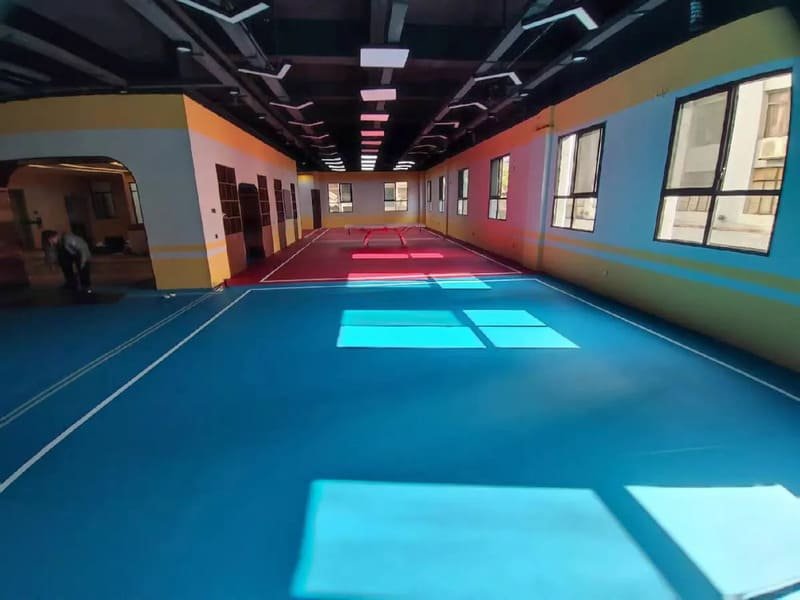
Vinyl wears fastest near entrances mainly because of abrasion, not a manufacturing defect. Tracked-in grit gets trapped under footwear and ground against the surface with every step. Concentrated traffic, pivoting motion, moisture and contaminants, and installation or substrate conditions add to the damage.
I hear this complaint often from product developers and facility managers: they invest in a durable vinyl floor, but the entryway looks dull and scratched within months while the rest of the room still looks new. This is not bad luck, and it is usually not a product flaw. It is physics. In most cases, entrance wear is primarily an abrasion problem: outdoor grit is carried indoors, trapped under footwear, and repeatedly ground against the surface in the highest-traffic part of the floor. In this article, I will break down the root causes of entryway wear in priority order, show you how to repair the damage you already have, and give you a prevention plan that protects your investment for years.
Before I get into repair steps, it helps to understand exactly what is happening under your feet at the door. Once you see the mechanism, the prevention steps make a lot more sense. Let’s start with the root causes.
What Causes Vinyl Flooring to Wear Near Entrances?
Entryway wear comes from tracked-in grit acting as an abrasive, concentrated traffic and pivoting motion, moisture and contaminant exposure, and installation or substrate conditions that vary by flooring type.
1. Abrasive Friction — The Sandpaper Effect
Shoes track in dirt, sand, small stones, and other debris every time someone enters. Under the pressure of a footstep, these particles do not just sit on the surface — they grind into it. Over time, this abrasion creates thousands of micro-scratches, gradually dulling the surface and wearing down the protective finish and wear layer. How quickly this becomes visible depends on traffic volume, grit load, the product’s surface construction, and how well the entrance is maintained.
2. Moisture and Contaminant Exposure
A properly finished vinyl or LVT wear surface, including PU/PUR-treated products, is designed to handle normal daily moisture and cleaning without damage to the surface itself. Rain, snow, and tracked-in moisture do not normally harm the wear layer on their own, but prolonged moisture at seams, edges, or joints can contribute to adhesive failure, edge lifting, or substrate-related problems. De-icing salts and other winter contaminants can leave residues, haze, or staining if they are allowed to sit on the floor, especially when combined with abrasive grit.
3. Concentrated Traffic and Pivoting Motion
Entrances experience concentrated foot traffic, repeated turning, braking, and pivoting as people enter and change direction. These movements increase scuffing and abrasive contact compared with straight-line traffic in other parts of the building. High heels, carts, and rolling luggage can add localized indentation or joint stress, depending on the flooring system.
4. Installation and Substrate Conditions
Installation-related causes depend on the flooring system. Floating click floors (LVP, SPC, WPC) may develop stress or joint issues if the required perimeter and transition clearances are not maintained. Glue-down LVT does not rely on the same expansion-gap logic — problems there are more likely to come from inadequate adhesive transfer, poor substrate preparation, or insufficient moisture control at the entry point.
Knowing the cause is only half the job. Now let’s figure out exactly what kind of damage you are dealing with, because the repair method depends on it.
How Do I Identify the Type of Vinyl Damage at My Entrance?
Look for four patterns: surface haze or dullness, mechanical scratches and scuffs, chemical discoloration or yellowing, and peeling, cupping, or lifted edges. Each points to a different cause and repair path.
| Typ uszkodzenia | Jak to wygląda | Prawdopodobna przyczyna |
|---|---|---|
| Surface haze / dullness | Dull, flat, or cloudy finish | Fine abrasion, cleaner residue, finish buildup, or general surface wear |
| Scratches & scuffs | Visible lines or marks | Sharp grit, footwear |
| Discoloration / yellowing | Yellow or amber tint | Rubber-backed mats, UV exposure, contaminant residue |
| Peeling / cupping / edge lifting | Raised edges, gaps | Moisture infiltration, adhesive failure |
A dull or hazy floor is not automatically a sign that the wear layer is gone — it’s worth ruling out cleaner residue or finish buildup before assuming the worst. A quick visual check tells you which category you’re in, and that determines whether you need a cleaning fix, a repair kit, or a full plank or section replacement.
How Do I Repair Existing Wear on Vinyl Flooring?
Minor wear usually needs cleaning per the manufacturer’s method, with polish only where the product allows it. Deep gouges are largely cosmetic repairs, not full restorations. Severe damage generally calls for localized tile, plank, or section replacement rather than a full floor tear-out.
For Minor Scuffs and Dullness
Start by cleaning the area using the manufacturer-approved maintenance method. Some vinyl products accept a compatible restorative finish or polish, while many modern PUR-coated commercial LVT products are designed for no-polish maintenance — check the product’s care documentation before applying anything. Keep in mind that cleaning or refinishing improves appearance and adds a protective maintenance layer; it does not regenerate wear layer material that has already been abraded away.
For Deep Scratches and Gouges
Minor cosmetic scratches can often be treated with a manufacturer-approved repair or restoration kit. Seam sealers are a separate product intended for joint and seam maintenance, not general gouge filling. Deep gouges that penetrate the wear layer usually cannot be fully restored to original performance with a filler alone and may require replacement of the affected area.
For Severe Damage
Severe damage may require individual tile or plank replacement, or a localized sheet repair or section replacement, depending on the vinyl format. For modular LVT/LVP, a severely damaged individual LVT tile or LVP plank can often be replaced on its own. Sheet vinyl requires a different repair method, such as localized patching or section replacement, depending on the extent and location of the damage.
Repairing damage is only a short-term win if you don’t also stop the wear from coming back. That’s where prevention comes in.
How Can I Prevent Future Vinyl Wear Near Entrances?
Use a two-mat system with non-staining materials, encourage grit-reducing footwear habits, follow a grit-focused cleaning routine, and install proper transition strips at the threshold. Together, these steps address the primary cause — abrasion — before it starts.
1. The Two-Mat Protection System
Place a heavy-duty outdoor scraper mat first, to knock loose mud, rocks, and coarse debris off shoes. Follow it with an absorbent indoor mat made of microfiber or polypropylene, to catch moisture and fine dust before it reaches the floor.
Note on mat backing: avoid rubber- or latex-backed mats unless the mat manufacturer confirms the backing is non-staining and compatible with vinyl flooring. The staining risk comes from antioxidants used in certain rubber compounds, not from rubber backing in general, so a certified non-staining product can be a safe option.
2. Smart Footwear Practices
A simple shoes-off rule, or a shoe rack at the door, removes most of the grit before it ever touches the floor. Soft-soled house shoes or slippers are a good alternative for households or facilities that don’t want a strict no-shoes policy.
3. Routine Maintenance for Entryways
Sweep or vacuum daily using a hard-floor setting with no beat bar, since beat bars grind grit into the surface rather than lifting it away. Damp mop with the manufacturer’s recommended vinyl cleaner, and avoid harsh chemicals or excess water at seams and edges.
4. Protective Doorways and Thresholds
Durable transition strips or nose trim at the threshold protect the plank edge from the flex and pivoting motion that happens right at the door.
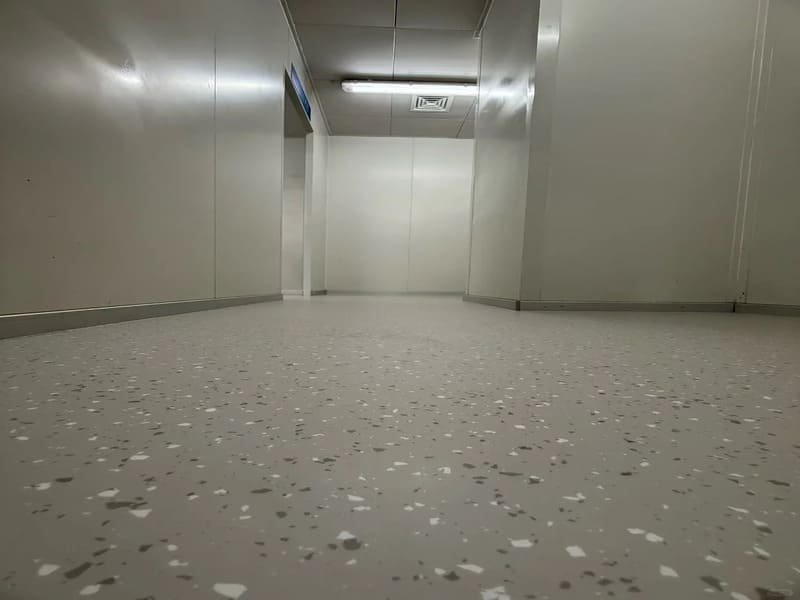
If you’re renovating or specifying vinyl for a new build, prevention starts even earlier — at the material selection stage.
Which Vinyl Flooring Is Best for High-Traffic Entrances?
Both commercial glue-down LVT and properly specified rigid-core vinyl (SPC/WPC) can perform well at entrances. The right choice depends on traffic level, rolling loads, substrate condition, moisture exposure, and the manufacturer’s intended-use classification — not the core type alone.
Grubość warstwy ścieralnej
For demanding commercial entrances, a wear layer around 20 mil (about 0.5 mm) is common among commercial LVT products. Some 0.5–0.55 mm products are also rated for heavy commercial use, such as Class 33 under EN ISO 10874. However, use classification is based on the complete flooring system and should not be inferred from wear-layer thickness alone. Good entrance matting and maintenance can significantly improve appearance retention, so wear-layer thickness should never be evaluated in isolation.
Core Types Compared
| System | Typowy przypadek użycia | Kluczowe aspekty |
|---|---|---|
| SPC (kompozyt kamienno-plastikowy) | High-traffic, moisture-prone areas | Very dimensionally stable; check perimeter/expansion clearances if floating |
| WPC (kompozyt drewniano-plastikowy) | Residential and light commercial entries | Softer underfoot; slightly less rigid than SPC |
| Commercial Glue-Down LVT | High-traffic commercial entrances, retail, healthcare | A proven standard for heavy and rolling-load traffic when substrate prep and adhesive selection are correct |
Commercial glue-down LVT remains a widely used option for high-traffic commercial environments such as retail, healthcare, hospitality, and workplace interiors, when the product is rated for the intended traffic and rolling loads. The decision between rigid-core and glue-down should be based on the site’s traffic profile and substrate, not a general assumption that one core type is superior.
Textured vs. Smooth Finishes
Embossed or textured surfaces mask fine scratches and dulling better than a smooth, high-gloss finish, which shows every scuff clearly under light.
Często zadawane pytania
Can steam mops cause vinyl flooring near doors to warp or peel?
Steam-mop compatibility varies by product and even by product line within the same manufacturer. Many vinyl products prohibit steam or heat mops because excessive heat and moisture may affect joints, adhesives, or surface finishes, while some product lines do permit them. Always follow the specific flooring manufacturer’s maintenance instructions rather than a general rule.
Will road salt ruin my vinyl floor?
Road salt itself is unlikely to chemically damage a properly finished vinyl surface, but residues, mineral deposits, and haze can build up if salt is allowed to sit, particularly when mixed with abrasive grit. Prompt cleanup and a scraper mat at the door limit this exposure.
How do I remove yellow stains caused by door mats on vinyl?
Yellowing from certain rubber-backed mats results from a chemical reaction with antioxidants in the rubber compound, not surface dirt, so normal cleaners often won’t fully remove it. A vinyl-safe stain treatment or professional refinishing may be needed for stubborn cases; switching to a certified non-staining mat prevents new staining.
Is it worth repairing a damaged vinyl entry plank, or should I replace it?
For surface scuffs or shallow scratches, a manufacturer-approved repair or restoration method is usually enough. For gouges that penetrate the wear layer, or planks and tiles with cupping or structural damage, individual tile, plank, or section replacement is generally more reliable than repeated cosmetic patching.
Wnioski
Entryway wear is primarily an abrasion problem, and while it can’t be eliminated, it’s manageable with grit control, the right mats, and a maintenance routine matched to your specific product.
If you’re specifying or sourcing vinyl flooring for high-traffic entrances and want to talk through wear-layer specification, core type selection, or a custom manufacturing solution for your project, send me a message — I’m happy to help you work through the technical details.