


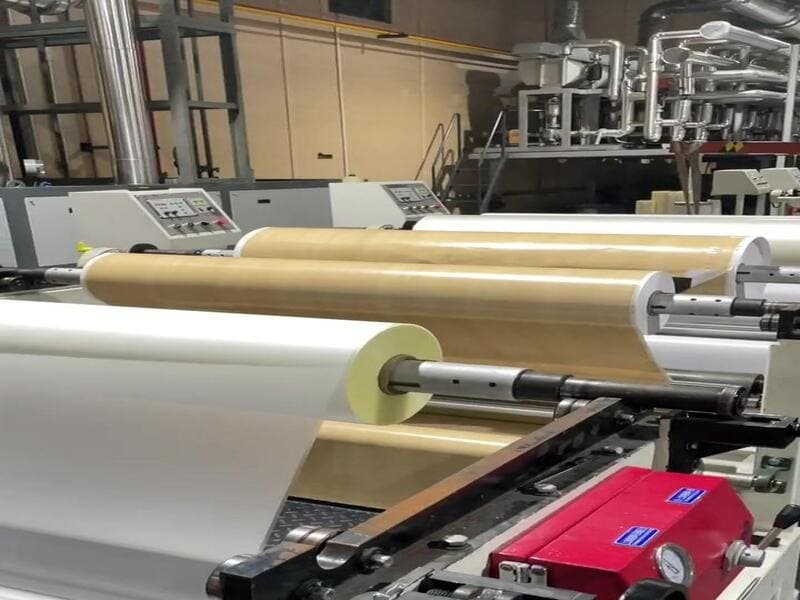
A substitute PVC flooring proves technical equivalence when it meets the salient characteristics named in the project specification, compares data using the same test method as the original, and discloses every deviation in writing for approval.
Budget cuts, supply chain delays, and discontinued product lines force many teams to look for a substitute PVC flooring. This is not a small decision. Architects, contractors, and facility owners all worry about the same thing: will the new floor fail early, break a code rule, or void a warranty? Here is the part many suppliers get wrong: equivalence does not mean copying every property of the original product. It means meeting the specific characteristics the project actually calls for, and being honest about anywhere the substitute differs. A generic list of "good flooring specs" does not win approval. A clear, traceable comparison against the governing specification does.
Before we get into test data, it helps to understand who reviews this proof and what "equivalence" is actually supposed to mean in a spec review.
Who Actually Needs Proof of PVC Flooring Equivalence?
Architects want proof on looks and stability. Contractors want proof on install fit. Owners want proof on lifespan and safety. Each group checks the specification’s own salient characteristics before signing off.
The people who approve a substitute PVC flooring are not looking at the same things. Architects and designers care about texture, color match, dimensional stability, and how the floor sounds underfoot. General contractors care about lead time, cost, subfloor prep, and install speed. Facility managers and owners think longer term: lifespan, upkeep cost, and health or safety code compliance. There is also a range in how "equivalent" a substitute needs to be. A direct clone matches specs almost one to one. A functional equivalent hits the same required performance through a different construction. Both can be accepted, but only if the substitute meets the salient characteristics the specification actually names for the intended use, not just characteristics a supplier thinks are relevant.
| Stakeholder | Main Concern | Proof Needed |
|---|---|---|
| Architect | Look, feel, stability | Dimensional stability data, color match |
| Wykonawca | Install fit, lead time | Subfloor prep compatibility, install guide |
| Owner/Facility Manager | Lifespan, safety | Test reports, warranty comparison |
Once you know who is reviewing the submission, the next step is identifying what the specification actually requires before you compare anything.
What Is the First Step Before Comparing Any Data?
The first step is identifying the governing specification section, the approved manufacturer basis, the product standard, and the code requirement tied to the original product. This defines which characteristics actually matter.
Many substitution packages fail because the supplier compares generic flooring properties instead of the properties the project cares about. Before pulling any test report, find the specification section that names the original product, the product standard it was written against, and the code or performance requirement driving that choice. This tells you which characteristics are salient, meaning genuinely important to how the floor performs in that building, and which ones are incidental. A hospital corridor and a retail showroom may specify the same product family but care about completely different things: one prioritizes chemical resistance and hygiene, the other prioritizes appearance and foot comfort. Skipping this step and jumping straight to a generic comparison table is one of the most common reasons submittals get sent back for revision.
Once you know what the specification actually requires, you can start comparing the physical build of the floor itself.
What Determines Material Construction Equivalence in PVC Flooring?
Material equivalence comes from matching wear layer thickness, core construction, and surface treatment separately, since a PUR coating is a surface finish, not a substitute for wear layer thickness.
The build of a floor decides how it performs over years, not just on day one, so this comparison needs care. A common mistake is comparing a PVC wear layer thickness directly against a PUR (polyurethane) coating thickness, as if they measure the same thing. They do not. PUR is typically a thin factory surface treatment applied over the actual wear layer, which stays the true PVC thickness underneath. A proper comparison keeps these separate: wear layer thickness against wear layer thickness, surface treatment against surface treatment. Next comes the core. LVT, SPC (rigid core), WPC, and homogeneous or heterogeneous sheet floors all carry different strength and flex profiles, so structural comparison matters as much as surface comparison. For dimensional stability, compare results using the test method and acceptance limit set by the applicable current product standard for that flooring type, rather than applying one fixed percentage across every product category.
Wear Layer and Surface Treatment Comparison
| Komponent | Specified Product | Substitute | Match Status |
|---|---|---|---|
| Grubość warstwy ścieralnej | 0.55 mm | 0.55 mm | Complies |
| Obróbka powierzchni | PUR | PUR | Complies |
| Typ rdzenia | SPC Rigid Core | To confirm | Pending |
| Stabilność wymiarowa | Per applicable ISO/EN standard | To confirm | Pending |
Once the build is confirmed against the right standard, safety and code compliance come next, and this is where standard versions matter most.
How Do You Verify Safety and Regulatory Compliance for Substitute Flooring?
Verify compliance through reaction-to-fire testing under EN 13501-1 or critical radiant flux under ASTM E648, current slip resistance standards, and separate VOC and restricted-substance certificates from an accredited lab.
Safety data is the fastest way to lose or win approval, so precision here matters. On fire performance, EN 13501-1 covers reaction to fire classification (such as Bfl-s1), while ASTM E648 measures critical radiant flux, a different property, not smoke density; if smoke output is a separate project requirement, that typically sits under a different test method entirely. On slip resistance, many specifiers still reference the older DIN 51130 R9–R11 scale, but current European practice has moved toward EN 16165, so it helps to cite both the familiar R-rating and the current governing standard. Be careful with friction test data too: EN 13893 measures dynamic coefficient of friction on a dry surface only, so it should never be used to claim wet-condition slip performance. On indoor air quality, certifications like FloorScore or GREENGUARD Gold confirm low VOC emissions, but they do not by themselves confirm phthalate-free content; if phthalate content matters to the project, ask for that data separately.
Key Safety Certifications
| Test Area | Standard | What It Actually Proves |
|---|---|---|
| Reaction to Fire | EN 13501-1 | Fire classification (e.g. Bfl-s1) |
| Krytyczny strumień promieniowania | ASTM E648 | Flame spread under radiant heat |
| Slip Resistance (dry) | EN 16165 / DIN 51130 (R-rating) | Traction on dry surfaces |
| Emisje LZO | FloorScore / GREENGUARD Gold | Low VOC, not phthalate content |
Safety data proves the floor is fit to install. The next question is whether it will hold up for the years ahead, and here too, standard versions matter.
What Durability Metrics Prove Long-Term Performance?
Durability proof comes from abrasion performance under current ISO standards, indentation resistance under EN ISO 24343-1, castor chair testing under EN ISO 4918, and colorfastness under ISO 105-B02. These give comparable evidence, not a guaranteed lifespan.
Long-term performance is where owners focus most, so it is worth citing current standards rather than withdrawn ones. Abrasion resistance for homogeneous PVC flooring falls under ISO 10581, and for heterogeneous PVC flooring under ISO 10582; wear groups such as T, P, M, or F reflect measured abrasion performance under the applicable test method, not simply how much binder the product contains. Indentation resistance is tested under EN ISO 24343-1 or ASTM F1914, showing how the floor recovers after heavy point loads like furniture legs or rolling carts. Castor chair resistance now falls under EN ISO 4918, which confirms the floor holds up under repeated chair rolling without tearing. Colorfastness near windows matters too, and a lightfastness rating of 6 or higher under ISO 105-B02 protects against fading. It is worth being direct with clients here: these tests give standardized, comparable evidence of relative durability, but they do not, by themselves, predict the exact service life of an installed floor, since real-world wear also depends on traffic, maintenance, and installation quality.
Durability Benchmark Table
| Test | Current Standard | Wynik docelowy |
|---|---|---|
| Abrasion (Homogeneous) | ISO 10581 | Group T or P |
| Abrasion (Heterogeneous) | ISO 10582 | Group T or P |
| Wcięcie | EN ISO 24343-1 / ASTM F1914 | Low residual mark |
| Castor Chair | EN ISO 4918 | No visible damage |
| Trwałość koloru | ISO 105-B02 | ≥6 rating |
Strength and wear numbers tell most of the story, but sound performance often gets tested and reported in a way people misread.
How Does Acoustic Performance Get Proven Correctly?
Acoustic parity is proven using base test methods like ASTM E492 alongside rating methods like ASTM E989, or ISO 10140-3 for impact sound, not by citing a rating standard as if it were the base test.
Sound performance claims get misreported often, so it pays to be precise here. ASTM E989 is not itself a base test method; it is a single-number rating method that converts raw data, typically from tests like ASTM E492, E1007, or E2179, into a comparable rating such as IIC or ΔIIC. The correct way to cite it is something like "ASTM E492 with ASTM E989 rating" rather than treating E989 alone as the test. On the international side, ISO 10140-3 covers impact sound insulation testing directly and is more commonly referenced outside North America. For comfort, underfloor heating compatibility is checked under EN 12664, which confirms the substitute floor allows heat transfer close enough to the original that the heating system still performs as designed.
Acoustic and Thermal Comparison
| Metryczny | Standard | Dlaczego to ma znaczenie |
|---|---|---|
| Impact Sound (base test + rating) | ASTM E492 + E989, or ISO 10140-3 | Noise between floors, correctly cited |
| Przewodność cieplna | EN 12664 | Underfloor heating compatibility |
With performance data gathered and correctly cited, the next step is turning it into a package a specifier can actually approve, built around disclosed deviations rather than blanket claims.
How Should You Present a Technical Dossier for Approval?
Present proof in five steps: a comparison matrix with a deviation column, accredited third-party or ISO/IEC 17025-compliant lab reports, physical samples with data sheets, real case studies, and a written approval request.
A strong technical dossier follows a clear order, and the most important addition is a deviation column that most substitution packages leave out. Step one is a comparison matrix that lines up salient characteristics side by side, using the same test method and unit on both sides wherever possible, with any standard conversions clearly noted. Step two is lab testing: where independent verification is required, use a laboratory accredited to ISO/IEC 17025 by an accreditation body that is an ILAC MRA signatory, such as CNAS or UKAS; note that acceptance of internal factory reports depends on what the project actually requires, so this is a project-by-project decision rather than a fixed rule. Step three is physical proof: send cut samples along with the technical data sheet (TDS) and safety data sheet (SDS), so the reviewer can inspect the real product firsthand. Step four is real-world case studies from similar high-traffic or specialized settings. Step five, and the one most packages skip, is a written deviation list and a formal approval request, since equivalence is not something a supplier declares on its own; it is something a specifier or engineer confirms in writing.
Comparison Matrix with Deviation Column
| Wymóg | Specified | Proposed | Status | Deviation / Action Needed |
|---|---|---|---|---|
| Total thickness | 2,0 mm | 2,0 mm | Complies | Brak |
| Warstwa użytkowa | 0.55 mm | 0.55 mm | Complies | Brak |
| Fire classification | Bfl-s1 | Bfl-s1 | Complies | Brak |
| Roll width | 2.0 m | 1.83 m | Deviation | Extra seams; architect review |
| Warranty term | 15 years | 12 years | Deviation | Owner approval required |
Even a strong dossier can get rejected if a few common mistakes slip through, and most of them come back to skipping the deviation step above.
What Common Mistakes Cause Substitution Rejection?
Rejections usually come from mismatched or outdated test standards, missing accessory compatibility, undisclosed warranty gaps, or a changed backing thickness that shifts finished floor height. Disclosing deviations up front avoids most of these.
Most rejections are avoidable. The first mistake is presenting ASTM values on a project specified under European Norms, or the reverse, without any cross-reference or conversion context. The second is citing withdrawn standards, since older documents like EN 649, EN 433, or EN 425 have been replaced and citing them signals the submission was not carefully checked. The third is ignoring accessory systems: welding rods, adhesives, skirtings, and transition strips all need to match the substitute floor, not just the floor itself. The fourth is treating warranty length as fixed rather than comparing it directly to what the specification actually requires; a shorter warranty than specified is a deviation to disclose, not a detail to leave out. The fifth is neglecting backing thickness changes, which can quietly shift finished floor height and throw off door clearances and transition details across the project.
Rejection Triggers and Fixes
| Błąd | Ryzyko | Fix |
|---|---|---|
| Mismatched standards | Rejected on paper | Add cross-reference or conversion data |
| Citing withdrawn standards | Loss of credibility | Use current ISO/EN equivalents |
| Missing accessories | Install failure | List compatible systems |
| Warranty gap left undisclosed | Contract dispute | Compare directly to spec, disclose gaps |
| Backing thickness change | Height mismatch | Confirm finished floor height before order |
With the pitfalls covered, here is a simple checklist to keep the whole process organized from start to finish.
What Should Your PVC Flooring Substitution Checklist Include?
A complete checklist covers the TDS and SDS, current fire and slip certificates, separate VOC and restricted-substance certificates, current abrasion and indentation reports, a comparison matrix with a deviation column, and a warranty comparison against the specified term.
Before sending a substitution request, run through a full checklist so nothing gets missed. This saves time on both sides and avoids back-and-forth delays during review.
PVC Flooring Substitution Approval Checklist:
- Technical Data Sheet (TDS) & Safety Data Sheet (SDS)
- Reaction-to-Fire / Critical Radiant Flux Certificates (current standards)
- Slip Resistance Certificates (current R-rating or EN 16165)
- VOC Emissions Certificate (FloorScore / GREENGUARD Gold)
- Restricted Substance Data (phthalates, heavy metals, where required)
- Abrasion & Indentation Test Reports (current ISO standards)
- Comparison Matrix with Deviation Column
- Warranty Term Compared Against Project Specification
Every item on this list builds the case for approval, but the checklist only works if the underlying comparison is honest about where the substitute differs.
Wnioski
Equivalence means meeting the specification’s salient requirements and disclosing every deviation, not matching a generic list.
Have a substitution project on your desk right now? Message me directly and I will help you build a custom substitution matrix, with a proper deviation list, or arrange certified sample kits for your specific project.