


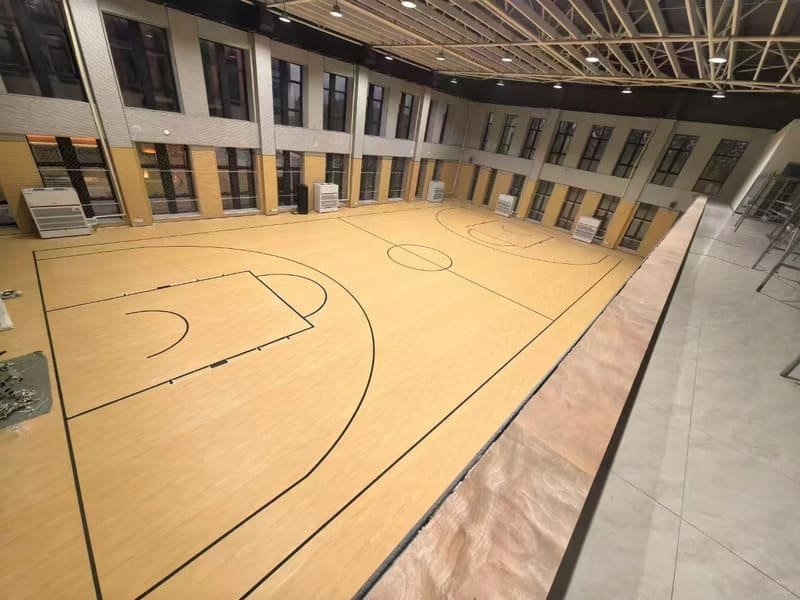
Yes. PVC sports flooring can be an excellent surface for indoor futsal, as long as the complete flooring system meets the required performance standards for shock absorption, slip resistance, deformation, and durability.
Futsal is a fast game. Players pivot, sprint, and stop hard, again and again. The ball is heavier than a regular soccer ball and stays low, so the court surface must control bounce and speed at the same time. This is why not every floor works for futsal. In my work building custom courts, I see facility owners face the same problem over and over: how do you protect players, meet real play standards, and still stay on budget? PVC sports flooring answers all three needs at once when the system is specified correctly. It is not just one product, it is a family of engineered systems, and the specs behind each one matter more than the material name alone. That is what I want to walk through here, not just "yes it works," but why it works, and what to actually check before you buy.
Before we get into specs and standards, let’s break down what actually makes PVC flooring suited to futsal’s demands.
Why Choose PVC Flooring for Futsal Courts?
PVC flooring can protect joints through shock absorption, give safe grip for fast pivots, support consistent ball response, and cost less over time than hardwood.
I break this down into four points I explain to every client. First, shock absorption. Futsal players land hard on knees and ankles during pivots and sudden stops. A well-built PVC system spreads that impact so joints take less stress. Second, grip. The surface needs enough friction to stop slips, but not so much that a foot locks and twists the knee. Third, ball response. Futsal uses a low-bounce, heavier ball, so the floor should support consistent rebound and rolling behavior. On this point, I keep the language careful, since ball response requirements differ between general indoor sports standards and dedicated futsal testing, which I’ll explain further down. Fourth, cost. PVC rolls install faster and cost less upfront than solid hardwood, and cleaning is simple, so long-term maintenance spend drops too.
| Voordeel | Why It Matters for Futsal |
|---|---|
| Schokabsorptie | Reduces knee, ankle, lower back stress |
| Slipweerstand | Helps prevent falls during fast direction changes |
| Balreactie | Supports predictable rebound and rolling speed |
| Cost & ROI | Lower install and upkeep cost than hardwood |
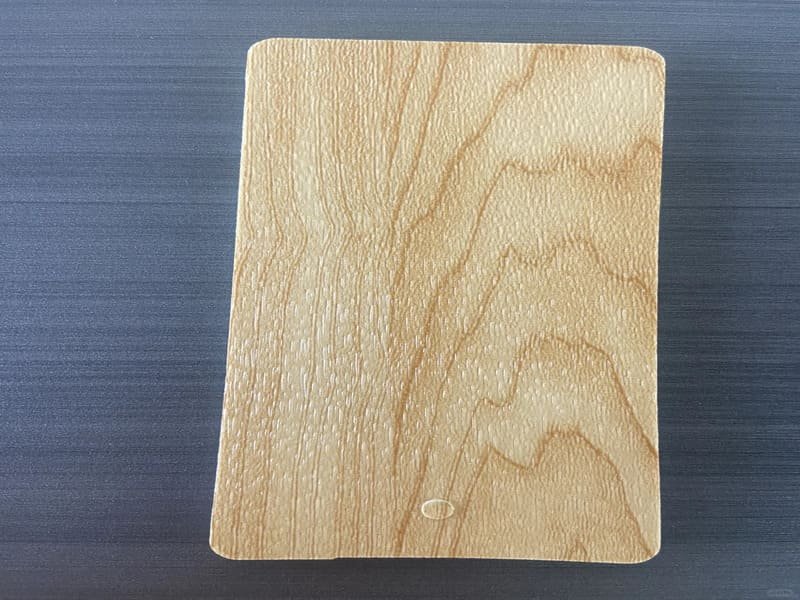
Once you understand why PVC works, the next question is what specs actually separate a general-purpose PVC floor from one that is genuinely built for futsal.
What Makes a PVC Floor Suitable for Futsal?
A futsal-suitable PVC floor is judged by tested shock absorption, slip resistance, deformation, and rolling-load performance, not by a fixed thickness number.
This is where I see a lot of buyers get misled by marketing shortcuts, so I want to be precise here. There is no single FIFA-mandated thickness for PVC futsal flooring. Many point-elastic vinyl systems fall somewhere around 6mm to 10mm, but I don’t treat a thickness number as a requirement on its own. What actually gets tested and certified is the finished system’s performance: shock absorption, vertical deformation, slip resistance, rolling-load resistance, indentation, and surface evenness. A 9.0mm product and a 7.5mm product from different manufacturers can both qualify as FIFA Quality futsal surfaces, because the certification is performance-based, not a thickness rule. Fiberglass reinforcement is common in higher-end PVC sports flooring because it improves dimensional stability, and I recommend it, but it is a construction feature, not a universal requirement. The same goes for PUR or similar surface treatments. They improve stain and scratch resistance, and I specify them often, but they are not a mandatory pass/fail item in futsal certification.
| Eigendom | Practical Guidance |
|---|---|
| Totale dikte | No universal requirement; many PVC systems run roughly 6mm–10mm |
| Schokabsorptie | EN 14904 point-elastic floors start at ≥25%; FIFA futsal uses its own separate range |
| Dimensionale stabiliteit | Fiberglass reinforcement is common and beneficial, not mandatory |
| Oppervlaktebehandeling | PUR or equivalent is recommended for durability, not mandatory |
| Rolling Load & Indentation | Should be verified against test data for bleachers and equipment |
Since standards get confused so often in this space, I think it’s worth stopping here and separating the two systems buyers usually mix up.
Does PVC Flooring Meet FIFA Futsal Requirements?
PVC as a material is not automatically "FIFA approved." FIFA certifies the complete installed flooring system through its dedicated Futsal Quality Programme, separate from general EN 14904 sports floor standards.
This distinction matters a lot for procurement decisions, so let me lay it out clearly. EN 14904 is the general European standard for indoor multi-sport flooring. Under this standard, point-elastic PVC floors are grouped into categories like P1 and P2, generally starting around 25% shock absorption, and slip resistance is commonly referenced in the 80–110 range. FIFA’s Futsal Quality Programme is a separate system built specifically for futsal. It tests shock absorption across a wider range, roughly 18% to 75% for point-elastic surfaces, and slip resistance under EN 16837 in the 80–115 range. It also evaluates vertical deformation, rolling-load resistance, indentation, and finished surface evenness. Passing lab testing on the raw material is only step one. To carry FIFA Quality status, the completed, installed court has to pass field testing as well. So when I evaluate a product for a futsal project, I ask two separate questions: does it meet general EN 14904 sports flooring criteria, and separately, has it (or a comparable installed system) achieved FIFA Quality certification for futsal specifically. These are related standards, but they are not interchangeable.
With the standards question addressed, it helps to see how PVC actually compares against the other surfaces facility owners consider for futsal.
How Does PVC Flooring Compare to Other Futsal Surfaces?
PVC flooring is often one of the strongest choices for multi-purpose indoor futsal facilities, combining solid sports performance, fast installation, and simple maintenance, though the right choice depends on budget, use level, and site conditions.
Every material has a place, and I try not to oversell PVC as automatically "the best." Hardwood, when built as a proper sprung area-elastic system, can offer excellent shock absorption, but it costs much more upfront and needs regular sanding and refinishing. Poured polyurethane can match PVC on shock absorption but usually takes longer to install and costs more. PP interlocking tiles are fast to lay and often cost less, but sports performance varies a lot between systems, so I always ask for test data before assuming a PP product is suitable for serious indoor futsal play rather than casual use.
| Functie | PVC vloeren | Massief hardhout | Polyurethaan (PU) | PP Tegels |
|---|---|---|---|---|
| Initiële kosten | Gemiddeld-laag | Zeer hoog | Hoog | Laag |
| Schokabsorptie | Good to Excellent (system dependent) | Moderate to Excellent (if sprung) | Uitstekend | Varies by system |
| Onderhoud | Gemakkelijk | Hoog | Medium | Gemakkelijk |
| Installatiesnelheid | Fast (rolls) | Langzaam | Slow (curing) | Zeer snel |
| Beste toepassing | Indoor, multi-purpose | Premium indoor competition | Premium indoor | Fast-build or outdoor, verify performance |
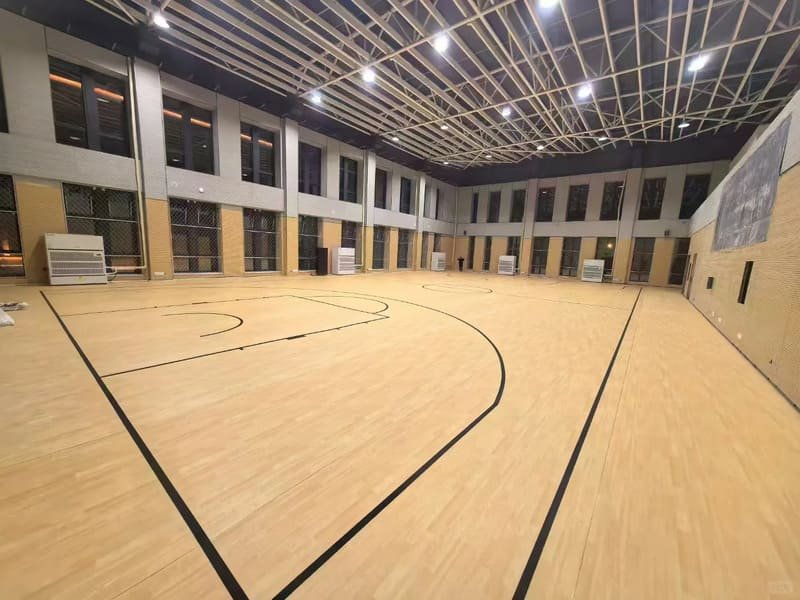
PVC clearly holds its own against pricier options, but it isn’t the right fit for every situation. Let’s look at where it falls short and how those issues actually get solved.
What Are the Drawbacks of PVC Flooring and How Do We Fix Them?
PVC flooring can face moisture issues, load-related damage from heavy equipment, and it is not built for outdoor conditions, but each problem has a proven engineering solution.
I always tell clients about the trade-offs upfront, because a well-managed install avoids almost all of them. Moisture is the biggest risk. If the subfloor holds too much moisture, the PVC layer can bubble or delaminate. The fix is subfloor moisture testing before installation and a Damp Proof Membrane (DPM) where levels are too high. Heavy rolling loads, like retractable bleachers or maintenance equipment, are a different problem, and I want to correct something I see repeated often: a cushioned foam backing alone does not solve this. What actually protects the floor is choosing a system with verified rolling-load and indentation resistance, and using rigid load-distribution panels under heavy equipment when needed. Cushion thickness by itself is not a load solution. Finally, PVC is strictly an indoor material. UV exposure and temperature swings degrade it outdoors, so for outdoor futsal courts, I recommend PP interlocking systems with verified outdoor performance instead.
| Terugbetaling | Oplossing |
|---|---|
| Moisture bubbling | Moisture testing + DPM barrier |
| Rolling-load or indentation damage | Verified rolling-load/indentation-resistant system + rigid load-distribution panels |
| Outdoor UV and temperature damage | Use an outdoor-rated PP tile system instead |
Once these risks are managed, the real key to a long-lasting court comes down to how the subfloor is prepared before the PVC ever goes down.
How Should the Subfloor Be Prepared for Installation?
Subfloor flatness should follow the flooring manufacturer’s specification, and seam finishing methods depend on whether the installation is permanent or portable.
Subfloor prep is where I see the most corners cut, and it always shows up as a problem later. I don’t rely on one single "industry standard" number here, because tolerances differ by manufacturer, adhesive system, and local building standard, so I always check the flooring manufacturer’s installation specification and the project’s own requirements before pouring self-leveling cement. That’s a separate question from finished surface evenness, which is what gets checked during certification testing on the completed court. For seam finishing, many permanent sheet-vinyl sports installations use grooved, hot-welded seams following the manufacturer’s instructions, which creates a continuous, moisture-resistant joint. But not every system works this way. Portable and loose-lay installations often use different joint methods entirely, so the right approach depends on the installation type you’re specifying.
Good installation sets the foundation, but keeping the court in top shape depends on daily maintenance habits.
How Do You Maintain a PVC Futsal Court?
Daily dust mopping, careful scuff mark removal, and avoiding harsh chemicals or street shoes keep a PVC futsal court performing well for years.
Maintenance is simple, but consistency matters. Daily dust mopping removes small abrasive particles like sand and dirt that act like sandpaper on the wear layer if left alone. Black rubber scuff marks from aggressive footwork are common and can usually be removed safely without damaging the surface treatment, using non-abrasive methods designed for sports floors. What to avoid is just as important as what to do: skip strongly acidic or alkaline cleaners, never apply floor wax, and keep street shoes off the court. Following these basics is usually enough to protect the investment for the long run.
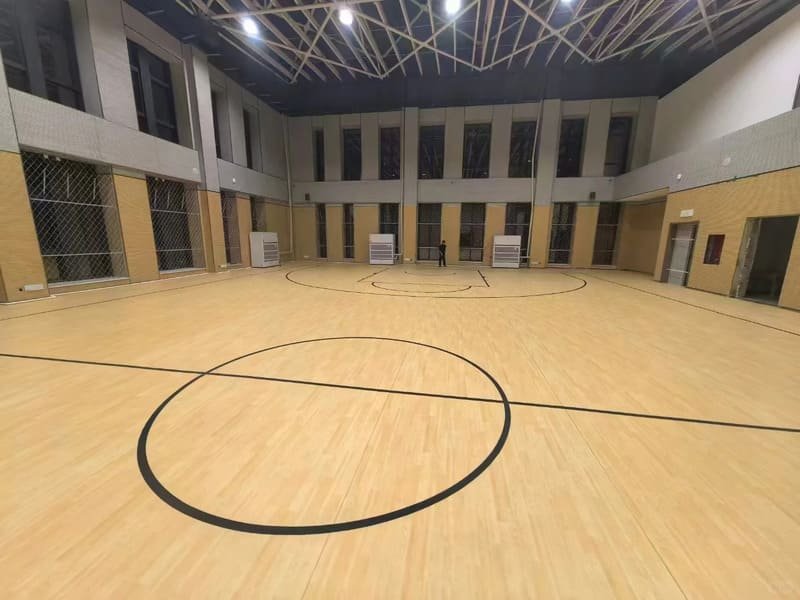
These habits protect the surface daily, but buyers often still have specific questions before committing to a court. Let’s cover those next.
Veelgestelde vragen
Can you wear standard outdoor cleats on indoor PVC futsal courts?
No. Indoor PVC futsal courts require flat-soled, non-marking indoor court (IC) shoes. Outdoor cleats or studs can tear the wear layer and reduce grip performance, creating a safety risk.
How long does a commercial-grade PVC futsal court last?
A quality PVC sports floor can often provide roughly 10 to 15 years of service, but actual lifespan depends heavily on traffic volume, shoe management, cleaning habits, rolling loads, and the manufacturer’s system warranty.
Is PVC flooring suitable for multi-sport use alongside futsal?
Yes. Many facilities use the same PVC court for basketball, badminton, and futsal by selecting a system with performance values that balance the needs of each sport.
Does a PVC futsal court need to be FIFA certified?
Not always. Recreational and multi-purpose facilities often only need to meet general EN 14904 sports flooring criteria. Competitive or professional venues typically need the installed system to pass FIFA’s dedicated Futsal Quality Programme testing.
Conclusie
PVC sports flooring can meet futsal’s demands for safety and performance, when the system, not just the material, is verified against the correct standard.
If you’re planning a futsal court and want help reviewing test data, choosing between EN 14904 and FIFA Quality specs, or working through installation details for your space, send me a message — I’m happy to walk through your project specifics.