



Safety vinyl flooring traps dirt because its slip-resistant surface texture and embedded aggregates create low points that grease, dust, and cleaning residue settle into. Standard mopping often cannot reach deep enough to remove it.
I have spent years on the production floor designing and testing vinyl flooring compounds, and this question comes up in nearly every project review. Safety vinyl is built to stop slips. To do that, manufacturers work aggregate particles and surface embossing into the wear layer so the floor keeps grip even when wet. That same texture creates recesses at a microscopic level, and those recesses are exactly where soil, grease, and detergent residue like to sit. Routine mopping glides over the surface but does not always reach into the low points, so the floor can look dull even after regular cleaning.
This is not a defect. It is a byproduct of how the material is engineered for slip resistance. Once you understand where the dirt is actually collecting, the cleaning process becomes much easier to get right.
Why Does Safety Vinyl Trap Dirt So Easily?
Four factors drive this: surface texture, embedded aggregates, residue buildup, and traffic. Together they create low points that hold soil in ways a normal mop cannot clear.
| Oorzaak | Wat gebeurt er? | Waarom het belangrijk is |
|---|---|---|
| Slip-resistant surface texture | Embossing creates recesses across the surface | Mops glide over the high points, not the low ones |
| Embedded aggregates | Particles sit within the wear layer for grip | Creates an uneven profile that traps fine particles |
| Grease and detergent residue | Cleaning film and oils settle into the texture | Residue attracts and holds new dirt over time |
| Heavy foot traffic | Repeated pressure pushes contaminants down | Drives soil deeper into the surface profile |
In my experience working with safety vinyl formulations, aggregate content and embossing depth are engineered to deliver the slip-resistance performance a product needs for its intended use. Depending on the market, this is typically evaluated using methods like EN 13845, DIN 51130, or pendulum testing rather than a single universal number. More aggressive textures can generally call for more intensive cleaning, but slip resistance and how easy a floor is to clean are not determined by roughness alone — particle distribution, surface finish, and how well the floor is maintained all play a role. Foot traffic then acts as the accelerant, pressing oils, mud, and residue further into that profile day after day.
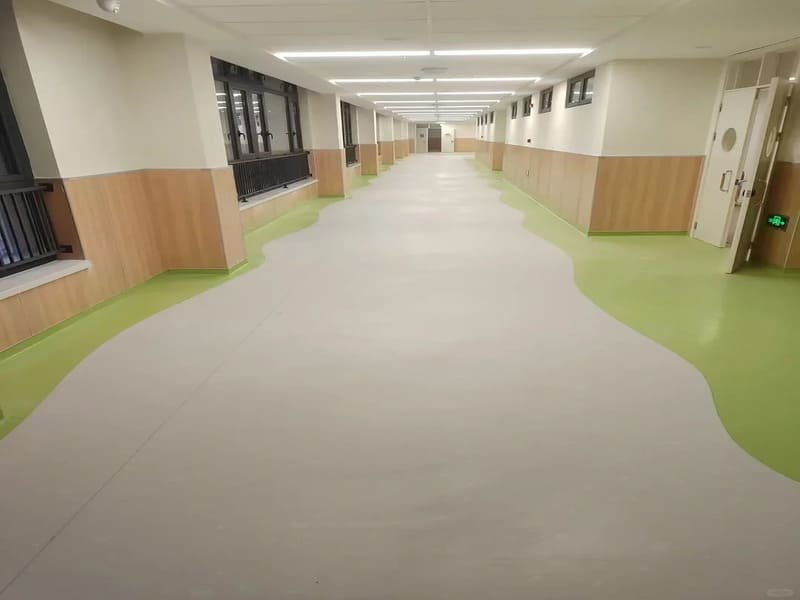
Knowing where the dirt collects is only half the picture. The other half is knowing which cleaning habits are quietly making it worse.
Are Common Cleaning Habits Making Safety Vinyl Dirtier?
Yes. Mopping alone often isn’t enough agitation, and excess cleaner, hard water, or the wrong pH can leave residue that attracts more dirt.
Most complaints I hear about "permanently dirty" safety flooring trace back to the cleaning process, not the floor itself. Routine mopping can lift loose surface soil just fine, but on a heavily textured floor it may not provide enough agitation to pull embedded grease and residue out of the recesses. Using too much cleaner, or not rinsing thoroughly, leaves a film that sits in the texture and attracts the next layer of dust like a magnet. Hard water makes this worse: minerals bond with soil inside the surface texture and form a stubborn haze that basic mopping cannot dissolve. I also see facilities reach for harsh acidic or high-alkaline products that are not matched to the flooring. Over time, products outside the manufacturer’s recommended range can affect the factory-applied surface finish and make future cleaning harder, not easier.
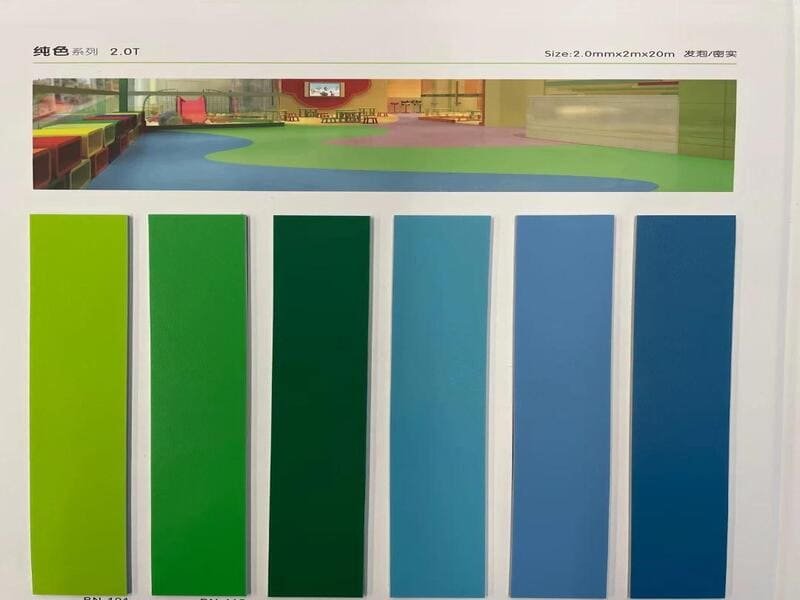
The good news is that fixing this is a matter of sequence and tools, not a full floor replacement.
How Do You Deep Clean and Restore Trapped Safety Flooring?
Restoring trapped safety vinyl takes five steps: dry soil removal, chemical dwell time, mechanical agitation, extraction, and a clean water rinse.
- Verwijdering van droge grond — Sweep or vacuum with a brush attachment first. Skipping this step turns dry grit into mud once liquid cleaner goes down.
- Chemical Dwell Time — Apply a manufacturer-approved alkaline safety floor cleaner or degreaser and let it dwell for the time the manufacturer recommends, typically several minutes, without letting it dry on the surface.
- Mechanical Agitation — This is the step most facilities skip, and it matters most on a textured floor. For manual cleaning, use manufacturer-approved nylon or polypropylene brushes, deck brushes, or cylindrical brushes designed to reach into the texture. For larger areas, a rotary floor machine or auto-scrubber fitted with a suitable brush or pad — matched to the flooring manufacturer’s recommendations — works the solution into the recesses far more effectively than a mop.
- Extraction and Rinsing — Squeegee or wet-vac the dirty solution off the floor. Mopping it back up just redeposits the grime you were trying to remove.
- Fresh Water Rinse — Rinse with clean water to remove any leftover cleaner residue before it dries into a new film.
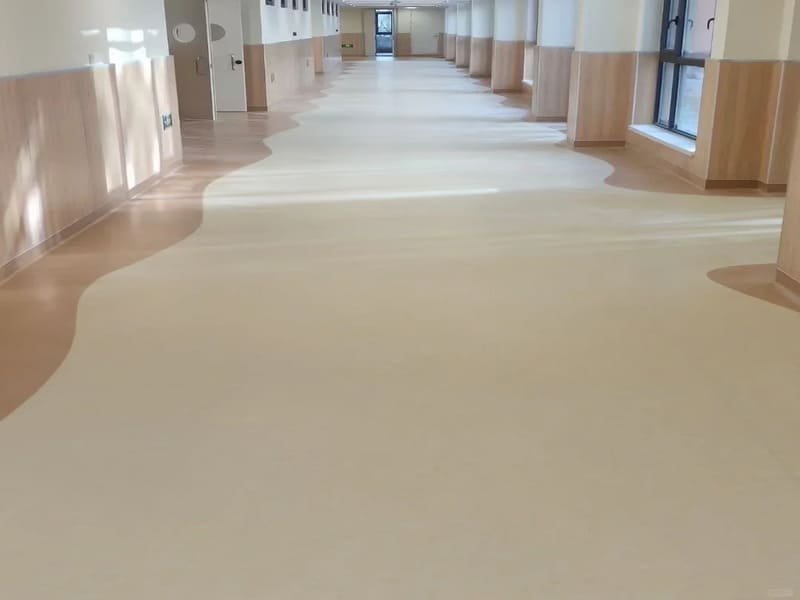
Deep cleaning solves the current problem. Keeping it from coming back is a separate habit.
How Do You Keep Safety Vinyl Flooring Clean Long-Term?
Long-term cleanliness comes from entrance matting, the right daily cleaner, and a consistent maintenance schedule.
- Entrance Matting Systems — A properly designed entrance matting system can substantially reduce the grit, dust, and moisture that gets tracked onto the safety floor in the first place.
- Daily Cleaner Choice — Use low-foaming, low-residue, neutral pH cleaners designed for textured safety flooring, and stick to what the manufacturer approves.
- Avoid Waxes, Polishes, and Sealers — Do not apply waxes, dressings, or sealers unless the flooring manufacturer specifically approves that product for use on that floor. Surface coatings can alter the designed slip resistance, and several manufacturers explicitly advise against sealing or polishing safety flooring.
- Onderhoudsroutine — Daily sweep or vacuum, regular agitation cleaning, and periodic deep extraction keep grime from rebuilding in the texture.

A consistent routine is what separates a floor that stays clean from one that needs deep restoration every few months.
Safety Vinyl Maintenance vs. Standard Smooth Vinyl (LVT/Sheet Vinyl)
Safety vinyl generally needs more agitation than standard smooth vinyl because its textured surface, built for slip resistance, holds more soil.
| Functie | Safety Vinyl | Standaard Glad Vinyl |
|---|---|---|
| Oppervlak | Textured with slip-resistant particles | Generally smooth |
| Primary Design Goal | Enhanced slip resistance for the intended environment | Durability, aesthetics, ease of cleaning |
| Routinematige reiniging | Often requires periodic mechanical agitation | Usually manageable with mopping alone |
| Soil Retention Risk | Generally higher with more aggressive texture | Over het algemeen lager |
| Slipbeoordeling | Product- and application-specific safety rating | Varies by product |
This comparison comes up often with product developers weighing safety vinyl against a smoother alternative. The texture that gives safety vinyl its grip is the same texture that raises its soil retention risk, so the maintenance plan needs to be part of the spec conversation from day one, not something added after installation.
Veelgestelde vragen
Can I use a steam mop on safety vinyl flooring?
I generally advise against it unless the manufacturer confirms it is safe for that specific product. Heat and moisture can affect adhesives beneath the flooring and push moisture into seams over time.
Can I wax safety vinyl to make it easier to clean?
No, unless the manufacturer explicitly approves a product for that purpose. Standard wax fills in the anti-slip texture and can lower slip resistance, which works against the reason the flooring was installed.
How do I remove black heel marks or rubber shoe scuffs from textured safety vinyl?
A manufacturer-approved nylon brush combined with a neutral pH degreaser usually lifts scuff marks without affecting the surface finish. Avoid solvent-based scuff removers unless they are confirmed safe for vinyl.
Will deep scrubbing ruin the anti-slip rating of my floor?
Not if you use the correct brush type. Manufacturer-approved nylon or polypropylene brushes clean effectively without excessively wearing the aggregate. Overly abrasive pads or the wrong tools used repeatedly can wear down texture over time, so it’s worth confirming tool recommendations with the flooring manufacturer.
Conclusie
Dirty safety vinyl is not ruined. It just needs the right agitation and residue-free cleaning to look new again.
Quick 3-Step Action Plan:
- Remove dry soil, then apply a manufacturer-approved cleaner and let it dwell.
- Agitate with manufacturer-approved brushes, not a flat mop alone.
- Extract the solution and rinse with clean water.
If you are developing or sourcing custom safety vinyl flooring and want to talk through texture, aggregate selection, or slip-resistance specs for your application, send me a message directly. I work with product teams on manufacturing optimization and design consultation for custom and bulk vinyl flooring solutions, and I am glad to help think through your specific requirements.