


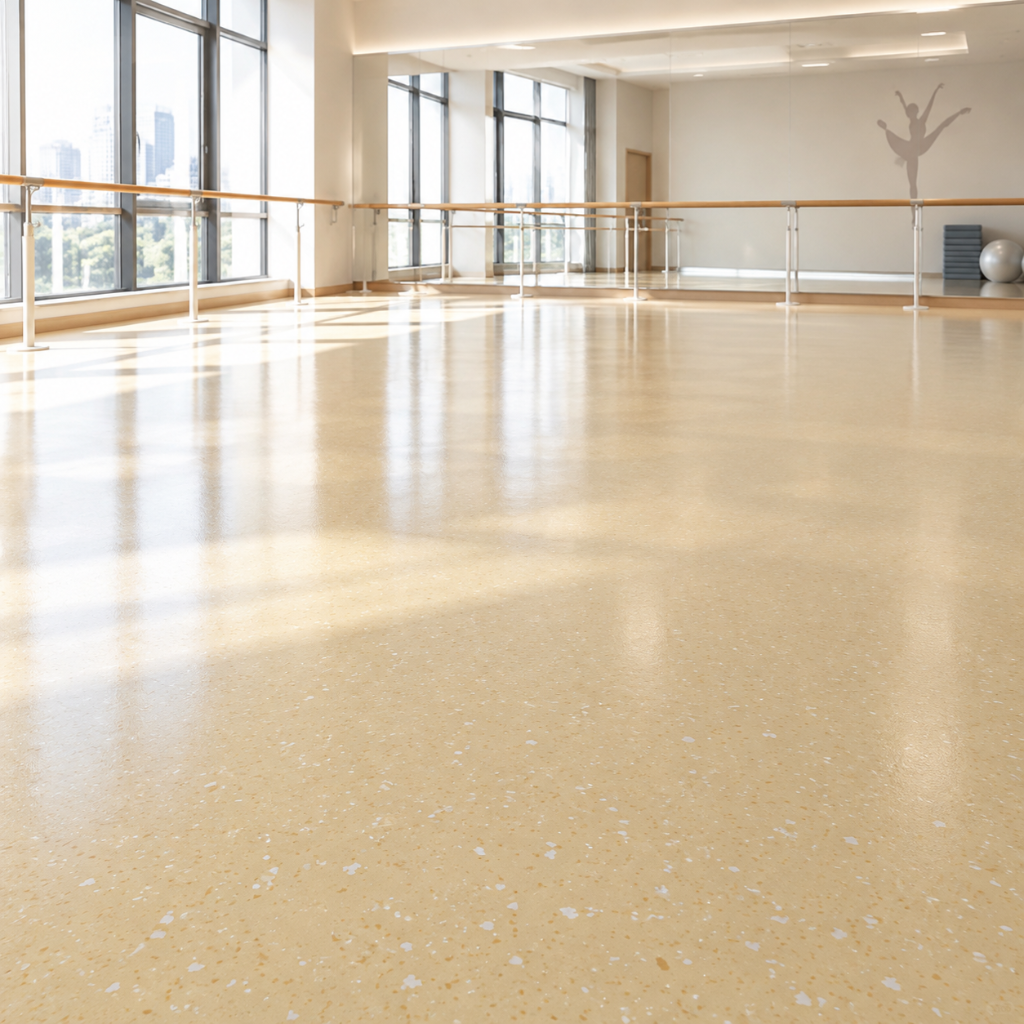
Not always. The right vinyl dance floor depends on the dance styles, footwear, and use of each room. Specialized rooms may need a dedicated vinyl surface, but a well-chosen multipurpose vinyl dance floor can serve several disciplines.
Vinyl is the most common surface in dance studios. A vinyl dance floor, often called Marley-style flooring, is a PVC-based surface made for turning, sliding, and landing. But not every vinyl floor feels the same. The surface finish, the PVC formulation, the backing, and the installation all change how the floor performs. A vinyl floor that suits one activity may not suit another, but that does not mean every room needs a different product. This guide explains how to judge traction needs, when schools can share one vinyl floor, and what to ask a vinyl flooring manufacturer.
First, let me explain why vinyl behaves the way it does.
What Affects Traction on a Vinyl Dance Floor?
Traction on vinyl comes from the PVC surface finish and formulation, the shoe or bare skin, cleanliness, wear, and room conditions. No single factor decides it, so product-specific information is more reliable than assumptions about material.
Factors That Change How Vinyl Feels
Two vinyl floors can look the same and feel different. The surface texture, the PVC formulation, and any surface treatment all affect grip and slide. I do not link traction to how soft or hard the vinyl is, because the effect differs from product to product. Friction also behaves differently when a foot is held still than when it slides, and real dance movement mixes both. One number cannot predict how a floor feels in motion.
| Factor | Why It Matters on Vinyl |
|---|---|
| Surface finish and texture | Changes how the foot grips and slides |
| PVC formulation | Affects surface feel and wear behavior, and varies by product |
| Footwear or bare skin | Each contact material reacts differently to the same vinyl |
| Netheid | Dust, sweat, and cleaner residue can create uneven spots |
| Wear | A worn vinyl surface can feel different from a new one |
| Room conditions | Temperature and humidity may change the feel, so check on site |
With these factors in mind, we can look at how each style uses a vinyl floor.
How Do Vinyl Flooring Needs Vary by Dance Style?
Each style asks for different vinyl floor performance. Ballet needs controlled grip and smooth turns, contemporary needs bare-foot comfort, tap needs damage resistance, and hip-hop needs a balance of sneaker grip and turning.
Performance Priorities by Style
I use performance priorities and not labels like "high" or "low" friction, because a label means little without a test method and use conditions.
| Dansstijl | What to Prioritize in Vinyl |
|---|---|
| Ballet and pointe | Controlled grip, turning performance, support from the full system |
| Contemporary and barefoot | Bare-foot comfort, floor work, skin contact |
| Tap | Resistance to surface damage, sound, shoe compatibility |
| Hip-hop and street | Balance between sneaker grip and turning resistance |
| Ballroom and character | Smooth movement with hard-soled shoes |
| Multifunctioneel | Suitability for several styles and shoe types |
Ballet involves both landing and turning, so too much grip can hurt a turn just as too little can hurt a landing. Tap needs extra care. Loose metal plates and screws can damage some vinyl surfaces, and some cushioned vinyl products are not recommended for tap. Always check the manufacturer’s guidance for each style.
These needs raise the next question.
Can One Vinyl Floor Serve Multiple Disciplines?
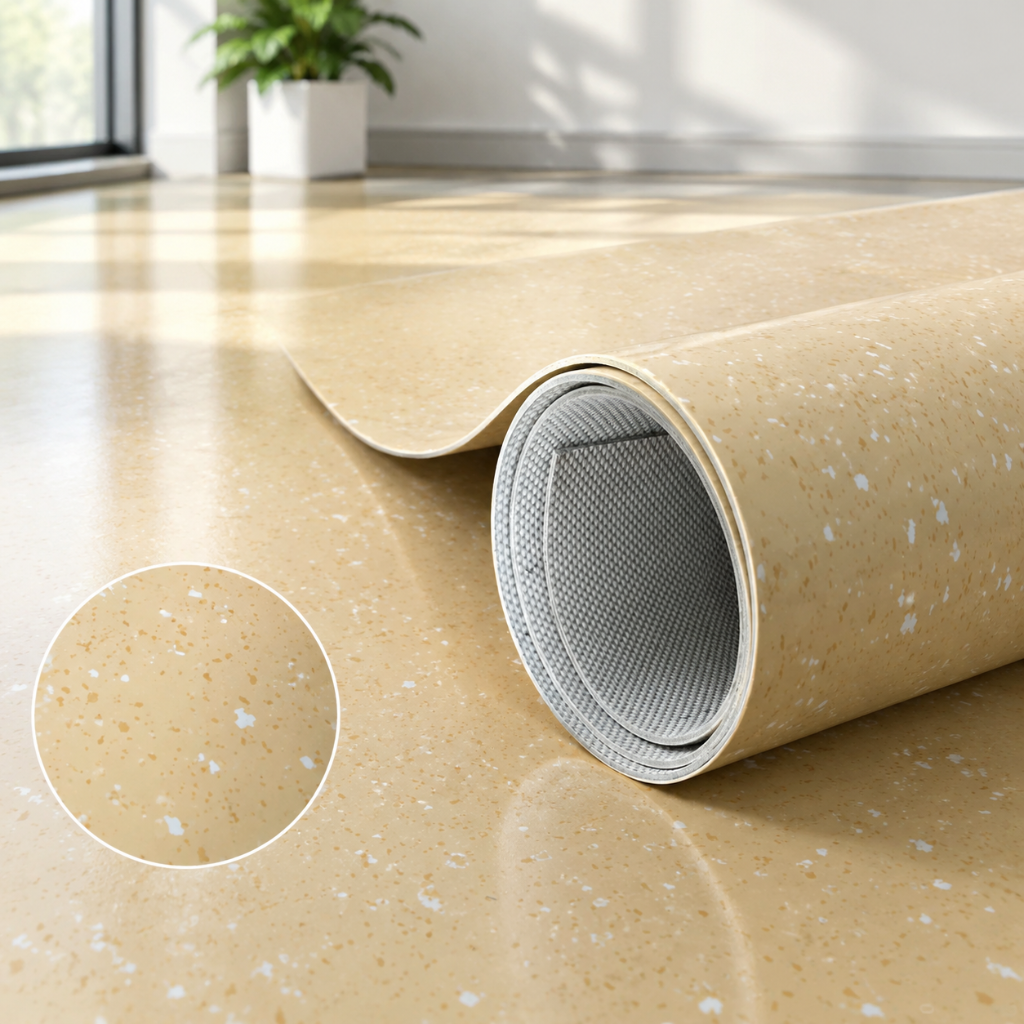
Often yes. A properly selected multipurpose vinyl dance floor can support several styles. A dedicated vinyl floor makes more sense when one discipline dominates a room or has strict demands.
How to Decide
Many manufacturers offer multipurpose vinyl dance floors made for mixed use, so I do not tell schools to buy a different vinyl for every room. Look at the shoes, the share of each style in the timetable, and any style with strict demands, such as tap or pointe.
| Situatie | Suggested Direction |
|---|---|
| Several rooms with similar styles and shoes | Evaluate one verified multipurpose vinyl floor for all |
| One room mixing ballet, contemporary, and street | Confirm each candidate suits every planned activity |
| Room used mainly for tap | Check shoe compatibility, surface damage, and sound |
| Professional pointe room | Evaluate the full floor system, support, and vinyl surface together |
| Existing vinyl feels wrong | Check cleaning, footwear, wear, and installation before blaming the surface |
A product listed for several styles still needs checking. Ask which conditions that claim covers.
Next, let me cover how to check a vinyl floor before you buy.
How Should Vinyl Floor Traction Be Tested?
Use a stated test method, then check the vinyl in realistic conditions with real dance shoes and bare feet. A friction number alone cannot show how a floor will feel in class.
Three Levels of Testing
| Test Level | Wat dit je vertelt | Limiet |
|---|---|---|
| Laboratory test | Measured values under a stated method | Depends on method and contact material, and may not match dance movement |
| Small vinyl sample | Surface texture and first feel with real shoes | Cannot show how an installed floor performs |
| Installed trial area or full system | Turning, landing, seams, support, and response under real use | Takes more time and planning |
Sports flooring standards, such as EN 14904 and DIN 18032-2, can give useful technical information. But their results do not prove that a vinyl surface suits a particular dance style. Other performance-floor standards and product-specific test data may also apply. I ask for the method behind every number and I do not ask for one "perfect" value.
For a major project, use small samples to shortlist, then test a properly installed area or the full system.
After testing, you can write a clear request for suppliers.
What Should Schools Ask a Vinyl Flooring Supplier?
Ask which dance styles and shoes the vinyl suits, how any friction figure was measured, how the floor is built, how it installs, and how to clean it. Do not choose from thickness alone.
Supplier Request List
A thicker vinyl layer alone does not show that a floor suits dance. Wear resistance depends on the product design and planned use, so I ask for the manufacturer’s own technical data.
| Verzoek | Waarom het helpt |
|---|---|
| Suitable styles and shoe types | Confirms intended use |
| Friction test method and conditions | Makes any number meaningful |
| Construction details, including backing and reinforcement | Shows how the vinyl is built |
| Surface finish or coating information | Explains how the surface should be cared for |
| Installation options and limits | Matches the vinyl to the room |
| Cleaning and care instructions | Protects surface performance |
| Restrictions, such as for tap shoes | Avoids damage |
| Sample or trial options | Allows real testing |
If a supplier cannot answer these points, treat that as a warning sign. For custom vinyl projects, discuss the planned activities and performance needs with the manufacturer before production. What can be adjusted depends on that manufacturer’s capabilities.
The vinyl surface is only one part of the system, so let me cover what sits below it.
How Do Subfloors and Installation Affect a Vinyl Dance Floor?
Traction comes mainly from contact between the vinyl surface and footwear. Shock absorption, support, and response depend on the whole system, including any backing, cushioning layer, and subfloor.
Look at the Whole System
A foam backing does not make a vinyl right for pointe work, and a good vinyl surface on a hard base can still give poor results. Some vinyl dance floors have built-in cushioning, so the system’s behavior cannot be assigned to one layer. Look at the vinyl, any backing, the subfloor, and the installation as one system, and ask the supplier for guidance on the combination.
| Deel | Rol |
|---|---|
| Vinyl surface | Traction and feel under the foot |
| Backing or cushioning layer, if any | Contributes to shock absorption and response |
| Ondervloer | Supports the system and affects impact and response |
| Installatiemethode | Stability, seams, and fit to the room |
Installation is not set by dance style alone. Roll-out vinyl with taped seams, semi-permanent, and permanent systems exist. The right choice depends on the room, the base, the product, and the manufacturer’s instructions.
A well-built system still needs care to keep its traction steady.
How Can Schools Keep Vinyl Floor Traction Consistent?
Clean vinyl on a regular schedule with products the manufacturer approves. Remove residue and shoe dirt, and avoid treatments the manufacturer has not approved.
Care and What to Avoid
Dust, body oils, sweat, and cleaner residue can make a vinyl floor slick or sticky in patches. I advise sweeping and damp-mopping with the cleaner and method the manufacturer recommends, and checking shoe soles for outside dirt. Some sprays, coatings, and rosin can change the traction a vinyl surface was designed to give or leave marks, so I do not treat them as normal ways to adjust friction. Ask the supplier before using any of them.
| Probleem | What to Check First |
|---|---|
| Vinyl feels sticky | Cleaner residue, dirt, spills |
| Vinyl feels slick | Dust, oils, surface film |
| Uneven feel across the room | Wear patterns, uneven cleaning |
| Change after a new product was used | Stop using it and ask the supplier |
Good care also affects cost over time.
How Can Schools Plan Vinyl Flooring Within Budget?
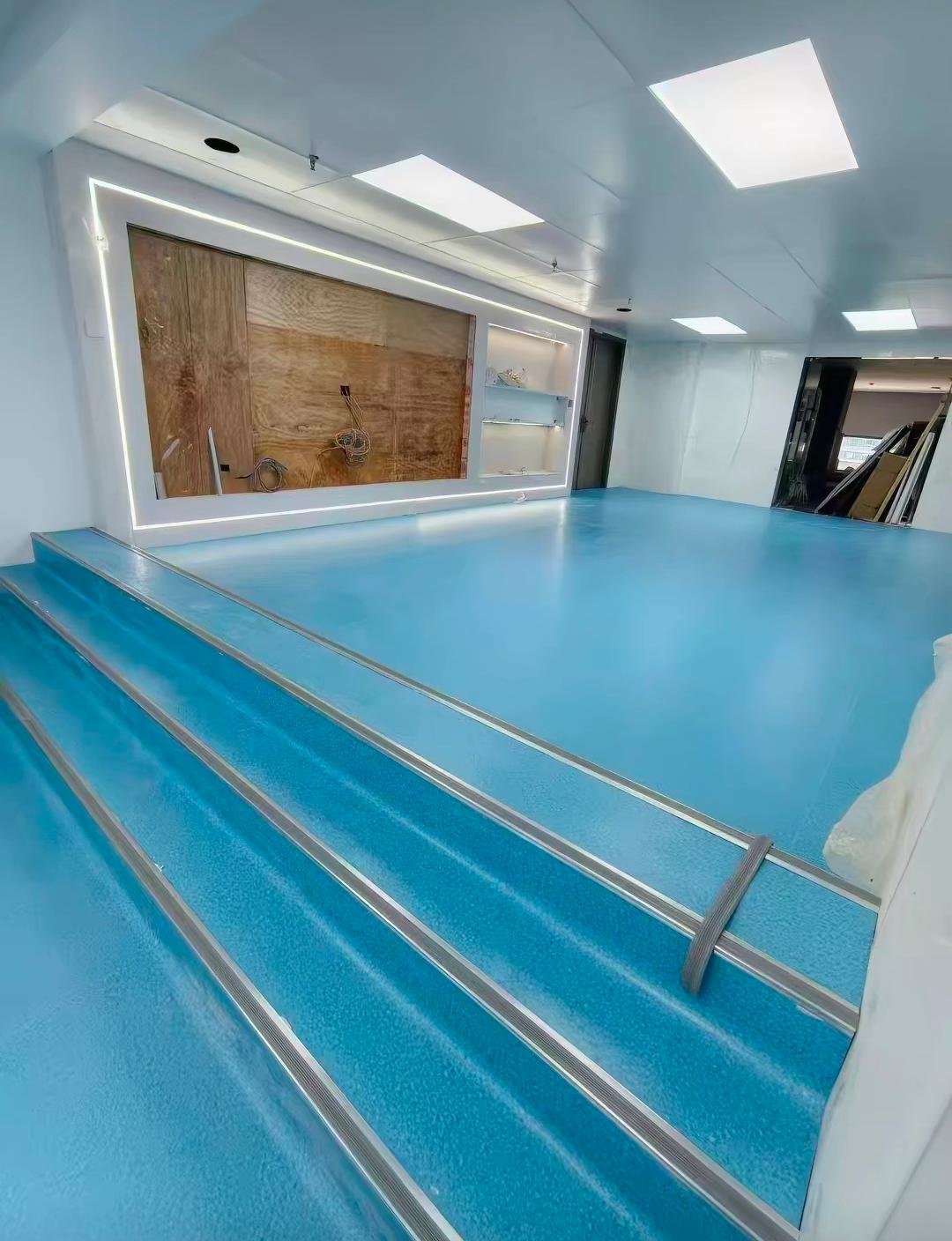
Put more budget into rooms with strict demands, such as a pointe studio. A multipurpose vinyl floor may reduce the need for separate systems, but real savings depend on the product, installation, upkeep, and replacement.
Where the Money Goes Furthest
I would put the larger share of the budget into the room with the most demanding use, and look at multipurpose vinyl for shared rooms. Some schools use portable roll-out vinyl for rooms that change function. Compare quotes for the full system, including installation and care. Following the manufacturer’s care guide can help avoid preventable surface damage, but service life depends on the product, frequency of use, shoes, installation, and upkeep.
| Aanpak | Mogelijk voordeel | Check Before Choosing |
|---|---|---|
| Specialized vinyl in key rooms | Better fit for strict needs | Cost of the full system |
| Multipurpose vinyl in shared rooms | Fewer separate systems | Suitability for every planned activity |
| Portable roll-out vinyl | Flexible room use | Product limits and handling |
With the budget in view, the last step is a final check.
What Should Schools Confirm Before Ordering Vinyl Flooring?
Map how each room is used, shortlist vinyl floors, test them realistically, get the technical documents, and confirm the subfloor, installation, and care plan.
Final Checklist
| Stap | Actie |
|---|---|
| 1 | List the styles, shoe types, and hours of use for each room |
| 2 | Decide which rooms need a dedicated vinyl and which can share |
| 3 | Shortlist products and request samples |
| 4 | Test samples with real shoes, then test an installed area for major projects |
| 5 | Ask for the test method behind any friction figure |
| 6 | Confirm product limits, such as for tap shoes |
| 7 | Check the subfloor and installation system |
| 8 | Get written care instructions |
A short audit of room use takes little time and gives your vinyl flooring supplier the information needed to advise you well.
Conclusie
Choose each vinyl floor by how the room is used. Test realistically, ask for clear data, and match surface, system, and care to the dancers.