


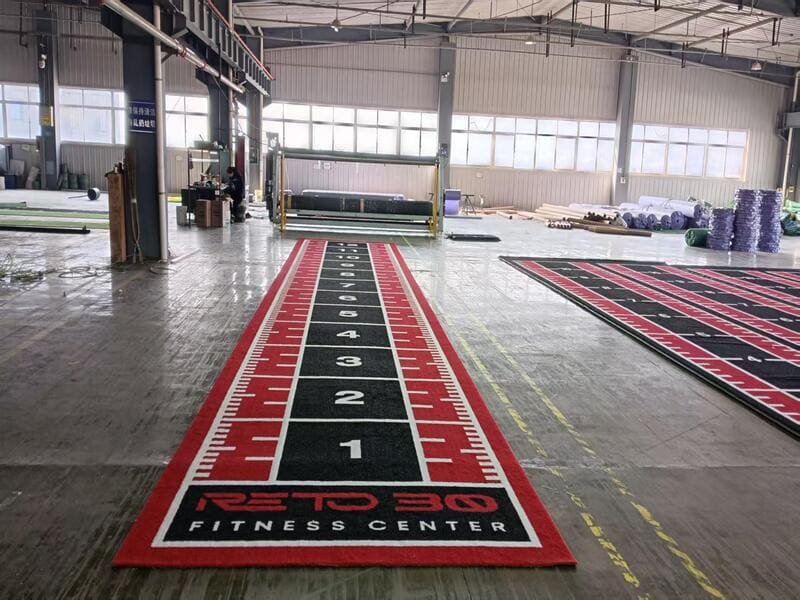
To remove chalk and dust from gym turf safely, you must use a high-filtration vacuum for dry extraction followed by low-moisture spot cleaning with pH-neutral solutions. Avoid harsh chemicals and high-heat tools to ensure the synthetic polyethylene fibers remain intact and maintain their structural integrity over time.
As a production manager who oversees the manufacturing of thousands of square meters of gym turf, I see many facility owners ruin their investment within the first year. The problem is not just how the turf looks but how it functions. When white chalk stains and fine dust settle into the pile, they do more than just make the gym look dirty. These particles are actually sharp. From a manufacturing perspective, the yarn is designed to be resilient, but constant friction from abrasive particles can lead to premature thinning of the fiber walls. I often tell my clients that cleaning is not just about aesthetics; it is about protecting the molecular bond of the polymer. If you use the wrong method, you might save time today but you will spend thousands on a replacement floor much sooner than expected.
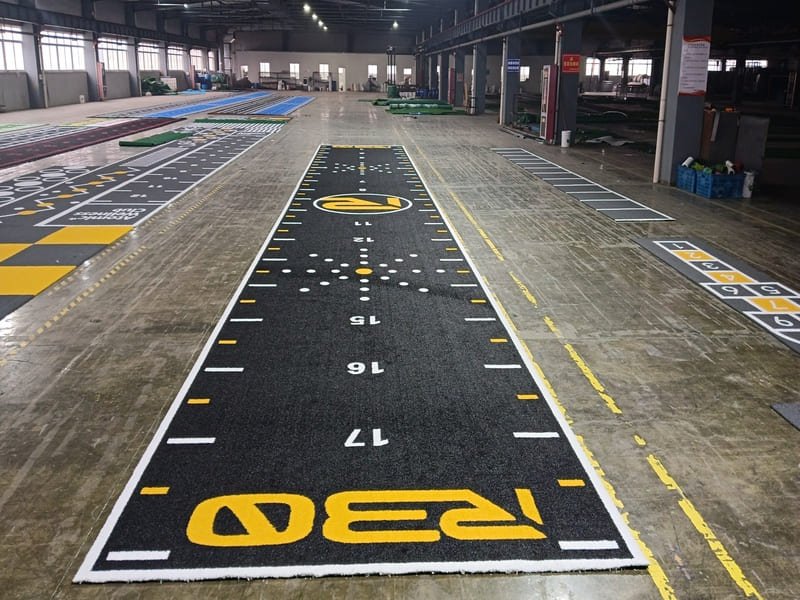
I will now explain why typical cleaning habits fail and how you can apply a professional manufacturing-grade maintenance routine to your facility.
Why Do "Standard" Cleaning Methods Often Fail?
Standard cleaning fails because gym turf has a dense pile that traps fine particles at the base through static electricity. Traditional sweeping or hosing down the floor often results in "muddying" the chalk or pushing dust deeper into the backing where it cannot be reached by basic tools.
| Reinigingsmethode | Major Failure Point | Impact on Turf Fiber |
|---|---|---|
| Standard Sweeping | Moves surface dust only | Particles remain at the base and cause friction |
| High-Pressure Hosing | Traps water under backing | Leads to mold and adhesive breakdown |
| Harsh Detergents | Chemical imbalance | Makes polyethylene brittle and prone to breaking |
In our factory, we test the durability of gym turf using various mechanical stresses. We found that the biggest threat to indoor turf is "The Static Trap." Because synthetic grass is a plastic product, it naturally builds up a static charge during use. This charge acts like a magnet for magnesium carbonate (lifting chalk). If you only use a broom, you are fighting physics. Furthermore, many indoor gyms lack floor drains. When you soak the turf with a hose, the water has nowhere to go. It sits between the rubber backing and the concrete floor. This causes the glue to fail. From a technical standpoint, the chemical sensitivity of the yarn is also a factor. Most gym turf is made of polyethylene (PE). Bleach or high-pH cleaners strip the UV stabilizers and antioxidants from the plastic. This makes the fibers lose their color and strength.
You must understand the specific tools required to bypass these common mistakes.
What Are the Essential Tools for a "Safe" Cleaning Kit?
The essential kit must include a HEPA-filter vacuum with adjustable height, a nylon-bristled turf rake, and a pH-neutral cleaning solution. These tools allow you to remove deep-seated dust mechanically without using heat or abrasive metal parts that could tear or melt the synthetic grass blades.
| Gereedschap Categorie | Recommended Item | Technische reden |
|---|---|---|
| Extractie | HEPA stofzuiger | Captures 99.9% of fine chalk dust particles |
| Agitatie | Nylon Turf Rake | Lifts the pile without scratching the yarn surface |
| Chemisch | pH-neutrale zeep | Maintains the chemical stability of the polymer |
In my years of production, I have seen people try to use wire brushes or industrial steam cleaners. This is a disaster. Wire brushes create micro-scratches on the fibers which then collect even more dust. Steam cleaners can exceed the melting point of the yarn, which is often around 100°C to 120°C for PE. I suggest building a "Safe Kit" centered on mechanical extraction. A HEPA vacuum is non-negotiable because it prevents the fine chalk from being blown back into the air and onto the turf. For the solution, a simple mix of water and a small amount of white vinegar or a professional-grade neutral cleaner is best. These do not leave a film. A film on the turf acts like glue for the next round of chalk dust, creating a cycle of dirt that is very hard to break.
Once you have the right tools, you must follow a specific order of operations to get results.
How Do You Remove Heavy Chalk Stains Step-by-Step?
Removing heavy chalk requires a four-step process: dry extraction to pull out loose powder, targeted agitation with a nylon brush to break up caked areas, spot treatment with a damp microfiber cloth, and a low-moisture rinse to finalize the surface without saturating the backing.
| Step Number | Actie | Doel |
|---|---|---|
| Stap 1 | Droog zuigen | Remove 80% of loose chalk before adding moisture |
| Stap 2 | Nylon Agitation | Lift caked-on chalk to the surface |
| Stap 3 | Microfiber Blotting | Dissolve and lift remaining white stains |
| Stap 4 | Mist Rinse | Remove any remaining cleaning residue |
The most common mistake is adding water too early. If you spray a chalk stain with water, you create a liquid paste that flows down into the turf backing. Once that paste dries, it becomes hard like concrete. As a production expert, I recommend "Dry Extraction" as your primary weapon. Use the vacuum first. If the chalk is caked from sweat and pressure, use the nylon rake to break it into powder, then vacuum again. For the spot treatment, do not pour water on the spot. Dampen a microfiber cloth and blot the area. This uses capillary action to lift the chalk into the cloth. This "low-moisture" approach is the only way to ensure the glue under your turf stays dry and the floor remains stable for heavy sled pushes or sprints.
Managing the daily accumulation of dust is just as important as removing big stains.
What Is the Best Way to Manage Fine Dust in High-Traffic Zones?
The best way to manage fine dust is to use dry microfiber mops daily and set a weekly schedule for deep vacuuming. Microfiber mops use a slight static charge to pull "fines" (microscopic dust) off the surface before they have a chance to settle deep into the turf pile.
| Frequentie | Vereiste actie | Target Area |
|---|---|---|
| Dagelijks | Microfiber Mopping | Main walking paths and sled tracks |
| Wekelijks | HEPA-stofzuigen | Full surface area including edges |
| Driemaandelijks | Diepe Scrub | High-traffic zones near chalk buckets |
In manufacturing, we call the smallest particles "fines." These are the most dangerous because they are small enough to get into the gaps of the turf backing. Once they are there, they stay there. To prevent this, your staff should run a dry microfiber mop over the turf every night. It takes ten minutes but saves hours of deep cleaning later. For gyms with high foot traffic, you must also consider the "Frequency Guide." If you have 500 people a day walking on your turf, a weekly vacuum is not enough. You need to vacuum every two days. I always advise my clients to check the "crush" of the fiber. If the fibers are lying flat, they are trapping more dust. Using a rake to pull them upright once a week helps the vacuum reach the very bottom of the turf where the dust hides.
There are several common practices that you must avoid to prevent permanent damage.
What Activities Will Permanently Damage Your Turf Fibers?
You must never use high-speed rotary buffers, wire brushes, or oil-based solvents on gym turf. These actions cause friction burns that melt the yarn, structural scratches that weaken the fibers, or chemical reactions that dissolve the secondary backing and tuft-bind of the grass.
| Prohibited Action | Gevolgschade | Repareerbaarheid |
|---|---|---|
| Rotary Buffing | Fiber Melting / Friction Burn | Irreversible |
| Wire Brushing | Fibrillation / Splitting | Irreversible |
| Oil-Based Cleaners | Backing Delamination | Requires replacement |
From a factory standpoint, the "Friction Burn" is the most common reason for warranty claims being denied. High-speed buffers designed for hard floors generate too much heat. Synthetic grass is a thermoplastic; it will melt and turn into a hard, slick surface that is dangerous for athletes. Also, watch out for "Infill Integrity." If your turf uses sand or rubber infill for stability, using a shop-vac with too much suction can pull out the infill along with the dust. This makes the turf "wrinkle" and move underfoot. Finally, avoid anything with a high oil content. Oils can seep into the backing and weaken the latex or polyurethane coating that holds the grass blades in place. Once that coating fails, the grass blades will start to pull out in clumps.
Prevention is always more cost-effective than cleaning or repair.
How Can You Proactively Prevent Chalk and Dust Buildup?
You can prevent buildup by using liquid chalk instead of block chalk, placing entry mats at all gym entrances, and enforcing a strict "Chalk Bucket" policy. These steps reduce the amount of loose powder that ever reaches the turf fibers, significantly lowering your maintenance labor and costs.
| Preventiemethode | Voordeel | Doeltreffendheid |
|---|---|---|
| Liquid Chalk | Eliminates airborne dust | Zeer hoog |
| Entry Matting | Catches outdoor debris | Hoog |
| Chalk Stations | Localizes the mess | Medium |
In my experience working with large-scale gym projects, the most successful facilities are the ones that control the source of the mess. Block chalk is the enemy of gym turf. When athletes clap their hands with block chalk, a cloud of magnesium carbonate settles over a 5-meter radius. Switching to liquid chalk can reduce your cleaning time by 70%. Additionally, the dust in your gym isn’t just chalk; it is also dirt from outside. High-pile entry mats are a simple engineering solution. If you catch the dust at the door, it never reaches the turf. I also suggest putting your chalk buckets as far away from the turf as possible. If the chalk is on the rubber floor, it is much easier to mop up than if it is inside the grass pile.
Conclusie
Protecting gym turf requires dry extraction and gentle chemicals. This ensures long-term ROI and safety.
If you have any questions regarding the production process, maintenance, or bulk procurement of gym turf, feel free to send me a private message. I can provide you with professional manufacturing solutions and technical support.