


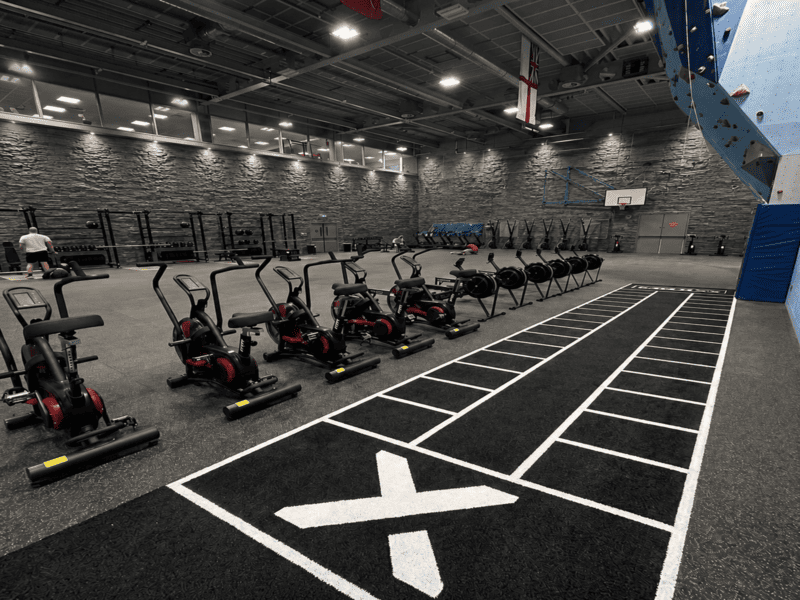
Calculating custom gym turf lead time requires adding pre-production design approval, factory manufacturing time, port handling, and final ocean or air transit days together.
To get a reliable delivery date, you must look past simple production timelines and map out every single logistical step from the factory floor to your gym floor. As a production manager, I see many gym owners and distributors face major project delays because they think production time is the same as total lead time. When you order standard turf rolls, the material is already on shelves ready to load, but custom turf demands engineering modifications like tufting specific functional lines or logos directly into the primary backing material. This customization requires raw material checks, machine recalibration, and specialized secondary coating processes that change your delivery timeline completely. We must break down this process with engineering data to help you calculate an exact schedule and avoid paying rent on an empty, unopened fitness facility.
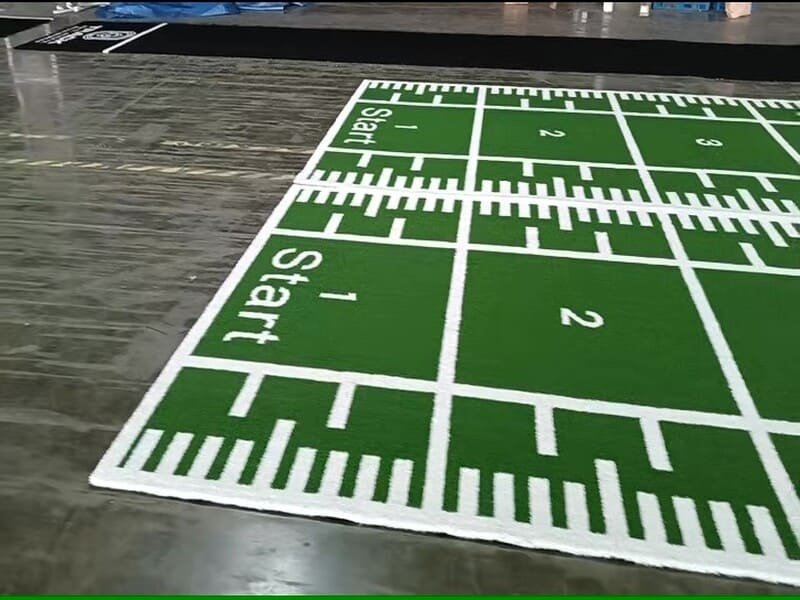
Let us look at the detailed stages of this manufacturing and shipping timeline so you can plan your gym setup without costly errors.
What Exactly is Lead Time for Custom Gym Turf?
Total lead time is the whole period from your initial deposit payment and CAD design sign-off to the day the turf rolls arrive at your venue.
| Timeline Stage | Average Time Range | Key Operational Focus |
|---|---|---|
| Pre-Production Processing | 1 – 7 Days | CAD layout approval, yarn specification confirmation, and deposit payment processing. |
| Manufacturing & Coating | 10 – 20 Days | Tufting custom patterns, polyurethane or SBR latex application, oven curing, and QC tests. |
| Port Logistics & Export | 3 – 7 Days | Inland trucking to export hub, export customs declaration, and ocean vessel loading. |
| Shipping & Last-Mile Transit | 15 – 45 Days | Ocean freight transit, import customs clearance, and local flatbed truck delivery. |
Technical Definition and Engineering Formula
You cannot measure custom manufacturing by production days alone because technical milestones control when work starts. I use a fixed formula to manage our factory floor schedules and set shipping dates for international clients:
$$\text{Total Lead Time} = \text{Pre-Production Processing} + \text{Manufacturing Time} + \text{Logistics \& Transit}$$
From an engineering standpoint, manufacturing time is highly dependent on material specifications like pile height, gauge, and stitch rate. For example, a heavy-duty sled track turf with a 15mm pile height and a high stitch rate of 25,000 stitches per square meter takes longer to tuft than low-density decorative turf. Our machinery runs at set speeds to ensure yarn uniformity, which means high-density functional turf requires more machine hours.
The Role of Design Approvals in Lead Time
The timeline equation only begins when the design file receives technical approval. If a client sends a low-resolution logo file instead of a clean vector file, our design team must spend days recreating the layout in CAD format. Production cannot start until you sign off on the exact dimensions, logo placement, and boundary lines. Any delay in this initial step pushes the entire factory schedule back.
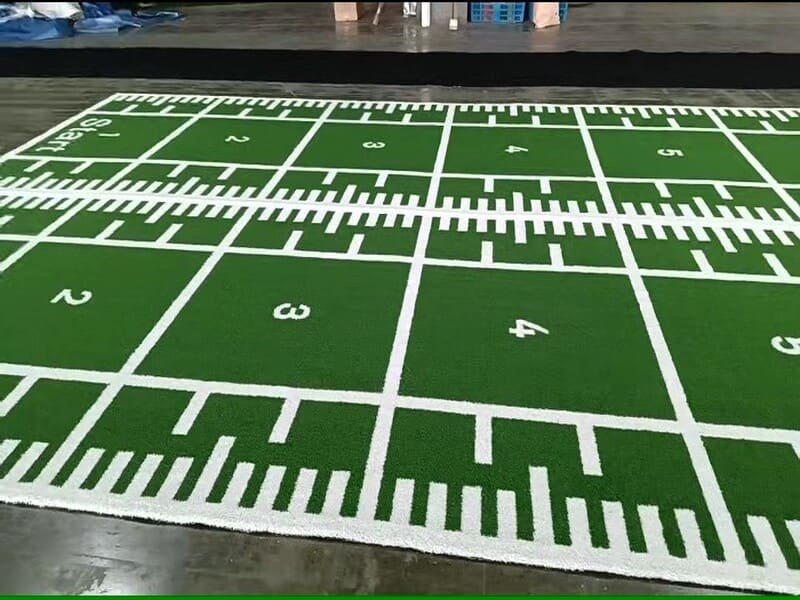
We will now look at each stage of the production pipeline to show you how these components work together.
What Are the 4 Key Stages of Custom Turf Lead Time?
The four key stages are pre-production design confirmation, factory manufacturing, export port handling, and shipping transit.
| Production Stage | Minimum Days | Maximum Days | Primary Bottleneck Risk |
|---|---|---|---|
| Stage 1: Design & Pre-Prod | 1 | 7 | Slow vector file submission or bank payment delays. |
| Stage 2: Factory Manufacturing | 10 | 20 | High backing humidity or custom yarn shortages. |
| Stage 3: Port & Customs | 3 | 7 | Export inspection queues or documentation errors. |
| Stage 4: Ocean/Air Transit | 15 | 45 | Port congestion or bad weather at sea. |
Stage 1: Pre-Production & Design Confirmation (1–7 Days)
Custom turf production requires complete structural alignment before any machine starts running. In this first phase, our engineering team takes your branding sketches and transforms them into a technical CAD drawing that defines the precise tufting grid. We must cross-check your requested performance variables, including pile height, yarn denier, and stitch rate, against our machinery constraints. If your team requests custom functional line markers, we map out the exact gauge requirements to make sure the contrasting yarns mesh perfectly with the main green turf body. This stage also covers formal yarn color matching and bank payment verification for your initial production deposit.
Stage 2: The Manufacturing Pipeline (10–20 Days)
Once technical drawings are locked, the order moves directly onto the physical factory floor. The process begins with tufting, where heavy mechanical needle bars weave the polyethylene synthetic yarn into a high-strength polypropylene primary backing. For complex logos or multi-color functional grids, our technicians must execute precise custom inlays or program specialized tufting sequences. The loose yarn loops are then secured via a backing application line, where we apply a uniform layer of liquid polyurethane (PU) or SBR latex. This raw material then travels through a long drying oven under strict temperature controls to cure the backing material. Finally, our quality control team tests the rolls for structural metrics like tuft bind strength and dimensional stability before cutting, rolling, and wrapping the turf in heavy-duty protective plastic packaging for export export.
Stage 3: Port Handling & Customs Clearance (3–7 Days)
When the custom rolls leave the production line, they enter the export logistics buffer zone. We arrange specialized inland flatbed trucking to transport the massive, heavy rolls from our warehouse loading dock directly to the regional container port terminal. At the port, our logistics specialists complete the mandatory export customs declaration and prepare your crucial international shipping paperwork, which includes the Commercial Invoice, detailed Packing List, and the Bill of Lading. The wrapped turf rolls are then carefully transferred and secured inside standard sea freight containers to prevent shifting or crush damage before being craned onto the scheduled ocean vessel.
Stage 4: Shipping & Final Delivery (15–45 Days)
The final transit duration depends completely on your chosen shipping method and your final geographic destination. Traditional ocean freight stands as the most economical option for bulk commercial flooring, taking roughly 15 to 25 days for transit from Asian ports to the US West Coast, and up to 35 to 45 days to reach the US East Coast or European hubs. For small, highly urgent replacement pieces or specialized samples, air express cargo can shrink this transit window down to 5 to 10 days. The phase finishes with last-mile delivery, where local freight trucks transport the turf from your local destination port or regional logistics warehouse straight to your commercial fitness facility doorstep.
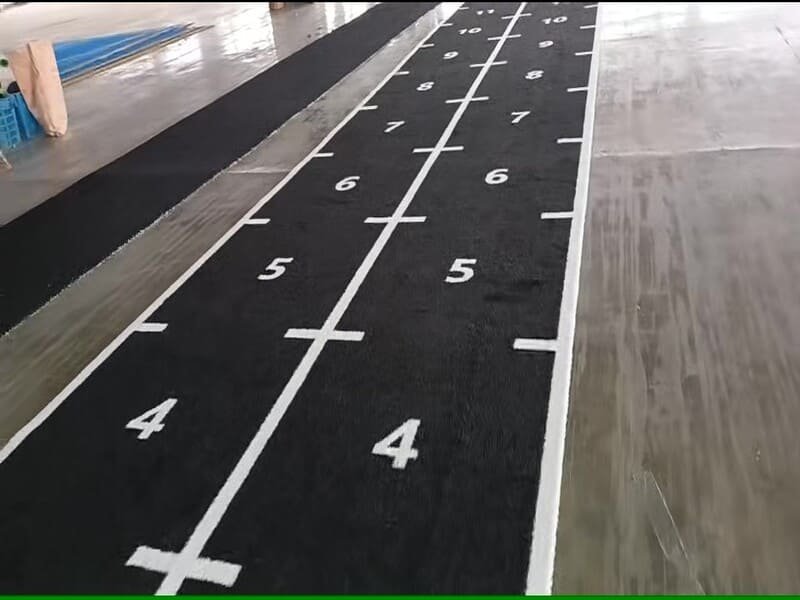
Let us look next at the specific variables that can delay these steps during production.
What Crucial Factors Can Delay Your Custom Turf Order?
Order complexity, raw yarn availability, peak factory seasons, and ambient weather conditions can delay your custom turf order.
| Delay Risk Factor | Impactniveau | Potential Timeline Increase | Preventiestrategie |
|---|---|---|---|
| Intricate Logo Design | Medium | 3 – 5 Days | Use standard fonts and clean vector files. |
| Non-Standard Yarn Color | Hoog | 7 – 14 Days | Choose stock factory colors for lines. |
| Peak Holiday Rush | Kritisch | 10 – 20 Days | Book factory production slots 3 months early. |
| High Ambient Humidity | Laag | 2 – 4 Days | Use polyurethane backing options. |
Technical Obstacles on the Factory Floor
High design complexity slows down our tufting speeds. A simple 2-meter wide sled track with basic white border lines runs quickly through our machinery. However, if your design includes an intricate functional zone grid with numbers, agility dots, and a multi-colored brand logo, our technicians must stop the machines frequently to change yarn spools or manually insert specific turf segments. Material shortages also cause delays. Factory warehouses keep massive stocks of standard green yarn, but custom colors like neon pink or specific brand blues require a custom yarn extrusion run if stock runs low. This adds at least a week to the front end of manufacturing.
Pre-Contract Checklist for Buyers
- Design Files: Have you provided high-resolution vector files (.AI, .EPS, or CAD) for all logos and custom functional zone lines?
- Backing Choice: Did you confirm if your order uses SBR latex or fast-curing, heavy-duty polyurethane (PU) backing?
- Yarn Specifications: Are you using standard factory colors for your agility tracks to avoid custom extrusion delays?
- Shipping Terms: Is your freight quote door-to-door (DDP) or port-to-port (FOB), and have you calculated last-mile flatbed delivery?
- Safety Buffer: Have you added at least 14 days of buffer time to your calculations to account for customs clearance or weather issues?
If you are planning a new fitness facility project, trying to optimize your build schedule, or need exact container loading specifications for custom turf rolls, send me a private message right now. I will personally review your CAD sketches, verify material availability, and build a detailed production schedule for your gym brand.