


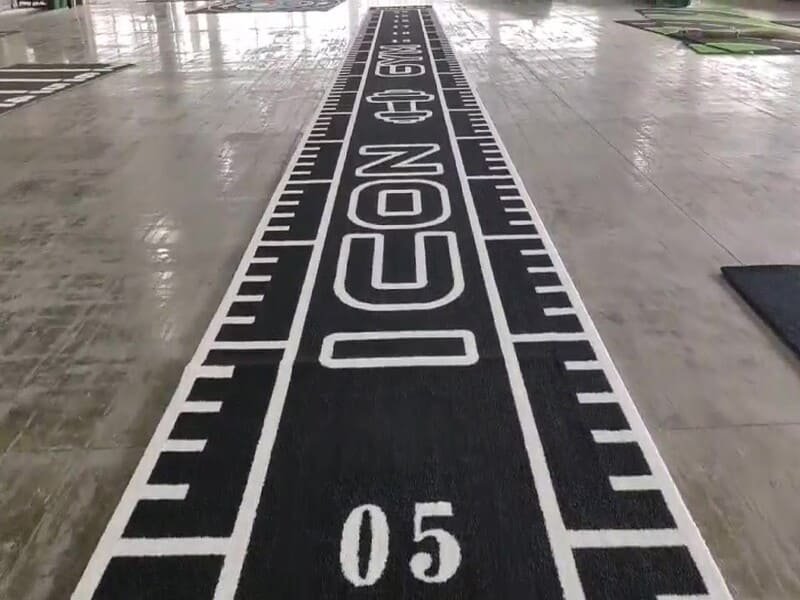
Om grasbanen voor groepslessen te ontwerpen, moet je je primaire trainingen evalueren, een baanbreedte van 1,5 tot 2 meter instellen, een grasmat met een poolhoogte van 15 tot 20 mm en een hoge steekdichtheid kiezen, een volledig uitgespreide lijminstallatie gebruiken en ingebouwde functionele markeringen toevoegen om leden veilig te begeleiden.
Het ontwerpen van de perfecte grasmat voor sportscholen vereist een goede balans tussen ruimtelijke planning en materiaalontwerp. Wanneer ik in de vroege ontwerpfase met eigenaren van sportscholen werk, zie ik dat veel mensen gras als een eenvoudige esthetische keuze zien. Groepsfitness stelt echter hoge fysieke eisen die een gestructureerde aanpak vereisen. We moeten kijken naar hoe meerdere lichamen op hoge snelheid bewegen binnen een kleine ruimte. Als je geen rekening houdt met de fysieke krachten van zware sledes en snel voetenwerk, zal je grasmat het snel begeven. We moeten de technische onderdelen van de lay-out, de hechting van de ondervloer en de garenkeuzes uitsplitsen. Deze aanpak zorgt ervoor dat uw investering miljoenen high-impact stappen overleeft.
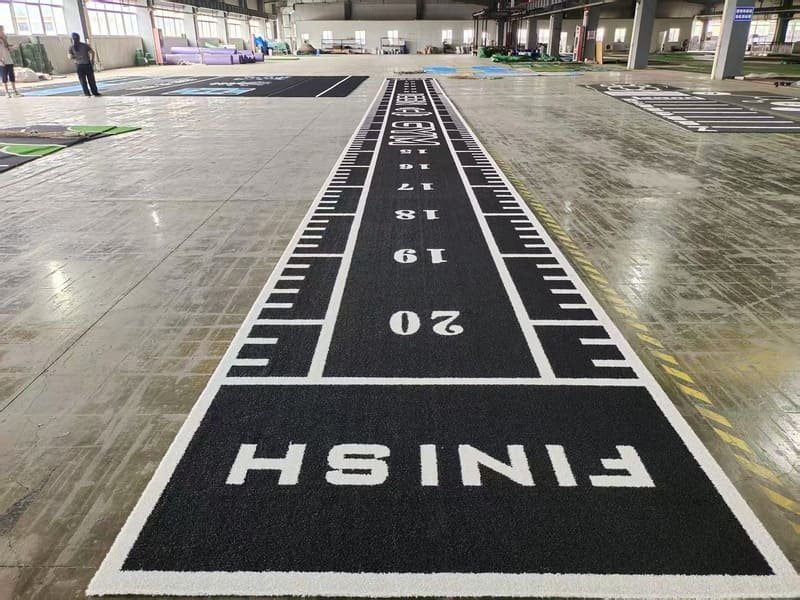
Laten we eens diep ingaan op de specifieke stappen om een veilige, goed presterende groepsfitnessruimte te bouwen.
1. Hoe analyseer je de vereisten voor groepslessen?
Om de vereisten voor groepslessen te analyseren, moet je de exacte workouts in kaart brengen, het totale aantal deelnemers berekenen en de ruimte meten die nodig is voor de opslag van apparatuur aan het einde van de banen.
| Soort activiteit | Ruimte nodig | Impactniveau | Primaire uitrusting |
|---|---|---|---|
| Sledetraining | Lange lineaire rijstroken | Hoge wrijving | Gewogen sleeën |
| Behendigheidsoefeningen | Breed open rooster | Hoge zijdelingse kracht | Kegels, ladders |
| Vloerwerk | Compacte bufferzones | Lage impact | Kettlebells, matten |
Als ik advies geef over grasmatprojecten, begin ik altijd met het dagelijkse trainingsschema. Als uw lessen gericht zijn op zware sleeduwoefeningen, moet uw grasmat een hoge tuft bindsterkte hebben om de immense wrijving aan te kunnen. Voor behendigheidsoefeningen is zijdelingse stabiliteit de belangrijkste prioriteit zodat leden niet uitglijden. Je moet de maximale capaciteit van je groep berekenen om overbevolking te voorkomen. Elk lid heeft genoeg ruimte nodig om veilig met een kettlebell te zwaaien of te springen. Ik zie vaak dat sportscholen de integratie van apparatuur vergeten. Je moet minstens 2 meter vrije ruimte overlaten aan het einde van de banen. Deze ruimte is essentieel voor het opbergen van sledes, battle ropes en plyo boxen zonder de trainingszone te blokkeren.
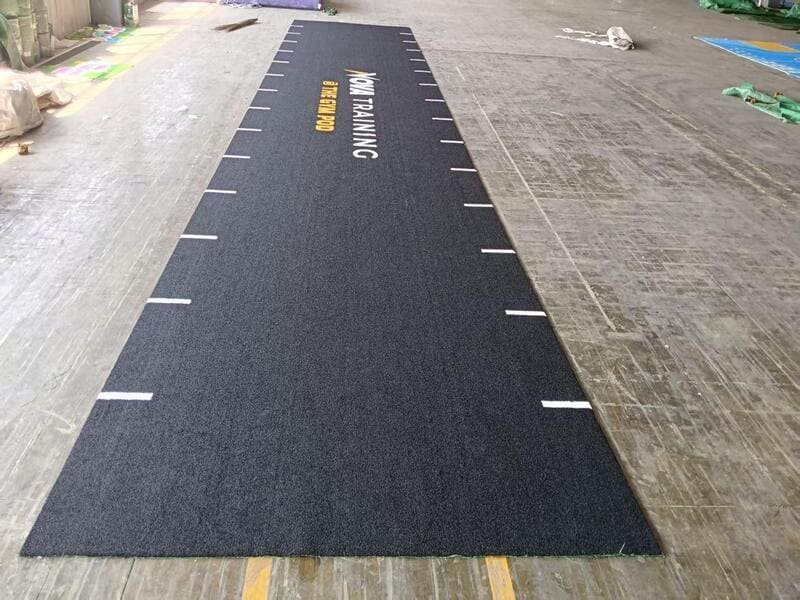
Een verkeerd ruimtelijk plan verpest de doorstroming in je klas, dus laten we eens kijken naar de exacte afmetingen die je nodig hebt.
2. Wat zijn de optimale afmetingen en lay-outstrategieën?
Optimale afmetingen vereisen een lengte van 10 tot 25 meter voor sleeën, een breedte van 1,5 tot 2 meter per baan voor een veilige lichaamsruimte en vrije bufferzones uit de buurt van vrije gewichten en toegangsdeuren.
Ruimtelijke dimensies voor functionele training
| Ontwerpelement | Standaard metrisch | Keizerlijk equivalent | Hoofdfunctie |
|---|---|---|---|
| Lengte rijstrook | 10m - 25m | 30ft - 80ft | Afstand sleeën |
| Breedte rijstrook | 1,5m - 2,0m | 1m50 - 1m60 | Afstand enkel lid |
| Bufferzone | 0,5m - 1,0m | 1,6 ft - 3,3 ft | Veiligheidsscheiding |
In mijn productie-ervaring voorkomt het geven van duidelijke nummers aan je baan grote installatiefouten. Een lengte van 10 meter is het minimum voor een echte sledetraining, maar 20 meter is het beste. Wat de breedte betreft, werkt 1,5 meter voor basislopen, maar je hebt 2 meter nodig als leden vloerwerk doen zoals burpees. Verkeersdoorstroming is een andere belangrijke uitdaging. Je moet de grasmatten uit de buurt van je hoofdingang plaatsen om te voorkomen dat het voetverkeer geblokkeerd wordt. Plaats de grasmatten niet vlak naast spiegels of zware halterrekken. Leden hebben een veilige zone nodig zodat een rollend gewicht niet in de grasbaan terechtkomt tijdens een snelle sprint.
Het kiezen van de juiste afmetingen is slechts de helft van de strijd; je moet een materiaal kiezen dat dit zware gebruik overleeft.
3. Hoe kies je de juiste materiaalspecificaties voor sportschoolgras?
Kies voor een korte poolhoogte van 15 tot 20 mm, een hoog gewicht van meer dan 60oz en een polyurethaan achterkant of een speciaal schokabsorberend kussen om de gewrichten van je leden te beschermen.
| Materiaaleigenschap | Ideale specificatie | Prestatievoordeel |
|---|---|---|
| Stapelhoogte | 15 mm - 20 mm | Vermindert de weerstand van de slee |
| Materiaal garen | 100% Polyethyleen | Hoge duurzaamheid, weinig huidverbranding |
| Type steun | Polyurethaan (PU) | Bestand tegen vocht en scheuren |
Ik zie vaak dat sportschoolhouders goedkope graszoden kopen bij plaatselijke bouwmarkten, wat een grote vergissing is. Graszoden hebben lange, zachte sprieten die onmiddellijk mat worden onder een slee. Voor groepsfitness heb je een dicht, getextureerd polyethyleengaren nodig. Een poolhoogte van 15 tot 20 mm laat de slee glijden met constante weerstand. Je moet de steeksnelheid en de sterkte van de tuftbinding controleren. Een hoge tuft bind voorkomt dat de graslussen uittrekken tijdens intensieve trainingen. De standaard PU-rug biedt een grote duurzaamheid, maar een bijgevoegd schuimkussen zorgt voor een uitstekende schokdemping voor intensieve groepstrainingen.
Als je eenmaal een duurzaam materiaal hebt gekozen, kun je een visueel ontwerp gebruiken om je trainingssessies te begeleiden.
4. Hoe plan je visueel ontwerp, markeringen en aanpassingen?
Gebruik ingelegde getufte lijnen in plaats van geverfde lijnen voor duurzaamheid op de lange termijn, neem ingebouwde nummers of behendigheidsladders op en kies donkere kleuren zoals zwart of grijs om vuil en krijt te verbergen.
| Type markering | Productiemethode | Levensduur | Beste gebruikscasus |
|---|---|---|---|
| Ingelegde lijnen | Getuft tijdens productie | Permanent | Grenzen van rijstroken, nummers |
| Geschilderde lijnen | Oppervlakte spuitverf | Korte termijn | Tijdelijke evenementmarkeringen |
| Logo inzetstukken | Precieze waterstraalsnede | Permanent | Brandingzones in het midden |
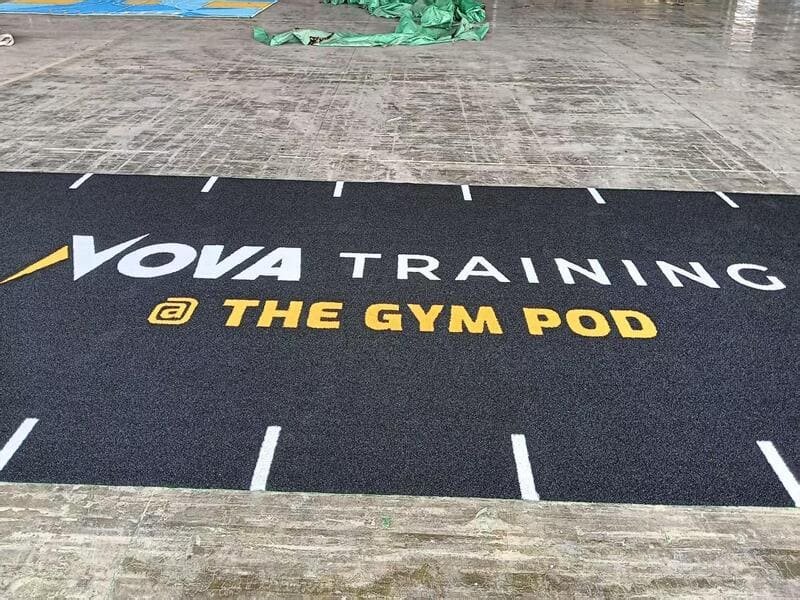
Als specialist in maatwerk vertel ik klanten altijd dat ze geverfde lijnen moeten vermijden. Verf slijt binnen een paar maanden door de wrijving van schoenen en sledes. Ingelegde lijnen maken gebruik van gekleurd garen dat direct in de achterkant is getuft, dus ze vervagen nooit. Je kunt functionele markeringen zoals afstandsnummers, hashmarkeringen en behendigheidsrasters direct in de lay-out inbouwen. Dit ontwerp helpt coaches om klassen sneller te laten verlopen omdat ze de leden gewoon kunnen vertellen dat ze naar lijn vijf moeten rennen. Wat kleuren betreft, traditioneel groen verliest aan populariteit. Veel moderne sportscholen kiezen voor zwart, donkergrijs of diep marineblauw. Deze donkere kleuren passen bij de moderne huisstijl en verbergen zweet, vuil en tilkrijt.
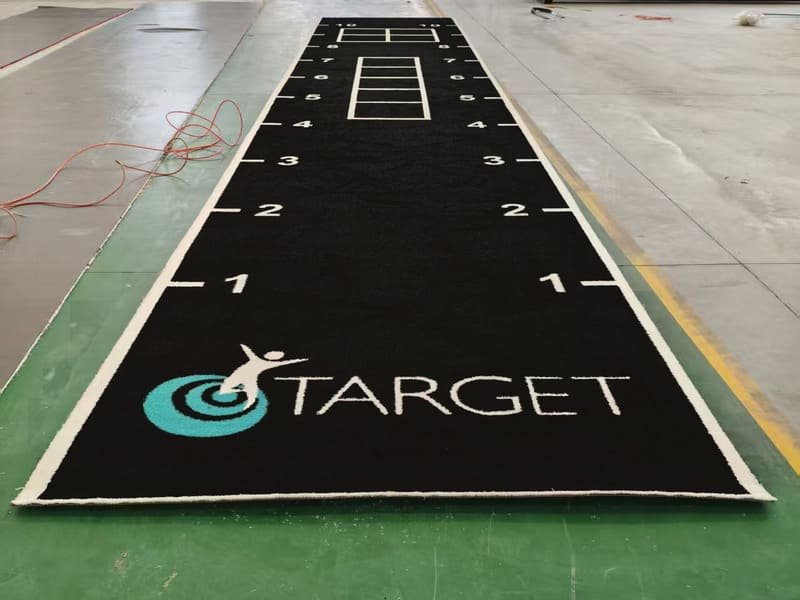
Een mooi ontwerp zal mislukken als de grasmat verschuift, waardoor een goede installatie essentieel is.
5. Wat zijn de installatievereisten voor drukbezochte ruimten?
Zorg ervoor dat de betonnen ondervloer vlak en droog is, breng een polyurethaanlijm over de volledige breedte aan om de graszoden te bevestigen en gebruik overgangstrips met een laag profiel om de graszoden gelijkmatig te verbinden met de omliggende rubberen vloer.
| Type ondervloer | Voorbereidingsvereiste | Kleefmethode | Risico op mislukking |
|---|---|---|---|
| Glad beton | Egalisatiemiddel, droog | PU-lijm over de hele breedte | Zeer laag |
| Houten ondervloer | Schuren, naadafdichting | Sterke tape/lijm | Medium |
| Oneffen beton | Slijpen vereist | Los leggen (geen lijm) | Hoog (bruisend) |
De grootste nachtmerrie voor sportschoolhouders zijn graszoden die bobbelen, verschuiven of afbladderen aan de randen. Dit probleem wordt bijna altijd veroorzaakt door een slechte installatie. Je moet beginnen met een schone, vlakke betonvloer. Vocht in het beton zal de hechting van je lijm vernietigen. Voor zware groepslessen is dubbelzijdige tape niet sterk genoeg. Je moet een volledig gespreide lijmmethode gebruiken met een eersteklas polyurethaanlijm. Een ander kritisch gebied is de overgangszone. Als je grasmat 15 mm dik is en je rubberen vloer 10 mm, dan creëer je een struikelgevaar. Je moet een rubberen overgangsstrip gebruiken of de ondervloer opvullen om het oppervlak perfect gelijk te maken.
Na een succesvolle installatie heb je een degelijk onderhoudsplan nodig om de ruimte schoon en fris te houden.
6. Wat zijn de beste onderhouds- en duurzaamheidstips voor turfturf?
Stofzuig de graszoden dagelijks, schrob het oppervlak wekelijks met een grasveilig ontsmettingsmiddel en borstel de vezels regelmatig met een bezem om te voorkomen dat ze gaan vervilten.
| Schoonmaak Taak | Frequentie | Benodigde apparatuur | Belangrijkste voordeel |
|---|---|---|---|
| Stofzuigen | Dagelijks | Commercieel vacuüm | Verwijdert stof en huidcellen |
| Desinfecteren | Wekelijks | Mop of lagedrukspuit | Doodt bacteriën en geurtjes |
| Elektrisch borstelen | Maandelijks | Synthetische bezem met stijve haren | Tilt platte grasvezels op |
Groepsfitnessruimtes verzamelen veel zweet, stof en kalk, wat snel kan leiden tot nare geurtjes. Je moet de grasmat dagelijks stofzuigen met een commerciële stofzuiger met roterende borstel. Gebruik voor het classificeren of ontsmetten een niet-bleekmiddel, grasveilig ontsmettingsmiddel gemengd met water. Spuit het over het oppervlak en veeg het af om bacteriën te doden zonder het synthetische garen te beschadigen. Na verloop van tijd veroorzaakt zwaar sleeverkeer vlakke sporen in de grasmat. Om dit te verhelpen, gebruik je een bezem met stijve synthetische haren om de vezels omhoog te borstelen. Deze eenvoudige taak houdt de pool veerkrachtig en verlengt de levensduur van je vloer met enkele jaren.
Laat ons enkele veelvoorkomende vragen beantwoorden die eigenaars stellen tijdens de ontwerpfase.
7. Veelgestelde vragen over het ontwerp van sportschoolgras?
Kun je zware gewichten rechtstreeks op de grasmat van de sportschool laten vallen?
Nee, je moet zware halters of barbells niet rechtstreeks op standaard sportschoolgras laten vallen. Gras is ontworpen voor wrijving en voetenwerk, niet om gewichten op te laten vallen. Als je gewichten laat vallen, worden de synthetische vezels verbrijzeld en kan de betonnen ondervloer eronder barsten. Als je in je lessen zowel gewichten laat vallen als op een grasmat werkt, moet je een rubberen onderlaag met hoge dichtheid onder de grasmat leggen om de zware schokken te absorberen.
Wat is de minimale ruimte die nodig is voor een grasmat voor functionele training?
De absolute minimumruimte voor een functionele grasmatzone is een enkele baan van 1,5 meter breed en 10 meter lang. Deze grootte geeft je net genoeg ruimte voor één persoon om een compacte slee voort te duwen of lineaire sprints uit te voeren. Als je vlotte groepslessen wilt geven met meerdere stations, moet je streven naar een minimale zonebreedte van 4 tot 6 meter en een lengte van 15 meter.
Hoe krijg je krijt en zweet uit kunstgras?
Om zweet en opgedroogd krijt te verwijderen, moet je de plek eerst grondig stofzuigen om losse deeltjes te verwijderen. Voor diepe vlekken of opgedroogd krijt meng je warm water met een kleine hoeveelheid milde afwasmiddel met een lage pH-waarde. Schrob de vlekken voorzichtig met een nylon borstel en gebruik vervolgens een natzuiger of een schone microvezeldoek om de vuile vloeistof te absorberen. Gebruik nooit agressief bleekmiddel of zure reinigingsmiddelen op synthetisch gras.
Is een schokdempende onderlaag nodig voor grasmatten in groepsklassen?
Een schokdempende onderlaag is niet verplicht voor puur sleeën, maar wordt ten zeerste aanbevolen voor groepsfitnesslessen. Als uw leden belastende bewegingen zoals jump squats, burpees of lunges uitvoeren op de grasmat, beschermt een schuimrubberen schokdemper van 5 tot 10 mm hun knieën en enkels. Het dempt ook het geluidsniveau in uw club tijdens drukke uren.
Conclusie
Het ontwerpen van groepsgrasbanen vereist een zorgvuldige planning van de afmetingen, sterke materialen en een professionele, gelijmde installatie.
Deskundige ontwerphulp nodig?
Als je een nieuwe functionele trainingszone plant of markeringen op maat nodig hebt voor je fitnesscentrum, laat ons dan meewerken aan je project. We bieden professionele materiaalontwikkeling en op maat gemaakte productielay-outs om uw ruimte te optimaliseren.
Stuur me vandaag nog een privébericht voor gratis materiaalstalen, productcatalogi of een direct ontwerpadvies!