


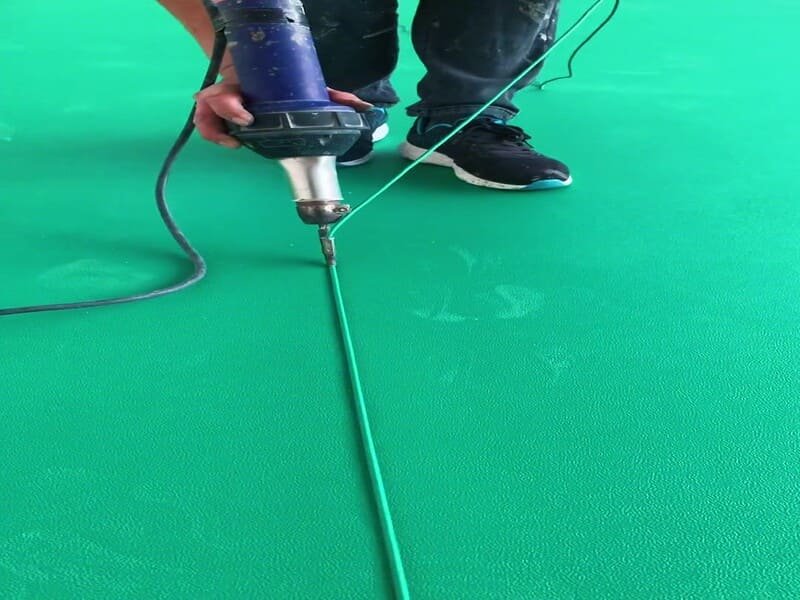
No, not all PVC sheet flooring seams must be heat welded. The required seam method depends first on the flooring manufacturer’s installation instructions and the project specification, then on the hygiene, moisture, and traffic conditions of the space. Heat welding is commonly specified where hygiene, moisture resistance, or heavy traffic matter, while some PVC sheet products allow cold welding or other approved seam treatments in lower-demand areas.
I’ve spent years on job sites watching contractors argue over this exact question, and the answer always comes back to the same starting point: what does the manufacturer’s technical data sheet say, and what does the project specification require? Some homogeneous PVC sheets, like fully welded medical-grade vinyl, call for heat welding on every seam regardless of the room. Other heterogeneous or project vinyl products give installers a choice between heat welding, an approved cold-welding system, or seam sealing, depending on the intended use. The environment still matters, but it’s the second question, not the first. I always tell clients to check the manufacturer’s installation guide before assuming a dry room means an easy seam.
Before you pick a method, it helps to understand what heat welding actually does and how it compares to the alternatives manufacturers allow. Let me walk you through it.
What Is Heat Welding for PVC Sheet Flooring?
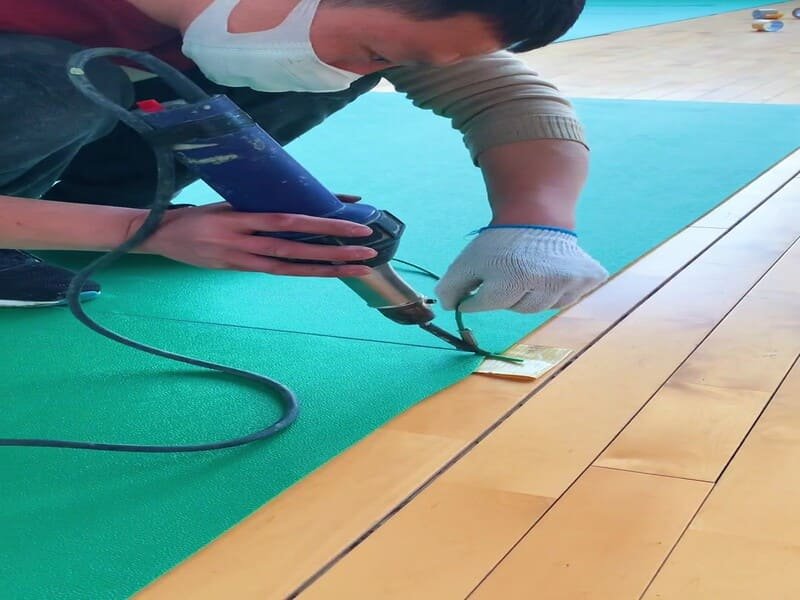
Heat welding grooves the joined PVC edges, melts a matching weld rod into the groove with a hot-air gun, and trims it flush. The result is a mechanically fused, tightly sealed seam.
| Méthode | Comment ça marche | Seam Result |
|---|---|---|
| Soudage à chaud | Thermal fusion with a PVC weld rod | Mechanically fused, sealed joint |
| Soudage chimique à froid | Liquid solvent melts edges together | Chemical bond, near-invisible line |
Heat welding is thermal, cold welding is chemical, and that difference explains why manufacturers specify each one differently. Heat welding physically fuses a rod into the sheet, creating a durable, mechanical joint suited to demanding conditions. Cold welding uses a solvent applied through a fine applicator tube, softening both sheet edges so they bond into one line without added material. It’s a widely approved method for many PVC floor coverings in small to moderate commercial applications, and it leaves a nearly invisible seam. It isn’t approved for every product, though. Some acoustic-backed or specialty vinyl sheets are not compatible with cold welding, which is exactly why the manufacturer’s instructions come first.
Once you understand how the two methods differ, the next question is where manufacturers and project specs actually require welding.
When Is Heat Welding Required for PVC Sheet Flooring?
Heat welding is typically required when the manufacturer’s product specification calls for it, and commonly in healthcare, cleanroom, food service, and heavy rolling-load environments.
Some homogeneous, fully welded vinyl products require heat-welded seams on every installation, independent of the room type, simply because that’s how the system is designed to perform. Beyond product-specific requirements, heat welding is also the common choice in settings where seam performance carries real consequences. Operating rooms, ICUs, and labs need seam treatment that supports strict infection control protocols. Cleanrooms rely on sealed seams to keep particulates and chemical spills from reaching the subfloor. Commercial kitchens, institutional showers, and food processing plants deal with frequent washdowns, and sealed seams help prevent water from working its way underneath. Hospital beds, carts, and other heavy rolling loads put constant stress on seam edges, and a properly welded joint holds up far better than an open one. Flash coving, where the flooring runs up the wall to form a hygienic basin, also depends on continuous welded seams to stay watertight at every transition.
Where welding isn’t specified as mandatory, there’s usually still an approved alternative worth knowing about.
When Can PVC Sheet Flooring Use Another Seam Method?
Some PVC sheet products allow cold welding, seam sealing, or another manufacturer-approved treatment in dry, light-traffic, or residential spaces.
I’ve done plenty of residential and light commercial installs where an approved cold-welding system held up fine for years. Homes and dry offices don’t see the washdowns or rolling loads that push a spec toward heat welding. But the deciding factor is still what the manufacturer permits for that specific product, not just how the room is used. Budget plays a role too, since heat welding needs a groover, a hot-air gun, and a trained installer, which adds cost and time to the job. Where an invisible seam line matters, such as a retail showroom, cold welding is often the preferred look as well, since heat-weld rod leaves a subtle visible line even when color-matched.
With both sides covered, a side-by-side comparison makes the trade-offs easier to see at a glance.
How Do Heat Welding, Cold Welding, and Butt Joints Compare?
Heat welding is generally preferred where seam durability, hygiene, moisture resistance, or heavy traffic are priorities, while approved cold-welding systems suit specific products in lighter-use applications, and unwelded joints only work where the manufacturer permits them.
| Feature / Scenario | Soudage à chaud | Approved Cold Welding | Unwelded / Approved Butt Joint |
|---|---|---|---|
| Résistance à l'humidité | Tightly sealed, high resistance | Good resistance where approved | Depends on product and location |
| Hygiene / Infection Control | Preferred for strict protocols | Suitable for moderate requirements | Only where manufacturer allows |
| Rolling Load Durability | Strong mechanical bond | Suitable for moderate traffic | Depends on installation and use |
| Aspect visuel | Visible seam line | Nearly invisible | Hairline gap visible |
| Skill / Tool Requirement | Higher, specialized tools | Faible à modéré | Faible |
| Relative Installation Cost | Plus élevé | Modéré | Le plus bas |
I’ve seen each of these underperform when used outside its intended scope. An unapproved butt joint in a commercial kitchen opens up within months and traps moisture underneath. Cold welding on a product not rated for it can fail under repeated wheel pressure. Heat welding on a residential job where the manufacturer allows a simpler method just adds unnecessary labor. Matching the method to what the product spec allows, and then to the environment, protects both the floor’s lifespan and the budget behind it.
Skipping the specified method carries real consequences, and I want to walk through exactly what those look like.
What Happens If You Skip a Required Seam Treatment?
Skipping a required heat-welded seam can lead to subfloor moisture damage, bacterial growth in open seams, seam curling, and a voided manufacturer warranty.
I’ve been called in to repair floors where water crept through an open seam and damaged the subfloor beneath it. Once that happens, the affected section usually needs to come up entirely, not just the surface layer. In healthcare settings, trapped organic matter in open joints becomes a genuine infection control concern, which is exactly why hospital specifications are strict about seam treatment. Rolling loads make the problem worse over time, lifting seam edges until they curl and create a trip hazard. On top of the physical damage, manufacturers will typically void the product warranty if their seam specification wasn’t followed, regardless of how the room was used.
None of this means welding is always the right spend, so let’s look honestly at the cost side.
Is Heat Welding Worth the Cost?
Heat welding adds labor, tooling, and weld-rod cost compared with simpler approved seam treatments, but that cost is usually justified wherever the manufacturer or project specification requires it.
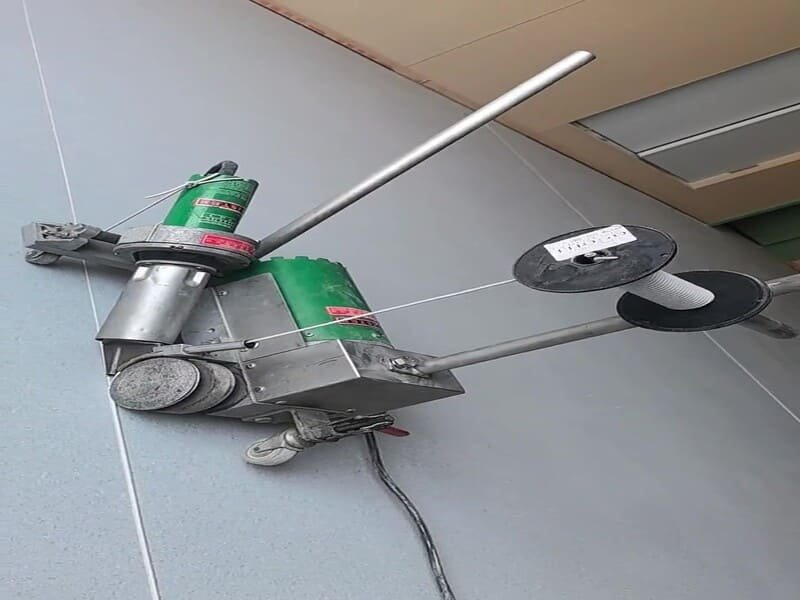
The added cost comes from three places: the weld rod material, specialized tools like groovers and hot-air guns, and the extra labor time needed to groove, weld, and trim each seam correctly. That cost is easy to justify in a hospital or commercial kitchen, where a water damage repair or a failed hygiene inspection would cost far more than the welding itself. In a dry residential space where the manufacturer allows a simpler method, that same spend often isn’t necessary. I encourage clients to weigh the welding cost against what a seam failure would actually cost in their specific environment, not just the price difference on installation day.
To make this decision easier, I put together a simple checklist I use with clients on-site.
How Do You Decide If You Need to Heat Weld Your Floor?
Start with the manufacturer’s installation instructions and project specification, then confirm against hygiene, moisture, and traffic conditions.
- Does the manufacturer’s technical data sheet require heat welding for this product? If yes, weld.
- Does the project specification or building code mandate a specific seam treatment? If yes, follow it.
- Is the space subject to regulatory health or hygiene codes? If yes, heat welding is commonly specified.
- Will the floor be washed down regularly with water or chemicals? If yes, heat welding is commonly specified.
- Will heavy wheel traffic roll over it daily? If yes, heat welding is commonly specified.
- Is it a dry, light-traffic, or residential space where the manufacturer permits another method? If yes, an approved cold weld or seam treatment may work.
I run through this list on every project before quoting seam work, because it keeps the decision grounded in what the product and specification actually require, not just habit or guesswork.
Once you’ve confirmed heat welding is the right call, execution quality matters just as much as the decision itself.
What Are Best Practices for Executing Heat Welded Seams?
Successful heat welded seams depend on proper acclimatization, groove depth appropriate to the sheet construction, calibrated heat and speed, and a two-pass trim.
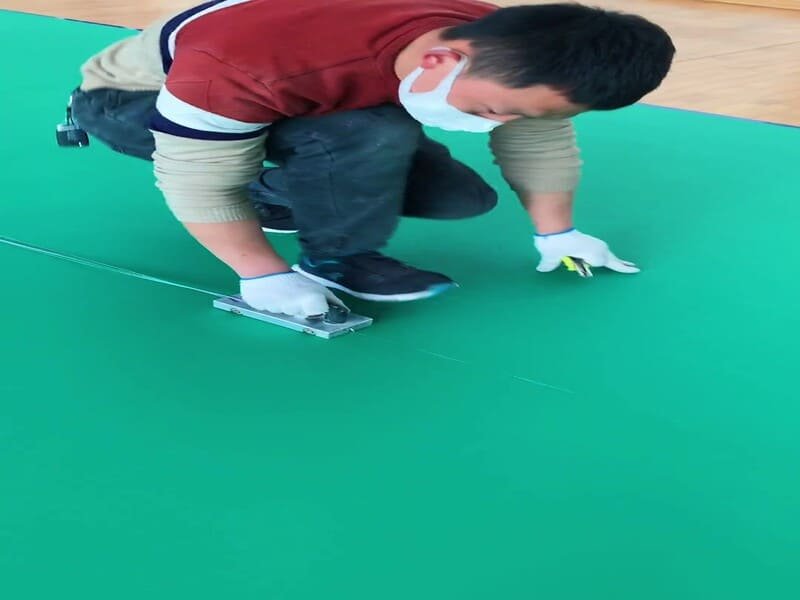
I let PVC sheets and weld rods rest at ambient room temperature before starting, since cold material welds poorly and can crack under pressure later. Groove depth isn’t one-size-fits-all: on homogeneous, fully welded sheets, grooving typically reaches around two-thirds into the sheet thickness, while heterogeneous sheets with a distinct wear layer need groove depth controlled to that wear layer without cutting into the backing. Heat gun temperature and travel speed have to match the specific PVC formulation, since too much heat scorches the rod and too little leaves a weak bond. I always trim in two passes: once while the rod is still warm using a trim guide, then a final flush cut after it cools, which prevents the concave dipping that shows up when installers rush the job.
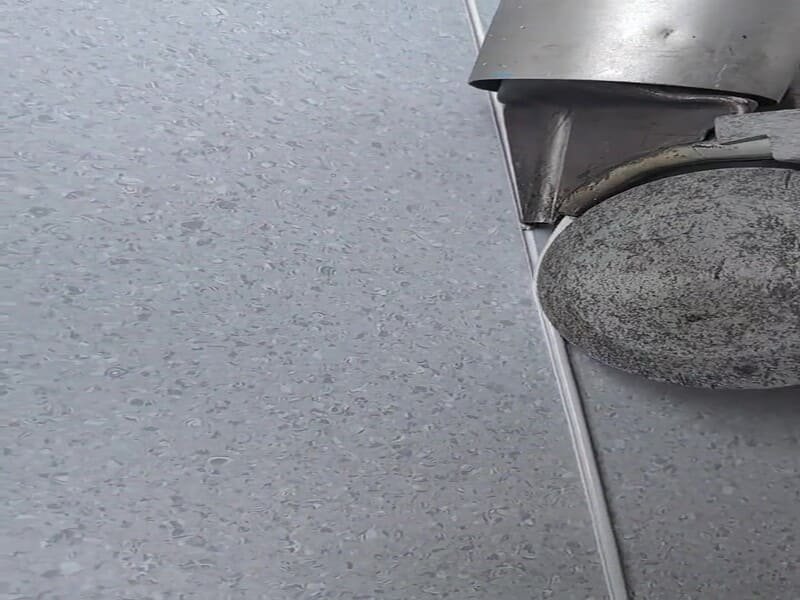
Getting these details right, and matching them to the specific product construction, is what separates a seam that performs for the life of the floor from one that fails early.
Conclusion
Check the manufacturer’s spec first. Weld where hygiene, moisture, or heavy loads demand it, and use an approved alternative where the product allows.
Questions fréquemment posées
Can I mix cold welding and heat welding in the same room?
Yes, where the products used allow it. I’ve done this on projects with mixed-use zones, like an office with an attached wet area, using heat welding in the wet zone and an approved cold-welding system elsewhere to manage cost.
Does color-matched weld rod really disappear visually?
It gets close, but a faint line is usually still visible under direct light. If a fully invisible seam is the priority and the product allows it, cold welding is the better choice.
How long does a heat welded seam typically last?
A correctly executed heat-welded seam is designed to remain serviceable for the life of the flooring, provided the system is installed and maintained according to the manufacturer’s instructions.
Can an existing unwelded floor be retrofitted with heat welding?
Only in limited cases, and only where the product is designed to accept it. If the seams are still tight and the subfloor is dry underneath, a groover and rod can sometimes be added after the fact, but it’s more reliable to plan the seam treatment at install time based on the manufacturer’s guidance.
I work in engineering installation for custom and bulk PVC sheet flooring manufacturing, with hands-on experience across seam welding processes, material performance, and design optimization for commercial and healthcare applications. If you’re weighing seam methods for an upcoming project, feel free to send me a message and I’ll help you think it through.