


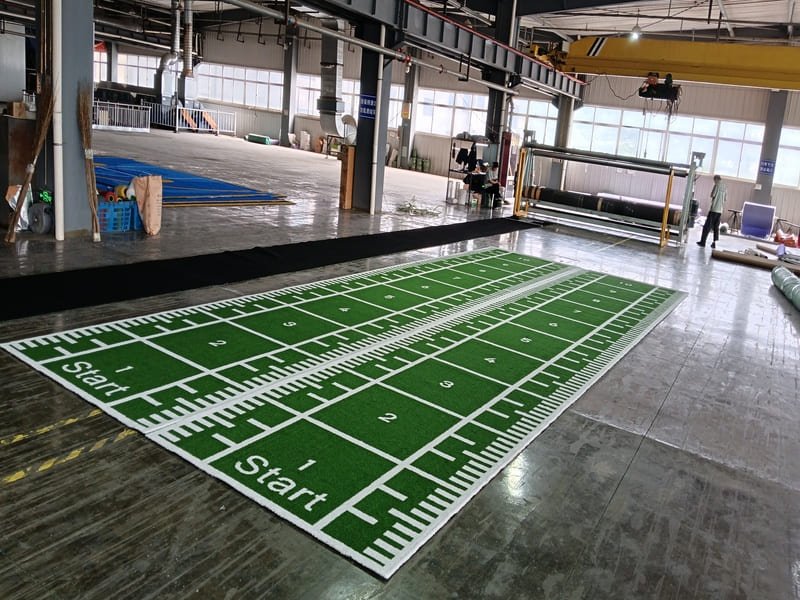
The best infill-free turf for functional gyms features high-density polyethylene fibers with a pile height between 10mm and 15mm. This specific design ensures a flat, durable surface that handles heavy sled pushes and high-intensity agility drills without the mess or maintenance of traditional rubber crumb infill systems.
Infill-free turf represents a major leap in manufacturing technology for the fitness industry. As an engineer, I see many facility owners struggle with outdoor-style turf used indoors. Traditional turf needs sand or rubber pellets to keep the fibers upright, but in a gym, these particles fly everywhere and get into your equipment. True infill-free turf uses a dense "thatch" layer at the base. This curly fiber acts like a spring to support the taller straight fibers. From a manufacturing perspective, we increase the stitch rate significantly to ensure the grass stays upright under its own weight. This creates a uniform surface tension that is vital for consistent foot traction and smooth sled gliding. It is not just about aesthetics; it is about the structural integrity of the yarn and the backing system working together to resist the horizontal shear forces of a 200kg sled.
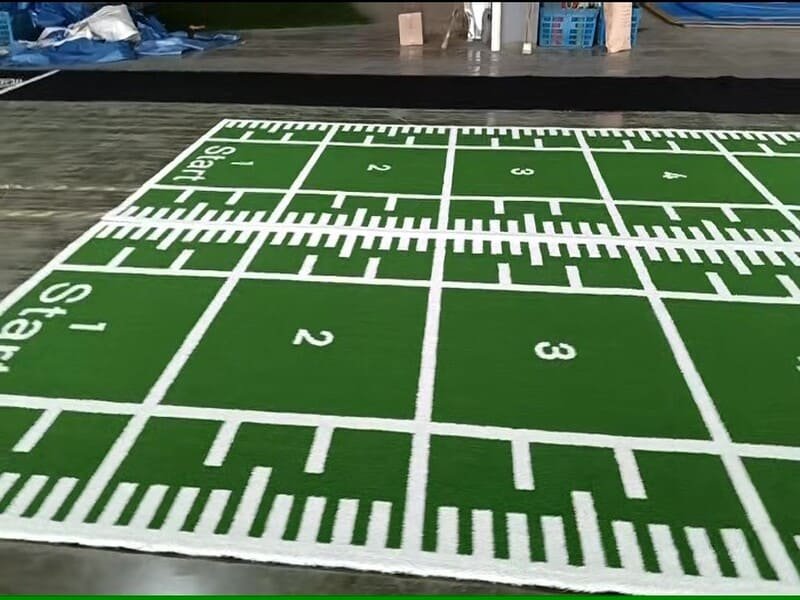
I have spent years on the factory floor optimizing these machines, and I can tell you that the backing is just as important as the grass itself. If the backing is too thin, the turf will ripple. If the fiber is too soft, it will melt under the friction of a fast-moving sled. We build these products to solve the specific environmental challenges of an indoor training zone.
Why Infill-Free Is the Gold Standard for Functional Training?
Infill-free turf is the gold standard because it provides a clean, high-traction surface that eliminates respiratory irritants like rubber dust and fine sand. It offers superior stability for heavy sled work and requires almost zero maintenance compared to traditional "field-style" turf systems used in sports stadiums.
The Engineering Logic Behind Performance and Hygiene
In a functional training environment, the air quality is a top priority for athlete performance. When athletes perform high-intensity interval training (HIIT) or sprints, their respiration rate increases. Traditional infill turf releases micro-particles of rubber and dust into the air every time someone steps on it. Our infill-free manufacturing process uses 100% non-toxic Polyethylene (PE) or Nylon. These materials do not break down into harmful dust.
| Caratteristica | Infill-Free Turf | Tappeto erboso tradizionale |
|---|---|---|
| Qualità dell'aria | High (No dust/particles) | Low (Rubber/Sand dust) |
| Attrito della slitta | Consistent & Smooth | High & Unpredictable |
| Manutenzione | Low (Vacuuming only) | High (Re-leveling infill) |
| Installazione | Easier (No heavy infill) | Complex (Infill spreading) |
| Longevità | High (Fiber density) | Medium (Fibers mat easily) |
From a technical standpoint, sled performance is the ultimate test. In an infill system, the sled "plows" through the loose material, creating uneven resistance. Our infill-free turf uses a texturized monofilament that creates a predictable friction coefficient. This means an athlete can measure their progress accurately because the resistance comes from the weight on the sled, not the shifting sand beneath it. I always recommend a PU (Polyurethane) backing for these areas. PU does not absorb moisture and stays flexible, which protects the joints of the athletes during high-impact jumps or landing drills.
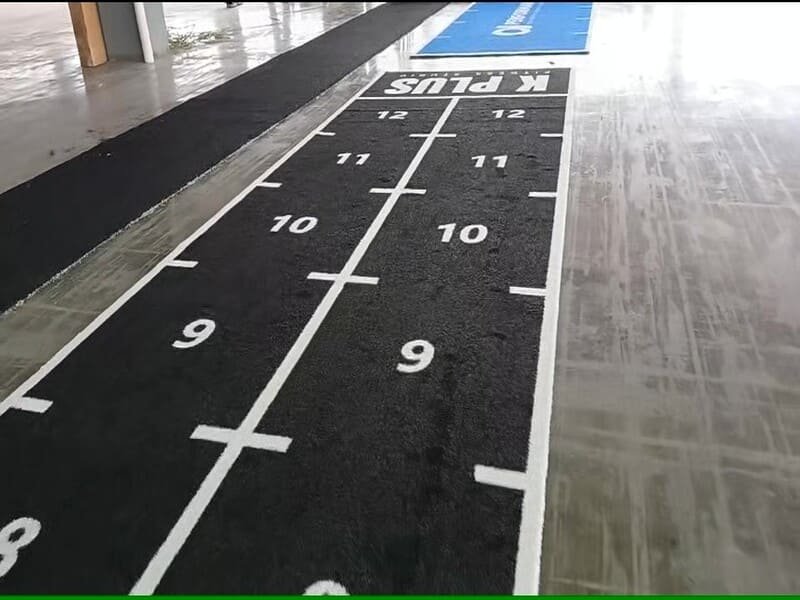
The transition to this technology is a direct response to the "mess factor" that gym owners hated for decades. You no longer need to sweep black rubber crumbs out of your locker rooms or away from your expensive treadmill belts every single night.
What Are the Key Technical Specifications You Must Check?
You must prioritize a pile height of 10mm-15mm and a stitch density of at least 60,000 per square meter. These specs ensure the turf handles heavy loads without matting down. Additionally, look for a Triple-Layer or PU backing to prevent the carpet from stretching under lateral force.
Understanding the Materials Science of Gym Flooring
When I design a production run for functional turf, I focus on the "Dtex" and the stitch rate. Dtex is the weight of the yarn. For a gym, you need a high Dtex combined with a very high stitch density. If the stitches are too far apart, the grass will lay flat after just a few weeks of use. A density of 60,000 to 70,000 stitches per square meter is the industry benchmark for commercial durability.
| Specifiche | Intervallo consigliato | Benefici per l'ingegneria |
|---|---|---|
| Altezza del palo | 10 mm - 15 mm | Prevents sled "snagging" |
| Densità dei punti | 60,000 – 75,000/sqm | Previene l'appiattimento delle fibre |
| Tipo di fibra | Polietilene (PE) | Soft feel, high durability |
| Tipo di supporto | PU or Triple-Latex | Stabilità dimensionale |
The choice between Polyethylene and Nylon is a common debate. Nylon has a higher melting point and is incredibly tough, but it can be abrasive on the skin. If your members do a lot of floor work like burpees or bear crawls, PE is usually the better choice because it is softer. However, we often use "texturized" PE. This is a process where we heat the fiber to give it a permanent curl. This curl creates the "thatch" layer that makes infill-free turf work. It provides the cushion and support without needing any loose sand. I have seen many owners buy 30mm "landscaping" turf because it looks soft, but this is a mistake. The long fibers will tangle in the sled skis and tear the turf right off the floor. Stick to the 10mm-15mm range for the best results.
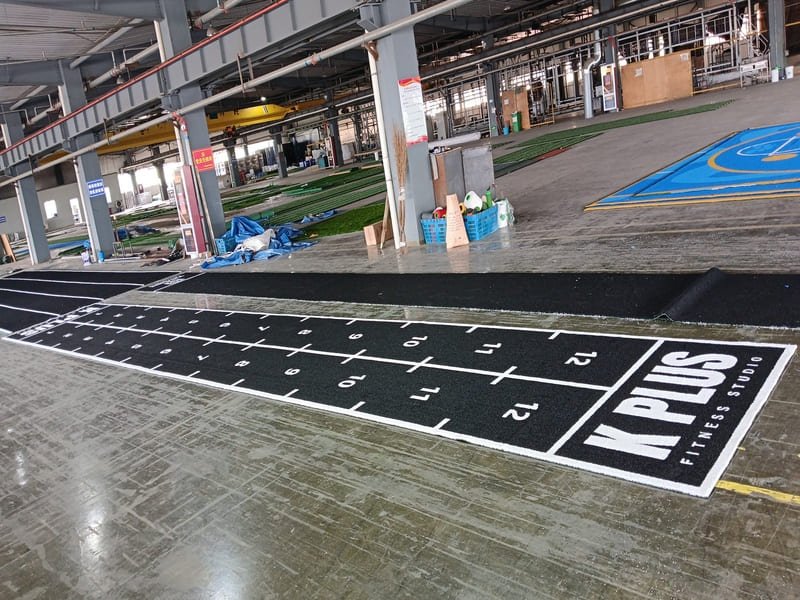
It is important to understand that the backing is the "spine" of your floor. Without a strong backing, the friction of a sled push will cause the turf to "creep" or ripple over time. This is a safety hazard and looks terrible.
How to Solve the Most Common Pain Points and Installation Errors?
To prevent matting and rippling, ensure your subfloor is perfectly level within 3mm and use a high-shear strength adhesive. Choosing "texturized" fibers reduces "turf burn" for floor exercises, while a thick secondary backing provides the acoustic insulation needed to dampen the sound of dropped equipment.
Advanced Installation and Maintenance Insights
The biggest "pain point" I hear from owners is that their turf started to ripple or move. This is almost always an installation error. Because functional training involves extreme horizontal force (sled pushes and sprints), you cannot treat this like a bedroom carpet. You need a full-spread glue-down method using a polyurethane adhesive. Standard pressure-sensitive tapes often fail when a 200kg sled is pushed across them. The force "shears" the bond.
Critical Installation Checklist:
- Subfloor Leveling: The concrete must be smooth. Any high spots will wear out the turf fibers 10x faster.
- Acclimatazione: Let the turf lay flat in your gym for 24-48 hours before gluing. It needs to shrink or expand to the room’s temperature.
- Pile Direction: Ensure every roll is laid with the "grain" facing the same way, or the light will hit it differently and it will look like two different colors.
- Sigillatura delle cuciture: Use a high-quality seam tape and glue to ensure the joints do not open up under foot traffic.
Regarding maintenance, the "infill-free" tag does not mean "zero cleaning." Dust and sweat will still accumulate in the fibers. I recommend a vacuum with a beater bar for daily cleaning. This lifts the fibers back up while removing dirt. Once a month, use a damp mop with a non-acidic sanitizer. This keeps the gym smelling fresh and prevents the buildup of bacteria. If you have a high-traffic sprint lane, use a stiff-bristled nylon brush once a week to "groom" the fibers. This prevents the "matting" effect where the grass stays permanently flat. By following these steps, I have seen our turf last over 8 years in high-volume commercial clubs.
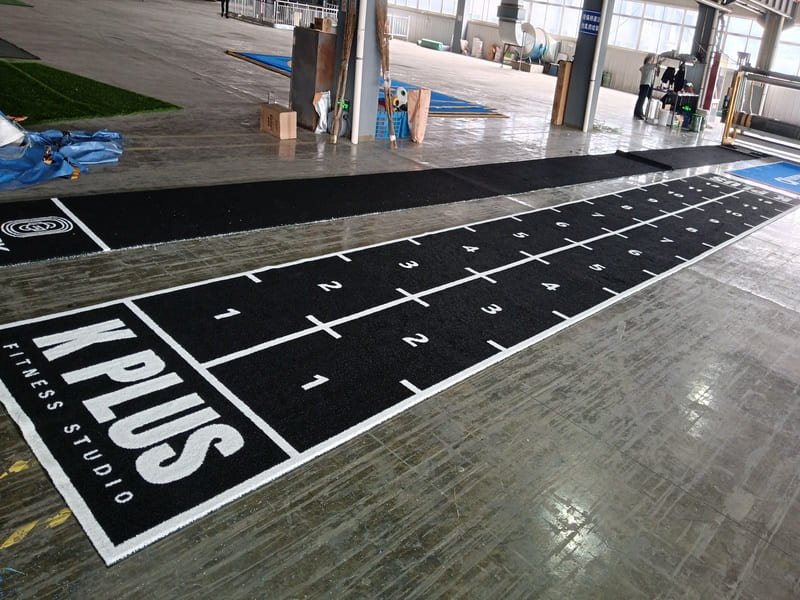
I once worked with a client who ignored the subfloor prep. Their floor had a small 5mm hump. Within three months, the sleds had literally shaved the green fibers off that hump, leaving a bald black patch. Don’t make that mistake.
Conclusione
Infill-free turf is the best choice for gyms because it combines high-density durability with low maintenance. Always check the stitch density and backing quality before you buy.
If you are planning a new gym layout or need a technical consultation on which turf density fits your specific sled weight requirements, feel free to send me a private message. I can help you optimize your flooring choice for long-term performance.