


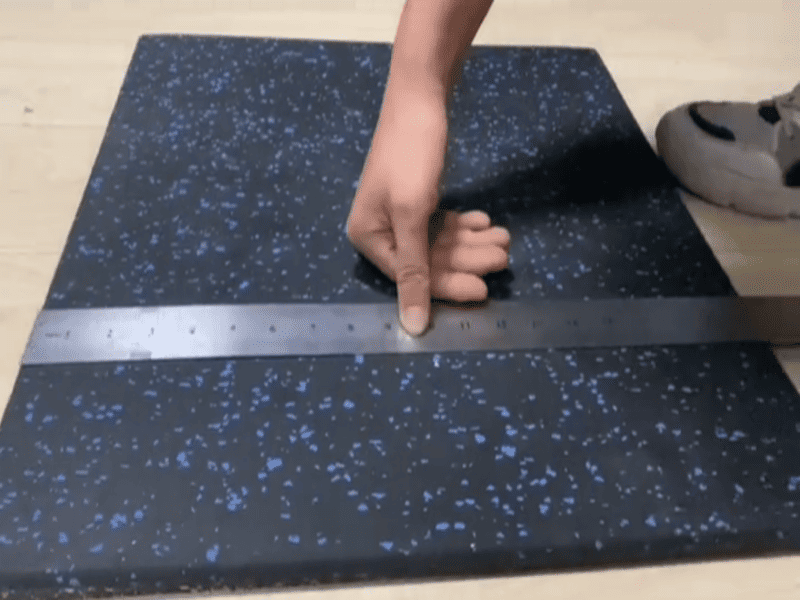
To fix tacky rubber flooring, rinse the floor thoroughly with hot water or a mild vinegar solution ($1\text{ cup per gallon of water}$) to remove residual soap film. This stickiness happens when concentrated detergent residues or incorrect chemical cleaners trap dirt on the non-porous rubber surface instead of washing away.
As a rubber flooring technical R&D engineer, I see this issue often in our testing labs and customer facilities. When rubber feels sticky after cleaning, it is almost never because the rubber itself is breaking down. Instead, it is usually a simple chemical layer sitting on top of the floor. Rubber is non-porous and highly durable, but its surface texture can easily trap soap molecules if the cleaning mix is too strong or if you do not rinse it well. In our manufacturing facility, we test how different cleaning agents interact with rubber sheets. We find that high-pH chemicals leave a thin, greasy layer that grabs dirt from shoes and air. This makes the floor feel tacky and look dirty very quickly. To fix this, you must break down that chemical layer and lift it completely off the floor.
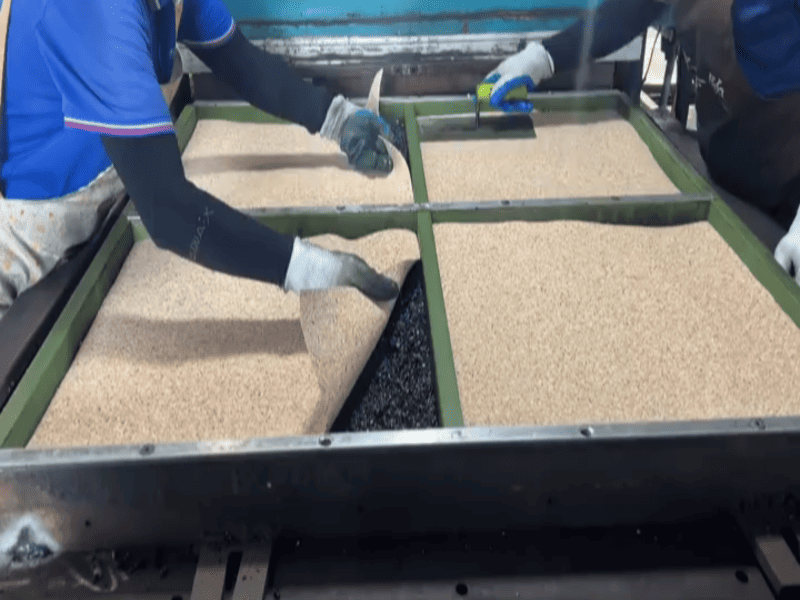
In the next sections, I will give you fast ways to clear this stickiness and explain why it happens so you can keep your floors smooth.
Can You Use Immediate Rinsing Methods to Remove Rubber Floor Stickiness?
Yes, you can fix sticky rubber floors fast by using hot water, a mild vinegar mix, or a safe degreaser to dissolve and lift the leftover soap residue. These simple methods neutralize high-pH detergent films and break down oily dirt without damaging the raw rubber material.
Quick Fix Methods for Tacky Rubber Floors
| Method Type | Primary Cleaning Agent | Best Used For | Meccanismo tecnico |
|---|---|---|---|
| The Deep Rinse | Pure Hot Water ($45^\circ\text{C} – 55^\circ\text{C}$) | Light soap scum and basic detergent buildup | Dissolves dried surfactant crystals |
| The Acid Neutralizer | White Vinegar + Warm Water ($1:16\text{ ratio}$) | Alkaline film and hard water scale | Neutralizes high-pH cleaners ($pH > 9$) |
| The Safe Degreaser | Diluted Dish Soap or Safe Degreaser | Oil, grease, or petroleum contamination | Emulsifies hydrophobic sticky oily films |
Technical Analysis of Immediate Rinsing
When soap dries on rubber, it forms a microscopic film that acts like glue.
- The Deep Rinse: You must use hot water because heat lowers the viscosity of dried soap and makes it dissolve faster. Use a clean mop and then pick up the water with a wet vacuum.
- The Vinegar-Water Neutralizer: Most floor cleaners have a high pH to cut grease. If you do not rinse them, they leave a slippery or sticky alkaline layer. White vinegar has a low pH ($pH \approx 2.5$). When you mix 1 cup of vinegar with 1 gallon of water, it neutralizes the alkaline film.
- The Safe Degreaser: If the stickiness comes from spilled oil or grease, standard water will not fix it. You need a highly diluted grease-cutting dish soap like Dawn to break the oil bond, then rinse with clean water.
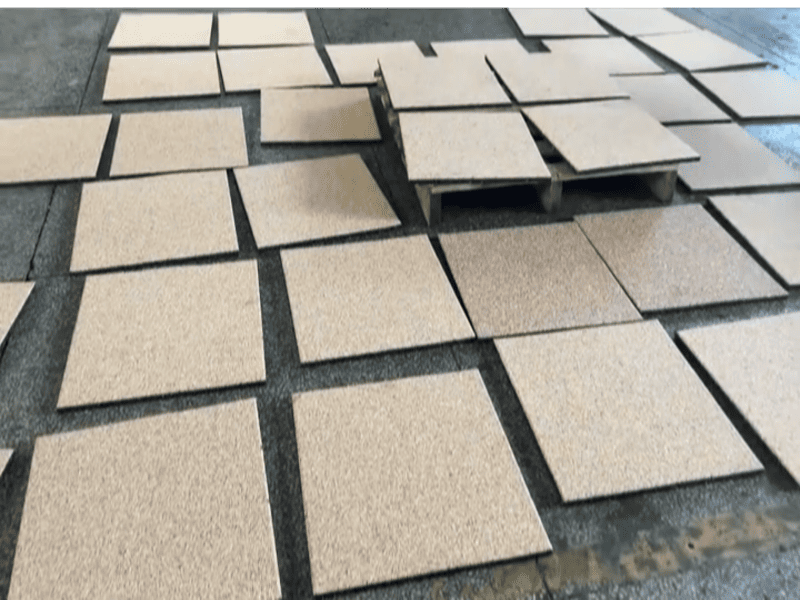
If these quick steps do not solve the sticky feeling, we need to look deeper into the chemical reasons behind the problem.
Why Does My Rubber Flooring Feel Sticky After I Clean It?
Rubber flooring feels sticky after cleaning due to heavy detergent buildup, the use of harsh chemical solvents, hard water mineral interference, or rare plasticizer migration from the rubber matrix. Understanding these chemical reactions helps you prevent permanent surface damage.
Four Common Root Causes of Rubber Stickiness
| Cause of Tackiness | Chemical Mechanism | Visual Identification | Risk Level to Rubber |
|---|---|---|---|
| Product Buildup | Leftover cleaning agents dry into a thick film | Dull, hazy surface that scrapes off with a fingernail | Low (Reversible) |
| The Wrong Cleaner | Solvents or pine oils soften the polymer chains | Soft, gooey spots that leave dark marks | High (Permanent) |
| Hard Water Link | Calcium and magnesium bind with soap molecules | White, powdery streaks under the sticky film | Low (Reversible) |
| Migrazione del plastificante | Internal oils move to the surface from heat/solvent use | Shiny, wet-looking film that smells like wet oil | High (Critical) |
Technical Analysis of Materials and Chemistry
From an engineering perspective, rubber is a vulcanized polymer network.
- Product Buildup: This is the most common issue. People think more soap means cleaner floors, but extra soap just builds up on the rubber surface.
- The Wrong Cleaner: You must never use pine oil, d-limonene, or petroleum solvents on rubber. These chemicals match the solubility parameter of rubber, meaning they dissolve the surface bonds and make the floor permanently gooey.
- Hard Water Interference: Minerals like calcium ($Ca^{2+}$) in hard water react with cleaners to form an insoluble salt scum that traps dirt and creates a tacky layer.
- Plasticizer Migration: In low-quality rubber floors, processing oils can migrate to the surface if exposed to harsh chemicals. This destroys the physical properties of the mat.
When these issues become severe, a simple wipe down is not enough, and you must follow a full restoration process.
How Do You Restore Severe Cases of Sticky Rubber Flooring?
To restore severe cases of sticky rubber flooring, you must dry-vacuum the grit, apply a approved low-pH floor stripper with a soft deck brush, extract the slurry with a wet vacuum, and hand-dry the surface with microfiber towels. This multi-step process removes deep residue without scratching the floor.
Step-by-Step Restoration Protocol
| Fase di restauro | Azione richiesta | Attrezzatura necessaria | Scopo tecnico |
|---|---|---|---|
| Passo 1 | Dry Soil Removal | High-CFM Vacuum with brush roll off | Removes sharp grit that can scratch rubber |
| Passo 2 | Strip the Buildup | Apply neutral stripper + Soft scrub | Breaks the heavy chemical crust apart |
| Passo 3 | Neutralize & Extract | Wet vacuum extraction with clean water | Removes the suspended soap slurry completely |
| Passo 4 | Final Towel Dry | Hand wipe with clean microfiber | Prevents hard water spots and drying rings |
Technical Details of the Restoration Process
When a floor has layers of old soap, you cannot just mop it again because mopping simply moves the dirt around.
- Fase 1: Use a vacuum without a beating brush to pull sand and dirt out of the rubber pores.
- Passo 2: Use a manufacturer-approved rubber floor stripper or a heavy-duty neutral cleaner ($pH \approx 7.0 – 8.5$). Scrub with a soft-bristle machine or a deck brush. Do not use black stripping pads because they tear the rubber surface.
- Fase 3: This is the most important step. You must use a wet vacuum to pull the dirty water off the floor. If the water dries on the floor, the tackiness will return.
- Passo 4: Finish by wiping the floor with dry microfiber towels. Air-drying can leave mineral deposits behind, but towel drying leaves the rubber clean and dry.
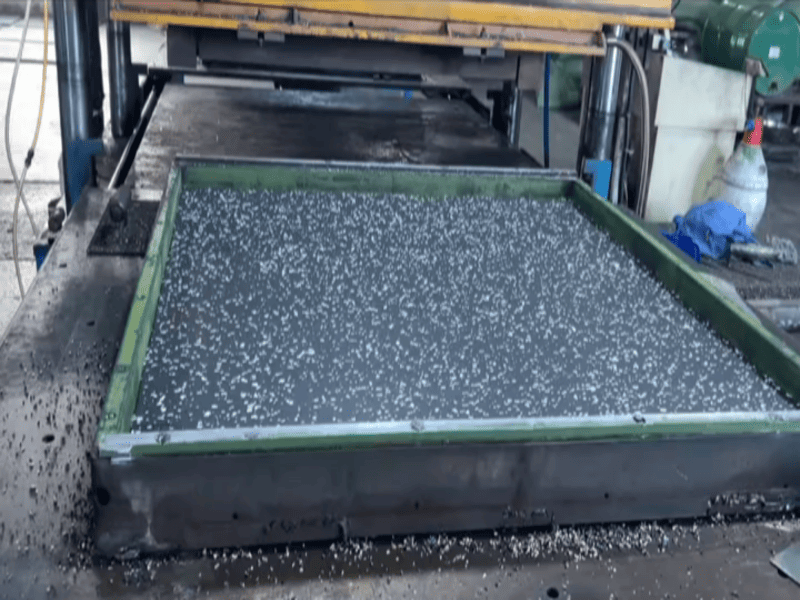
Once your floor is clean and smooth again, you should adjust your daily cleaning habits to keep it that way.
What Are the Best Maintenance Practices for Non-Sticky Rubber Floors?
The best maintenance practices for non-sticky rubber floors include using a neutral-pH cleaner ($pH \approx 7.0$), rinsing with clean water every time, changing the wash water often, and using microfiber mops with a two-bucket system. These tools lift dirt away instead of spreading it.
Proactive Maintenance Standards
| Fattore di manutenzione | Correct Specification | Incorrect Specification | Impatto sulle prestazioni |
|---|---|---|---|
| Cleaner pH Level | Neutral $pH \approx 7.0 \pm 0.5$ | High Alkaline ($pH > 10$) or Acidic | Prevents chemical film formation |
| Materiale del mop | Split Microfiber loops | Cotton string mop | Microfiber lifts dirt; cotton smears it |
| Bucket System | Two-Bucket System (Clean/Dirty) | Single Bucket | Stops cross-contamination of soap |
| Rinse Frequency | Every cleaning session | Monthly or never | Eliminates detergent layer buildup |
Engineering Guidelines for Daily Maintenance
To keep rubber floors safe and non-slip, you must use the right tools.
- The Golden Rules: Always check the label of your cleaner to ensure it has a neutral pH. High pH cleaners slowly damage the rubber bonds. Never skip the clean water rinse, and change your water bucket as soon as it looks cloudy.
- Recommended Tooling: Cotton mops have large fibers that cannot reach into the micro-textures of rubber flooring. Split microfiber mops have tiny fibers that grab dirt and soap out of the pores. A two-bucket system keeps your rinse water clean, so you never put dirty soap water back onto the floor.
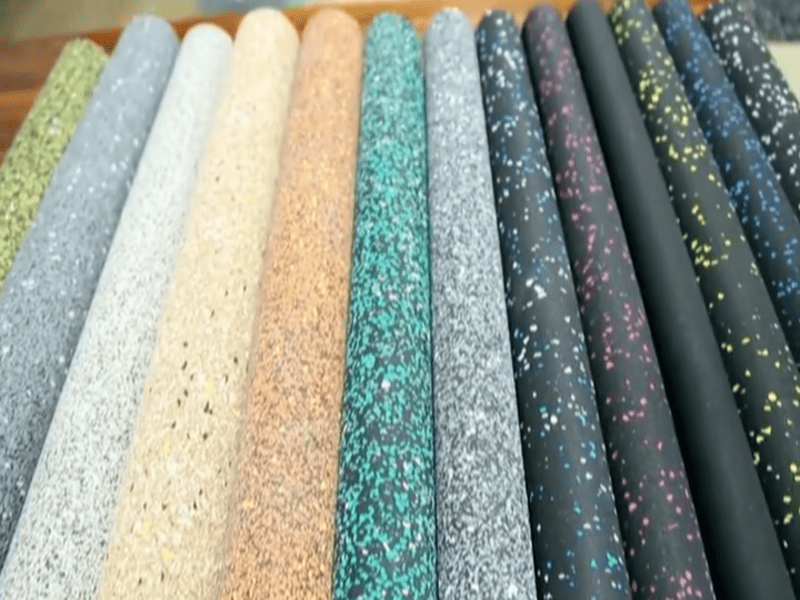
Using the wrong cleaning tools or products can ruin your rubber floor quickly, so you need to know what chemicals to avoid.
Which Cleaning Products Will Damage or Ruin Your Rubber Floor?
Cleaning products that will damage rubber floors include chlorine bleach, high-strength ammonia, petroleum solvents, turpentine, abrasive scouring pads, and standard commercial floor waxes. These items dry out the rubber, cause cracking, or create a permanent sticky melt.
Chemical Incompatibility Matrix
| Hazardous Product | Chemical Group | Specific Damage to Rubber | Risultato a lungo termine |
|---|---|---|---|
| Chlorine Bleach | Ipoclorito di sodio | Oxidizes the rubber polymer links | Drying, fading, and brittle cracking |
| Ammonia Solvents | Ammonium Hydroxide | Strips natural moisture from rubber | Sfarinamento e sgretolamento della superficie |
| Petroleum / Turpentine | Hydrocarbons | Dissolves the vulcanized bond | Permanent melting, goo, and tackiness |
| Commercial Wax | Acrylic polymers | Traps moisture and peels away | Flaking and uneven sticky spots |
Technical Explanation of Chemical Hazards
As an engineer, I test these chemicals on rubber samples to see how they fail.
- Bleach and Ammonia: These chemicals are too harsh for rubber. They cause oxidation, which breaks the sulfur links created during vulcanization. This dries out the floor and leads to deep cracks.
- Petroleum Solvents: These are the worst products for rubber. They seep into the rubber matrix and cause it to swell, soften, and melt. This type of stickiness cannot be fixed because the material itself is destroyed.
- Abrasive Pads and Wax: Steel wool or green scrubbing pads make micro-scratches on the rubber surface. These scratches trap dirt and old soap, making the floor look bad. Acrylic waxes do not bond well with rubber and will peel off in a sticky mess.
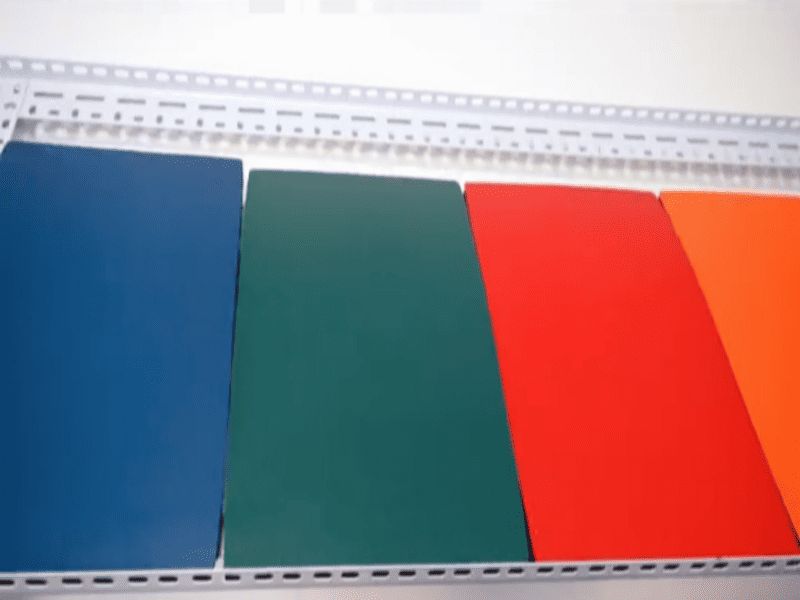
Let us look at some common questions about caring for rubber floors to help you avoid these issues.
Frequently Asked Questions About Tacky Rubber Flooring
Can I use a steam mop on rubber flooring?
No, you should not use a steam mop on rubber floors. The high heat ($>100^\circ\text{C}$) can weaken the polyurethane glue used to hold rubber tiles or rolls to the subfloor. Steam can also cause the rubber edges to warp or curl up over time.
Is surface tackiness dangerous for gym users?
Yes, a sticky rubber floor is a safety hazard. It increases friction unevenly, which can cause people to trip during workouts. It also attracts bacteria, dust, and skin cells, making the gym space unsanitary.
How long does it take for new rubber floor stickiness to fade?
If the stickiness is from the manufacturing process (like leftover mold release agents), it usually fades in 2 to 4 weeks with regular mopping using a neutral cleaner. If the stickiness is from using the wrong chemical cleaner, it will not go away until you wash it off.
When is it time to replace a sticky rubber floor?
You must replace the floor if the rubber feels soft, muddy, or leaves black marks on your fingers when you touch it. This means a chemical solvent has melted the rubber structure, and this damage cannot be repaired.
Conclusione
Tacky rubber flooring is usually caused by left-over cleaning soap and can be fixed with a thorough hot water or vinegar rinse.
If you are sourcing high-quality, durable, and easy-to-clean rubber flooring for commercial gyms, sports facilities, or bulk distribution projects—or if you need direct technical guidance to resolve ongoing maintenance issues—send me a direct message! As an experienced R&D engineer specializing in custom rubber compounding and high-performance flooring solutions, I am here to provide technical support, material specifications, and wholesale manufacturing partnerships tailored to your exact project needs.