


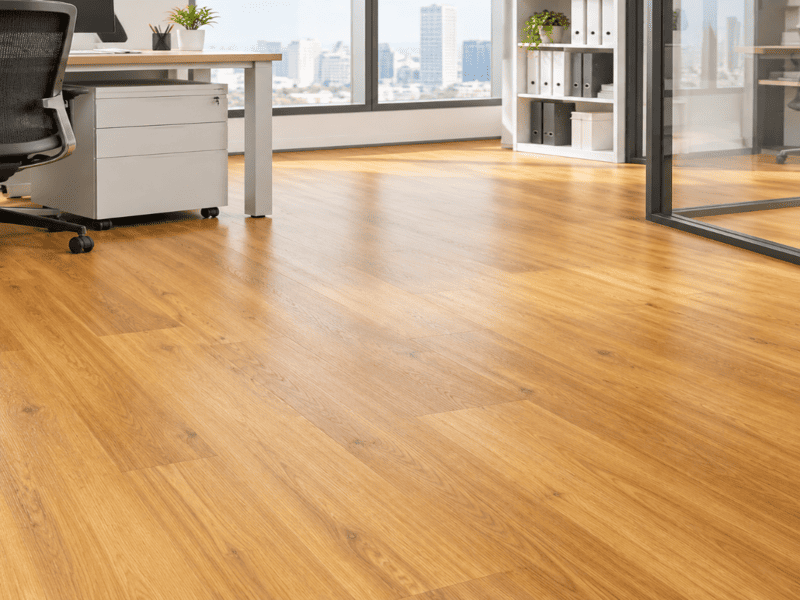
Follow the flooring and adhesive manufacturers’ instructions, clear construction debris, and choose compatible protection if other work continues. Avoid dragging loads, taping the surface, or covering the floor with unapproved materials.
I work as a quality control manager and engineer in PVC flooring manufacturing, supporting custom and bulk projects from product testing to design review. Protection requirements vary with the flooring type, adhesive system, and conditions on site. A glue-down tile, a click-lock plank, and a sheet floor can each have different limits for traffic, cleaning, and covering. Always follow the flooring and adhesive manufacturers’ instructions. The steps below help you plan protection during the remaining construction work, and they cover the points that cause the most damage on site: loose grit, point loads, the wrong cover, and the wrong cleaning method. Read the product data sheet and the adhesive data sheet before the installer leaves, and keep a copy on site so that every trade can see the same rules.
What Should You Do Immediately After PVC Flooring Installation?
Read the data sheets, remove loose debris, keep room conditions as the manufacturer requires, and inspect the floor for residue and defects before other trades arrive.
Construction dust, offcuts, and fine grit act like sandpaper under shoes and wheels, so remove loose debris as part of the installation cleanup. Once the floor can be safely accessed, use a soft broom, dust mop, or vacuum with the beater bar off. Excess adhesive should be removed during installation using the approved method. Before handover, check for any remaining residue and follow the manufacturer’s instructions for safe removal. Check the room as well. Many data sheets name a temperature range and ask you to keep it steady before, during, and after installation. The range and the hold time differ between products, so use the figures for your floor and not a general number. If the floor gets direct sun through a window, blinds or UV film reduce uneven heating in the first days.

First Steps Checklist
| Étape | Pourquoi c'est important |
|---|---|
| Read the flooring and adhesive data sheets | Limits differ by product and adhesive |
| Remove loose debris, then sweep once access is allowed | Grit scratches the wear layer |
| Remove excess adhesive during installation | Cured glue is much harder to remove |
| Keep room temperature steady | Sudden changes can stress the floor and the bond |
| Inspect the floor | Defects are easier to fix before other trades arrive |
When Is It Safe to Walk on Newly Installed PVC Flooring?
It depends on the installation system. Glue-down floors follow the adhesive’s traffic limits. Some click-lock and loose-lay products allow walking soon after installation.
Follow the manufacturer’s installation instructions. With glue-down floors, the adhesive needs time to build its bond, and some manufacturers ask you to avoid heavy traffic for a set period. The period changes with the product and the adhesive. Many click-lock products have no adhesive to cure, so walking may be allowed soon after installation, but some systems use partial fixing or have other limits, so confirm with the data sheet. Walking and heavy loads are separate questions. A loaded trolley or a heavy appliance can cause indentation or disturb the bond even when foot traffic is fine. Find the rule for your exact product, write the earliest traffic time on the job notes, and tell everyone on site. Do not base the decision on how the surface looks or feels, because the adhesive underneath may not be ready.
| Type d'installation | What to Expect | Que faire ? |
|---|---|---|
| Glue-down tile or plank | Traffic limits follow the adhesive | Check the adhesive and floor data sheets |
| Click-lock LVP or SPC | Many products allow early walking | Confirm with the maker and protect from point loads |
| Pose libre | Rules vary by product | Check the data sheet before moving loads |
| Sheet or heavy-duty tile | Limits depend on the product and adhesive | Follow the product data sheet and project specification |
How Should PVC Flooring Be Protected During Further Construction?
Once the manufacturer permits covering, choose a compatible protection material based on flooring type, curing requirements, and site traffic. Add rigid boards for carts, ladders, or heavy loads. Do not tape the floor or seal it under airtight film.
Painters, electricians, and movers often work after the floor is in, so temporary protection matters. Sweep first, because grit trapped under a cover gets pressed into the surface with every step. Then check the covering time. For glue-down floors, the adhesive and floor makers set when covering is allowed, and surface dryness is not a reliable guide. Lay the protection so that sheets overlap, and tape the joints between sheets to each other, not to the flooring. Hold the edges with boards or secure them to wall trim only where the finish allows it. Match the cover to the risk: paper for light foot traffic, and rigid boards over it for carts, ladders, and tools. Plan routes for heavy items before the work starts. Inspect the cover each day. Self-adhesive films can leave residue, and airtight plastic can trap moisture.

| Site Risk | Suitable Protection | Notes |
|---|---|---|
| Faible fréquentation piétonne | Protection paper compatible with the floor | Check that it will not stain or trap moisture |
| Carts, ladders, tools | Rigid boards over the paper | Spread the load and limit point pressure |
| Heavy items | Thick boards on a clean surface | Plan the route before the move |
If Water or Grit Gets Under the Cover
Lift the affected section and remove the cover. Let the floor dry, then sweep or vacuum and inspect for scratches or staining before you cover it again. If moisture may have reached the seams or adhesive layer, ask the installer to assess the floor before covering it again. If the water came from a leak, find and stop the source.
How Can You Move Furniture Without Damaging New PVC Flooring?
Lift furniture, fit wide, flat, non-staining pads, and move appliances on clean, stable boards. Do not drag items or the boards. Use only mats the maker says are safe for PVC flooring.
PVC is softer than tile or stone, so a small contact point under a heavy or long-term load can cause indentation. A bare metal foot or a hard plastic glide puts the weight on a very small area. Wider pads spread the same weight over more floor and lower the pressure. Choose pads that are flat, clean, and non-staining, and check them every few months, because grit collects in felt and makes the pad abrasive. For appliances, build a path of clean, smooth plywood or Masonite boards that lie flat and do not shift. Then move the appliance along the path with a dolly that has soft wheels, or with appliance glides. Lift and carry the boards when you reposition them, because dragging a board across the floor can scratch it too. Office chairs with hard wheels need soft wheels or a chair mat made for resilient floors.
| Objet | Meilleur choix | Pourquoi |
|---|---|---|
| Chairs and tables | Wide, flat felt or soft glides | Lower pressure on the surface |
| Heavy cabinets and sofas | Wide load-spreading pads that do not stain | Spread the weight |
| Refrigerators and washers | Clean boards forming a path, plus a soft-wheel dolly | Prevents dragging and tearing |
| Office chairs | Soft wheels or a suitable chair mat | Hard wheels cut and dent |
| Rugs and door mats | Non-staining mats the maker approves | Some rubber additives can discolor vinyl |
Some rubber backings contain additives that can react with flexible PVC and leave permanent yellow or brown marks. Not every rubber mat does this, so choose mats that are marked as safe for vinyl.
When and How Should New PVC Flooring Be Cleaned?
Remove loose debris first, then use a soft broom, dust mop, or vacuum with the beater bar off once access is allowed. Wait for the manufacturer’s wash time before damp mopping, and use a neutral cleaner approved for your floor.
Dry cleaning removes the grit that causes scratches, but only once the floor can be safely accessed. Some glue-down floors do not allow traffic right after installation, so check the traffic limits before anyone steps on the floor to clean it. Wet cleaning needs more care. Some products allow damp mopping soon after installation, and others ask you to wait several days, because water and cleaning chemicals can reach the adhesive before it is ready. Use a lightly damp microfiber mop and do not flood the floor. Avoid solvent-based cleaners and removers unless the flooring maker confirms they are compatible. Avoid steam mops, because heat and moisture can weaken adhesive and loosen click joints. Do not apply wax, polish, or restorative coatings unless they are approved for your product. Some commercial vinyl flooring products require or permit specific maintenance finishes. Follow the manufacturer’s care instructions. Wipe spills right away, since standing water at seams and edges can reach the subfloor over time.
What Protection Mistakes Should Be Avoided?
The most common mistakes are allowing heavy loads too early, dragging furniture, using incompatible covers, and cleaning with unapproved products.
These mistakes can cause scratches, indentation, staining, or adhesive problems. Check the manufacturer’s instructions before allowing normal use, and share the same rules with every trade on site.
What Should Be Checked Before the Floor Is Handed Over?
Inspect for scratches, dents, lifted edges, open seams, stains, and adhesive residue. Photograph and note any defects, and give the owner the manufacturer’s care instructions.
Before handover, inspect the flooring for visible damage and record any defects. Check the floor under good lighting, and use angled light where possible, because it shows dents, residue, and surface marks that overhead light can hide. Look closely at edges, doorways, and seams, where lifting and gaps tend to start. Write down what you find and take dated photos. These records can help clarify when damage occurred if a dispute arises later. Give the owner the manufacturer’s cleaning and care sheet so the next person to work on the floor follows the right rules. For commercial projects or any job with a formal acceptance process, a signed handover note adds a clear record for the owner, the installer, and the supplier.
| Vérifier | Ce qu'il faut rechercher |
|---|---|
| Surface | Scratches, scuffs, dents |
| Bords et coutures | Lifting, gaps, open joints |
| Propreté | Stains, dust, adhesive residue |
| Dossiers | Dated photos and written notes |
| Documents | Manufacturer’s care and cleaning instructions |
Conclusion
Follow the manufacturer’s rules, remove grit, cover the floor during site work, move loads with care, and inspect at handover.
If you have questions about protecting a PVC flooring project, want help choosing protection for a specific site, or need custom or bulk PVC flooring solutions, send me a private message. I am happy to help.