


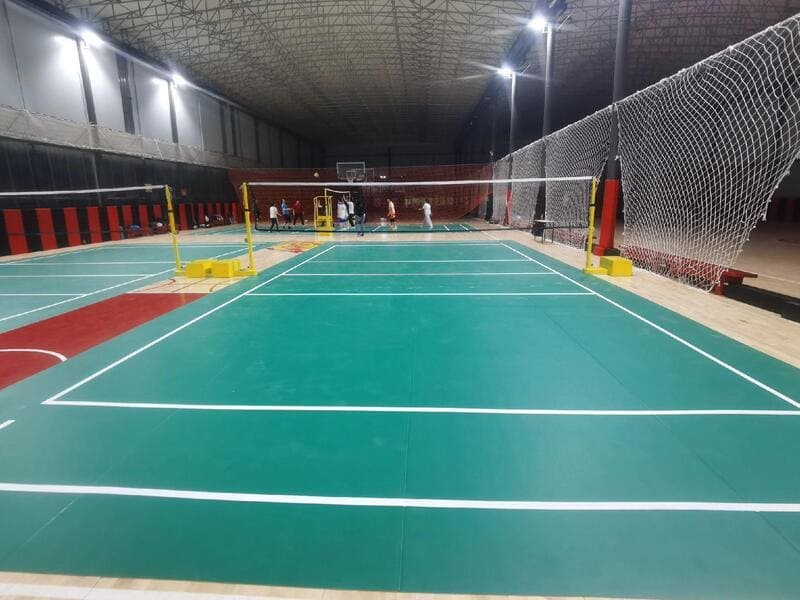
PVC sports flooring must be packed with a strong core, waterproof kraft wrap, hard end caps, and secure strapping. This stops crushing, moisture damage, and scratches during long ocean transit.
When I inspect export shipments of PVC sports rolls, I see the same failures again and again. A roll leaves the factory in perfect shape. Six weeks later, it lands at the port with a crushed core or a torn wrap. The buyer opens the container and finds water stains or a flat spot that ruins the whole roll. For a distributor, this is not a small problem. A damaged roll means a delayed installation, an angry client, and a claim that eats into profit. Export packing is not extra cost. It is the last line of defense between a good product and a wasted shipment. In this guide, I will walk through the real risks, the right materials, and the exact steps that keep PVC sports flooring safe from factory floor to final job site.
Before I get into the how, it helps to understand why so many rolls get damaged in the first place. Let me break down the four main risks I check for on every quality inspection.
Why Does Standard Packaging Fail for PVC Sports Flooring Export?
Standard packaging fails because it does not account for roll weight, edge impact, container moisture, and long transit time. These four forces work together to damage rolls that look fine on paper.
I group export damage into four risk categories, and I check for all of them during QC.
| Risque | Cause | Résultat commun |
|---|---|---|
| Weight & Creasing | Heavy rolls stacked wrong or resting on a weak core | Flattened sections, permanent deformation |
| Edge & Corner Crushing | Forklift forks and handling impact on roll ends | Crushed core, torn end wrap |
| Moisture & Mold | Container condensation over multi-week ocean transit | Swelling, mold spots, weak adhesive backing |
| Surface Scratches | Loose wrap rubbing against other cargo | Scuffed wear layer, damaged court lines |
Weight is the risk people underestimate the most. A roll that sits fine in a warehouse can crush its own core once it is stacked three high in a container for a month. Add rough forklift handling at each port, and the outer rim takes the brunt of the impact. Then there is moisture. Ocean containers heat up in the day and cool at night, and this creates "container rain" that drips straight onto cargo. I have seen rolls with perfect packaging on the outside and mold underneath because nobody added desiccant inside the container.
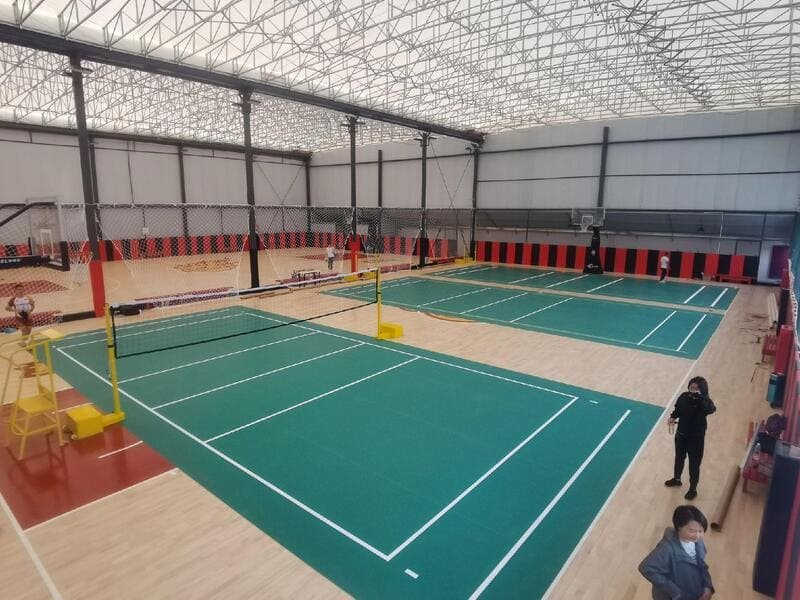
Knowing the risks is step one. Step two is picking the right materials to fight each one of them. Here is what I look for on every roll before it leaves the factory.
What Materials Are Required for Proper PVC Sports Flooring Packaging?
Proper packaging needs a strong inner core, moisture-proof film, cushioned padding, waterproof kraft paper, hard end caps, and a tough outer bag. Each layer protects against a different type of damage.
I split packaging materials into two groups: inner protection and outer protection.
Inner Protection: The First Line of Defense
- Paper or plastic cores: I require a wall thickness of 5mm or more. A thin core will collapse under roll weight during transit.
- PE film wrap: This seals the roll tight against humidity before any outer layer goes on.
- Foam pads or bubble wrap: This cushions the top wear layer so nothing scratches the embossed surface.
Outer Protection: The Heavy-Duty Shell
- Waterproof kraft paper: Double-layer or PE-laminated paper resists friction and tearing during loading.
- Hard end caps: Plastic or fiber plugs go into both ends of the core. This is the single most important defense against edge crushing.
- Woven PP bags: A tough final layer stitched tight at both ends stops tears from manual sliding.
Skipping any one of these layers creates a weak point. I have rejected shipments where the core was strong but the end caps were missing, and the rolls still arrived crushed at the corners.
Materials alone do not guarantee protection. The order and technique of packing matter just as much, so let me walk through the actual packing process.
How Do You Pack PVC Sports Flooring Rolls Step by Step?
Packing PVC sports flooring rolls follows seven steps: core inspection, tight winding, moisture wrap, end cap insertion, outer wrapping, strapping, and clear labeling.
Here is the exact sequence I check on the production line:
- Core selection and inspection: Match core strength to roll length and weight before winding starts.
- Tight, even winding: Loose winding causes internal slippage, known in the industry as telescoping, where inner layers shift out of alignment.
- Moisture protection wrap: PE film seals the full length and both edges of the roll.
- Edge cap insertion: Heavy-duty caps go into both ends of the core to lock the shape in place.
- Outer protective wrapping: PE-laminated kraft paper or a heavy woven bag covers the full roll.
- Edge taping and strapping: Industrial tape and plastic strapping belts secure both ends.
- Clear labeling: Waterproof labels show thickness, length, weight, color, batch number, and a "Do Not Hook" warning icon.
Telescoping is a detail buyers rarely ask about, but it is one of the top causes of rejected shipments I see. A roll that looks fine from the outside can have shifted layers inside, and that only shows up once the material is unrolled at the job site.
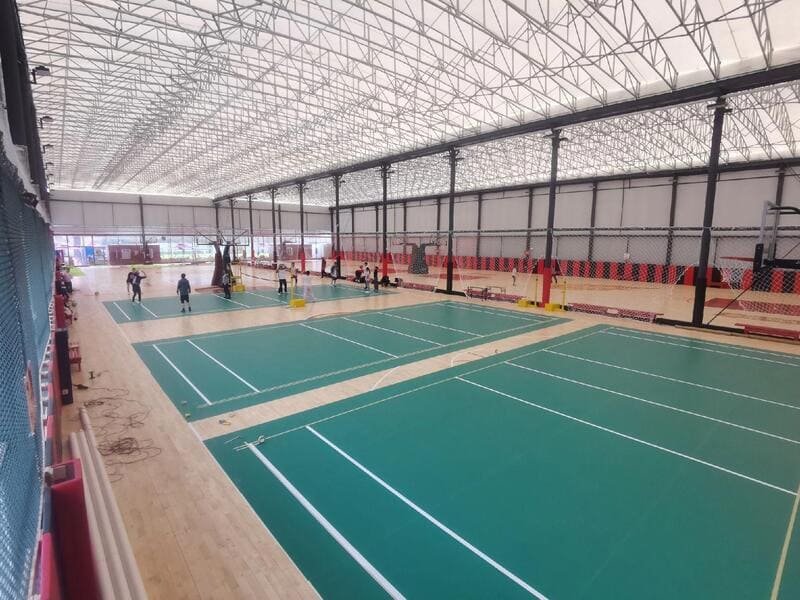
Once the roll itself is packed correctly, the next decision is how it travels inside the container. This choice affects both cost and protection level.
Should You Choose Palletized Packing or Direct Container Loading?
Palletized packing gives the highest protection but costs more and uses more container space. Direct loose loading maximizes container space but needs skilled handling to avoid damage.
| Facteur | Palletized Packing | Direct Container Loading |
|---|---|---|
| Niveau de protection | Highest, forklift-friendly | Moderate, needs careful handling |
| Space Efficiency | Slightly lower | Maximum, uses 95%+ of container space |
| Unloading Speed | Fast, 20-30 minutes with forklift | Slower, needs boom attachment or manual labor |
| Coût | Higher, due to ISPM-15 fumigated pallets | Lower upfront packaging cost |
My recommendation depends on the buyer’s unloading setup. If the destination warehouse has a forklift and loading dock, palletizing saves time and reduces handling risk. If the buyer only has manual labor or a boom truck, direct loading with strong dunnage still works, but it demands more care during stowing, which brings me to the next point.
Whichever method you choose, how the rolls sit inside the container during a multi-week voyage determines whether they arrive intact.
What Are the Best Practices for Container Loading and Stowing?
PVC sports rolls should be loaded horizontally, with weight balanced across the floor, gaps secured with dunnage bags, and desiccant added to control moisture.
I check three things on every container loading video a factory sends me:
- Orientation: Rolls almost always load horizontally, with clear stacking height limits to avoid crushing the bottom layer.
- Weight distribution: Weight must balance across the container floor. Uneven loading can tilt the container or push axle weight over legal limits at destination.
- Securing the load: Industrial dunnage airbags fill gaps between rolls, and lashing straps or wooden stoppers nailed to the floor stop shifting during rough seas.
Moisture control is the step people forget most. I require silica gel or calcium chloride desiccant bags inside every container, at a minimum of 1-2 kg per 20ft container. I also check that the container floor is dry before loading starts. A wet floor at the start of a six-week voyage almost guarantees a moisture problem by the time it arrives.
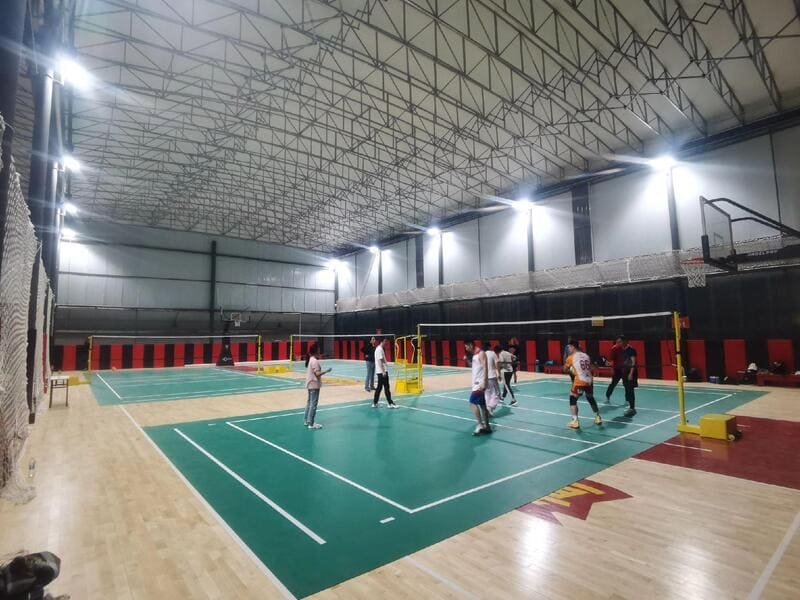
Good stowing protects the product physically, but exporters also need to meet customs rules to avoid delays that have nothing to do with product quality.
What Customs and Compliance Rules Apply to PVC Flooring Exporters?
Exporters need ISPM-15 certified wooden pallets, accurate gross and net weight on all documents, and standard international handling symbols on every package.
Three compliance points come up on almost every shipment I review:
- ISPM-15 certification: Any wooden pallet or skid needs heat-treatment or fumigation marking. Customs in most countries will hold or reject uncertified wood packaging.
- Weight precision: Gross and net weight on the packing list must match the actual shipment. Small errors here cause customs delays that cost buyers days or weeks.
- Handling symbols: Standard icons for Fragile, Keep Dry, No Hooks, and Stack Height Limit need to be visible on every package, not just written in a document buried in the shipment paperwork.
Compliance keeps the shipment moving through customs, but buyers still need a way to confirm the packaging quality before they pay the final balance.
How Can Buyers Verify Packaging Quality Before Shipment?
Buyers should request photos of end caps, roll labels, and video of container loading and dunnage placement before final payment. This confirms packaging quality without an in-person inspection.
Here is what I recommend buyers ask for as part of a pre-shipment inspection:
- A close-up photo of end caps fitted on both sides of each roll.
- A clear photo of the roll label showing thickness, length, weight, and batch number.
- A video of the full container loading process, including dunnage bag placement and floor dryness check.
At destination, I also advise buyers to unload with care. Cut strapping first, then remove the outer wrap slowly rather than pulling it off in one motion. Ripping the outer wrap often damages the surface layer underneath, which defeats the whole purpose of the packaging in the first place.
With the full process covered, here is the short version to remember.
Conclusion
Export packaging for PVC sports flooring rests on three pillars: strong structural cores, waterproof wraps, and secure container stowing.
Questions fréquemment posées
What core wall thickness prevents collapse during export?
I require a minimum of 5mm wall thickness for paper or plastic cores. Anything thinner risks collapse under stacked roll weight during a multi-week voyage.
How much desiccant is needed per container?
I recommend a minimum of 1-2 kg of silica gel or calcium chloride desiccant per 20ft container, placed away from direct contact with the rolls.
Can PVC sports flooring rolls be stacked vertically in a container?
No. Rolls almost always need horizontal loading. Vertical stacking puts direct weight on the roll ends and increases the risk of core crushing.
Do I need ISPM-15 certified pallets for every shipment?
Yes, if you use wooden pallets or skids. Most countries will hold uncertified wood at customs, which delays the entire shipment regardless of product quality.
What is telescoping and why does it matter?
Telescoping happens when a roll is wound too loosely and the inner layers shift out of alignment. It is not visible from the outside, so tight, even winding at the factory is the only real prevention.
A propos de l'auteur
I work as a quality control specialist in PVC sports flooring manufacturing, with daily hands-on experience inspecting custom and bulk production orders for export. My focus is on packaging integrity, material performance, and solving design or logistics challenges before they become shipment failures. I work closely with OEM/ODM partners to build packaging solutions suited to each buyer’s handling capability and destination market.
Want a packaging solution built around your specific shipping route and container setup? Send me a message and I will walk through the options with you.