


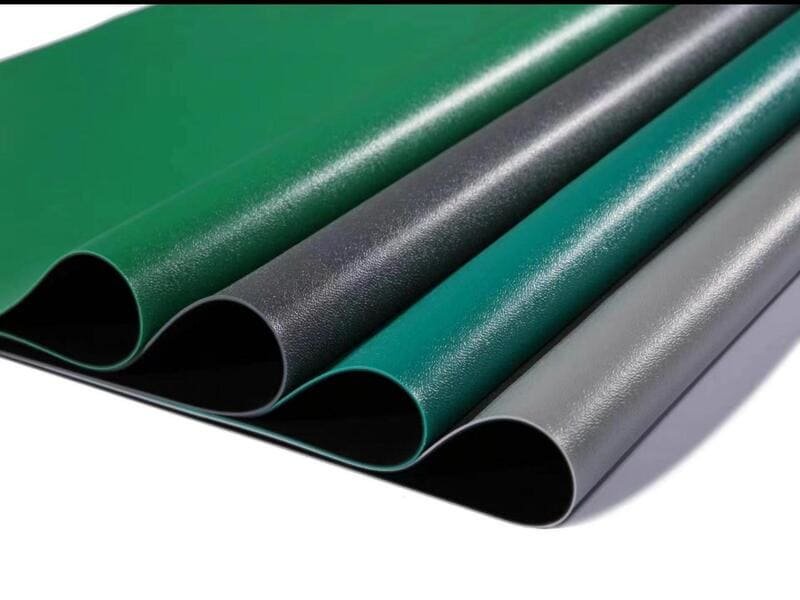
The right anti-static PVC flooring resistor value depends on your risk level: 10⁴–10⁶ Ω for conductive zones near explosive or ultra-sensitive electronics, and 10⁶–10⁹ Ω for standard static dissipative use in labs, data centers, and clean assembly lines.
I have spent years on the production floor working with engineering teams who thought buying "anti-static flooring" was the whole solution. It is not. A floor with the wrong resistance value, a missing ground path, or a skipped safety resistor can leave a facility just as exposed as having no ESD protection at all. Static discharge does not need to be dramatic to cause damage. A single unnoticed spark near a microchip can wipe out a component that costs thousands of dollars, and in an explosive atmosphere, that same spark can trigger a fire. The good news is that choosing the correct resistance spec, installing the grounding system properly, and verifying compliance is a process you can follow step by step. That is what I want to walk you through here, using what I have learned from manufacturing and specifying PVC flooring systems across different industries.
Before we get into selection matrices and installation steps, we need a shared vocabulary. A lot of costly mistakes trace back to people mixing up "conductive," "static dissipative," and "insulative" flooring, or misunderstanding what a safety resistor actually does in the ground path. Let’s clear that up first.
What Do "Conductive," "Static Dissipative," and "Insulative" Mean for PVC Flooring?
Conductive PVC flooring measures 10⁴–10⁶ Ω, static dissipative flooring measures 10⁶–10⁹ Ω, and insulative flooring exceeds 10⁹ Ω and is not ESD-safe. Most electronics work falls in the dissipative range.
Resistance Ranges and Where They Apply
The terms sound similar, but the resistance ranges tell very different stories about how fast a charge moves through the floor.
| Type de sol | Resistance Range | Utilisation typique |
|---|---|---|
| PVC conducteur | 10⁴ – 10⁶ Ω | Explosive atmospheres, extreme ESD sensitivity |
| Static Dissipative PVC | 10⁶ – 10⁹ Ω | Electronics assembly, data centers, healthcare |
| Insulative | >10⁹ Ω | Not ESD-safe; avoid for controlled areas |
Conductive flooring drains a charge almost instantly, which sounds ideal, but instant discharge is not always safe for people or sensitive boards, since it can create a sudden current spike. Dissipative flooring slows that process down to a controlled bleed-off, which is why ANSI/ESD S20.20 requires the resistance of an ESD floor to measure under 1.0 x 10⁹ ohms for electronics manufacturing and handling applications. Beyond the floor surface itself, there is also the question of surface resistance versus point-to-ground resistance, and where a dedicated safety resistor fits into the grounding path. I will unpack both of those in the next section, because they change how you design the ground connection, not just how you pick the floor material.
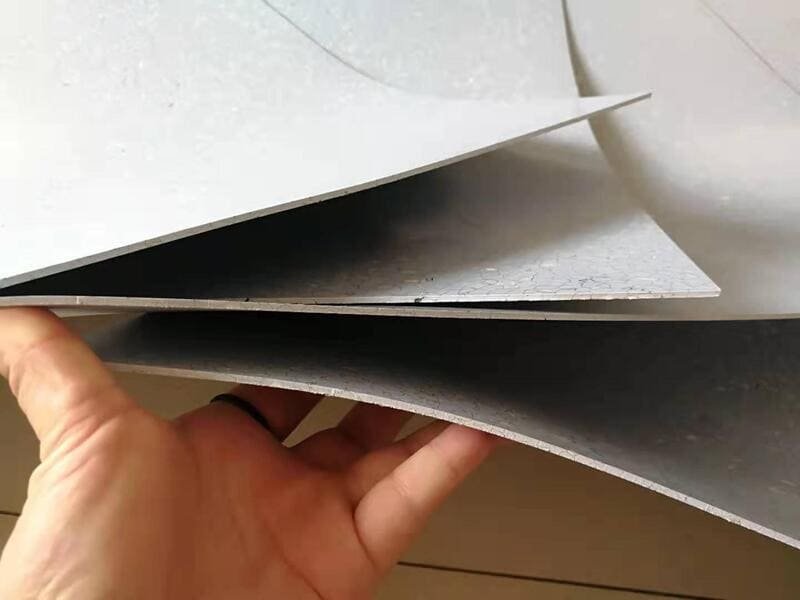
Getting the terminology right is only half the job. The number on a spec sheet means nothing if it does not match what your facility actually needs, and that depends heavily on the industry you are working in.
Why Does the Safety Resistor Matter in an ESD Grounding Path?
A 1 MΩ current-limiting resistor sits in the ground connection to protect personnel from electric shock while still letting static charge drain safely to earth.
Point-to-Point Versus Point-to-Ground Resistance
Surface resistance (R p-p) tells you how a charge moves across the floor surface between two points. Point-to-ground resistance (R g) tells you how efficiently that charge reaches earth ground. Both numbers matter, and a floor can pass one test and fail the other if the grounding grid is poorly designed.
The 1 MΩ resistor is not there to control the floor’s static dissipation range. It is a personnel safety device. Without it, a person touching a grounded conductive surface while carrying line voltage could receive a dangerous shock. With the resistor in place, current is limited to a safe level for the human body while ESD charges, which involve far less energy, still discharge fast enough to protect equipment. I have seen installations skip this resistor to save a small amount on materials, and that decision turns a safety system into a liability the moment something goes wrong electrically.
Once you understand the terminology and the role of the safety resistor, the next question is practical: which resistance range actually fits your facility, your equipment, and your traffic patterns?
What Resistance Range Fits Your Industry?
Data centers and electronics assembly typically need 10⁶–10⁹ Ω dissipative flooring, while explosive-zone labs and high-sensitivity SMT lines often require the lower 10⁴–10⁶ Ω conductive range.
Industry-by-Industry Selection Matrix
| Industry | Fourchette recommandée | Principaux éléments à prendre en compte |
|---|---|---|
| Data Centers & Server Rooms | 10⁶ – 10⁹ Ω | Continuous uptime, minimal shock risk |
| Electronics Manufacturing / SMT | 10⁶ – 10⁸ Ω | Aligns with ANSI/ESD S20.20, targeting resistance below 10⁹ Ω |
| Healthcare / Operating Rooms | 10⁶ – 10⁹ Ω | Balance ESD control with infection control cleaning |
| Labs & Explosive Cleanrooms | 10⁴ – 10⁶ Ω | Faster discharge for flammable material handling |
Matching the right number to your industry is only step one. Ambient humidity changes surface resistance readings over a day, so a floor tested in the morning can read differently by afternoon in a dry facility. Footwear matters just as much as the floor: a dissipative floor paired with insulating rubber-soled shoes still leaves the full loop broken, since the complete person-footwear-flooring system generally needs to stay under 35 million ohms combined. Traffic load matters too. A warehouse running forklifts needs a wear-resistant conductive layer that will not degrade under constant abrasion, while a light-traffic clean lab has more flexibility in material choice.

Selecting the right resistance value is the design decision. Getting that value to hold up in the real world comes down to how the floor is installed and grounded, which is where most failures actually happen.
How Do You Properly Ground a PVC Anti-Static Floor System?
Grounding requires a stable subfloor, conductive adhesive, a copper foil grounding grid spaced every 3–6 meters, and a connection to earth ground through the safety resistor.
Step-by-Step Grounding Installation
A conductive floor is only as good as the path underneath it. Here is the sequence I recommend for a reliable install.
- Subfloor preparation and moisture control – An uneven or damp subfloor breaks conductive pathways and creates dead zones where resistance spikes unpredictably.
- Conductive adhesive layer – Carbon-infused conductive glue, not standard adhesive, keeps resistance uniform across the entire subfloor rather than isolating the flooring in patches.
- Grounding grid installation – Copper foil tape laid in a grid, typically every 3–6 meters, with interconnected lines for redundancy so one break does not disable the whole system.
- Connecting to earth ground – The copper grid ties into the main earth point, with the 1 MΩ current-limiting safety resistor incorporated at the connection to protect operators while still discharging static safely.
Skipping any one of these steps undermines the whole system, even if the flooring material itself carries the correct resistance rating on paper. I have walked into facilities where the floor spec was perfect and the ground connection was still failing tests, simply because the copper grid was not interconnected properly.
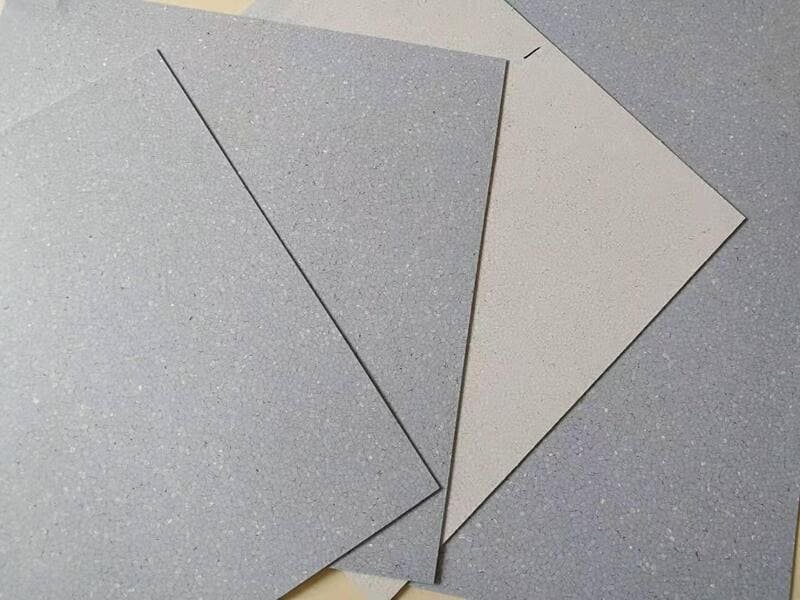
Installation gets the system in place, but you still need proof it actually performs to spec. That means testing against recognized standards, not just trusting the material data sheet.
How Do You Test and Verify ESD Flooring Compliance?
Use a surface resistance meter with 5 lb weighted probes to test point-to-point and point-to-ground resistance against ANSI/ESD S20.20, IEC 61340-5-1, or ASTM F150, logging results at multiple points per area.
Testing Methodology and Standards
Three standards come up most often in flooring specifications, and each has a slightly different scope.
| Standard | Focus |
|---|---|
| ANSI/ESD S20.20 | Resistance under 1×10⁹ Ω at all points, with charge accumulation limited to prevent shocks above 100 volts |
| IEC 61340-5-1 | International equivalent requiring resistance below 1×10⁹ ohms with charge dissipation from 5000V to under 50V within two seconds |
| ASTM F150 | Static conductive resistive characteristics of resilient flooring |
To measure accurately, you need a megohmmeter with 5 lb weighted probes, since probe weight affects contact resistance and skews readings if it is inconsistent. Point-to-point testing checks resistance across the surface between two probes placed a set distance apart. Point-to-ground testing checks resistance from a surface point down through the grounding grid to earth. For audit certification, most programs require multiple test points across the floor area rather than a single spot check, because resistance can vary meaningfully across a large installation, especially near seams or high-traffic zones. Logging every result with location and date gives you a defensible compliance record if an auditor or client ever asks for evidence.
Testing tells you where you stand today, but resistance values drift over time. Knowing how to troubleshoot when readings fall out of range is what keeps a floor compliant for years, not just on installation day.
What Causes ESD Flooring Resistance Failures, and How Do You Fix Them?
High resistance usually comes from wax buildup, dirt, or a dry ground connection, while dangerously low resistance points to a missing safety resistor or the wrong flooring class.
Common Failure Causes and Fixes
| Problème | Cause probable | Fixer |
|---|---|---|
| Resistance too high (>10⁹ Ω) | Non-conductive floor wax, dirt buildup, dry ground connection | Strip wax, use ESD-safe cleaners, verify ground contact |
| Resistance too low (<10⁴ Ω) | Missing safety resistor, wrong flooring class installed | Add current-limiting resistor, re-audit floor class |
Standard floor detergents and waxes are one of the most common causes of resistance drift I have seen in the field, because they leave an insulating film on the surface even when the underlying floor material is correctly rated. ESD-safe cleaning solutions avoid this problem, but facility maintenance staff need to know to use them consistently, not just during the initial install phase. Humidity also plays a role: very dry environments tend to push resistance readings higher, so some facilities add humidity control specifically to keep flooring within its rated dissipative range. Regular re-testing, on a quarterly or biannual schedule depending on traffic and cleaning frequency, catches these drifts before they become compliance failures.
Questions fréquemment posées
Q1: Can I apply standard floor wax to anti-static PVC flooring?
No. Standard wax creates an insulating film on the surface that raises resistance out of the dissipative range, even if the underlying PVC material is correctly rated. Use only ESD-safe cleaning products designed for conductive or dissipative floors.
Q2: Why do I need a 1 Megohm (1 MΩ) resistor in my ESD grounding cord?
The resistor limits current to a safe level for a person in contact with the ground path, protecting against electric shock, while still allowing static charges to discharge fast enough to protect equipment.
Q3: What is the difference between conductive PVC and static dissipative PVC flooring?
Conductive PVC measures 10⁴–10⁶ Ω and discharges static almost instantly. Static dissipative PVC measures 10⁶–10⁹ Ω and discharges static in a slower, more controlled way, which is the standard choice for most electronics and healthcare environments.
Q4: How often should ESD flooring resistance be tested?
Most facilities test on a quarterly or biannual basis, though high-traffic or humidity-variable environments benefit from more frequent checks to catch drift from wax buildup, dirt, or ground connection wear.
Conclusion
Correct resistance selection, conductive adhesive, a grounded copper grid, and regular verification together keep your PVC flooring genuinely ESD-safe.
Mon rôle
I work in technical research and development for anti-static PVC flooring, focused on manufacturing processes and design optimization for custom and bulk production runs. My background is in matching flooring resistance specifications, conductive adhesive systems, and grounding grid design to the real operating conditions of electronics manufacturing, data center, healthcare, and laboratory environments. I work directly with engineering and product development teams during the design stage to identify resistance requirements, troubleshoot grounding issues, and recommend material adjustments that solve performance problems before installation, not after a compliance test fails.
Have a specific facility, resistance spec, or grounding challenge you’re working through? Send me a message and let’s talk through the right anti-static PVC flooring setup for your project.