


L'avenir des revêtements de sol sportifs en PVC réside dans les matériaux bio-attribués respectueux de l'environnement, l'ingénierie multicouche pour la conformité à la norme EN 14904 et l'intégration intelligente du sous-plancher.
En tant qu'ingénieur en procédés de fabrication, je travaille tous les jours avec des structures polymères multicouches. La vieille idée selon laquelle le chlorure de polyvinyle n'est qu'une alternative bon marché au bois est erronée. Aujourd'hui, nous combinons la science avancée des matériaux avec de nouvelles méthodes de production. Nous utilisons des traitements de surface de haute technologie tels que des couches UV cristallines et des couches de fibres de verre. Ces changements signifient que les revêtements de sol PVC modernes absorbent mieux les chocs, durent plus longtemps et ont un coût total inférieur à celui des anciens types de revêtements de sol. Cet article présente les faits techniques clairs et les mises à jour de production qui font des sols synthétiques en PVC de la prochaine génération le meilleur choix pour les terrains de sport modernes.
Vous verrez exactement comment nous résolvons les problèmes courants sur le terrain, tels que les déchirures du sol et l'altération des couleurs, pendant la phase de production. Nous examinerons les nouvelles conceptions techniques qui protègent les joueurs et réduisent vos coûts de maintenance ouverte.
Pourquoi les revêtements de sol sportifs en PVC nouvelle génération résistent-ils au trafic intense et aux déchirures ?
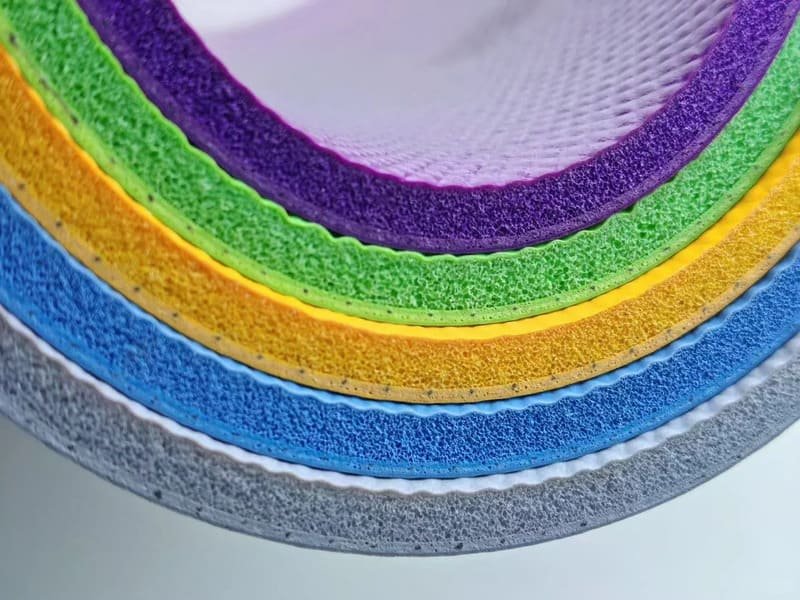
Les sols sportifs en PVC de nouvelle génération résistent au trafic intense grâce à une couche d'usure en PUR réticulé et à une couche de stabilité en fibre de verre haute densité.
| Type de couche | Composition du matériau | Fonction principale d'ingénierie | Performance technique Valeur |
|---|---|---|---|
| Couche d'usure | PUR réticulé avec cristaux UV | Résiste aux rayures, élimine l'efflorescence de la cire | Options d'épaisseur de 0,5 mm à 1,2 mm |
| Stabilisation | Fibre de verre non tissée haute densité | Empêche la dilatation et le rétrécissement dus à la chaleur | Stabilité dimensionnelle ≤ 0.10% |
| Support de choc | Matrice de mousse PVC à cellules fermées | Absorbe les chocs violents et atténue le bruit | Capacité de réduction de la force jusqu'à 50% |
Nous utilisons une méthode complexe de stratification multicouche pour fabriquer ces sols. Dans le passé, les acheteurs craignaient que les couches ne se détachent ou que le sol ne grandisse et ne rétrécisse en fonction des changements de température. Pour résoudre ce problème, nous avons placé un treillis en fibre de verre non tissé de haute densité entre la couche d'usure supérieure et le support en mousse inférieur. Ce treillis agit comme un acier structurel dans le béton. Il maintient le sol plat et stable. Nous utilisons également de nouvelles matières premières qui empêchent la migration des plastifiants. Cette modification technique élimine complètement l'ancien problème de l'"efflorescence de la paraffine", qui laissait une poudre blanche et glissante sur la surface du sol.
Variations structurelles avancées pour les installations à fort trafic
1. Stratifiés structuraux de forte épaisseur (7,0 mm - 9,0 mm+)
Nos planchers les plus épais utilisent un système de mousse dense à double noyau et à cellules fermées. Cette conception permet de supporter les lourdes charges roulantes des équipements sportifs sans laisser de traces profondes.
2. Surfaces de préhension spécialisées
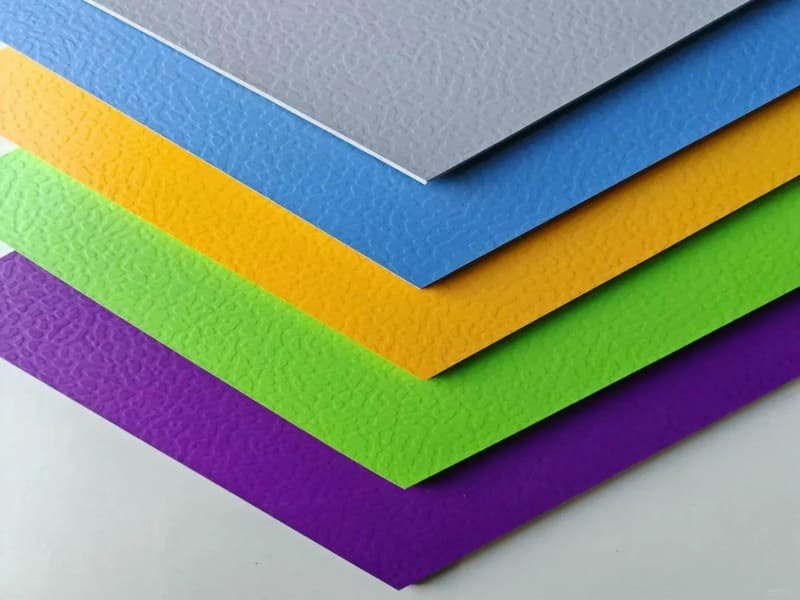
Nous utilisons des rouleaux mécaniques pendant l'extrusion pour presser des motifs d'adhérence précis comme la peau de serpent ou les formes en nid d'abeille dans la couche d'usure. Ces motifs donnent aux joueurs une grande adhérence pour les arrêts rapides.
Si vous voulez savoir comment ces mises à jour d'usine modifient la façon dont vous sélectionnez les matériaux pour les projets de construction écologique, continuez à lire ci-dessous.
Comment les tendances vertes et les technologies intelligentes façonnent-elles la production moderne de PVC ?
La production moderne de PVC utilise des plastifiants sans phtalates respectueux de l'environnement, des résines bio-attribuées et des sous-planchers qui fonctionnent avec des lumières LED et des capteurs de suivi.
| Tendance future | Mise en œuvre de l'ingénierie | Bénéfice direct du projet | Conformité aux normes industrielles |
|---|---|---|---|
| Matériaux verts | PVC bio-attribué et plastifiants sans phtalates | Zéro gaz toxique, sans danger pour les enfants, recyclable | Certifié FloorScore, points LEED v4 |
| Intégration intelligente | Couches d'usure transparentes et cavités des capteurs | Travaille avec les lignes de démarcation LED et le suivi | Compatible avec les tests de sol EN 14904 |
| Conception visuelle | Cylindres de gaufrage mécaniques 3D | Un aspect bois profond sans coût élevé du bois | Niveau 2 de résistance aux rayures |
Le marché international exige désormais des produits sûrs et écologiques. Dans notre usine, nous avons remplacé les anciens adoucisseurs chimiques par des plastifiants végétaux sûrs et sans phtalates. Cela permet de préserver la qualité de l'air à l'intérieur des bâtiments et de respecter les objectifs stricts en matière de faible teneur en COV. Nous avons également apporté d'importants changements au processus de conception visuelle. Nous utilisons des cylindres de gaufrage mécaniques 3D pour créer des motifs réalistes de bois et de pierre. Cela permet d'obtenir l'aspect classique d'un court en bois, mais avec le nettoyage rapide et le faible coût du PVC synthétique.
Principales innovations en matière de fabrication écologique et intelligente
1. Mélanges de polymères bio-attribués
Nous utilisons des déchets provenant d'autres industries pour fabriquer notre résine PVC. Cette méthode permet de réduire les émissions de carbone de 30% par rapport aux plastiques standard à base de pétrole.
2. Découpes de la ligne numérique et du capteur dans le sous-plancher
Nous avons conçu la couche de mousse inférieure avec des rainures spéciales. Ces rainures permettent aux installateurs de faire passer facilement les fils des lignes LED et des capteurs électroniques sous le plancher.
Il est utile de comprendre ces mises à jour vertes, mais il faut également tenir compte des tests physiques requis pour l'utilisation dans les sports professionnels.
Quels sont les critères de performance EN 14904 les plus importants pour les projets de gymnastique ?
Les chiffres les plus importants de la norme EN 14904 pour les projets de gymnastique sont l'absorption des chocs (classe P1 à P3), le mouvement vertical et une plage de préhension comprise entre 80 et 110.
| EN 14904 Propriété d'essai | Gamme standard requise | Méthode d'ingénierie pour atteindre | Avantages pour les athlètes dans le monde réel |
|---|---|---|---|
| Absorption des chocs | P1 (≥25%) à P3 (≥45%) | Réglage du taux d'expansion de la mousse PVC | Réduit le stress articulaire et les blessures dues à l'impact |
| Friction / adhérence | De 80 à 110 barèmes | Gravure microtexture sur le revêtement PUR | Empêche les glissements mais permet de pivoter le pied en toute sécurité |
| Rebond du ballon | ≥ 90% Efficacité | Compression du support haute densité | Véritable rebond de basket-ball sur le terrain |
| Déformation verticale | 0,5 mm à 5,0 mm max. | Ajustement des cellules de mousse ouvertes ou fermées | Stabilise la cheville lors des sauts |
En tant qu'ingénieur, je considère un sol sportif comme un outil de sécurité pour les joueurs. Nous testons chaque série de production selon les règles européennes EN 14904. Pour obtenir un taux d'absorption des chocs P3 élevé de 45% ou plus, nous gérons soigneusement l'étape d'injection d'air lors de la fabrication du support en mousse. Si la mousse est trop souple, les joueurs se blesseront aux chevilles parce que le sol s'enfonce trop. Si la mousse est trop dure, le sol n'absorbera pas les impacts, ce qui provoquera des douleurs aux genoux. Nous trouvons l'équilibre parfait en mélangeant des couches de mousse à cellules fermées et à cellules ouvertes.
Ventilation technique des méthodes d'essai critiques
1. Réglage du coefficient de glissement
Nous vérifions la friction de la surface à l'aide d'une machine à pendule spécialisée. Nous maintenons le score entre 80 et 110 afin que le sol ne soit jamais trop collant ou trop lisse.
2. Contrôle de la déformation verticale
Nos laboratoires vérifient que le sol se plie juste assez sous une charge soudaine. Ce contrôle structurel donne aux joueurs une assise solide pour les sprints rapides.
Comparons ces performances de laboratoire aux coûts réels d'achat et d'entretien à long terme.
Quelle est la véritable comparaison des coûts à long terme entre le PVC et le bois ?
Le PVC a un coût à long terme inférieur à celui du bois car il coûte moins cher à installer, ne nécessite pas de ponçage ou de cirage important et dure 10 à 15 ans.
| Métrique des coûts et des opérations | PVC hétérogène de nouvelle génération | Bois d'érable traditionnel | Caoutchouc solide vulcanisé |
|---|---|---|---|
| Coût initial des matériaux | Faible à moyen | Très élevé | Moyen à élevé |
| Temps d'installation | Rapide (1-2 jours via la colle ou la pose libre) | Lent (7-14 jours pour le sous-cadre) | Moyen (Roulements lourds pour se déplacer) |
| Entretien annuel | Simple serpillière et savon neutre standard | Ponçage, scellement et vernissage réguliers | Gommage intense pour éliminer les marques |
| Résistance à l'eau et à la sueur | Excellent (surface imperméable) | Médiocre (le bois se déforme sous l'effet de l'humidité) | Bon (mais les coutures peuvent retenir l'odeur) |
Examinons le coût total de l'acquisition d'un sol. Les courts en bois d'érable sont beaux, mais ils réagissent mal à l'humidité et à la transpiration. Le bois peut se tordre, se déformer et se fissurer si l'humidité du gymnase change. Le bois nécessite également un ponçage et un vernissage coûteux tous les deux ans. Nos rouleaux de sol PVC modernes sont totalement imperméables. La surface PUR supérieure empêche la sueur et l'humidité de pénétrer dans le matériau. Cette caractéristique permet aux gestionnaires d'installations d'économiser des milliers de dollars en réparations et en frais de nettoyage au fil du temps.
Véritables déclencheurs de coûts de maintenance et d'ingénierie
1. Méthodes d'installation rapide
Vous pouvez coller nos rouleaux de PVC directement sur une base plane en béton. Vous pouvez également utiliser du ruban adhésif double face pour les espaces événementiels temporaires, ce qui permet de réduire les coûts de main-d'œuvre.
2. Longue durée de vie du produit
Nous incorporons des composés antivieillissement spécialisés dans notre mélange de PVC de base. Ce choix empêche le polymère de se fragiliser, ce qui permet au sol de rester utilisable pendant 10 à 15 ans.
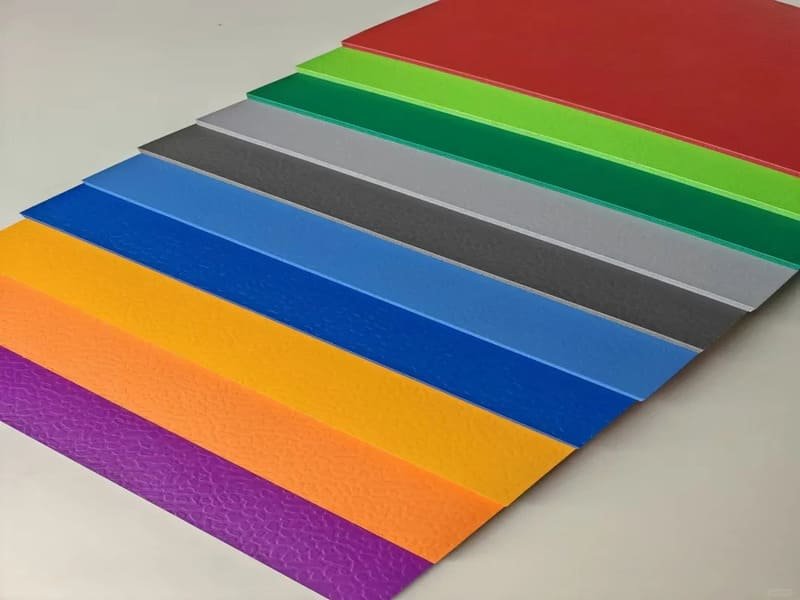
Maintenant que vous connaissez les avantages en termes de coûts, voyons comment choisir la bonne épaisseur pour votre plan de construction.
Comment choisir la bonne spécification de revêtement de sol PVC pour votre espace ?
Sélectionnez les spécifications de votre sol PVC en associant votre type de sport à une épaisseur de 4,5 mm à 9,0 mm et en effectuant un test d'humidité sur le sous-plancher.
| Scénario d'application cible | Meilleure épaisseur de sol | Choix de la texture de la surface | Préparation critique du béton |
|---|---|---|---|
| Courts de badminton et de tennis de table | 4,5 mm à 5,0 mm | Texture litchi ou sable pour l'adhérence | Film de protection contre l'humidité nécessaire |
| Studios de fitness et espaces de yoga | 5,5 mm à 6,0 mm | Motif lisse ou grain fin | Produit d'égalisation pour base plate |
| Basket-ball professionnel et gymnases multisports | 7,0 mm à 9,0 mm+. | Finition grain de bois profond | HR inférieur à 75%, pH entre 7 et 9 |
Le choix d'une mauvaise épaisseur de sol est une erreur fréquente chez les acheteurs. Un sol fin de 4,5 mm convient parfaitement au tennis de table, car les joueurs ont besoin d'une base ferme et rapide et de rebonds réguliers. Mais ce même sol de 4,5 mm est trop fin pour un terrain de basket commercial ou une salle de sport à fort impact. Ces espaces ont besoin d'un sol de 7,0 ou 8,0 mm pour protéger les joueurs lorsqu'ils tombent ou sautent. Vous devez également tester votre sous-plancher en béton avant l'installation. Si le béton est humide ou inégal, l'humidité s'accumulera et provoquera la formation de grosses bulles d'air sur votre nouveau sol.
Points de contrôle des sous-planchers étape par étape pour les ingénieurs
1. Essai d'humidité relative (HR)
Utilisez toujours une sonde électronique pour vérifier que l'humidité relative du béton est inférieure à 75% avant d'appliquer la colle.
2. Vérification du niveau et de la régularité
Utilisez une longue règle droite pour vérifier le sol de base. Remplissez les points bas avec un ciment autonivelant de qualité pour que la couche finale de PVC reste plane.
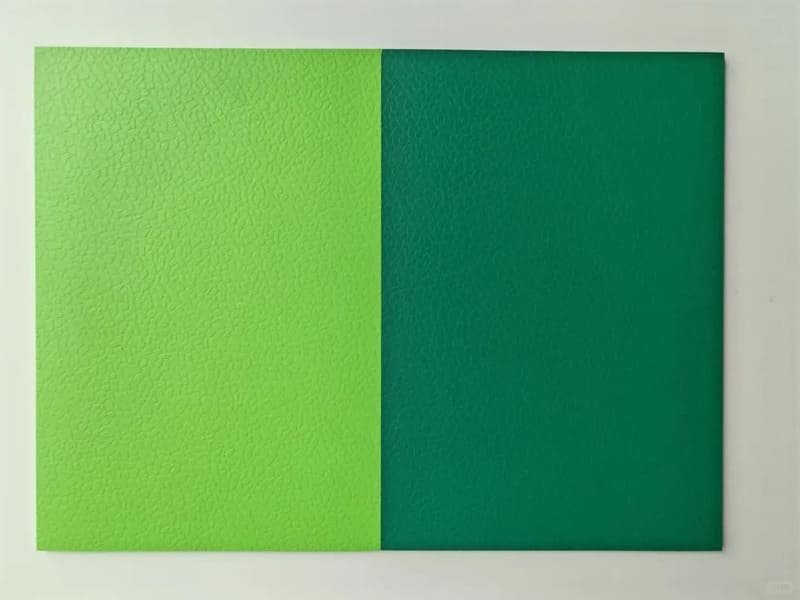
Permettez-nous de répondre à quelques questions fréquemment posées par les développeurs de projets et les agents d'achat.
FAQ sur les revêtements de sol sportifs en PVC
Quelle est la durée de vie d'un sol sportif commercial en PVC en cas d'utilisation intensive ?
Un sol sportif hétérogène en PVC de haute qualité dure entre 10 et 15 ans. La durée de vie dépend de l'épaisseur de la couche d'usure supérieure et du respect de programmes de nettoyage réguliers.
Les revêtements de sol sportifs en PVC peuvent-ils être utilisés à l'extérieur ?
Non, vous ne devez pas installer de sols sportifs en PVC à l'extérieur. Une exposition prolongée aux rayons UV du soleil extérieur décompose les chaînes de polymères, ce qui entraîne une décoloration des couleurs et une fissuration du support en mousse. Pour les terrains extérieurs, il est préférable d'utiliser des dalles à emboîtement en polypropylène (PP).
Quelle est la différence entre un sol PVC homogène et un sol PVC hétérogène pour le sport ?
Le PVC homogène est une couche solide du même matériau de haut en bas. Le PVC hétérogène utilise plusieurs couches techniques, dont une couche d'usure supérieure résistante, une maille en fibre de verre stable et une base en mousse amortissante. Le PVC hétérogène est bien meilleur pour le sport car il permet d'absorber les chocs.
Comment réparer une rayure ou une entaille profonde dans un sol sportif en PVC ?
Les petites rayures superficielles peuvent être réparées à l'aide d'un kit de retouche PU spécialisé. Pour les trous profonds ou les déchirures, vous devez découper la partie cassée proprement le long des coutures et souder à sa place un morceau de revêtement de sol en PVC assorti à l'aide d'un pistolet à souder à chaud.
Conclusion
Les revêtements de sol sportifs modernes en PVC offrent une surface sûre, très durable et rentable grâce à une ingénierie intelligente, des matériaux respectueux de l'environnement et une protection éprouvée contre les chocs selon la norme EN 14904.
Si vous êtes en train de planifier une nouvelle installation sportive, la rénovation d'un gymnase ou un appel d'offres commercial et que vous avez besoin de conseils techniques sur la sélection des matériaux, les largeurs de rouleaux ou les spécifications de couleurs personnalisées, n'hésitez pas à m'envoyer un message privé. Travaillons ensemble pour optimiser la conception de votre projet et les exigences de fabrication !