


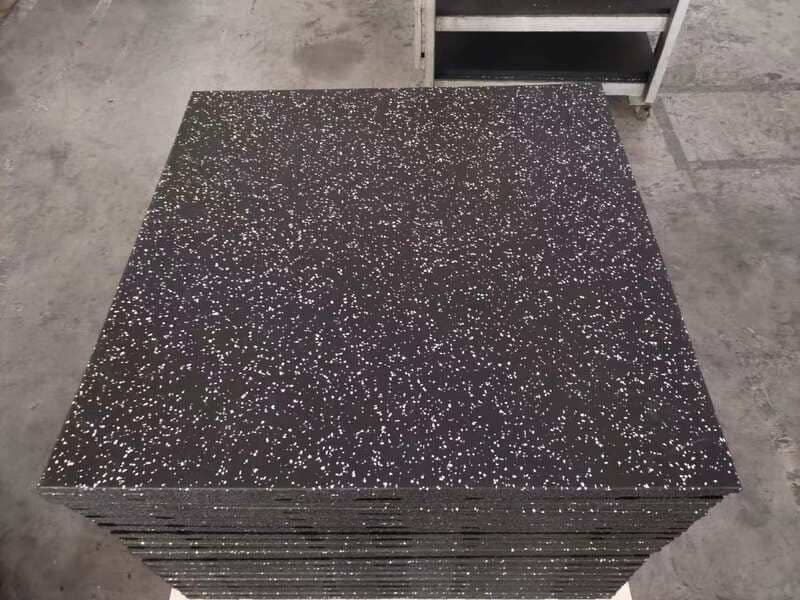
Les revêtements de sol en caoutchouc deviennent brillants en raison de la friction mécanique due au trafic piétonnier qui polit la surface, combinée à l'accumulation d'huiles cutanées, de sueur et de résidus de nettoyage inappropriés. Cela crée un film lisse qui reflète la lumière, remplaçant le fini mat d'origine par un aspect glissant et brillant.
En tant que responsable du contrôle de la qualité ayant passé des années à inspecter des installations de gymnastique et à tester la densité du caoutchouc en laboratoire, je vois constamment ce problème de "chemin brillant". Il se produit généralement dans les les zones de gymnastique très fréquentées Les propriétaires achètent du caoutchouc mat pour son adhérence et son aspect robuste. Les propriétaires achètent du caoutchouc mat pour son adhérence et son aspect robuste, c'est pourquoi il est frustrant de voir un effet miroir poli. Ce changement n'est pas seulement une question d'apparence ; c'est un signal que l'état physique de votre sol a changé. Nous devons déterminer s'il s'agit d'une usure permanente du matériau ou d'une simple couche de saleté nécessitant un traitement chimique approprié. Mon objectif est de vous montrer exactement pourquoi cela se produit et comment y remédier pour que vos installations restent sûres et professionnelles.
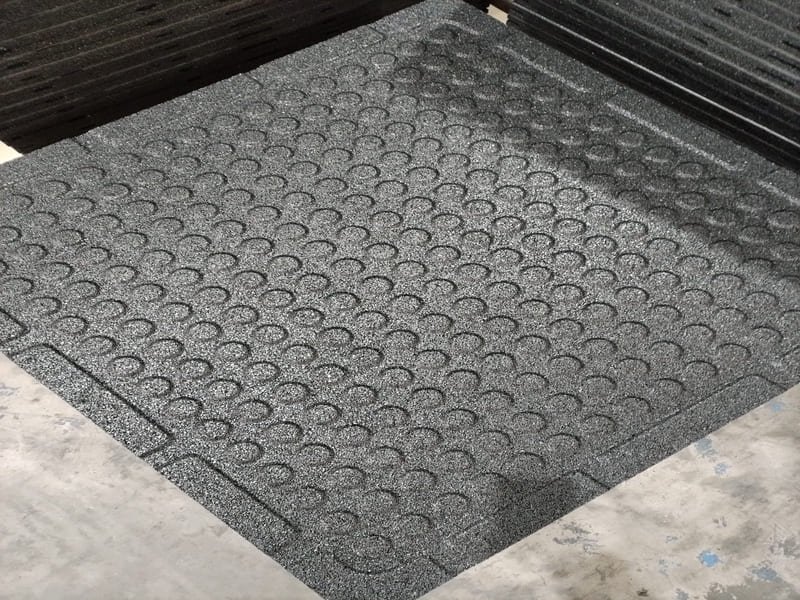
Il est conseillé de lire les sections suivantes pour comprendre la science qui sous-tend ce changement de surface.
S'agit-il d'un frottement mécanique ou d'un effet de frottement ?
Le frottement mécanique dû au trafic piétonnier constant agit comme un papier de verre à grain élevé qui polit lentement la surface en caoutchouc au fil du temps. Lorsque les chaussures pivotent et appuient sur le sol, elles aplatissent la texture microscopique du caoutchouc, le rendant plus lisse et plus réfléchissant que le fini mat d'origine.
Lorsque j'analyse le caoutchouc au microscope, la finition mate provient d'une minuscule texture de surface inégale qui diffuse la lumière. Dans les zones très fréquentées, le poids des utilisateurs et le frottement des semelles en caoutchouc compriment ces minuscules pics. C'est ce que j'appelle "l'aplatissement de la surface". Au fil des mois, le caoutchouc perd sa capacité à diffuser la lumière et commence à la refléter. En outre, la chaleur générée par les mouvements rapides peut légèrement ramollir la couche supérieure de polymère, ce qui la rend plus sujette à cet effet de lissage.
| Facteur | Impact sur la brillance | Raison technique |
|---|---|---|
| Trafic piétonnier | Forte augmentation | Le frottement constant agit comme un agent de polissage. |
| Mouvement de pivotement | Augmentation modérée | La force de cisaillement aplatit le grain de la surface plus rapidement. |
| Production de chaleur | Faible augmentation | Ramollit le liant SBR/EPDM, facilitant ainsi la compression. |
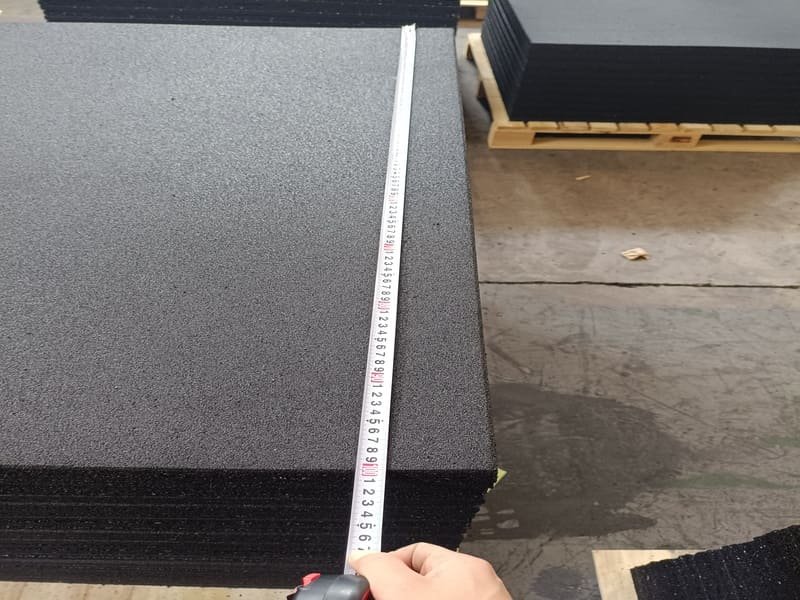
Cette usure mécanique n'est que la moitié de l'histoire, et la partie suivante pourrait vous surprendre.
Comment les contaminants et les résidus créent-ils un film brillant ?
La brillance est souvent due à une accumulation d'huiles corporelles, de sueur et de produits chimiques de nettoyage inadaptés qui laissent une "pellicule de savon" sur le sol. La saleté et le sable fin agissent comme des agents de polissage supplémentaires, tandis que les serpillières ne font souvent qu'étaler ces huiles au lieu de les décoller.
D'après mon expérience, les sols "propres" sont souvent les plus brillants parce que les gens utilisent des nettoyants dont le pH n'est pas le bon. Si vous utilisez un savon à forte teneur en cire ou un nettoyant dont le pH n'est pas neutre, vous peignez essentiellement une fine couche de plastique sur le caoutchouc. La sueur et les huiles de la peau des athlètes réagissent avec les miettes de caoutchouc recyclé, créant un résidu collant qui retient les particules réfléchissant la lumière. Le frottement de la serpillière est un problème majeur. Si l'eau de votre seau est sale, vous ne faites que déplacer l'huile des bords de la pièce vers le centre le plus fréquenté.
Le rôle de la densité des matériaux
1. SBR recyclé vs. EPDM
J'ai constaté que le SBR (caoutchouc styrène-butadiène) recyclé standard a tendance à devenir brillant plus rapidement que les couches supérieures en EPDM très colorées. Cela s'explique par le fait que le SBR est souvent plus poreux et peut piéger plus d'huiles.
2. Densité et dureté Shore
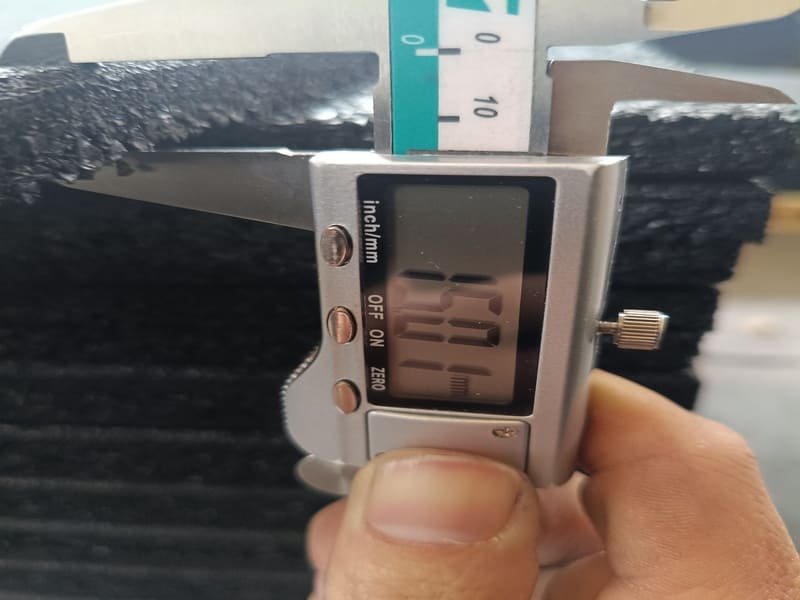
La densité est la caractéristique la plus importante que j'observe. Une dalle de faible densité (inférieure à 900 kg/m³) contient davantage de poches d'air. Ces poches s'effondrent sous l'effet du poids, ce qui accélère le lissage de la surface. Densité de caoutchouc élevée et dureté Shore A résistent à cet effet de "polissage" car leur surface est trop rigide pour être facilement polie par les chaussures.
3. Performance du caoutchouc vierge
Le caoutchouc vierge est moins poreux que le caoutchouc recyclé. Il n'absorbe pas les huiles aussi facilement, de sorte que le "film brillant" met beaucoup plus de temps à se former. Toutefois, si vous n'utilisez pas d'auto-laveuse, même le caoutchouc vierge finira par être brillant à cause des résidus.
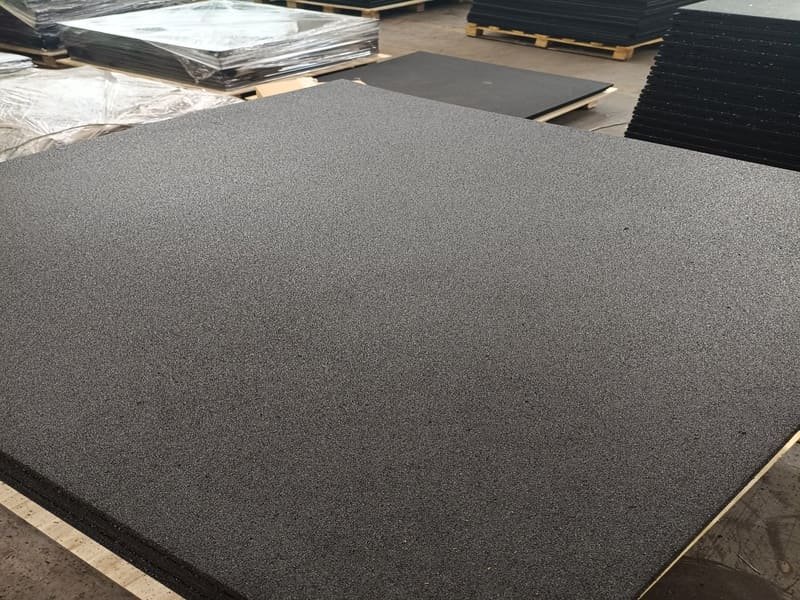
Le lustre n'est pas seulement une horreur, et la section suivante explique pourquoi il représente un risque pour la sécurité.
Les revêtements de sol en caoutchouc brillant sont-ils dangereux pour les utilisateurs ?
Oui, le caoutchouc brillant est dangereux car une surface lisse réduit considérablement le coefficient de frottement (COF), ce qui rend le sol glissant. Lorsque la texture mate disparaît, il y a moins de "mordant" entre la chaussure et le sol, ce qui augmente le risque d'accident lors du levage de charges lourdes.
Du point de vue de l'ingénierie de la sécurité, nous voulons un COF d'au moins 0,6 pour les salles de sport. Lorsqu'un sol devient brillant, ce chiffre peut chuter. Il s'agit là d'un problème majeur pour les marques commerciales. Un sol brillant et irrégulier donne l'impression d'être négligé et bon marché, ce qui nuit à l'image de votre marque. Il indique à vos membres que l'équipement est entretenu, mais que les fondations ne le sont pas. Si votre sol ressemble à un miroir sous le rack de squat, il est temps d'agir avant que quelqu'un ne glisse pendant une série.
| État de surface | Risque de glissement | Mesures recommandées |
|---|---|---|
| Original Mat | Faible | Nettoyage quotidien standard. |
| Légèrement brillant | Moyen | Dégraissage et nettoyage en profondeur. |
| Poli/Miroir | Haut | Décapage et rescellage mat. |
L'arrêt de ce processus nécessite une modification de votre routine d'entretien.
Comment prévenir et inverser l'effet de brillance ?
Pour inverser la brillance, vous devez utiliser un dégraissant puissant et une autorécureuse pour éliminer l'accumulation d'huile et de savon. Pour l'éviter, il faut utiliser des nettoyants au pH neutre, installer des tapis d'entrée pour retenir les gravillons et faire pivoter les dalles modulaires pour répartir l'usure sur l'ensemble du sol.
Je dis toujours à mes clients de ne plus utiliser de vadrouille manuelle pour les nettoyages en profondeur. L'agitation mécanique d'une autorécureuse est nécessaire pour extraire les huiles des pores du caoutchouc. Si le sol est déjà poli en permanence, vous aurez peut-être besoin d'un décapant pour enlever la vieille cire, puis d'appliquer un scellant spécialisé au fini mat. Ce produit ajoute une couche de protection qui ne brille pas. Utilisez également des tapis d'entrée. Si vous arrêtez le sable et les gravillons à la porte, vous arrêtez l'effet "papier de verre" du polissage de vos sols.
Liste de contrôle pour l'entretien des zones à fort trafic
- Tous les jours : Passez l'aspirateur ou la serpillière pour éliminer les grains abrasifs.
- Hebdomadaire : Passer une serpillière humide avec un nettoyant professionnel pour caoutchouc au pH neutre.
- Mensuel : Utilisez une autorécureuse avec un dégraissant dans les zones très fréquentées.
- Tous les ans : Inspectez les "chemins brillants" et envisagez de refaire l'étanchéité en finition mate.
Nombreux sont ceux qui pensent qu'une fois qu'un sol est brillant, il est abîmé, mais c'est un mythe.
Conclusion
Le caoutchouc brillant est dû au frottement et à l'accumulation d'huile, mais il peut être corrigé par un nettoyage en profondeur et un entretien adéquat.
Besoin d'aide pour restaurer votre sol ? Si vous avez affaire à des taches glissantes et brillantes ou si vous avez besoin d'un caoutchouc de haute densité qui résiste au polissage, je peux vous aider. Envoyez-moi un message privé pour obtenir un protocole d'entretien personnalisé ou un devis pour notre revêtement de sol de gymnase de qualité industrielle à finition mate.