


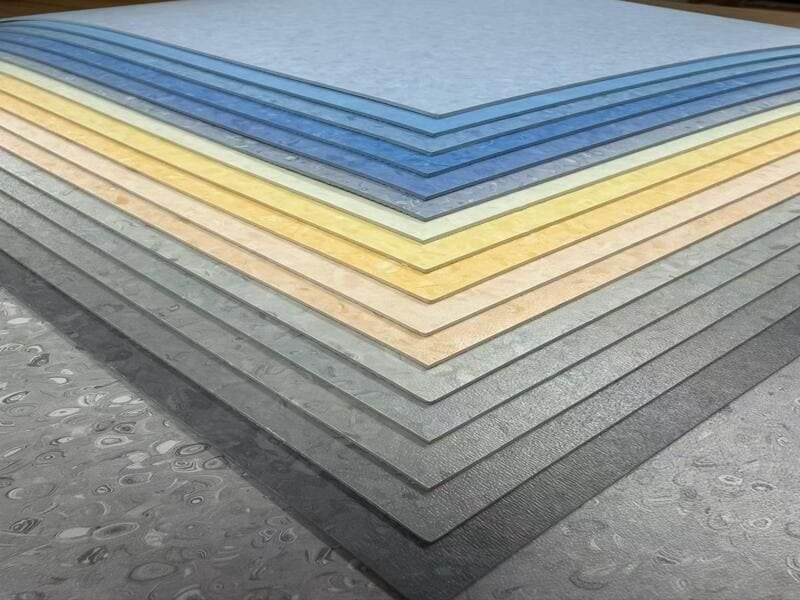
There is no single best flooring material for every commercial office. Commercial glue-down Luxury Vinyl Tile (LVT) is often the best all-round hard-surface option because it balances durability, design flexibility, and low maintenance. However, heavy commercial carpet tile remains the industry standard for open-plan workspaces and meeting rooms where high acoustic absorption is the main priority, while specialized sheet vinyl, rubber, or ceramic tile are better suited for service, hygiene, and wet areas.
Selecting the right flooring system requires a careful look at the relationship between material composition and your specific workplace performance needs. In my career optimizing manufacturing lines for resilient flooring, I have seen many facility managers pick materials based only on aesthetics or a single specification. A truly successful corporate environment requires a balanced, zonal approach. It must weigh initial installation parameters against total cost of ownership, while matching the specific technical performance of each material to the functional demands of the space. This technical analysis breaks down the leading commercial office flooring options based on certified performance standards, helping you engineer an optimal, long-term solution for your facility.
What Key Performance Indicators Must Guide Your Office Flooring Selection?
Evaluating commercial flooring requires analyzing standardized engineering metrics like traffic classification, rolling load capacity, acoustic ratings, and indoor air quality compliance rather than just visual appeal.
| Key Performance Indicator (KPI) | Relevant Test Standards | Critical Operational Impact |
|---|---|---|
| Commercial Use Class | ISO 10874 / ASTM F1303 | Determines suitability for moderate, heavy, or very heavy traffic. |
| Castor Chair Resistance | EN 425 / ISO 4918 | Prevents joint delamination and wear from rolling office chairs. |
| Impact Sound Insulation | ISO 10140-3 / ASTM E492 | Measures the reduction of footfall noise traveling to spaces below. |
| Static Indentation | EN ISO 24343-1 / ASTM F1914 | Dictates the floor’s ability to recover from heavy furniture loads. |
| Emisiones de COV | FloorScore / AgBB / LEEDv4 | Assures indoor air quality and compliance with building health codes. |
When I consult on office flooring engineering, I stress that relying on a single metric like wear layer thickness is a mistake. For example, a busy office requires a product certified under ISO 10874 as Class 33 (Heavy Commercial) or Class 42 (General Industrial). This specification ensures the complete flooring structure—not just the surface—can withstand continuous stress. You must look at the castor chair test results, where a machine rolls a weighted wheel over the floor for 25,000 cycles to evaluate joint stability and delamination resistance. Furthermore, static indentation limits prevent permanent damage from heavy file cabinets. Finally, indoor air quality is a major factor in modern design. Specifying low-VOC materials with FloorScore certification is necessary to maintain a safe, healthy environment for employees who spend long hours inside the building.
How Do the Top Commercial Office Flooring Materials Compare Formally?
A rigorous comparison shows that every material has clear trade-offs between physical durability, acoustic absorption, environmental maintenance, and long-term return on investment.
| Material para suelos | ISO 10874 Class | Sound Absorption ($\alpha_w$) | Maintenance Routine | Primary Structural Risk |
|---|---|---|---|---|
| LVT encolado | Class 33 / 34 | Bajo a moderado | Sweep, damp mop | Humedad del subsuelo |
| Rigid Core SPC | Class 33 / 42 | Low (unless backed) | Sweep, damp mop | Joint breakage under heavy rolling loads |
| Commercial Carpet Tile | Class 33 | High ($0.15 – 0.25$) | Daily vacuum, deep steam | Permanent staining, fiber crushing |
| Hormigón pulido | N/A | Very Low ($< 0.05$) | Dust mop, auto-scrub | Surface cracking, high reverberation |
| Madera de ingeniería | Class 31 / 32 | Moderado | Specialized wood cleaners | Surface scratching, humidity shifting |
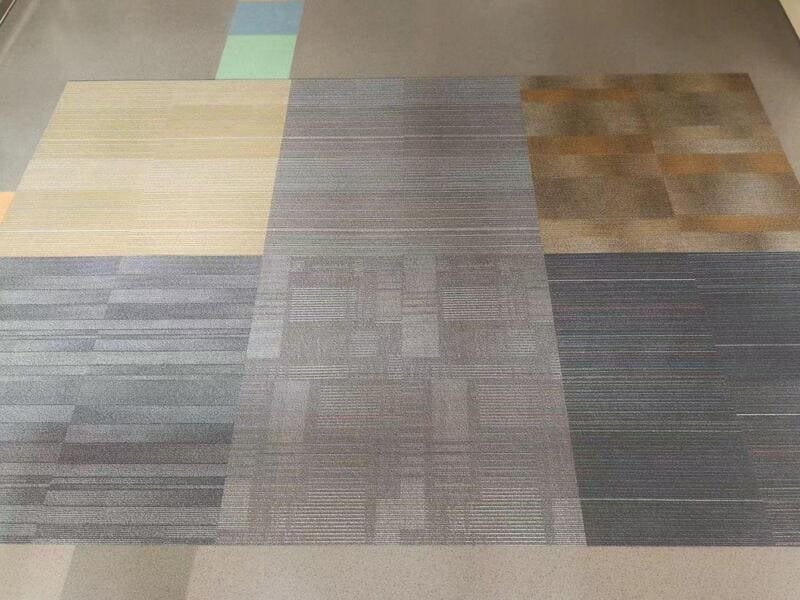
Let’s break down the actual performance differences. Commercial carpet tiles are the traditional benchmark for a reason. They offer high sound absorption coefficients ($\alpha_w$) that reduce room echoing and ambient noise in open areas. However, their fibers trap dust and stains, which increases daily cleaning costs. Polished concrete is highly durable and lasts a long time, but it offers almost no sound absorption, creating loud, echoing spaces. Engineered wood adds an executive aesthetic, but it scratches easily under rolling chairs and shifts when indoor humidity changes. Flexible glue-down LVT solves many of these issues. It offers excellent dimensional stability, simple maintenance, and high resistance to surface wear. While it is naturally harder than carpet, modern acoustic-backed LVT can reduce footfall noise significantly compared to conventional hard floors. It provides a balanced technical option without the maintenance liabilities of textile coverings.
What Is the Core Technical Difference Between Commercial LVT and SPC?
Commercial Luxury Vinyl Tile (LVT) and Stone Plastic Composite (SPC) are distinct resilient floors with different core structures, installation methods, and performance behaviors under corporate conditions.
| Propiedad | Flexible Glue-Down LVT | Rigid Core SPC |
|---|---|---|
| Composición del núcleo | Polyvinyl chloride (PVC) resin with plasticizers | Calcium carbonate (limestone) and PVC stabilizer |
| Método de instalación | Full-spread commercial adhesive | Click-lock, floating system |
| Requisitos del subsuelo | Extremely strict; telegraphs minor imperfections | Forgiving of minor subfloor unevenness |
| Capacidad de carga rodante | High; adhesive prevents material shifting | Moderate; heavy loads can stress click joints |
| Reparabilidad | High; individual tiles can be heated and replaced | Moderate; requires unclicking multiple rows or specialized cutting |
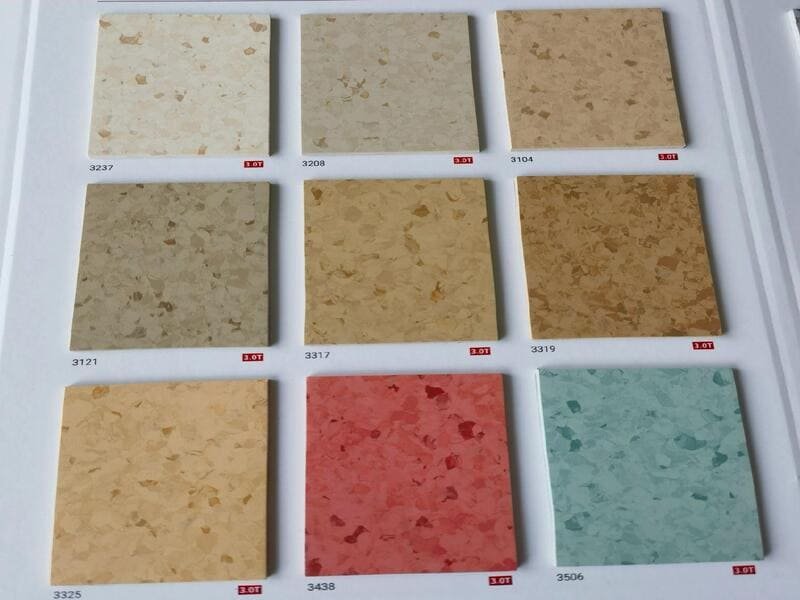
From a manufacturing and process engineering perspective, LVT and SPC are built for different conditions. Traditional commercial LVT is flexible. When glued down with a full-spread adhesive, it forms a tight bond with the concrete slab. This makes it highly resistant to heavy rolling loads and continuous office chair movement, as the material cannot shift. However, it requires a perfectly smooth subfloor, or imperfections will show through the surface over time. SPC features a rigid polymer core. This core provides better indentation resistance and can be installed over slightly uneven subfloors using a click-lock system. However, for an office with heavy rolling files or constant chair movement, you must verify the joint strength of the SPC. Heavy loads can stress floating click systems more than glued vinyl. While SPC offers excellent dimensional stability, proper expansion gaps and HVAC climate controls are still required to ensure long-term performance.
How Do You Design a Functional Zonal Flooring Strategy for an Office?
An effective commercial facility layout uses a zonal strategy to place specific flooring materials where their technical properties match the environment’s functional demands.
| Designated Office Zone | Recommended Primary Floor | Recommended Secondary Floor | Engineering Objective |
|---|---|---|---|
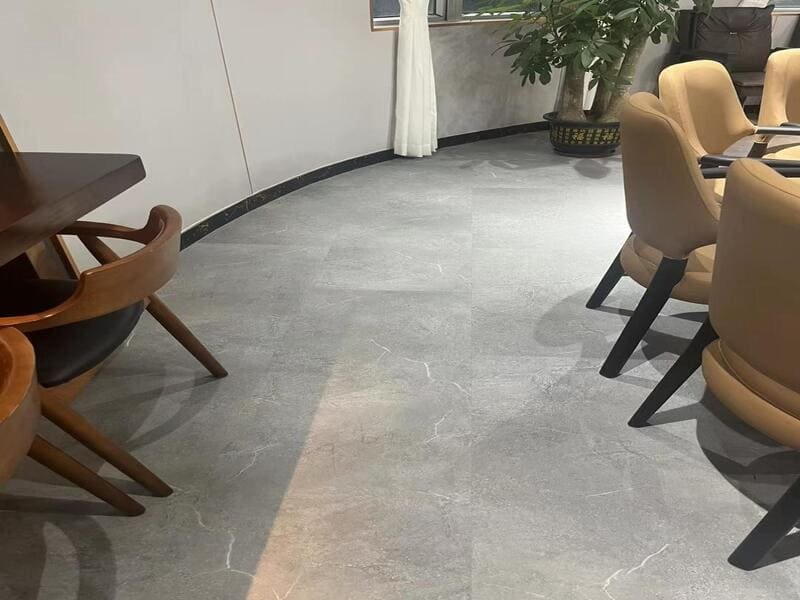
| Lobby / Main Reception | High-Grade Stone-Look LVT | Large-Format Ceramic Tile | Maximum wear resistance and slip control. |
| Open Offices / Workstations | Commercial Carpet Tile | Acoustic-Backed Glue-Down LVT | Maximum sound absorption and comfort. |
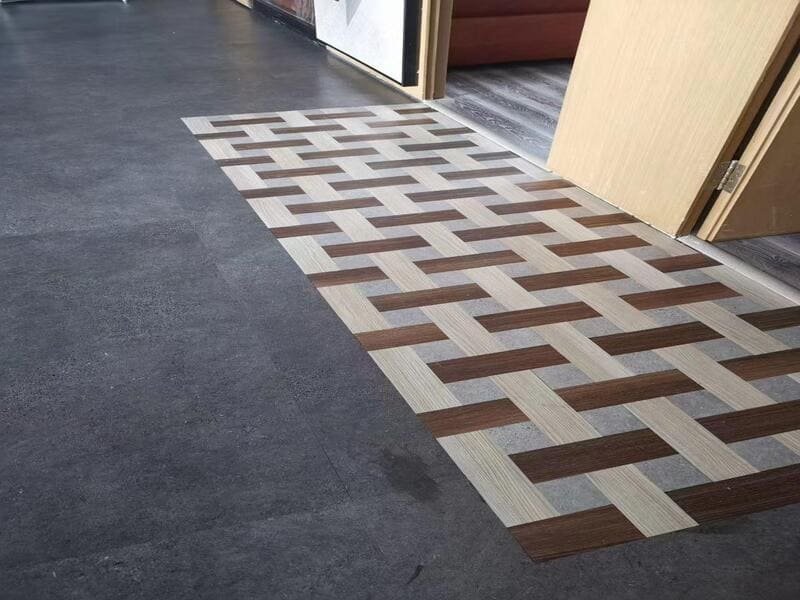
| Conference Rooms | Acoustic LVT / Premium Planks | Carpet Tile with Inset Borders | Speech clarity and professional design. |
| Breakrooms / Cafeterias | Glue-Down LVT / Sheet Vinyl | Slip-Resistant Porcelain Tile | Spill containment and easy sanitation. |
| Copy Rooms / IT Hubs | Homogeneous Sheet / Static LVT | Heavy-Duty Rubber Flooring | Rolling load capacity and static control. |
A single material cannot meet the needs of a whole modern office. The entry zone requires a material that can handle tracked-in moisture and dirt. High-grade LVT or porcelain tile works best here because they protect the interior. For open workstation areas, the main challenges are conversation noise, foot traffic, and chair movement. Placing carpet tiles or acoustic-backed LVT in these areas helps absorb sound and control echoing. Conference rooms require excellent acoustics to ensure clear speech during meetings. You can achieve this by combining acoustic vinyl with targeted textile accents. In breakrooms, safety and spill cleanup matter most. Click-lock SPC can allow liquids to seep into the seams, so glue-down LVT or sheet vinyl is a better choice. They offer tighter joints and simpler cleanup for food and beverage spills, protecting the subfloor from damage.
What Hidden Costs and Subfloor Engineering Rules Prevent Floor Failures?
Long-term flooring performance depends on managing hidden installation costs, subfloor moisture levels, and proper material preparation before the building opens.
| Installation Hazard | Engineering Root Cause | Preventative Action Required |
|---|---|---|
| Adhesive Failure / Blistering | High concrete subfloor moisture emission | Conduct RH testing (ASTM F2170); apply vapor barrier if needed. |
| Joint Gapping / Cupping | Lack of material thermal acclimation | Store flooring in regulated HVAC conditions for 48 hours before installation. |
| Telegraphing / Bumps | Poor subfloor smoothing and cleaning | Patch, skim-coat, and sand the concrete base completely. |
| Premature Surface Wear | Using residential-grade products | Verify a commercial use class rating and appropriate wear layer thickness. |
Many commercial flooring failures are caused by poor installation conditions rather than the material itself. High moisture levels in a concrete slab can destroy adhesives, causing glue-down LVT to bubble or shift. You must perform relative humidity testing using in-situ probes according to ASTM F2170 before installation. If the moisture levels exceed the adhesive limits, a specialized moisture barrier is required. Material acclimation is also critical. Resilient vinyl must sit in the regulated temperature and humidity of the job site for at least 48 hours before being laid down. If you skip this step, the planks may expand or contract later, causing gaps. Finally, using residential-grade products in a commercial setting can lead to early wear and void your warranty. Buying commercial-grade materials that match your traffic and load requirements ensures the floor performs as engineered for its entire lifespan.
Conclusión
The best office floor requires a balanced, zoned approach that matches specific material engineering with the traffic, acoustic, and maintenance needs of each zone.
Understanding these technical requirements helps you avoid common installation mistakes and choose a floor that looks good while lowering your total operating costs. If you plan your installation carefully, test your subfloor conditions, and select materials based on certified commercial standards, your office floor will remain durable, functional, and professional for years to come.
Need professional technical advice for your specific office project, volume procurement pricing, or customized functional flooring solutions? Send me a private message today. I can provide comprehensive technical consultation covering manufacturing processes, material selection, and structural installation specifications.