


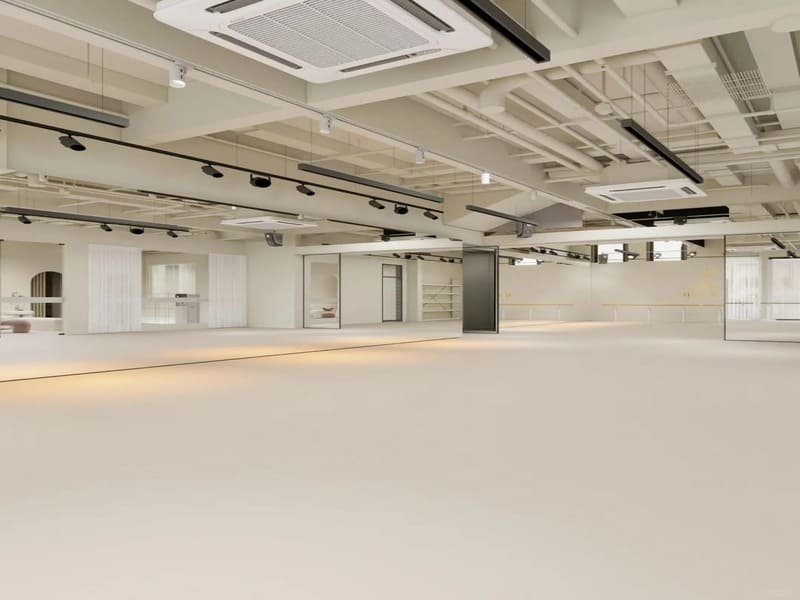
Yes, PVC sports flooring can be an excellent choice for many dance applications, but the right construction depends on dance style, impact level, and subfloor setup. It is not one single product, so the type you choose has to match how your dancers actually move.
I get this question constantly from studio owners. They are stuck between budget, safety, and performance, and they are not sure which vinyl dance floor covers all three. Here is the honest answer: PVC sports flooring is a family of products, not one product. Marley flooring is a type of performance vinyl commonly used in dance, but not every PVC sports floor is designed as a Marley dance surface. Some PVC floors are built for tap and heels. Some are built for ballet and jumps. Some are built for hip-hop crews who slide and drop to the floor. The trick is matching the wear layer, the backing, and the surface texture, plus the subfloor underneath, to what your dancers actually do every day.
Picking the wrong floor causes real problems. Dancers slip, shoes tear the surface, or the studio pays for repairs within a year. So before you buy a roll, let’s break down which floor fits which style, whether you need a sprung floor underneath, and what specs actually matter.
Which PVC Dance Floor Is Best for Different Dance Styles?
Ballet needs a controlled, stable surface plus a shock-absorbing floor system. Tap and flamenco need a denser surface with a durable wear layer. Hip-hop needs a surface that handles sneakers and floor work. Multi-purpose studios need a middle-ground floor that does all three reasonably well.
Each dance style puts different stress on a floor, so the surface needs different properties.
Ballet & Contemporary
Dancers need controlled slip resistance for turns and pirouettes, plus real shock absorption to protect knees and ankles during jumps and landings. That cushioning usually comes from the whole floor system, not the vinyl alone. Professional ballet studios typically install a PVC dance surface over a sprung floor rather than relying on foam backing by itself.
Tap, Flamenco & Irish Dance
These styles hit the floor hard, over and over. A denser PVC surface with a durable wear layer is usually preferred here, because it resists denting from heel strikes better than a soft, heavily cushioned floor. That said, PVC’s real advantage for tap and heel-heavy styles isn’t necessarily the best possible acoustics, it’s durability, easier maintenance, and portability compared with hardwood.
Hip-Hop & Jazz
Dancers move between sneakers and floor work in the same routine. The surface needs enough grip for footwork but not so much that it grabs skin during floor slides.
| Dance Style | Prioridad | Recommended Surface Type |
|---|---|---|
| Ballet/Contemporary | Controlled grip, floor-system shock absorption | PVC over sprung subfloor |
| Tap/Flamenco/Irish | Durability, impact resistance | Denser PVC, durable wear layer |
| Hip-Hop/Jazz | Versatility, balanced friction | Textured PVC, medium density |
| Multiusos | Balance of all factors | Mid-density PVC dance vinyl |
For studios teaching several styles, I usually suggest a mid-density PVC dance vinyl around 4.5mm to 6mm. It won’t be perfect for any single style, but it holds up across all of them.
Once you know which category your studio fits into, the next question that comes up constantly is whether you need something underneath the vinyl.
Does PVC Dance Flooring Need a Sprung Floor?
For light or occasional use, PVC directly on concrete can work. For daily training, jumps, or professional use, PVC dance vinyl paired with a sprung subfloor is the safer standard, because the vinyl and the subfloor handle different jobs.
This distinction trips up a lot of first-time buyers, so it’s worth separating clearly.
The PVC surface itself is responsible for friction, slip resistance, and surface feel underfoot. It is not designed to absorb the full impact of repeated jumps and landings on its own. A sprung floor, typically a batten system or a panel system with foam or rubber underneath, is what absorbs the deeper shock and protects joints over years of daily training.
Laying PVC dance vinyl straight onto bare concrete is common for casual or recreational studios and works fine for light use. For serious, high-impact training, especially ballet, contemporary, and any style with repeated jumping, pairing PVC sports vinyl with a sprung subfloor system is the safer approach for long-term joint health.
How Does PVC Compare to Hardwood and Rubber for Dance?
PVC often offers advantages in cost, installation speed, and maintenance. Sprung hardwood systems may still be preferred for certain professional dance applications where a specific feel and sound are non-negotiable.
None of these three materials wins outright. Each trades off differently.
| Tipo de suelo | Lo mejor para | Pros | Contras |
|---|---|---|---|
| PVC Dance Vinyl | Multi-style studios, touring, budget-conscious builds | Affordable, durable, fast install, easy to clean | Needs correct backing/density for the style |
| Madera maciza | Professional ballet, traditional dance training | Natural underfoot feel, classic acoustic response | Higher cost, longer installation, more maintenance |
| Suelos de caucho | Fitness-dance crossover spaces | Strong impact resistance | Often too much grip for turns and slides |
PVC often wins on cost, installation speed, and maintenance across a wide range of dance uses. Sprung hardwood still has a place in some professional or traditional dance settings where a specific underfoot feel and sound response matter more than cost or install time.
Once you’ve weighed these tradeoffs, the four core reasons studios choose PVC in the first place are worth understanding.
Why Do Studios Choose PVC for Dance in the First Place?
PVC sports flooring protects joints through the overall floor system, prevents slips and floor burns through engineered surface texture, resists wear from daily traffic, and typically costs less over its lifespan than sprung hardwood.
Joint Protection & Shock Absorption
Floors tested to standards like ASTM F2772 or EN 14904 show measurable shock absorption values, which give studio owners a real number to compare rather than a marketing claim. These standards were mainly developed for sports flooring generally, not dance specifically, but they still provide a useful reference point for comparing impact performance between products.
Optimal Friction
Surface texture on PVC dance floors is engineered to sit in a narrow friction range. Too little grip and dancers slip. Too much and they get painful floor burns during turns and slides. Good manufacturers test friction coefficients to land in a safe middle zone.
Durabilidad y longevidad
The wear layer, the clear top coating on the PVC, takes the daily hits from shoes, props, and rolling equipment. For dance-specific PVC surfaces, friction consistency and dimensional stability over time can matter just as much as raw wear-layer thickness, so don’t judge a floor on that one number alone.
Relación coste-eficacia
PVC rolls generally cost less upfront than sprung hardwood, install faster, and need less structural subfloor work. Over a 10-year lifespan, most studios spend less total money on PVC, even accounting for eventual replacement.
These benefits sound great on paper, but studio owners still have real worries before they commit to a purchase. Let’s go through the ones I hear most often.
What Are the Most Common Concerns About PVC Dance Flooring?
The three biggest concerns are shoe damage to the floor, knee strain on concrete subfloors, and chemical smell from new vinyl. Each has a clear, practical solution based on material selection.
"Will tap shoes or heels tear the floor?"
Not if you pick the right product. Standard foamed PVC made for general fitness use will dent and tear under heel strikes. A denser PVC surface with a thick wear layer is built to take that kind of point-load impact without damage.
"Is PVC flooring bad for knees if laid on concrete?"
As covered above, PVC alone on bare concrete gives limited cushioning. For serious dance training, pairing PVC sports vinyl with a sprung subfloor system is the safer choice for protecting joints over time.
"Are there harmful chemical smells?"
Cheap vinyl made with recycled content or heavy plasticizers can carry a strong smell and higher VOC emissions. I recommend choosing 100% virgin vinyl with low-VOC certification, and asking the manufacturer for test reports confirming emission levels before you buy.
Crucial Specifications to Look For When Buying
Check total thickness, wear layer thickness, and surface coating type. Together these tell you how the floor will feel, how long it will last, and how much maintenance it needs.
Espesor total
Thickness ranges from 2.0mm for travel or temporary use up to 8.0mm or more for heavy-duty permanent installations. Thinner floors are easier to roll, transport, and store, which suits touring companies. Thicker floors give better cushioning for permanent studio spaces with daily heavy use.
Espesor de la capa de desgaste
A thicker wear layer generally resists scratches and scuffs longer. But don’t treat this as the only number that matters — for dance-specific vinyl, surface friction consistency and dimensional stability matter alongside wear-layer thickness, not instead of it.
Surface Treatment (PUR/UV)
A polyurethane (PUR) or UV-cured coating affects both friction consistency and cleaning difficulty. A well-applied PUR coating keeps friction stable over years of use and makes daily cleaning much faster.
How Do You Install and Maintain PVC Dance Flooring?
Permanent studios typically use glue-down installation. Touring companies and portable setups often use loose-lay methods with tape or welding rod. Regular cleaning with the right products keeps the surface safe and long-lasting.
Installation Options
Glue-down installation suits permanent studios, since it locks the floor to the subfloor and prevents shifting during heavy footwork. Portable dance vinyl, including many Marley-style products, is often loose-laid with perimeter tape rather than fully adhered, which lets touring companies set up and remove flooring at different venues without damaging either surface. Semi-permanent seaming, such as hot-welded seams, is another option for spaces that need occasional but not constant relocation.
Rutina de limpieza
Black shoe scuffs and rosin buildup are the most common maintenance issues on dance floors. I recommend a neutral pH cleaner and a soft mop for daily cleaning, avoiding harsh solvents that strip the surface coating and reduce slip resistance over time. Weekly deeper cleaning removes rosin buildup before it hardens into a sticky film.
Conclusión
High-quality PVC dance flooring is a proven, practical choice for most modern studios, provided you match the surface, backing, and subfloor to your dance style and traffic level.
Not sure which spec sheet fits your studio? Traffic levels, dance styles, and subfloor conditions vary a lot from studio to studio, so the right thickness, backing, and installation method really do depend on your specific space. Envíame un mensaje directamente and I’ll walk you through material samples and help you match a spec sheet to your actual training needs.