


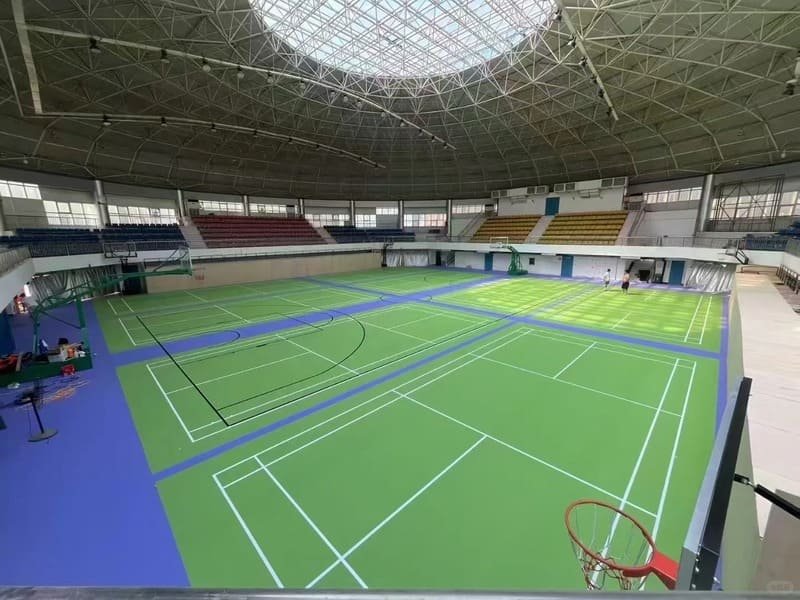
PVC sports flooring over a wood or concrete subfloor is the gold standard for pure badminton because it provides the best shock absorption, slip resistance, and ball visibility, while other materials like hardwood or modular tiles serve specific multi-sport or outdoor facility needs.
As a technical R&D engineer who develops and improves sports flooring formulas daily, I know that your court floor is the most critical asset of your facility. It directly impacts player performance, footwork speed, and injury prevention. Most facility owners struggle to choose between traditional wood, professional PVC mats, or multi-sport interlocking tiles. This guide will cover materials, technical specs, player safety, and cost analysis to help you make an engineering-backed decision for your facility.
Selecting the wrong floor layout always leads to high renovation costs and player complaints. Let us look deep into the material properties to see what makes a floor perform well under pressure.
Why Are Technical Requirements Crucial for Court Performance?
A high-performing badminton floor must meet specific shock absorption, friction, and deformation standards like EN 14904 to protect players from joint stress and ensure predictable footwork during high-speed lunges.
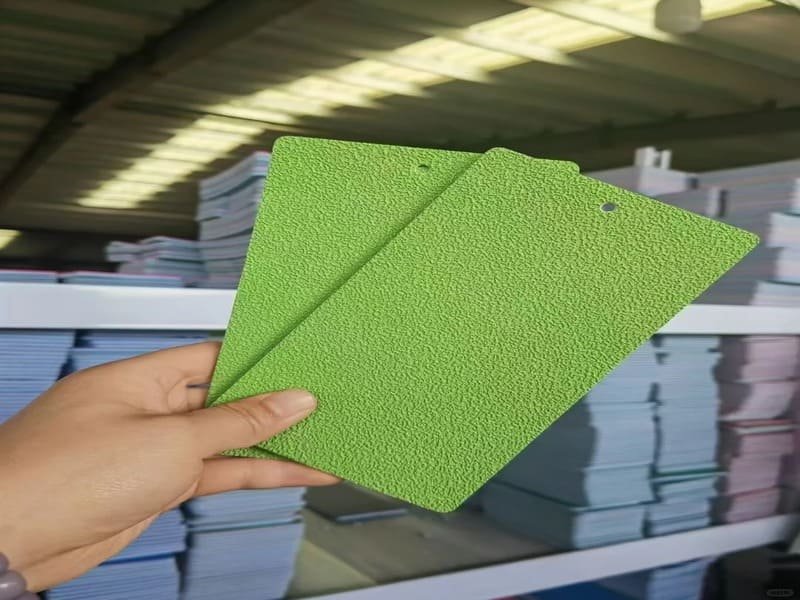
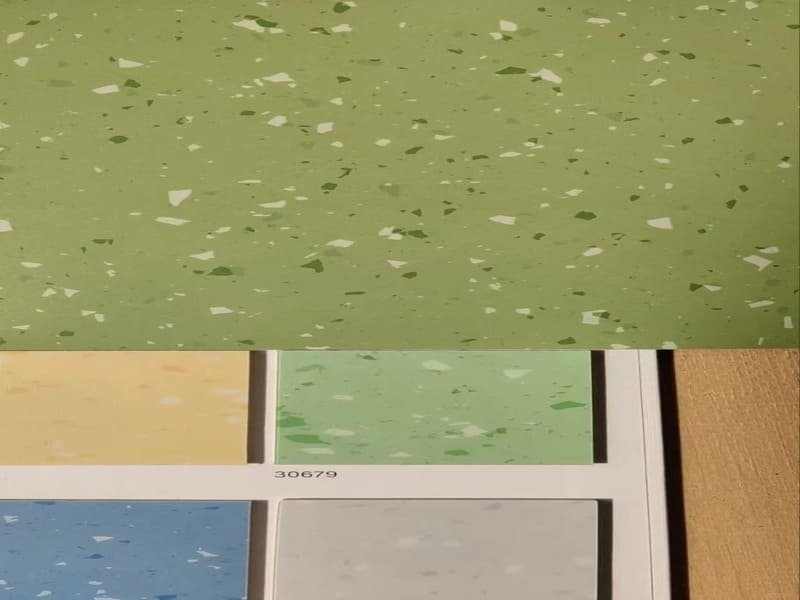
When we design PVC sports surfaces, we focus heavily on the force reduction index. According to European standard EN 14904, sports floors must provide a shock absorption value between 25% and 45%. This range reduces the impact load on knees and ankles during high jumps. Friction must sit between 80 and 110 units. Too much grip causes ankle sprains, while too little grip causes dangerous slips. Vertical deformation must remain low, usually under 3.5mm, so players can change direction fast without losing power. Finally, we implement matte surface finishes to prevent glare from overhead LED lights. We use specific mint green tones because they offer the best contrast against a white shuttlecock.
Engineering Metrics for Badminton Surfaces
| Технические параметры | Standard Range (EN 14904) | Impact on Player |
|---|---|---|
| Поглощение ударов | 25% – 45% | Reduces joint fatigue and long-term impact injuries |
| Коэффициент трения | 80 - 110 | Balance of grip and sliding for fast lunges |
| Вертикальная деформация | ≤ 3.5 mm | Provides stability for rapid directional changes |
| Gloss Level | < 30% (Matte) | Eliminates blinding light glare from LED fixtures |
Choosing the right material requires understanding these physical limits. Let us look at the top four material contenders for badminton courts.
Is PVC Sports Flooring the Absolute Gold Standard?
PVC sports flooring is the best choice for dedicated badminton courts because its multi-layer design provides point-elastic behavior, optimal grip, and direct compliance with Badminton World Federation requirements.
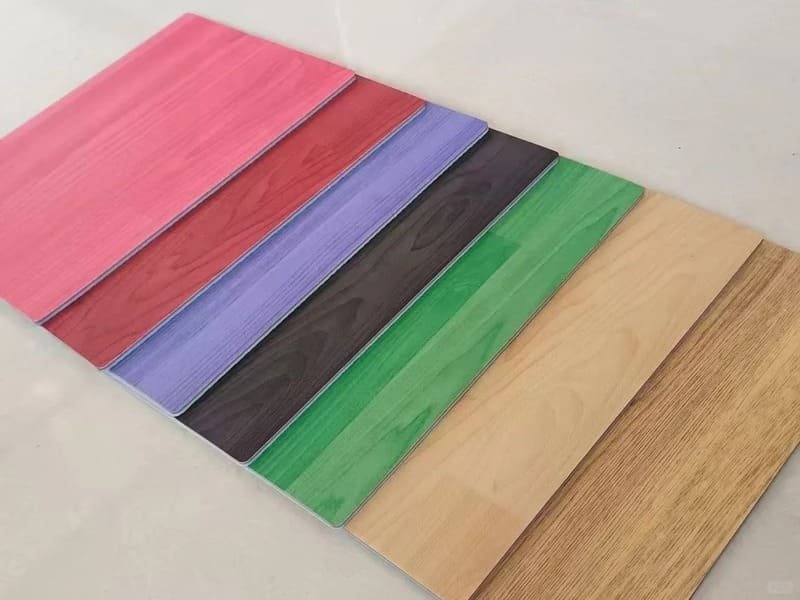
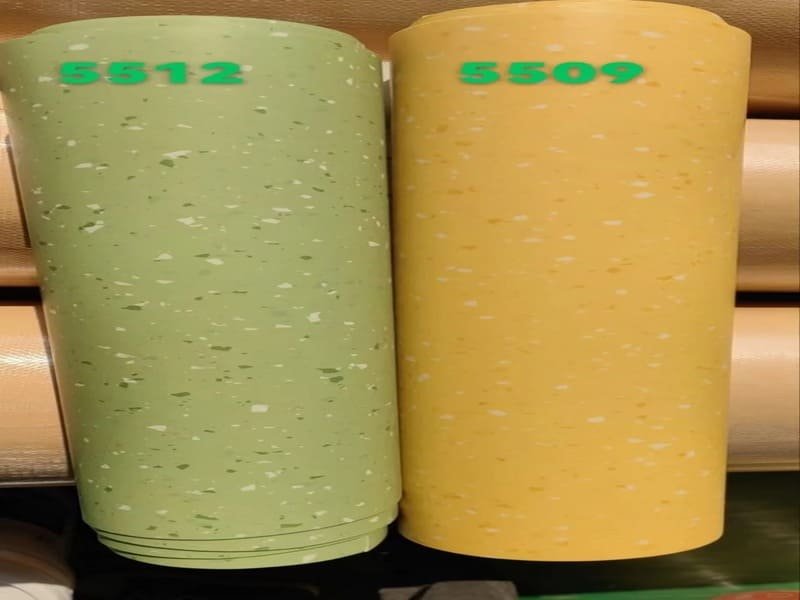
From an R&D standpoint, PVC flooring is engineered for badminton footwork. It uses a top high-density wear layer, a glass fiber stability layer, and a closed-cell PVC foam backing. This structure creates point-elastic behavior, meaning the floor deflects exactly where the player stands. The Badminton World Federation (BWF) mandates specific embossed textures like litchi, sand, or snake patterns. These textures maintain friction even when covered in light sweat. This material is best for dedicated badminton clubs, professional training centers, and tournament venues.
Structural Design of Professional PVC Flooring
| Тип слоя | Техническая функция | Выплата за производительность |
|---|---|---|
| PUR Surface Treatment | Anti-slip & Anti-fouling | Easy cleaning, stabilizes surface friction |
| Износостойкий слой из ПВХ | Wear resistance | Extends floor lifespan up to 10 years |
| Слой стекловолокна | Структурная стабильность | Prevents shrinkage or expansion from heat |
| PVC Foam Buffer | Energy return & Shock absorption | Protects joints during deep landings |
While PVC dominates professional play, facility managers often consider traditional options like wood.
Should You Choose a Hardwood Flooring System Instead?
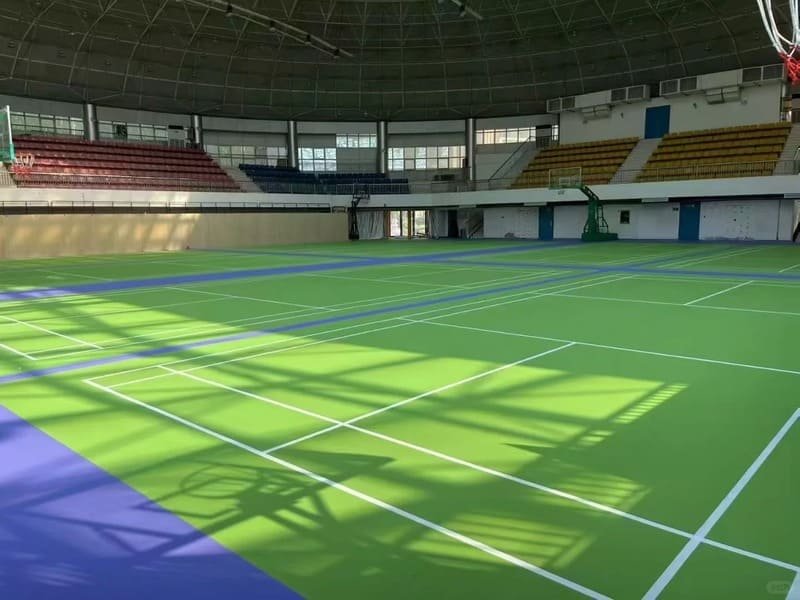
Hardwood flooring systems are the traditional choice for multi-purpose halls because they offer area-elastic performance and excellent aesthetics for basketball and volleyball alongside badminton.
Sprung wood flooring systems usually use Maple or Oak planks laid over wood sleepers with rubber pads underneath. This creates an area-elastic system where a larger zone deflects when a player lands. The main pros are timeless looks and great utility for multi-sport gyms. However, the cons include a higher initial investment and strict humidity control needs to prevent wood warping. Wood is also more slippery than PVC when dust builds up, which increases maintenance needs in busy school gymnasiums or community recreation centers.
Hardwood Performance Matrix
| Компонент | Технические материалы | Role in Assembly |
|---|---|---|
| Верхний слой | Premium Solid Maple/Oak | Provides a flat, durable playing surface |
| Subfloor Base | Plywood or Pine Sleepers | Distributes structural loads across the subfloor |
| Resilient Cushion | Neoprene or EPDM Rubber Pads | Supplies the necessary elasticity and spring |
If you are dealing with seasonal facilities or outdoor environments, wood is not a viable option.
Are PP Interlocking Tiles Effective for Outdoor Courts?
PP interlocking tiles are the best option for outdoor or temporary courts because their polypropylene modular design provides fast installation, high weather resistance, and efficient water drainage.
Polypropylene suspended modular tiles click together without adhesive. They feature an open-grid pattern that allows rainwater to drain instantly. They are highly portable and endure extreme weather conditions without degrading. However, they possess lower shock absorption than indoor PVC or sprung wood. Low-quality tiles can also warp or pucker when exposed to direct summer heat due to thermal expansion. We recommend this material for backyard courts, temporary outdoor tournaments, and multi-purpose community parks.
PP Tile Field Performance
| Характеристика | Engineering Attribute | Practical Value |
|---|---|---|
| Joint System | Interlocking Loop & Pin | Allows rapid assembly and disassembly |
| Тип поверхности | Perforated Open-Grid | Prevents water pooling during heavy rain |
| Material Compound | Impact-Resistant Polypropylene | Resists UV degradation and color fading |
For outdoor setups with tight budgets, liquid coatings are the main alternative to modular tiles.
Does Acrylic or PU Coating Suit Budget Courts?
Acrylic and polyurethane coatings are economical liquid applications best suited for low-budget outdoor public parks and school playgrounds where high durability is needed over concrete or asphalt.
Liquid coatings are applied directly over concrete or asphalt bases. They create a seamless, highly durable, and cost-effective surface. The major downside is that they form a very hard floor with minimal shock absorption. Frequent players face a high risk of long-term joint fatigue and shin splints on these surfaces. This material fits public outdoor parks or primary school playgrounds where recreational activity matters more than professional competition.
Liquid Coating Characteristics
| Недвижимость | Акриловое покрытие | Polyurethane (PU) Coating |
|---|---|---|
| Эластичность | Non-elastic, rigid | Semi-elastic, medium cushion |
| Base Requirement | Asphalt or Level Concrete | Fully cured concrete with vapor barrier |
| Основной пример использования | Public outdoor parks | General multi-purpose fields |
Now let us compare all four materials side-by-side so you can see which one fits your specific needs.
How Do All Four Court Materials Compare Head-to-Head?
A direct engineering comparison shows that PVC flooring provides the best performance-to-cost ratio for badminton, while wood excels in multi-sport indoor venues and tiles dominate outdoor spaces.
Comprehensive Material Comparison Matrix
| Material Option | Первоначальная стоимость | Поглощение ударов | Продолжительность жизни | Усилия по обслуживанию | Тип установки |
|---|---|---|---|---|---|
| PVC Sports Mats | Средний | Excellent (35%-45%) | 8-12 Years | Low (Mop & Sweep) | Professional / Semi-DIY |
| Пружинная твердая древесина | Высокий | Good (25%-30%) | 20+ лет | High (Sanding/Refinish) | Требуется профессионал |
| Плитка из полипропилена | Средний | Fair (15%-25%) | 10-15 лет | Low (Hose Down) | Easy DIY |
| Acrylic / PU Surface | Низкий | Poor (<10%) | 5-7 лет | Medium (Re-coating) | Professional Spray |
Choosing a material is only half the battle. Your selected floor will fail if you do not prepare the ground underneath.
Why Does Subfloor Preparation Control Your Floor’s Lifespan?
Subfloor preparation prevents PVC floor bubbling and wood rot by utilizing vapor barriers and self-leveling compounds to eliminate moisture and uneven surfaces.
When clients contact us about bubbling PVC floors, the root cause is almost always subfloor moisture. You must install a Damp Proof Membrane (DPM) vapor barrier over concrete bases to block rising moisture. The subfloor must also be perfectly level. Our engineering guidelines require a flatness tolerance of less than 3mm variance over a 2-meter radius. If the concrete has cracks or deep expansion joints, you must repair them using high-strength epoxy fillers before unrolling your mats.
Concrete Subfloor Specifications
| Требование | Целевое значение | Инженерное назначение |
|---|---|---|
| Содержание влаги | Below 3% (CM Method) | Prevents adhesive failure and PVC bubbling |
| Плоскостность поверхности | < 3mm over a 2m radius | Ensures predictable ball bounce and footwork |
| Твердость поверхности | C25 Concrete Minimum | Prevents floor indentation under heavy rolling loads |
Once the subfloor is flat and dry, you must choose the correct installation method for your business model.
Which PVC Installation Method Fits Your Business Model?
Facility owners should choose between permanent glue-down methods for long-term clubs, semi-permanent tape grids for leased venues, or portable roll-out systems for tournament events.
Permanent installation uses a full adhesive glue-down method with heat-welded seams. This creates a waterproof, seamless floor ideal for high-traffic commercial clubs. Semi-permanent installation utilizes double-sided specialized tape under the seams. This is perfect for leased venues because you can lift the floor and relocate it later without destroying the material. Portable setups involve rolling out the mats and securing the top seams with single-sided court tape. This method is designed for weekend tournaments or multi-purpose exhibition halls.
Installation Strategy Blueprint
- Permanent: Best for owned property, maximum traffic, 10+ year timeline.
- Semi-Permanent: Best for rented buildings, 3-5 year lease terms, easy asset recovery.
- Portable: Best for schools or event organizers who need to clear the hall for other activities.
The installation method you choose directly influences your initial costs and your long-term return on investment.
What is the Real Return on Investment for Quality Court Flooring?
Investing in premium BWF-standard PVC flooring drives higher revenue by lowering player injury rates, increasing member retention, and allowing you to charge premium court booking fees.
Cheap flooring like thin acrylic coating looks good on a budget sheet, but it costs more over time due to frequent maintenance and empty courts. Premium PVC flooring creates a professional look that attracts dedicated players who are willing to pay higher hourly booking fees. Good shock absorption means fewer player injuries, which translates directly into higher club member retention. The acoustic dampening properties of foam-backed PVC also reduce echo, making your facility a more pleasant place to play.
Financial Impact: Cheap vs. Premium Surface
- Cheap Surfaces: High player turnover, lower hourly rates, frequent surface repairs every 3 years.
- Premium PVC Surfaces: Steady club membership, 20-30% higher booking fees, minimal maintenance costs for a decade.
To protect this investment and reach a long lifespan, you must establish strict maintenance rules.
How Do You Maintain Your Sports Floor to Maximize Its Lifespan?
You can maximize your sports floor lifespan past 10 years by enforcing a strict non-marking shoes policy and dry mopping daily to remove abrasive dust.
Dust is the biggest enemy of court traction. Daily maintenance requires dry mopping or sweeping with a microfiber broom to keep the friction level stable. For weekly deep cleaning, use an automatic floor scrubber with a pH-neutral specialized sports floor cleaner. Avoid harsh detergents or solvent cleaners because they strip away the protective UV wear layer. Finally, enforce a strict "Non-Marking Shoes Only" policy at your facility entrance to prevent deep black scuff marks and structural damage to the top wear layer.
Daily and Weekly Maintenance Schedule
- Ежедневно: Sweep or dry mop twice a day to maintain optimal slip resistance.
- Еженедельно: Damp mop with a pH-neutral cleaner to remove dried sweat and oil stains.
- Prohibited: No high heels, no heavy equipment rolling without protective plywood sheets, and no wax products.
Заключение
Dedicated badminton facilities should always choose professional PVC flooring for its superior joint safety and performance, while multi-sport community halls should opt for sprung hardwood systems.
Need expert guidance on your next court project?
If you are planning a new badminton facility, upgrading an old school gym, or designing a custom sports floor layout, let us work together. As a technical manufacturing specialist, I can provide you with custom material formulations, exact cost breakdowns, and structural subfloor blueprints tailored to your local environment.
Отправить мне личное сообщение today to receive free material samples and a professional technical consultation for your project!