


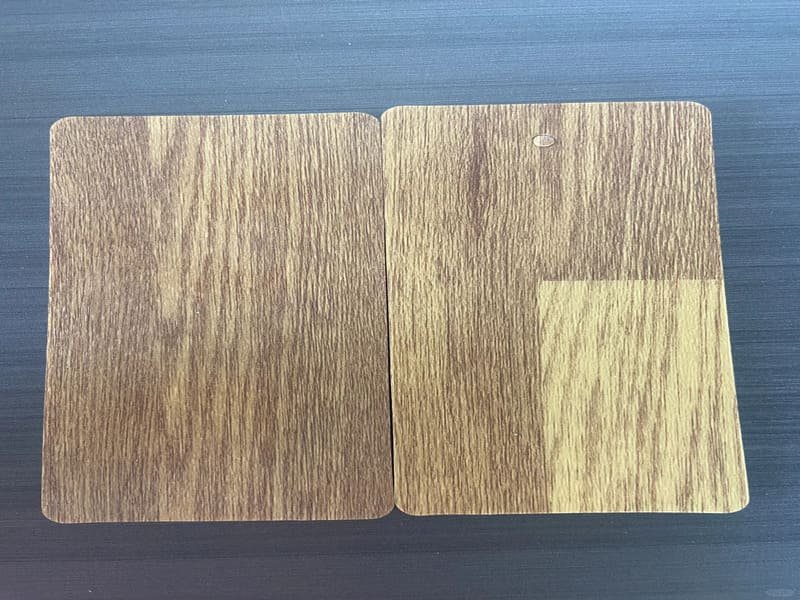
Buyers choose a PVC flooring OEM factory by matching factory specialization to their product need, then verifying real production, batch consistency, certifications, and commercial terms before comparing price.
Sourcing PVC flooring is not simple. You need to balance unit cost, batch consistency, and compliance at the same time. One wrong choice can cost you a container of bad product or a failed customs inspection. OEM often means production to your specification, formula, dimensions, and packaging, not just a logo on a stock item. ODM usually means the factory develops or owns a design and offers it to you for branding. This guide is for wholesalers, private-label brand owners, and importers who want a working process for picking a factory partner.
Picking a factory starts with knowing exactly what you need, then checking if the factory can prove it.
What Type of PVC Flooring OEM Factory Do You Actually Need?
There is no single "best" PVC flooring factory. The right one depends on your exact product construction, such as SPC, WPC, Dry Back LVT, Loose Lay, or homogeneous sheet.
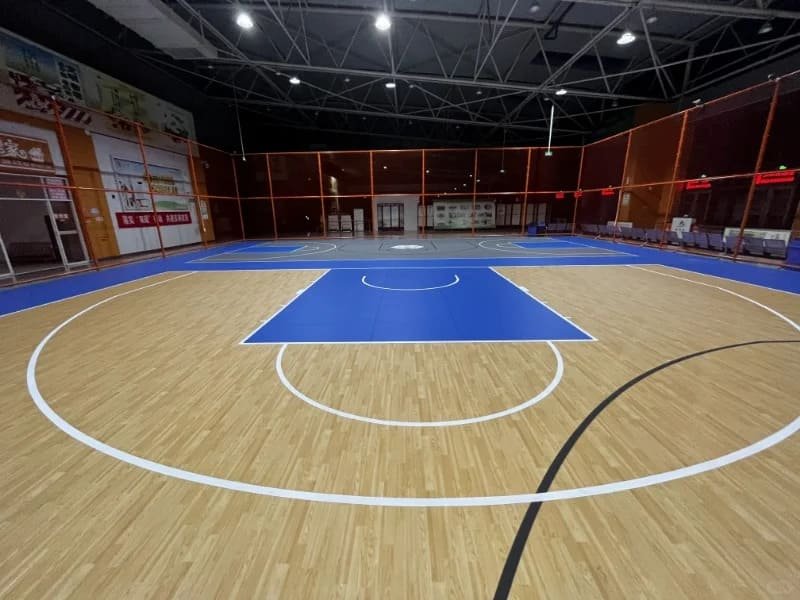
SPC, WPC, Dry Back LVT, Loose Lay, homogeneous sheet, heterogeneous sheet, sports flooring, and ESD flooring each need different equipment, formulation know-how, and export experience. A factory that runs everything under one roof is not automatically stronger than a specialist. A strong SPC extrusion plant may not run homogeneous sheet lines at all, and that is fine. The real question is not "what do you make," but whether the factory specializes in the exact construction and market you need.
How Do You Verify a Real Factory With Real Capacity?
Verify real manufacturing through video audits, third-party facility checks, and business license review, then confirm capacity by asking which specific line makes your product and its current backlog.
A trading company can look just like a factory online. Request a live video walk-through of the calender or extrusion lines, and check third-party facility reports against the business license. For capacity, avoid asking "what’s your annual output" since that number is easy to inflate. Instead ask: which line makes my product, what is its daily output and current utilization, what is the order backlog, and how long does a color changeover take? These answers reveal whether a quoted lead time is realistic.
Raw material policy matters too, but avoid oversimplifying it. Dimensional stability depends on formulation, filler loading, plasticizer, and processing together, not on virgin resin content alone. Ask the factory to prove stability through batch testing rather than a claim about virgin PVC.
Which Standards and Certifications Actually Apply to Your Product?
The applicable standard depends on your exact construction and destination market — there is no single certification covering all PVC flooring everywhere.
| Артикул | What It Actually Covers |
|---|---|
| FloorScore | Third-party VOC/indoor air quality certification |
| ASTM F1700 | Modular solid vinyl tile/plank |
| ASTM F3261 | Rigid polymeric core flooring (many SPC/WPC products) |
| EN 14041 / ISO 10581 / ISO 10582 | EU resilient flooring, homogeneous, and heterogeneous PVC standards |
| REACH | EU chemical substance regulation |
| CARB Phase 2 / TSCA Title VI | US formaldehyde rules for composite wood products — not general PVC/SPC/LVT |
Do not ask if a factory "has ASTM." Ask which specification applies to your exact construction — F1700 for modular solid vinyl, F3261 for rigid core. CARB and TSCA only apply if your product actually contains a regulated wood component, so don’t treat them as universal requirements. For heat and dimensional testing, ask which method applies, such as ISO 23999 or ASTM F2199, rather than assuming one fixed temperature covers every product.
How Do You Verify Batch-to-Batch Consistency and Lock It Into the Contract?
Consistency is confirmed through a signed golden sample, in-process inspection, and a contract clause requiring mass production to match that approved sample.
A good sample is not the hardest problem — the real question is whether container ten still matches container one. Establish a golden sample signed by both sides before mass production, and write into the contract that production must conform to it. Ask how the factory controls color, gloss, thickness tolerance, locking profile, and dimensional stability batch to batch, and whether it keeps retained samples and lot traceability.
Your quality agreement should also define: approved specification, test methods, inspection sampling plan and AQL, defect classification, pre-shipment inspection rights, and — critically — what happens if goods fail inspection. If this last point isn’t answered in writing, assume it isn’t answered at all.
What Should You Know About MOQ, Payment, and Total Cost?
MOQs apply per colorway and per order volume; pricing should break down by core, wear layer, backing, and packaging — and the real comparison is total landed cost, not unit price.
Ask how the factory handles low MOQ per colorway for new private-label launches, and how long a quote stays valid against resin price swings. Payment terms commonly run 30/70 T/T, L/C at sight for new relationships, or open account for proven partners.
The lowest FOB price is rarely the lowest real cost. Compare total landed cost: tooling, sample development, certification, inspection, freight, duty, damage rate, and claim rate. A cheaper unit price with a high claim rate is often the more expensive supplier.
How Should Packaging, Logistics, and Design Ownership Be Handled?
Custom packaging and clear Incoterms protect the shipment, while written IP terms protect your design from being resold to competitors.
PVC flooring is heavy, so containers often hit weight limits before volume limits — confirm moisture barrier wrapping and edge protection to prevent transit damage, and clarify Incoterms (FOB, CIF, DDP) up front.
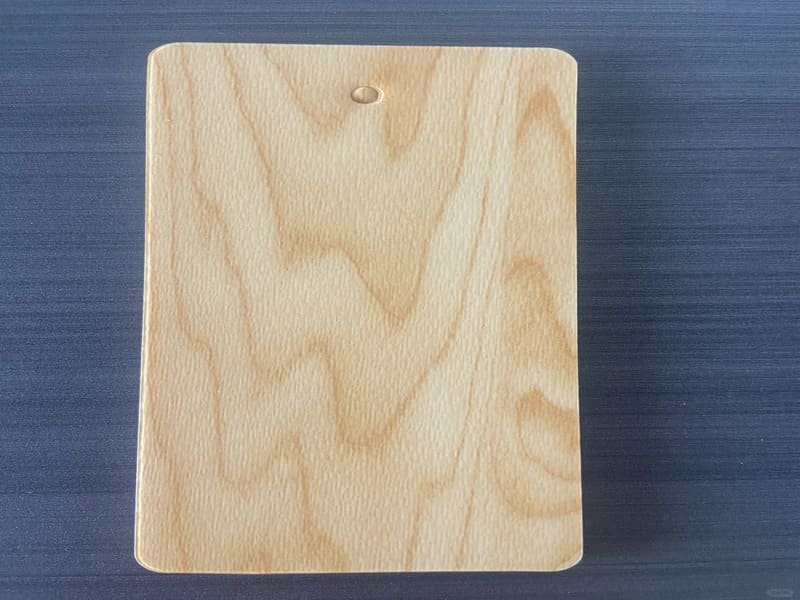
If you invest in an exclusive design or EIR pattern, get a direct answer to one question: can the factory sell this same design to another importer? Ownership of printing film, embossing tooling, packaging artwork, and territory exclusivity should all be written into the contract, not assumed.
What Red Flags Signal a Risky Supplier?
Watch for prices far below market, lab reports that don’t match the factory name, refusal to share inspection videos, and unlicensed locking systems.
Unusually low pricing may signal excessive filler loading, downgraded wear-layer specs, or uncontrolled recycled content — this is different from calcium carbonate filler, which is a normal mineral component in PVC and SPC formulas. Always match lab reports to the actual factory name, and be wary of any supplier unwilling to share batch inspection videos or allow third-party pre-shipment checks. Also check warranty terms in advance: how defects are defined, what evidence is required for a claim, and who pays freight on a replacement — this tells you how the factory behaves when something goes wrong.
How Do You Run the Final Evaluation and Choose?
Move through RFQ, sample testing, factory audit, a small trial order, and a signed quality agreement — then score every finalist against the same weighted criteria.
- RFQ & Screening — compare quote clarity and technical responsiveness.
- Sample Evaluation — test locking integrity, odor, bevel, and scratch resistance.
- Factory Audit — on-site or third-party (SGS, TÜV, Intertek).
- Trial Order — 1–2 containers checked against the golden sample.
- Contracting — defect thresholds, replacement terms, warranty in writing.
| Категория | Suggested Weight |
|---|---|
| Product specialization | 15% |
| Quality consistency | 20% |
| Compliance & testing | 15% |
| Производственные мощности | 10% |
| Price & commercial terms | 10% |
| Delivery performance | 5% |
| QC & traceability | 5% |
| Communication & warranty | 10% |
Score every shortlisted supplier on the same criteria instead of deciding on price or a sales presentation alone.
Заключение
Choose a PVC flooring OEM on specialization, proof, and consistency, not price. Verify, test, and score before you commit.
Want a custom quote or technical consultation for your PVC flooring project? DM me directly and I’ll walk you through it.