


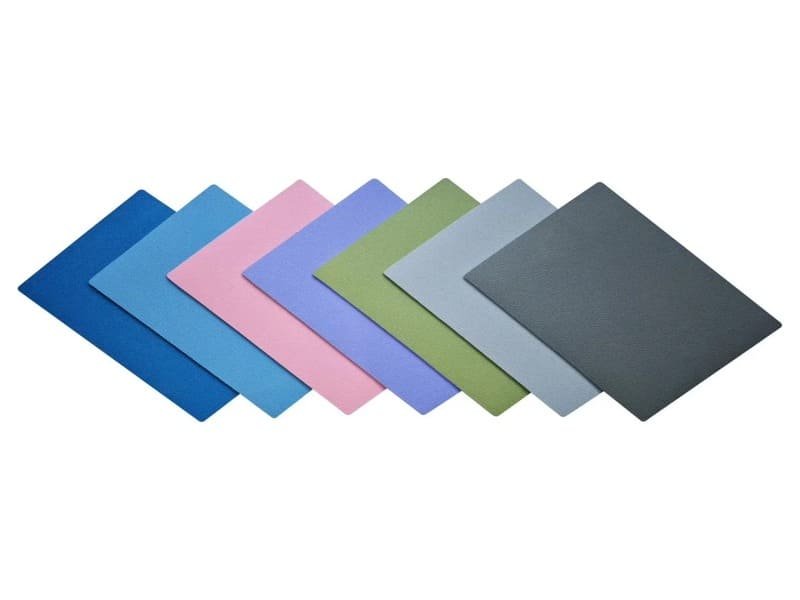
Yes, you can put a treadmill on many PVC sports flooring systems, but cushioned sports vinyl may need point-load protection. Whether protection is required depends on the treadmill weight, the size of its support feet, the flooring’s indentation resistance, and the manufacturer’s load limits.
This question comes up a lot in my quality control work, and I get why. PVC sports flooring is built to absorb impact from running, jumping, and quick lateral movement. That makes it feel forgiving underfoot. But a treadmill puts a different kind of stress on a floor. It’s not a person landing and moving on; it’s 200 to 400+ pounds sitting on a few small support feet, hour after hour, while the frame vibrates during use. Not every PVC sports floor responds to that the same way. Some are cushioned sports vinyl built mainly for shock absorption. Others are engineered specifically with static load and rolling load resistance in mind. The right answer depends on which one you actually have.
In this guide, I’ll walk through why this mismatch happens, what real risks look like, how to check whether your specific floor can handle it, and the protective steps I recommend when a mat or pad is genuinely needed. I’ll also cover when it makes more sense to zone a space with a different material instead of fighting the compatibility issue.
A treadmill isn’t automatically bad news for PVC flooring. The outcome depends on the product’s construction and the load it’s asked to carry. Let’s break down what’s actually happening at the material level.
How Does PVC Sports Flooring Handle Treadmill Demands?
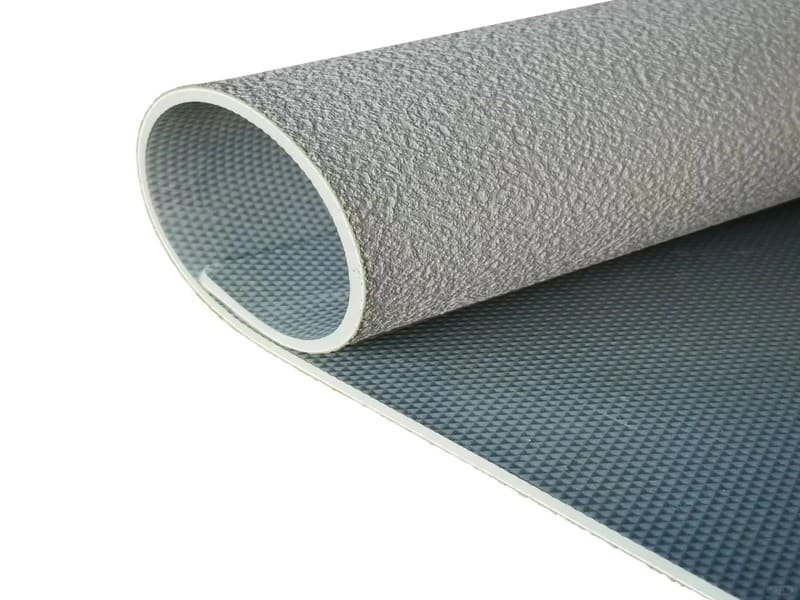
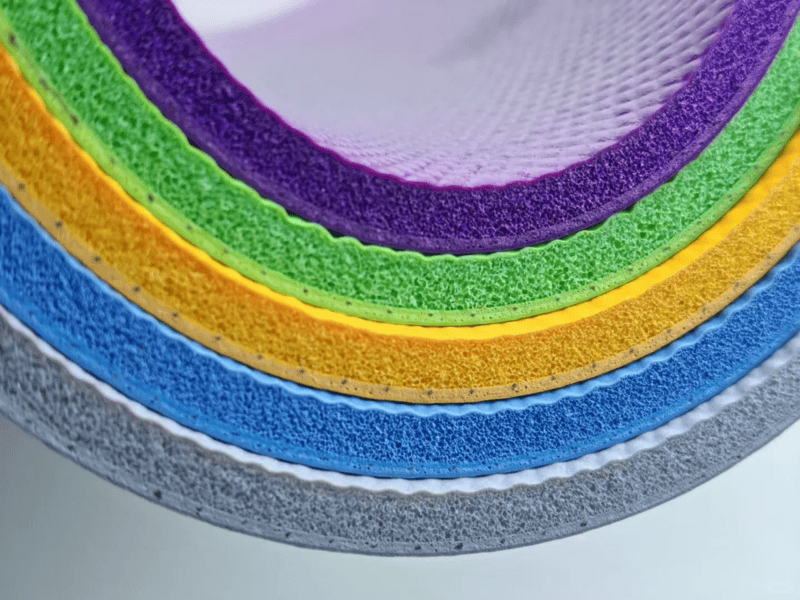
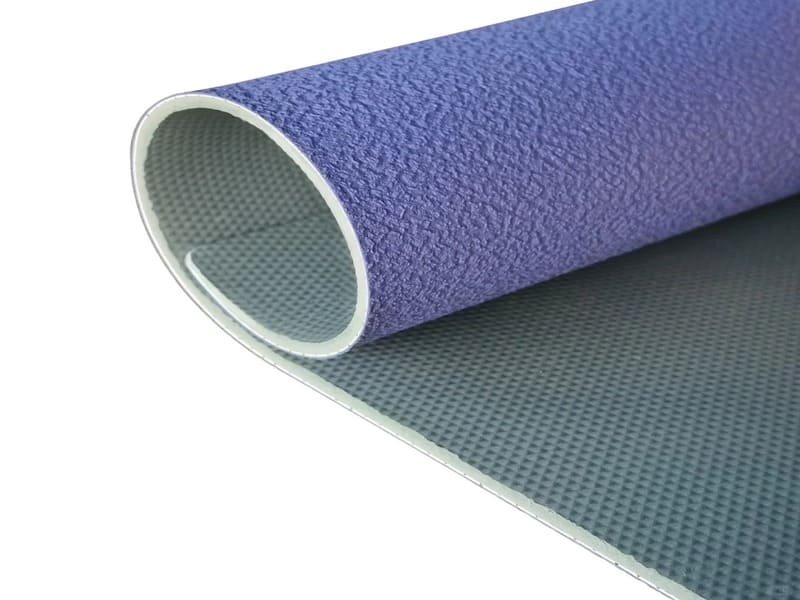
Many cushioned PVC sports floors use a multilayer construction that may include a surface treatment, wear layer, a reinforcement or stabilization layer, and a foam backing. The exact structure and its load resistance vary by product.
The construction isn’t identical across the market. Some systems are foam-backed for maximum shock absorption in multi-purpose athletic use. Others use denser, compact, or multi-use constructions specifically because they need to tolerate static loads, rolling loads, or equipment traffic without excessive deformation. That’s why the same question, "can I put a treadmill on this," can have a different answer depending on which product line you’re standing on. A treadmill applies static weight, meaning the machine’s full weight sits on a small number of support feet continuously, rather than distributed the way a shoe or a body in motion would spread it. During use, repeated foot strikes also create dynamic forces and vibration inside the treadmill frame. Part of this load transmits through the support feet into the flooring, creating a loading pattern that’s different from normal athletic foot traffic. How well a given floor handles that depends on its indentation resistance and load performance, which may be available in the manufacturer’s technical data or installation documentation.
| Тип нагрузки | Human Impact | Беговая дорожка |
|---|---|---|
| Contact area | Broad (shoe sole) | Narrow (support feet) |
| Продолжительность | Brief, repeated | Continuous, sustained |
| Force type | Vertical impact | Static load + vibration |
| Floor response needed | Elastic rebound | Indentation / point-load resistance |
Once you understand that construction varies this much, the risks I see most often in the field make a lot more sense, and so does why they don’t apply equally to every product.
Can a Treadmill Damage PVC Sports Flooring?
On cushioned PVC systems, unprotected treadmill placement can lead to localized indentation, surface scuffing, or discoloration. These risks depend heavily on the floor’s construction, the machine’s weight, and how long it stays in one spot.
The most common issue I get called about is localized indentation on cushioned, foam-backed products. When a treadmill’s support feet sit on the same spot for weeks or months, and the floor’s indentation resistance isn’t rated for that load, the backing under that point can compress past its elastic recovery limit, leaving a mark that doesn’t fully spring back. Repeated micro-movement from vibration can also cause localized scuffing or surface wear around heavily loaded contact points over time. Discoloration is a separate and often overlooked risk, and it usually isn’t about heat. It’s about material compatibility: certain rubber compounds in contact with vinyl for extended periods can cause staining or yellowing, regardless of how well-ventilated the equipment is. Moisture is a related but distinct concern. It isn’t that a treadmill generates moisture on its own; it’s that sweat, cleaning water, or condensation trapped beneath an impermeable mat or machine base has limited airflow to escape, so it can sit there longer than it would on open flooring. None of these risks are universal or guaranteed. They’re more likely on cushioned systems under heavy, stationary equipment without any protective measures in place.
Given how much this depends on the specific product, the first real step isn’t buying a mat. It’s checking what your floor is actually rated for.
How Do I Know Whether My PVC Floor Can Support a Treadmill?
Check the flooring’s technical data sheet for indentation, static load, and rolling load resistance, then compare that against your treadmill’s weight and support-foot geometry before assuming you need extra protection.
This is the step I wish more people took before buying mats or worrying about damage. First, pull the technical data sheet for your specific flooring product and look for indentation resistance, static load limits, or rolling load resistance figures. Reputable sports flooring manufacturers publish these because commercial buyers need them for equipment planning. Second, check your treadmill’s actual weight and, just as important, the contact area of its support feet. A heavier machine on wide, load-spreading feet can sometimes be gentler on a floor than a lighter machine balanced on four tiny points. Third, if you’re considering a mat or pad, confirm the specific material is listed as vinyl-compatible rather than assuming any mat is safe by default. Fourth, factor in both the flooring construction and the approved installation method, since point-load and rolling-load performance can vary between systems and installation configurations. Going through these four checks takes a few minutes and gives you a real answer instead of a guess.
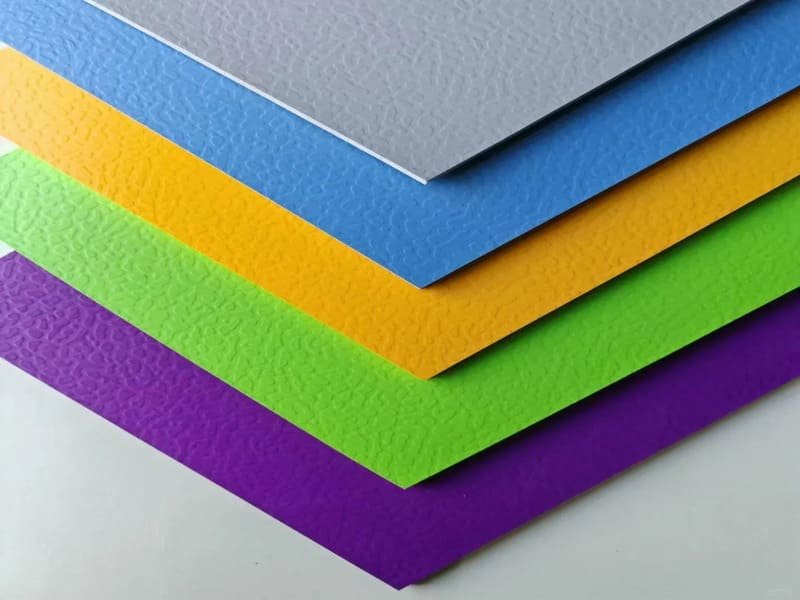
If that check tells you your floor needs help, or you’d simply rather not take chances, here’s what I recommend for protection.
How Can You Safely Place a Treadmill on PVC Flooring?
Use a manufacturer-approved, vinyl-compatible equipment mat or rigid load-spreading pads under the support feet, matched to the treadmill’s weight and the flooring’s documented load limits rather than to a generic thickness number.
If your floor’s technical data or your own caution points toward added protection, the priority is compatibility, not just coverage. Use a mat or pad that’s confirmed to be non-staining and compatible with vinyl flooring. Don’t assume that any rubber mat is automatically safe, since some rubber compounds are exactly what causes the discoloration issues described earlier. Rather than chasing a specific thickness, choose protection based on the treadmill’s weight and the flooring manufacturer’s point-load guidance. For genuinely high point loads, a rigid, smooth-bottomed load-distribution plate under each support foot can outperform a thicker but softer mat, because rigidity spreads concentrated force more evenly than cushioning does. This is also why I’d avoid the term "caster cups" for this purpose. Most treadmills aren’t resting on caster wheels during normal use; the load sits on support or leveling feet, so what you actually want is a load-spreading pad or plate sized to that foot, with a smooth, non-staining underside. Beyond the mat itself, good machine setup helps too: keep enough clearance around the base for airflow, and inspect and clean underneath the unit regularly so trapped moisture and dust don’t linger against the flooring surface.
These steps work well for most single-machine setups, but the right overall approach often depends on whether you’re outfitting a home gym or a commercial facility.
Commercial Gym or Home Gym: What Layout Strategy Works Best?
Commercial gyms benefit from zoned flooring, with denser materials for heavy, stationary cardio equipment and PVC reserved for multi-purpose athletic zones. Home gyms can often rely on a single treadmill with appropriate protection on existing PVC flooring.
In commercial settings, I generally steer clients toward a zoned flooring strategy rather than trying to make one material do everything. High-traffic areas with heavy commercial-grade treadmills, ellipticals, and free weights see constant, repeated point loads that are often better served by denser gym flooring specifically rated for that stress profile. PVC sports flooring then gets reserved for multi-purpose athletic zones, like small-sided courts, agility training, or group fitness spaces, where its shock absorption and slide resistance are genuine advantages rather than a liability. This zoning approach also protects your investment long-term, since replacing a small dedicated equipment zone is far less costly than repairing or replacing an entire PVC court floor. Home gym settings are a different calculation. With a single treadmill and a multi-use PVC floor already installed, checking the floor’s rated load capacity and adding manufacturer-approved protection where needed usually gets you most of the durability benefit of full zoning, at a fraction of the cost and disruption.
Whichever setting you’re working in, ongoing maintenance is what actually determines whether your setup holds up over years of use.
How Do You Maintain PVC Flooring Under Equipment?
Inspect regularly for early signs of surface change, clean underneath equipment without letting moisture sit trapped, and understand that recovery from minor compression has real limits.
A regular inspection routine is the cheapest insurance you can build into your maintenance schedule. I recommend checking under and around equipment periodically for early signs of surface change, discoloration, or the machine shifting position, since catching issues early gives cushioned flooring a better chance at full elastic recovery. Cleaning protocols need some adjustment under heavy equipment too. You want to avoid letting water or cleaning solution remain trapped underneath the machine or protective mat, since prolonged moisture can create hygiene problems and may affect the flooring or adhesive system depending on the installation. A damp cloth with minimal moisture and prompt drying works better in these zones than a standard mop pass. As for repairing minor damage, cushioned PVC does have some elastic recovery, meaning light, short-term compression often bounces back once the load is removed. But once compression exceeds the material’s elastic limit, which depends on the flooring construction, load intensity, contact area, temperature, and duration of loading, the deformation can become permanent and isn’t something cleaning or light repair can reverse.
If inspections keep turning up recurring indentation despite proper protection, it’s worth checking whether the installed product’s load rating actually matches the equipment it’s carrying.
What Are the Best Flooring Alternatives for Treadmills?
Dense rubber flooring systems are commonly used under commercial cardio equipment because they generally offer better resistance to concentrated loads than highly cushioned sports vinyl. Specific performance still depends on density, thickness, and construction rather than material type alone.
When a client’s equipment load is heavy enough that no amount of matting feels like a permanent fix, I usually point them toward dense rubber flooring options, available in rolls or interlocking tiles. These are common under heavy gym equipment because their density and structure generally resist point-load deformation better than cushioned, foam-backed PVC. That said, I’d avoid ranking specific materials as universally "better," since performance under a treadmill really comes down to density, hardness, thickness, and construction, not just the material category. A well-specified rubber or EPDM-based system can both work well, or both underperform, depending on the actual product spec. In practice, I rarely tell a client to rip out an entire PVC court to solve a treadmill problem. A hybrid layout works better in most cases: keep PVC sports flooring where it excels, in court zones and functional agility areas, and install a dedicated dense flooring zone specifically sized for cardio and heavy equipment. This gets you the performance benefits of each material exactly where they matter most.
With the right checks and protective habits in place, most of the common questions I get about treadmills and PVC flooring have straightforward answers.
Часто задаваемые вопросы
Q1: Will placing a treadmill on PVC sports flooring void the flooring warranty?
It can, depending on the specific manufacturer. Some publish point-load, rolling-load, or indentation limits and may require protective measures under heavy equipment as a warranty condition. This varies by product line, so always check the technical data sheet, maintenance guide, and warranty terms for your specific flooring rather than assuming a general rule applies.
Q2: How thick should a protective mat be under a treadmill on PVC flooring?
There’s no universal thickness that works across all situations. Choose a mat or protection system based on the treadmill’s weight and the flooring manufacturer’s point-load guidance rather than thickness alone. For high point loads, a rigid load-distribution plate can be more effective than simply using a thicker soft mat.
Q3: Does the cushion on a PVC sports floor reduce treadmill noise for rooms below?
Partially, but it’s worth separating two different things. Cushioned PVC can reduce some impact energy and may contribute to better acoustic comfort, but that does not mean it provides full structural vibration isolation. For noise control in rooms below, dedicated anti-vibration pads matter more than the flooring itself.
Q4: How long can a treadmill sit on PVC flooring before causing permanent marks?
There is no reliable universal timeline. A floor may show little visible change under one treadmill but develop residual indentation much sooner under another, because the load per support foot and the flooring’s own construction can be very different between products. Protection should be installed from the start based on your floor’s documented load limits, rather than waiting to see how quickly marks appear.
Final Verdict & Summary Checklist
Check your flooring’s documented load limits before assuming protection is needed, use a manufacturer-approved, vinyl-compatible mat or load-spreading pad when it is, and consider equipment zoning for long-term commercial durability.
Моя роль
I work as a quality control manager and engineer specializing in custom and bulk PVC sports flooring manufacturing. My background covers material science, multi-layer construction design, and application-specific performance testing across commercial gyms, multi-purpose courts, and home fitness spaces. I focus on connecting manufacturing decisions directly to real-world durability outcomes, helping product developers and facility planners verify the right specifications before installation rather than troubleshooting problems after the fact.
Have a specific project or equipment layout you’re planning around PVC flooring? Send me a message and I’ll help you check the right load specs or protective setup for your situation.