


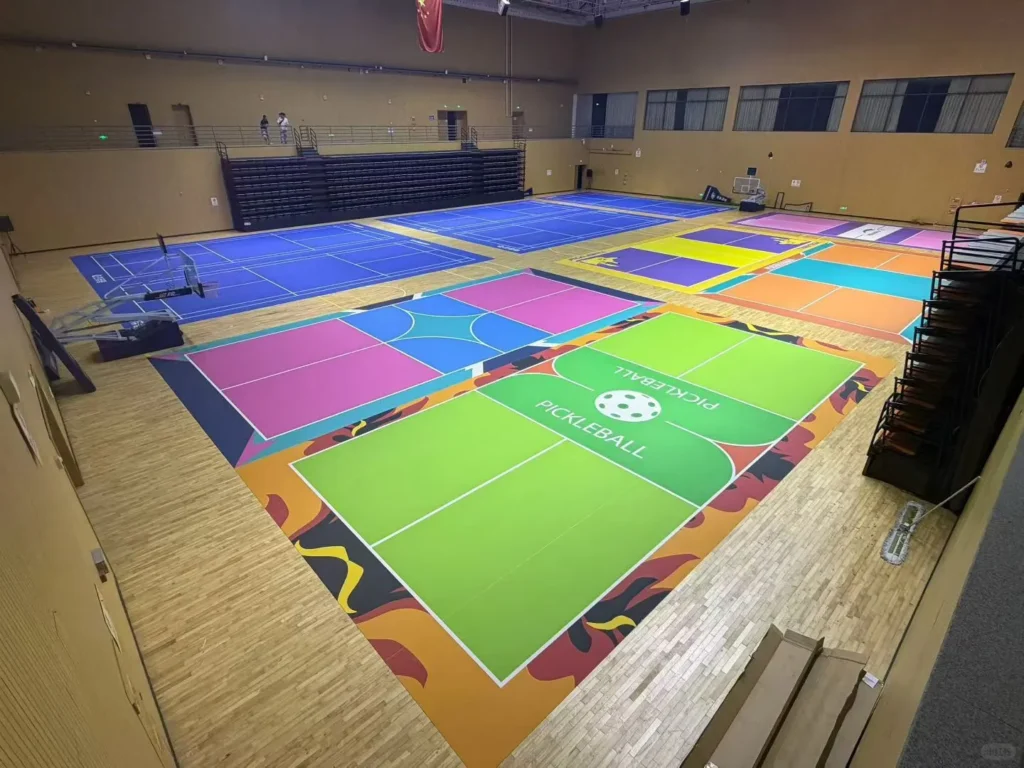
Yes. Some PVC sports flooring can be rolled up and reused, but only when the product and installation system are designed or approved for portable or removable use. Standard full-spread glue-down sports vinyl is generally not intended to be removed and reinstalled.
This is one of the most common questions I get from people managing temporary badminton courts, school multi-purpose halls, and rented event venues. The honest answer is more nuanced than a simple yes or no. Reusability is not a fixed trait of PVC as a material. It comes down to whether the specific product was engineered and approved by the manufacturer for repeated setup, removal, and reinstallation. I have seen buyers assume any PVC sheet can be pulled up and laid down again elsewhere, based on loose ideas like "thin floors crack" or "loose-lay always means reusable." Neither assumption holds up when you look at how manufacturers actually design and certify their portable systems.
In this article, I will walk through what actually determines reusability, how to roll and store the floor correctly, how to inspect it before putting it back down, and when a floor has genuinely reached the end of its reusable life. If you manage a space that changes function often, this is the information that protects your investment and your event schedule.
Which PVC Sports Floors Are Actually Reusable?
A floor is reusable when the complete system, not a single spec like thickness, has been designed and approved by the manufacturer for portable or removable installation.
I want to correct a common misconception up front. There is no reliable rule that says floors under a certain thickness crack easily, or that a specific thickness range is the "ideal" portable range. In practice, portable sports flooring exists across a wide range of thicknesses. Some portable badminton and table tennis systems come in well under 4mm, while some portable basketball or volleyball systems run past 8mm for added shock absorption. Both can be legitimate, manufacturer-approved portable products. What actually determines reusability is the full construction: the PVC formulation, backing and foam structure, dimensional stability, reinforcement design, manufacturing tension, seam design, and the fixing system the manufacturer specifies.
What Actually Determines Reusability
| Фактор | Почему это важно |
|---|---|
| Manufacturer-approved portable construction | Determines whether repeated installation and removal are supported at all |
| Стабильность размеров | Reduces stretching, shrinking and seam movement across cycles |
| Reinforcement or stabilizing layer | Can improve dimensional stability, depending on the product design |
| Толщина | Affects sports performance and handling, but does not by itself determine reusability |
| Backing construction | Influences rolling behavior, tape compatibility and resistance to deformation |
Fiberglass reinforcement is a good example of something that gets oversimplified. It can genuinely improve dimensional stability, and I use it in a lot of the custom portable constructions I work on. But it is not a universal requirement for every portable PVC sports floor. The more useful question to ask a supplier is whether the complete flooring construction has been designed and approved for repeated rolling, transport, and reinstallation, not whether a single layer is present.
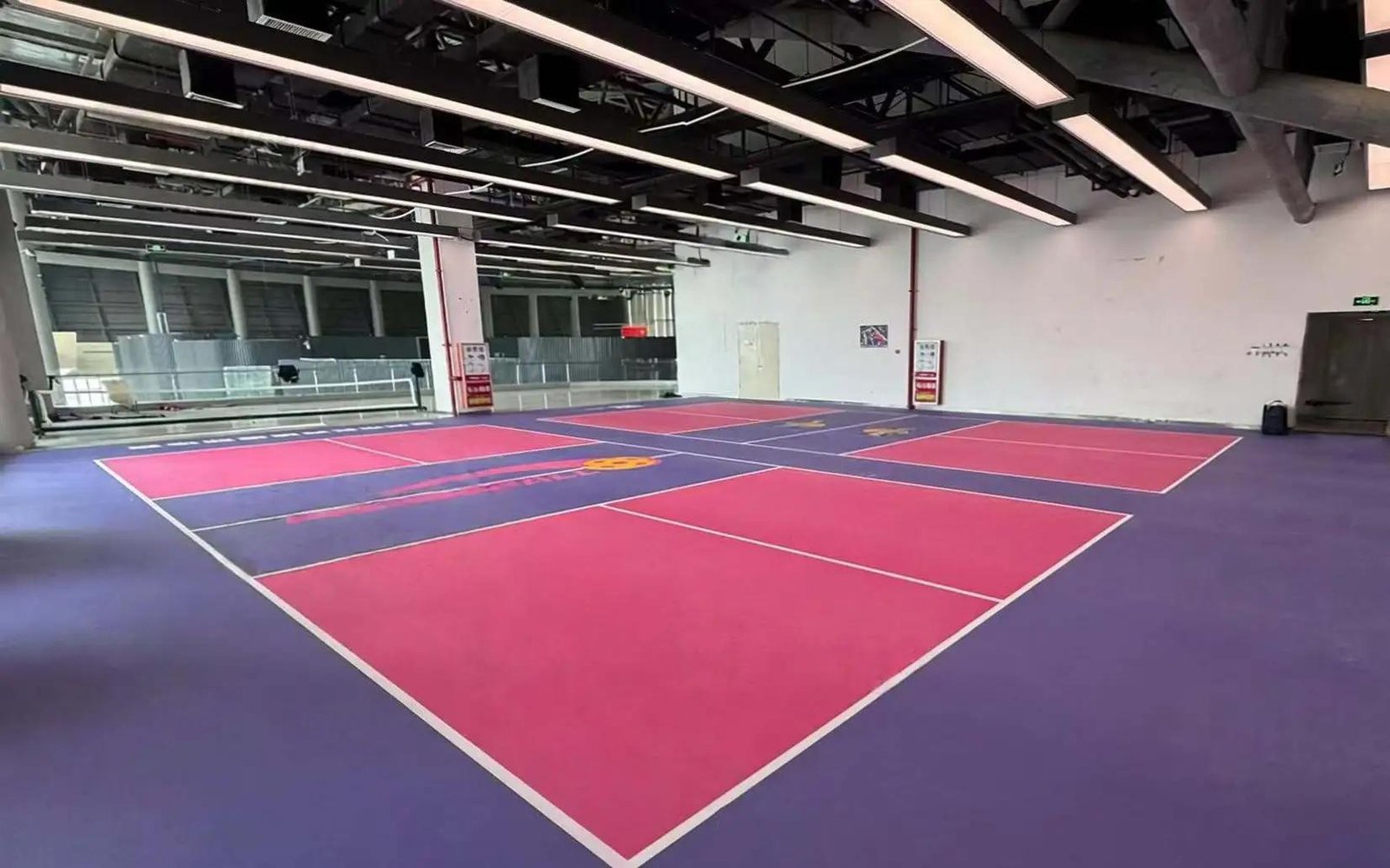
Understanding what makes a floor reusable is only useful once you also understand how it gets installed, since that decision happens before the floor ever gets rolled up.
Does Installation Method Affect Reusability?
Installation method matters, but the real distinction is between systems approved for portable or removable use and standard full-spread adhesive systems, not simply "loose-lay versus glue."
Installation method is closely tied to reusability, but I want to be precise here because the categories get oversimplified a lot. A manufacturer-approved portable or removable system is the best candidate for repeated reuse. Some loose-lay systems can also be removed without much trouble, but loose-lay on its own does not automatically mean the flooring was engineered for repeated setup and teardown. Manufacturers often separate "loose-lay," "portable," and "full-spread" as distinct installation categories, each with different expectations for how many times the floor can come up and go back down.
Common Installation Categories
| Тип установки | Typical Fixing Method | General Reuse Expectation |
|---|---|---|
| Portable system | Manufacturer-specified tape, slip-sheet or low-adhesion system | Designed for repeated setup and removal |
| Loose-lay (general) | Minimal or no adhesive, gravity and weight hold it in place | May be removable, but not always designed for frequent cycling |
| Low-adhesion / adhesive-reduced system | Specialized partial-bond systems | Reuse depends on the specific product’s approval |
| Full-spread glue-down | Continuous adhesive bond to subfloor | Generally not considered reusable |
Standard full-spread glue-down PVC sports flooring is generally not considered reusable. Removal can damage the backing, leave adhesive contamination on the sheet, and distort its dimensions, which makes reliable reinstallation impractical even if you manage to lift it in one piece. If reuse is a priority for your venue, this is a decision to make at the specification stage, not something to attempt after the fact on a glued-down floor.
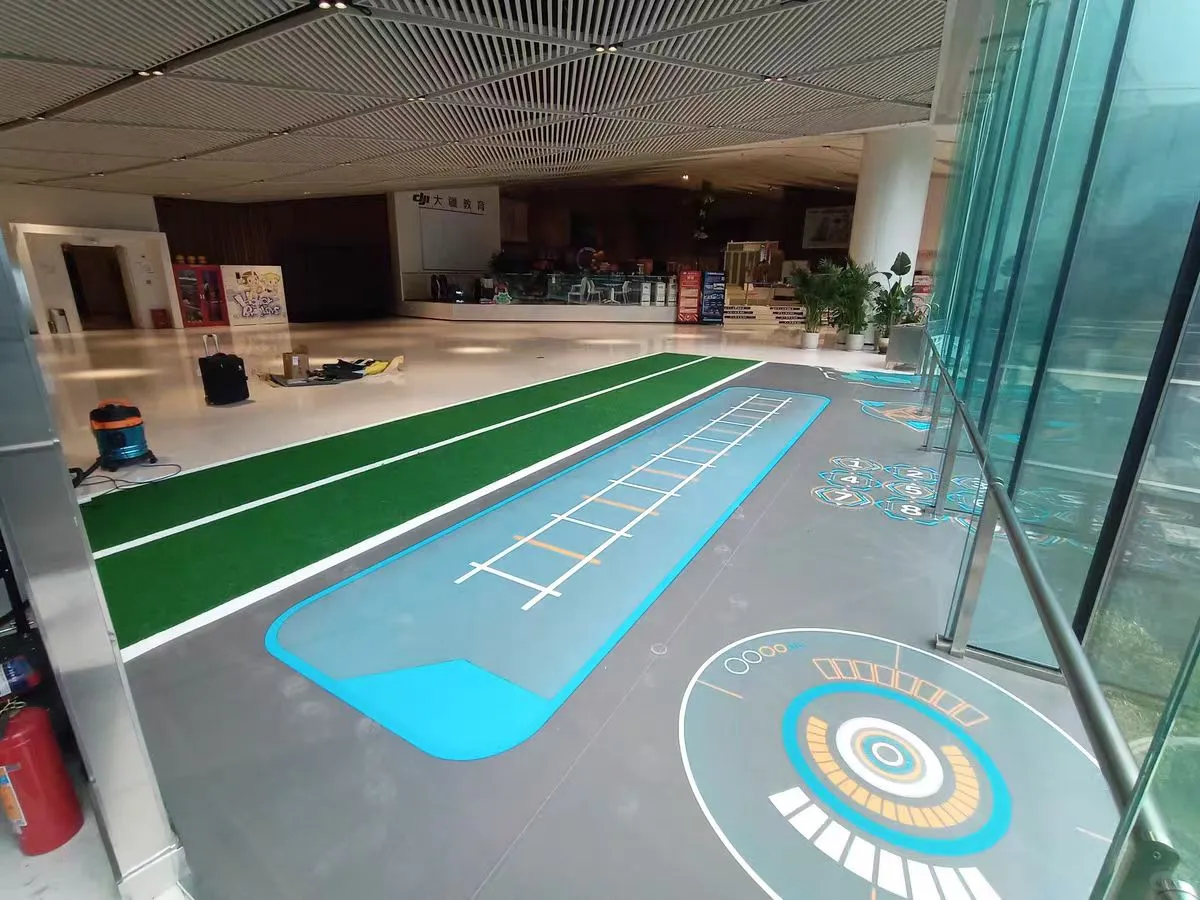
Once you have confirmed the installation system supports reuse, the next question is how to physically roll the floor without undoing that advantage.
How Do You Roll Up PVC Sports Flooring Correctly?
Clean the surface first, remove tape carefully, roll evenly around the manufacturer-recommended core in the specified direction, and secure the roll with wide straps rather than rope or surface tape.
The rolling process itself has a few steps that are easy to rush through. Start with a thorough clean. Dust, grit, and moisture left on the surface can act like an abrasive once the floor is rolled tight against itself, and that damage happens on the inside where you cannot see it developing. Next, remove any tape or temporary fixings slowly and at a low angle, so you do not tear the backing layer, which is generally thinner and more delicate than the top wear surface.
Rolling Technique
Always roll around a rigid core, ideally the original core tube or one recommended by the manufacturer. Folding the material, or rolling it flat without a core, creates a crease that can become permanent. On rolling direction, I would avoid repeating the common claim that "most manufacturers" want the wear layer facing outward. Backing and construction vary enough between products that this is not a safe generalization. Follow the manufacturer’s specified rolling direction for your particular product, and roll the material evenly around the core to avoid uneven tension across the width.
| Шаг | Риск в случае пропуска |
|---|---|
| Surface cleaning | Grit and moisture damage the surface while rolled |
| Careful tape removal | Backing layer tears |
| Rigid, manufacturer-specified core | Permanent creasing or cracking |
| Even tension while rolling | Stretching, sagging or uneven wear |
Finish by securing the roll with wide fabric straps or soft binding tape. Thin rope and adhesive tape applied directly to the surface concentrate pressure into narrow lines, which can leave lasting indentations in the wear layer.
Rolling the floor correctly protects it for the next stage, but a good roll can still be undone by poor storage conditions.
How Should Rolled Sports Flooring Be Stored?
Store the rolls in the orientation and conditions specified by the flooring manufacturer or portable-floor storage system, and always protect the rolls from temperature extremes and moisture.
I want to be direct about something here: there is no single industry rule that says PVC sports flooring rolls must always be stored horizontally, or always stored vertically. Different manufacturers specify different requirements. Some portable systems call for upright storage on a core, while others provide dedicated horizontal storage racks, holding straps, or winding equipment designed specifically for their product. Assuming a generic horizontal stack is safe for any roll is a mistake I would avoid making, since it can cause flat spots or an oval cross-section on products not designed to be stored that way.
Storage Conditions That Matter Regardless of Orientation
| Состояние | Risk If Ignored |
|---|---|
| Temperature control | PVC can become brittle in cold conditions or soften in excessive heat |
| Защита от влаги | Damp storage encourages mold and mildew on the backing |
| Following manufacturer orientation | Wrong orientation can cause flat spots, ovaling, or uneven pressure |
| Secure transport | Unsecured ends risk crushing damage during transit |
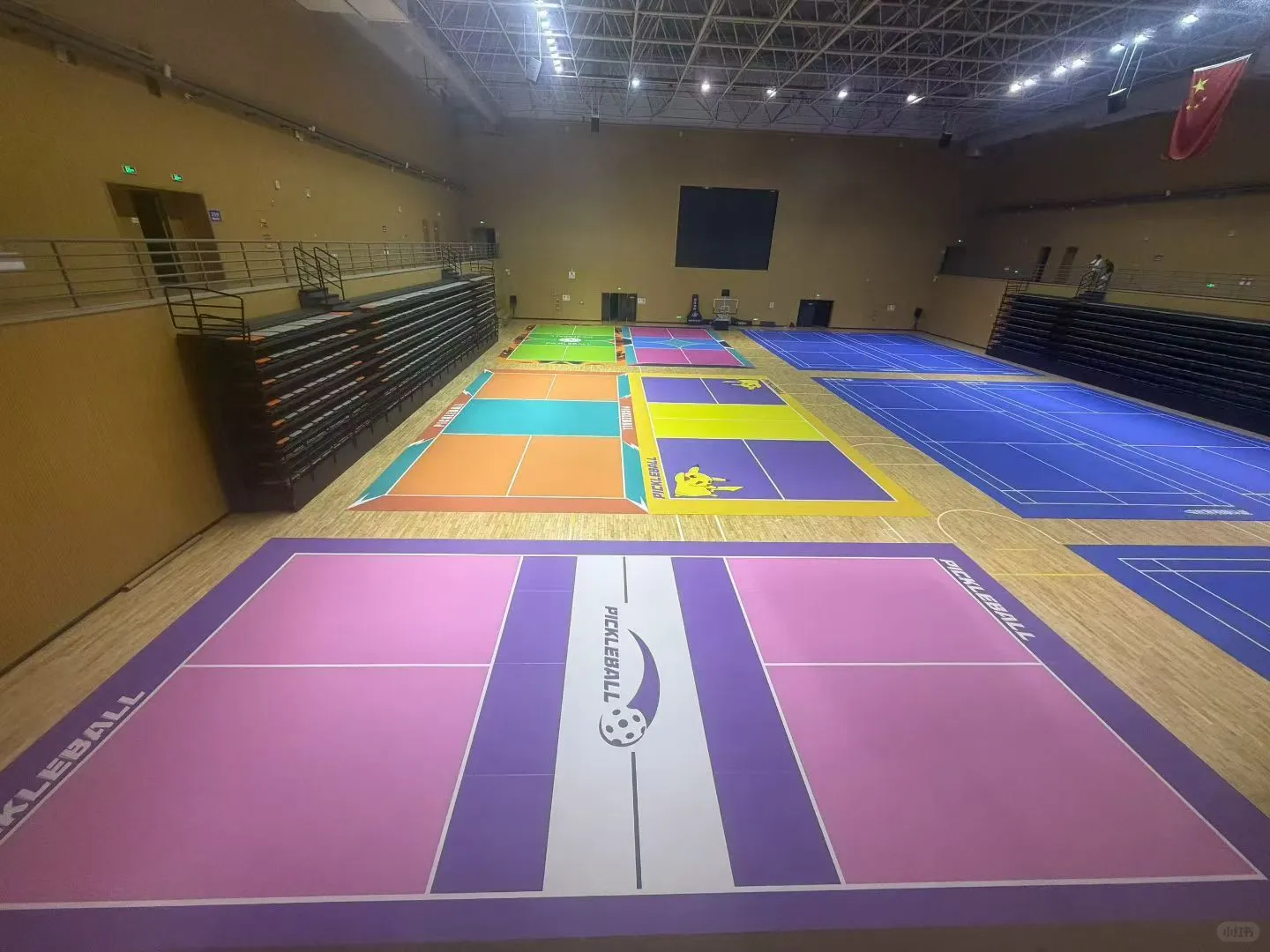
The safest approach is to store the rolls exactly as the manufacturer or the portable-floor storage system specifies, rather than defaulting to a general rule you read somewhere. When in doubt, ask your supplier for their specific storage and handling guidance for that product.
Storing the floor correctly sets you up for a smooth reinstallation, but before you put it back down, it is worth checking the condition of the material itself.
How Do You Inspect PVC Flooring Before Reusing It?
Before reinstalling, check for permanent creases, backing tears, uneven foam compression, edge damage, seam distortion, and dimensional change, since any of these can affect safety or performance.
This is a step I think gets skipped more than any other in the reuse process. Facilities are often in a hurry to get the court open again, and the floor gets rolled out and taped down without a real inspection. A quick, structured check before reinstallation catches problems while they are still minor and gives you a clear basis for deciding whether the floor is still fit for use.
Reuse Inspection Checklist
| Проверить | На что обратить внимание |
|---|---|
| Creases | Lines that do not relax after the material reaches room temperature |
| Обратная связь | Tears, delamination, or separation from the wear layer |
| Foam or cushion layer | Uneven compression or soft spots compared to the rest of the sheet |
| Края | Crushing, fraying, or damage from transport |
| Швы | Gaps, misalignment, or movement compared to the original layout |
| Размеры | Stretching or shrinking relative to the original panel size |
| Поверхность | Adhesive residue, contamination, or discoloration |
If everything checks out, you can move forward with reinstallation with reasonable confidence. If something looks off, it is worth pausing before you commit to laying that panel down for another event, which brings up a fair question: at what point should you stop reusing a floor altogether?
When Should a Portable Floor Not Be Reused?
Retire a section of flooring if creases fail to relax after proper acclimatization, the backing has torn, the foam has compressed unevenly, or the seams no longer align to their original dimensions.
Persistent creases are one of the clearer warning signs. Mild curling can often relax once the material reaches room temperature and has time to settle, but a crease that stays put after a normal acclimatization period is a sign of deformation that is not going to fix itself. I would be cautious about reaching for a heat gun as a routine fix here. Some manufacturers do offer approved repair procedures using controlled heat for specific products, but applying concentrated heat without that guidance risks gloss change, embossing distortion, or damage to the foam backing underneath. If a crease persists, treat it as something to inspect and discuss with the manufacturer, not a DIY fix.
Seam and Edge Problems
Edge curling and seam lifting are common after long storage, but the fix is not to jump straight to permanent welding at the seams. If a portable floor’s seams keep lifting, that usually points to insufficient acclimatization time or improperly applied fixing tape, not a design flaw that needs a permanent bond. Switching to permanent welding on a system that is meant to be portable defeats the purpose of having a reusable floor in the first place. Check whether the material has fully relaxed and whether you are using the tape or fixing system the manufacturer actually approved before considering any more drastic fix.
Knowing these warning signs helps you make a confident call on any single panel. The next question most facility managers ask is how long the whole system should last before more of it starts showing these issues.
How Many Times Can PVC Sports Flooring Be Reused?
There is no universal cycle count. A purpose-built portable floor can be reused many times when handled correctly, but service life depends on the product, installation system, transport, storage, and frequency of use.
I get asked for a specific number a lot, and I would rather give an honest answer than an appealing one. Reuse life is affected by too many variables to reduce to a single figure: the specific construction of the product, whether dedicated rolling and storage equipment is used, how the floor is transported, how it is stored between events, and simply how often it gets cycled. A floor handled with the right core, correct tension, proper storage conditions, and prompt inspection after each use will hold up far longer than an identical product handled carelessly.
What to Ask Your Supplier Instead of a Cycle Number
- Does the manufacturer’s warranty specifically cover portable or temporary use, not just permanent installation?
- What handling and storage guidance does the manufacturer provide for this product?
- Is there a recommended inspection interval or replacement indicator?
A warranty that explicitly names portable or temporary use is one of the most useful things you can check before buying, since some manufacturers write their warranty terms around permanent, glued installations only. That gap can leave you without coverage for damage that happens during normal rolling and storage, even on a product marketed as portable.
With reuse expectations set correctly, it helps to step back and see how portable systems compare to permanent installations overall.
Заключение
A floor’s reusability comes from its approved portable design, not its thickness. Confirm that approval before you buy or reuse.
Portable vs. Permanent PVC Sports Flooring
| Характеристика | Full-Spread Glue-Down | Manufacturer-Approved Portable |
|---|---|---|
| Reusable | Generally not designed for removal | Yes, when handled and stored correctly |
| Толщина | Varies by application | Varies by sport; not a reliable reuse indicator on its own |
| Лучшее для | Fixed courts, high-traffic gyms | Rented venues, temporary events, tournaments |
| Setup/teardown | Slow, effectively one-time | Fast and repeatable |
| Key requirement | Skilled adhesive installation | Manufacturer-approved fixing system and storage handling |
If long-term reuse is the priority, specify a product the manufacturer explicitly approves for portable use, follow their rolling and storage guidance exactly, and inspect the floor before every reinstallation rather than assuming it is fine.
Часто задаваемые вопросы
Q: How many times can PVC sports flooring be rolled up and reused?
There is no universal cycle count. A purpose-designed portable floor can be reused many times when handled correctly, but service life depends on the product, installation system, transport, storage, and frequency of use. Check the manufacturer’s portable-use guidance or warranty for the specific product.
Q: Does thickness tell me whether a floor is suitable for a particular sport?
Yes, but thickness should be selected from the manufacturer’s sport-specific system rather than a universal rule. Portable badminton or table tennis products can be considerably thinner than portable basketball or volleyball systems, which are often built thicker for added shock absorption.
Q: Is double-sided tape strong enough to hold up for a full tournament weekend?
It can be, when the flooring manufacturer specifically approves a tape-based portable installation for that product. It is not a fixing method you should assume works for any PVC sheet regardless of how it was designed.
Q: Can a permanently glued PVC floor be converted to a portable one later?
Generally not. Full-spread adhesive installation is not designed for removal, and lifting it can damage the backing and leave adhesive contamination. If flexibility matters, specify a portable or removable system from the start.
Q: What is the most common mistake facilities make with reuse?
Skipping inspection before reinstallation. Rolling and storing the floor correctly matters, but checking for creases, backing damage, and seam distortion before putting it back down is what actually prevents small issues from becoming reasons to replace the floor early.
Об авторе
I work in custom and bulk manufacturing of PVC sports flooring, with hands-on experience specifying material construction, backing design, and fixing systems for both portable and permanent court projects across badminton, basketball, volleyball, and multi-purpose facility applications. My background is in manufacturing process and design optimization, which means I focus on helping facility managers and product developers choose constructions that hold up to real reuse cycles, not just specs that look good on paper.
Not sure whether a portable construction fits your venue, or want help specifying a system built for repeated reuse? Напиши мне в личные сообщения and I will help you work through it before you order.