


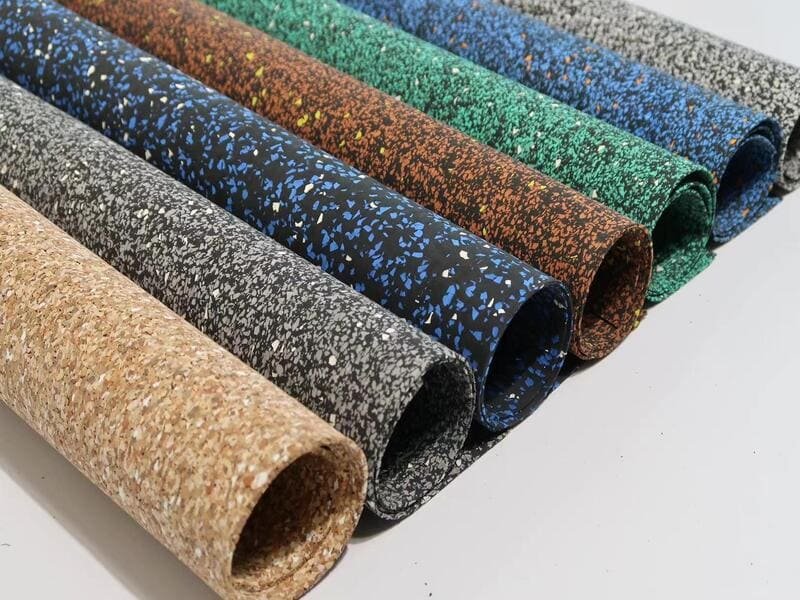
A standard rubber flooring installation requires a waste factor between 5% and 15%. For a basic rectangular room, a 5% margin is typically sufficient to cover perimeter trimming. However, spaces featuring structural pillars, alcoves, or curved walls necessitate a 10% to 12% allowance, while small areas under 200 square feet often require up to 20% extra material due to fixed roll widths and high off-cut ratios.
The primary error in gym flooring procurement is ordering based on net square footage. Rubber rolls are manufactured in fixed 4-foot widths. If a room measures 10 feet in width, three full 4-foot runs must be purchased to achieve total coverage. This results in 12 linear feet of width, meaning 2 feet of the third roll is "mathematical waste" before the first cut is even made. Calculating waste based on the specific layout geometry, rather than a flat percentage, is the only way to ensure a seamless finish and avoid the high logistical costs of ordering supplemental material later.
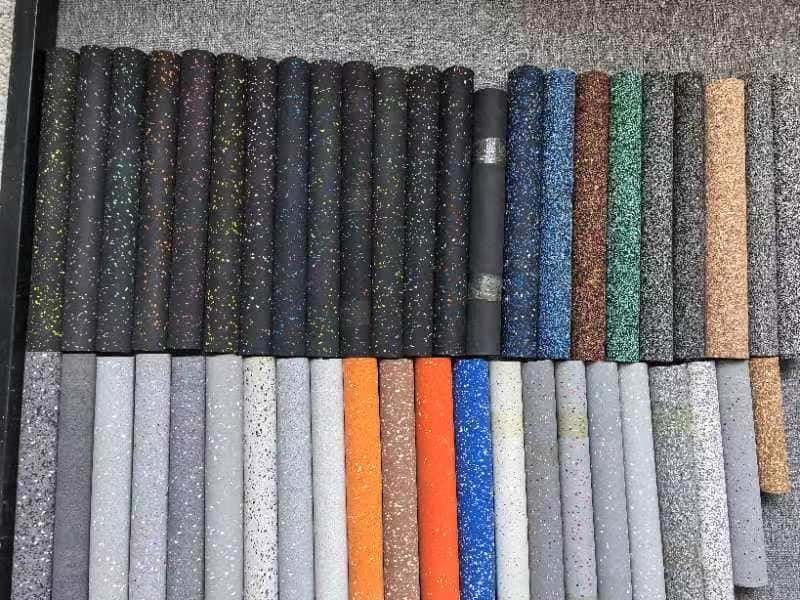
Quick Estimator: Material Allowance by Room Complexity
- Simple Rectangular Space: Adicionar 5% (Ideal for open garages or home training zones).
- Rooms with Pillars or L-Shapes: Adicionar 10% – 12% (Standard for commercial fitness centers).
- Small Spaces (<200 sq. ft.): Adicionar 15% – 20% (Due to the disproportionate width-to-area ratio).
- Complex or Circular Perimeters: Adicionar 20%+ (Requires extensive hand-scribed trimming).
Why Does Material Waste Occur During Rubber Roll Installation?
Waste is a byproduct of the conflict between standardized 4-foot roll widths and unique architectural dimensions. Because rubber flooring possesses a directional grain from the manufacturing process, off-cuts cannot be rotated to fill gaps without creating visible color shifts, and technical installation methods like "double-cutting" consume additional material at every seam.
| Fator de resíduos | Nível de impacto | Technical Cause |
|---|---|---|
| Width Incompatibility | Elevado | 4ft rolls rarely align with room widths; creates longitudinal scrap. |
| Directional Grain | Médio | Light reflects off the texture; 90-degree rotations appear as different colors. |
| Double-Cutting | Baixo | Overlapping seams for precision fit removes ~1 inch of material per joint. |
The "Width Constraint" is the most significant contributor to material loss. In an 11-foot wide room, the installation requires three 4-foot runs. This creates a 1-foot wide strip of waste that spans the entire length of the facility. While it may seem efficient to use these strips in other corners, the "Directional Grain" dictates that all rolls must run in the same direction. If a strip is turned sideways to patch an alcove, it will catch the light differently than the rest of the floor, making it look like a mismatched batch. Furthermore, the "double-cut" method—where two rolls are overlapped and sliced simultaneously for a vacuum-tight seam—naturally sacrifices a small portion of the roll edge to ensure a flush connection.
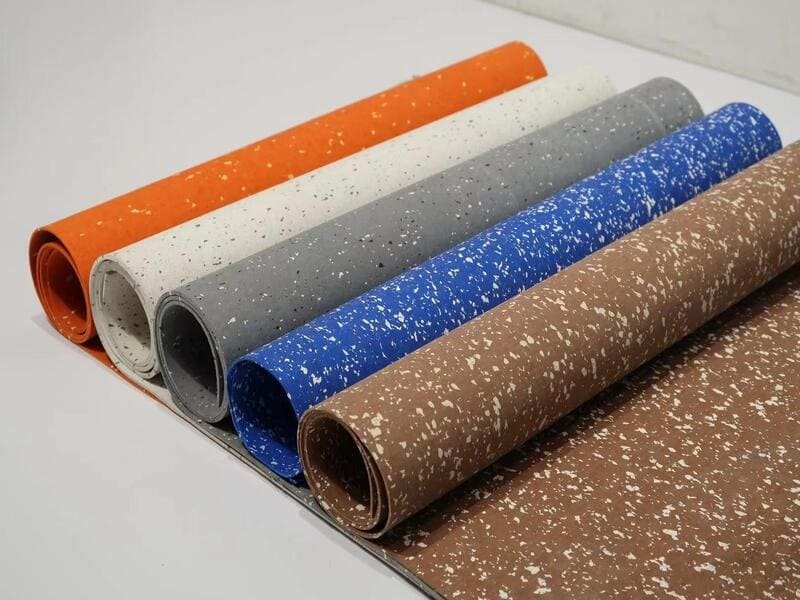
These physical constraints make a "buffer" essential for achieving a professional, uniform aesthetic across the entire floor surface.
Square Feet vs. Linear Feet: Understanding Professional Ordering Units
Most industrial-grade rubber rolls are sold by the "Linear Foot" based on a 4-foot width, rather than individual square feet. To accurately estimate waste, the room’s square footage must be converted into the number of 4-foot wide "runs" required, then multiplied by the length of the room plus the trimming allowance.
The Technical Calculation Formula for Precise Procurement
To ensure 100% coverage without a shortfall, the following engineering steps should be followed:
- Determine the Number of Runs: Total Room Width ÷ 4 (Always round up to the nearest whole number).
- Calculate Total Linear Feet: (Number of Runs × Room Length) + Perimeter Trimming Allowance.
- O resultado: This provides the exact volume required for the manufacturer to cut the rolls to size.
For a 15′ x 20′ room (300 sq. ft.):
- 15 ÷ 4 = 3.75 runs → 4 runs are required.
- 4 runs × 20′ length = 80 linear feet.
- 80 linear feet × 4′ width = 320 sq. ft.
- Conclusão: The initial "Base Waste" is already 6.7% due to width rounding alone. Adding a 5% trimming margin brings the total requirement to approximately 84 linear feet.
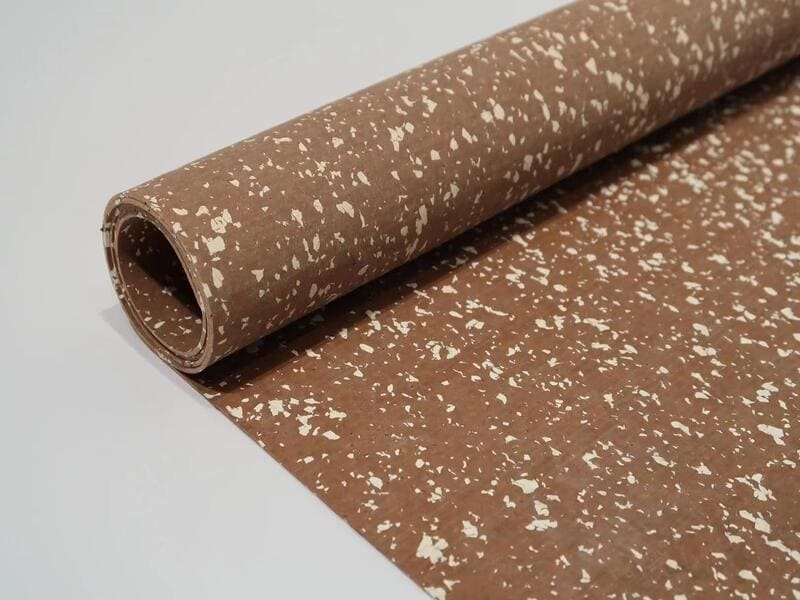
Ordering by linear feet prevents the common "shortfall nightmare" where a project stops because the installer is 2 feet short of finishing the final run.
How Thickness and Application Environments Influence Waste Levels
Material thickness directly impacts cutting precision; 10mm to 12mm rubber is significantly harder to trim than 6mm stock, increasing the likelihood of jagged edges that require re-cutting. Additionally, commercial environments with high-traffic demands allow for less margin for error compared to residential garage setups.
Waste Variability Based on Material Specifications
| Especificação | Waste Impact | Installation Insight |
|---|---|---|
| 6mm – 8mm Thickness | Padrão | Easier to score and snap; minimal risk of "oops" cuts. |
| 10mm – 12mm+ Thickness | Higher (+2%) | Requires multiple blade passes; increased chance of edge tearing. |
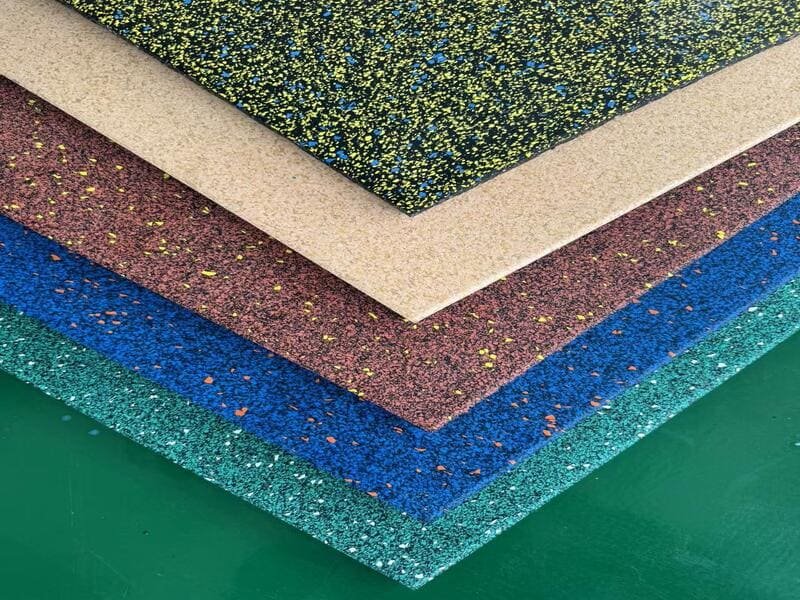
| Custom Color Fleck | Higher (+3%) | High-density color mixes make seams more visible if not cut perfectly. |
Cutting a 12mm high-impact roll for a professional weightlifting zone is a labor-intensive process. The increased density of the rubber causes blades to dull quickly, which can lead to "wandering" cuts. If a cut is not perfectly straight, the entire edge must be trimmed again, increasing the total waste. In a "Commercial Gym," every obstacle—such as floor-bolted power racks or electrical outlets—requires a precise cutout. These removed pieces cannot be recycled into the layout. In contrast, a "Residential Garage" might allow for slightly larger gaps at the perimeter that can be hidden by baseboards, whereas a commercial project requires millimetric precision, naturally consuming more raw material.
Evaluating these variables during the design phase ensures that the project budget remains accurate and the installation schedule is maintained.
The Financial Risk of Under-Ordering: Dye Lots and Logistics
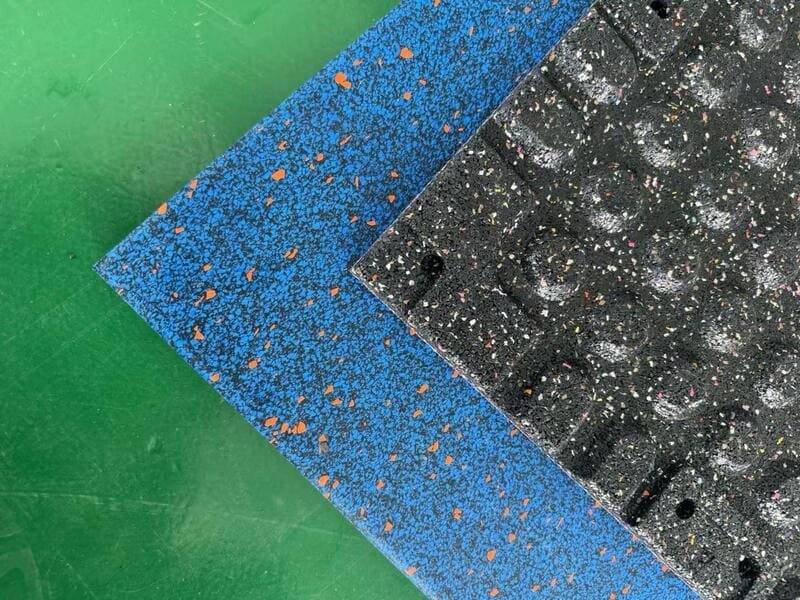
Ordering the exact square footage is a significant financial risk due to "Dye Lot" variation. If an installation falls short, the replacement material may come from a different production batch, resulting in slight differences in color fleck density or black base tone that are highly visible once installed.
The "Dye Lot" issue is a hidden danger in the flooring industry. Rubber is a manufactured product involving recycled tires and EPDM granules. Even with strict quality controls, a batch produced on Tuesday may vary 2% in shade from a batch produced on Friday. If a shortfall occurs and a single supplemental roll is ordered, it may not match the existing floor. This creates a permanent aesthetic flaw in the middle of the room. Furthermore, shipping a single 200lb roll is often more expensive per square foot than shipping a full pallet, making the "safety margin" much cheaper than a secondary order.
Keeping the largest off-cuts (scraps) is also a best practice for long-term facility management. These pieces are ideal for placing under high-wear equipment or for future repairs if a specific section of the floor is damaged by a sharp object or heavy chemical spill.
Properly accounting for waste is an essential part of professional project management and risk mitigation in rubber flooring.
Conclusão
Anticipate a 5% to 15% waste factor, calculate by linear runs, and prioritize a safety margin to avoid mismatched dye lots.
O meu papel
This guidance is provided by a technical expert in rubber flooring manufacturing and large-scale facility installation, with over 15 years of experience in material procurement and site management for the fitness and commercial sectors.
A minha opinião
For wholesale buyers and contractors, the waste factor is a critical metric for project profitability. A "seam plan" should always be generated prior to shipping. By strategically orienting rolls relative to the longest wall or the primary light source, waste can often be reduced by 3% to 5%. In large-scale commercial developments, these small percentage points equate to significant savings in both material costs and international shipping fees.
For a technical consultation on optimizing your flooring layout or to receive a professional estimation for a bulk project, please contact me directly.