


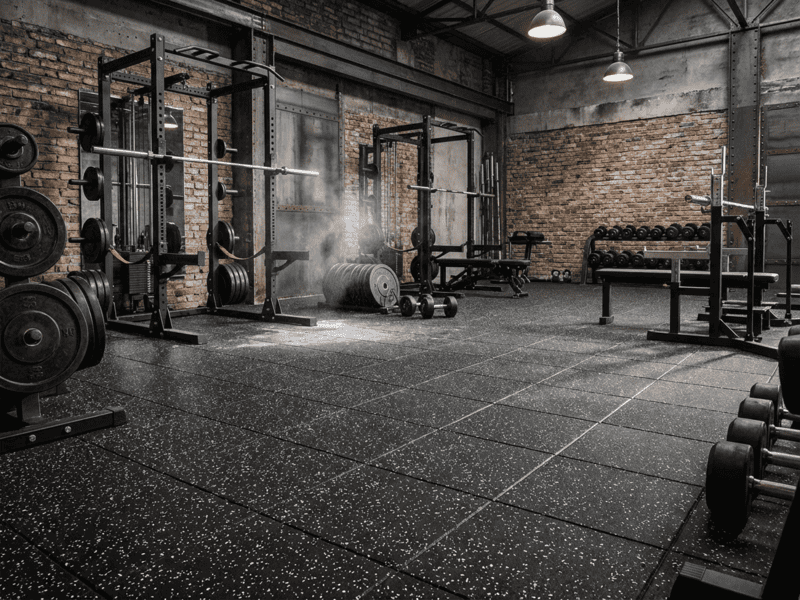
You block moisture vapor under rubber gym flooring by sealing the subfloor with a 6-mil polyethylene plastic sheet for floating installs or a specialized liquid epoxy mitigant for glue-down applications. The goal is to stop water vapor from rising through the slab and becoming trapped beneath the non-porous rubber.
In my decade of work as a flooring contractor, I have seen hundreds of gym owners ignore the moisture in their slabs. Because rubber is non-porous, it acts as a vapor barrier itself. This is the root of the problem. When ground moisture migrates through a concrete slab and hits the underside of a rubber mat, it has nowhere to go. This results in hydrostatic pressure, which destroys adhesives and creates a swampy environment for mold. You cannot just "hope" the floor is dry. You must create a physical break between the subfloor and your gym mats. Without this barrier, you are essentially sealing wetness into your foundation, which will eventually lead to a foul-smelling gym and ruined materials.
Quick Solution Summary
If you need to make a fast decision, follow these field-tested rules:
- Concrete Slab (Standard): Install a 6-mil poly film or 2-part epoxy mitigant.
- Basement (High Risk): Use a dimpled drainage mat to allow air movement.
- Plywood (Above Grade): Usually requires no barrier, but acclimation is key.
- All Scenarios: Always overlap seams by 6 inches and seal with waterproof tape.
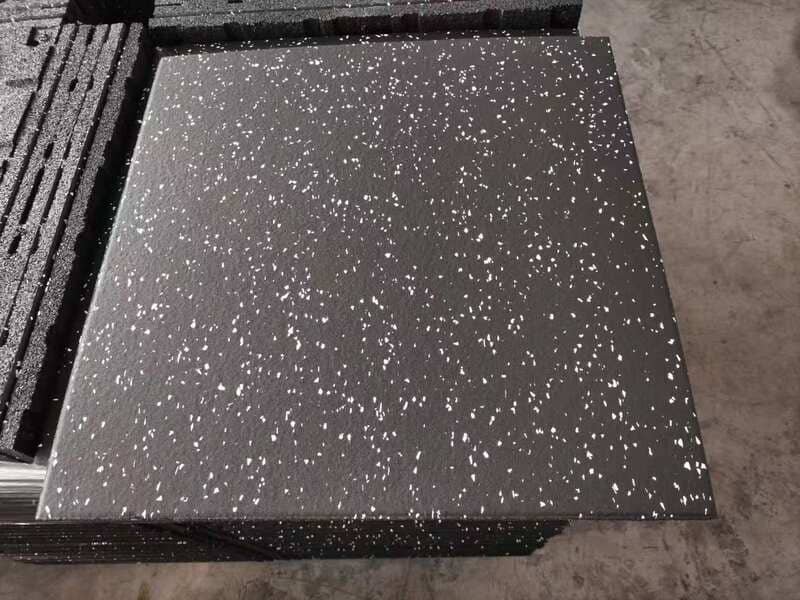
I always tell my clients that spending a few hundred dollars on a barrier now saves thousands in replacement costs later. If you skip this, you are gambling with your investment.
Do You Really Need a Vapor Barrier Under Rubber Flooring?
Yes, you almost always need a vapor barrier if you are installing rubber over concrete or in a basement. Since rubber does not "breathe," any moisture rising from the ground stays trapped, leading to adhesive failure and structural rot in organic subfloors.
| Tipo di sottofondo | Is a Barrier Required? | Perché? |
|---|---|---|
| Nuovo calcestruzzo | Sì | Fresh slabs contain "construction water" that takes months to escape. |
| Old Concrete | Sì | Ground moisture can still migrate upward through porous concrete. |
| Basement Floor | Absolutely | Basements are the highest risk areas for hydrostatic pressure. |
| Plywood/Wood | Consigliato | Helps prevent the wood from absorbing humidity and warping. |
I once handled a project where a client thought their 20-year-old garage floor was "bone dry." We installed 8mm rubber rolls without a barrier. Three months later, the seams were curling and a white powder (efflorescence) was oozing out. Even old concrete is like a sponge; it pulls moisture from the soil. If you are laying rubber—which is a vapor retarder by nature—you are creating a trap. Professional standards like those from the Rubber Manufacturers Association (RMA) emphasize that moisture control is the single most important factor for floor longevity. You must treat every concrete floor as a potential source of water vapor.
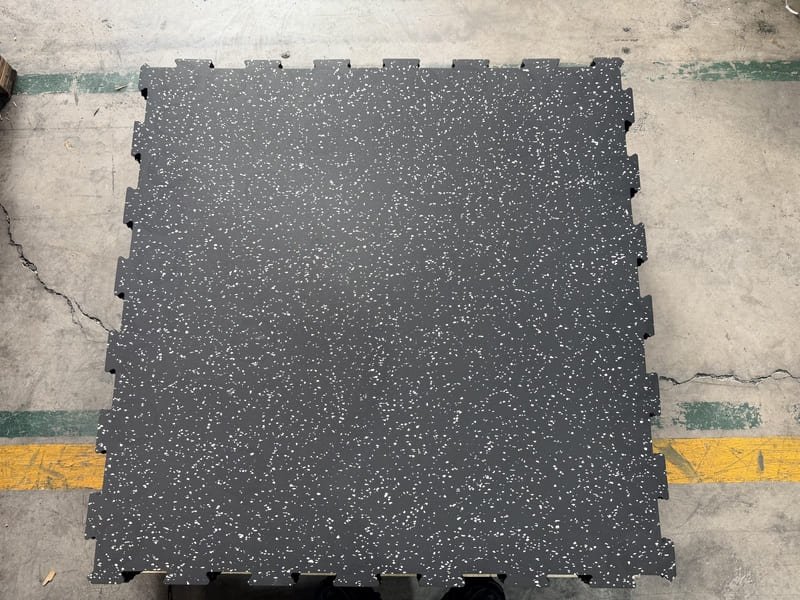
Identifying the problem is only half the battle. You need to know exactly what is happening inside that slab before you buy your barrier.
How to Test and Block Moisture for Different Subfloor Scenarios
The best moisture barrier depends on your specific floor type: use a 6-mil poly film for home garage gyms with interlocking tiles, a liquid epoxy mitigant for commercial glue-down rolls, or a dimpled drainage mat for damp basements to create a vital air gap.
Choosing the Right Barrier for Your Situation
1. The Concrete Slab (Standard Garage or Commercial)
For these floors, I recommend the Calcium Chloride Test (ASTM F1869). If the results show more than 3 lbs of vapor per 1,000 sq. ft., you need a liquid-applied moisture mitigant. These epoxies penetrate deep into the concrete. They are the gold standard for high-traffic gyms because they allow you to glue the rubber directly to the barrier.
2. The Residential Basement
Basements are tricky because they are often below the water table. A flat plastic sheet might not be enough. In these cases, I use Dimpled Drainage Mats. These create an air space between the slab and the flooring. If a small amount of vapor rises, it can move through the air gap to the perimeter and evaporate rather than getting stuck under your rubber tiles.
3. The Wood Subfloor (Second Story or Crawlspace)
On wood, the goal is to prevent the "Rot Sandwich." If you put plastic on top of wood, make sure the wood can breathe from underneath. If the wood is over a damp crawlspace, you must seal the ground in the crawlspace first. Then, use a thin poly film under your gym flooring to protect the wood from sweat and cleaning water.
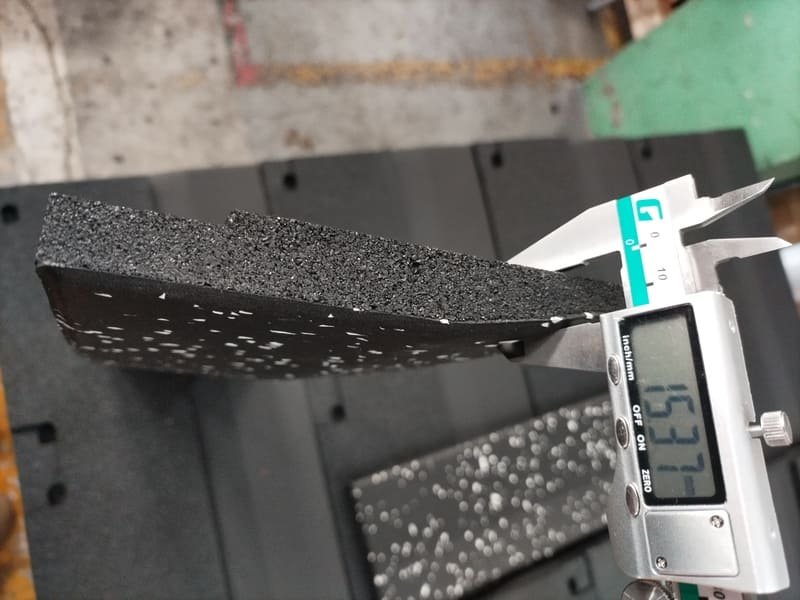
Once you have chosen the right material, the installation must be flawless. A single hole in your vapor barrier can cause a localized "bubble" in your floor.
Step-by-Step Guide: Professional Installation of Moisture Barriers
To install a moisture barrier, clean the subfloor of all debris, fill cracks with a moisture-stable patch, roll out your barrier—ensuring a 6-inch overlap on all seams—and seal every edge with high-tack waterproof tape to create an airtight seal.
Phase 1: Preparation is Everything
I spend more time cleaning than I do laying the floor. You must remove all old glue, paint, and dust. If you are using a liquid barrier, the concrete must be "profiled" (slightly rough) so the epoxy can bite into it. I always use a vacuum with a HEPA filter to ensure no dust remains in the cracks.
Phase 2: Applying the Vapor Barrier
If you are using 6-mil Polyethylene, roll it out across the entire room. I always run it 2 inches up the wall. This "tubbing" effect ensures moisture doesn’t leak out at the edges. Use specialized seam tape. Do not use standard masking tape; it will fail in a damp environment. For Liquid Barriers, use a foam roller to ensure an even coat. Check for "pinholes"—small bubbles in the liquid—and touch them up immediately.
Phase 3: Flooring Acclimation and Layout
I never install rubber the day it arrives. I let the rolls or tiles sit in the gym for 48 hours with the HVAC system running. This stabilizes the material. When laying the rubber over plastic, be careful not to puncture the film with your tools. If you are gluing, ensure the adhesive is compatible with the moisture barrier you applied.
These steps ensure that your floor stays flat and smells fresh for the life of the building.
FAQ: Common Questions from Gym Owners and Engineers
Q: Can I use a regular tarp as a moisture barrier?
No. Tarps are woven and have tiny gaps that allow vapor to pass through. You must use a solid, non-woven film like 6-mil polyethylene or a certified liquid mitigant.
Q: How do I know if my basement floor has too much moisture?
Perform a "Plastic Sheet Test." Tape a 2’x2′ piece of clear plastic to the floor for 48 hours. If there is condensation or the concrete turns dark, a barrier is mandatory.
Q: What is the best barrier for glue-down rubber rolls?
A two-component, 100% solids epoxy moisture mitigation system is the professional choice. It allows for a permanent bond while blocking up to 25 lbs of vapor pressure.
Q: Does a moisture barrier make the floor louder?
If you use a dimpled mat, it can create a slight "hollow" sound. Using a high-density rubber underlayment or a rubber-cork composite can help dampen this sound while still providing moisture protection.
Conclusione
Blocking moisture vapor is a three-step process: test the slab, choose a barrier based on your subfloor type (Poly for tiles, Epoxy for glue), and seal all seams perfectly.
Quick Checklist Before You Install:
- Concrete moisture test performed (RH or Calcium Chloride)
- Subfloor cracks filled and leveled
- Vapor barrier overlaps sealed with waterproof tape
- Rubber flooring acclimated to the room for 48 hours
- Perimeter gaps left for edge evaporation