


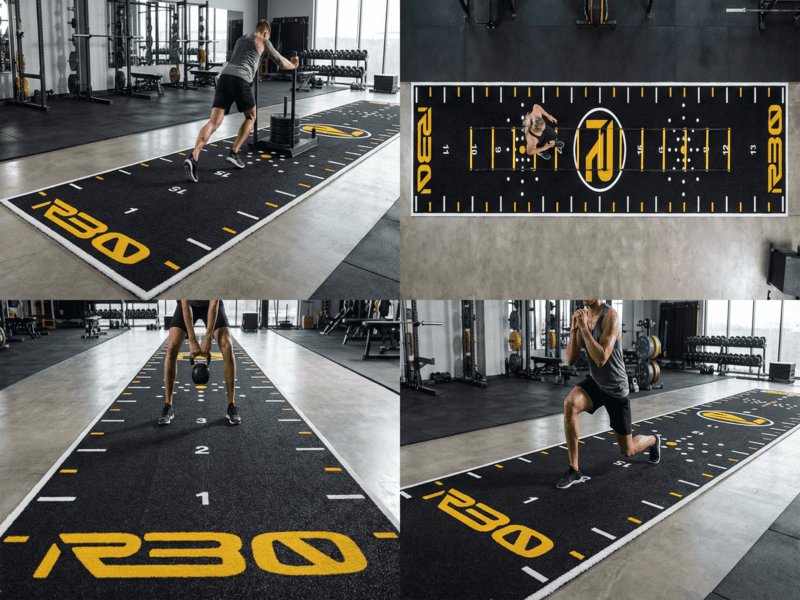
Sled weight and technique accelerate turf wear through high-pressure friction and mechanical shear. Standard PE turf supports up to 250 lbs safely, while weights exceeding 500 lbs require high-density Nylon. Aggressive "toe-drilling" and metal sled skis can reduce turf lifespan by 60% without proper maintenance and sacrificial start zones.
As a flooring R&D engineer with 15 years in polymer extrusion, I have tested hundreds of turf samples under industrial sled simulators. Many owners treat turf as a generic commodity, but the physics of a 400 lb sled push are brutal. You are dealing with a contact patch often smaller than 10 square inches, creating immense PSI (pounds per square inch) that can liquefy standard polyethylene fibers. In our lab, we have seen "burn streaks" occur in seconds when high-speed friction meets low-melting-point polymers. This article breaks down the exact thresholds where damage begins and how you can engineer your training environment to stop it. By applying specific weight limits and technique corrections, you protect your investment from premature "trenching" and baldness.
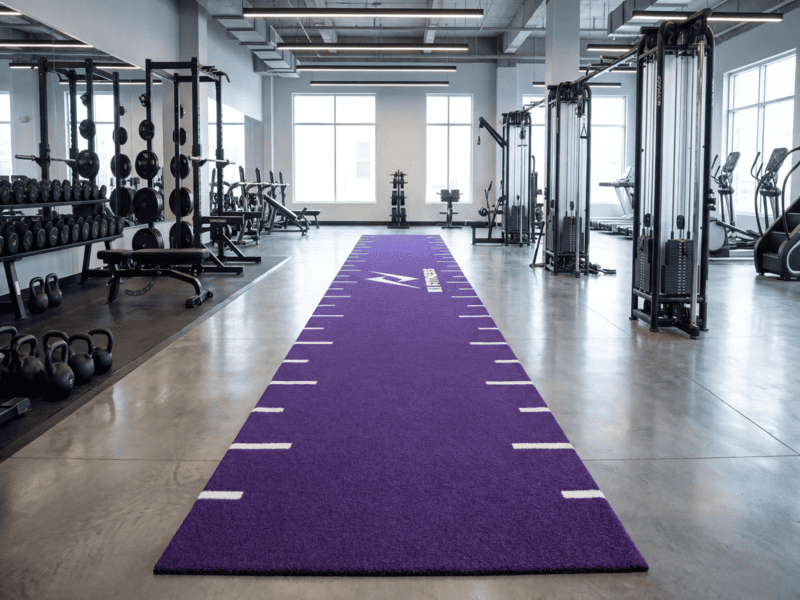
The difference between a track that lasts 2 years and one that lasts 8 years often comes down to a few key technical choices.
What Are the Safe Weight Limits for Different Turf Types?
The safe weight limit depends on the fiber polymer: standard Polyethylene (PE) turf handles up to 250 lbs for long-term durability, whereas high-density Nylon (Polyamide) can withstand 600+ lbs. Exceeding these thresholds causes "Permanent Deformation," where fibers lose their ability to recover and lay flat forever.
In my experience, "trenching" (a permanent valley in the middle of the track) is the most common failure. We analyzed a 20-meter track at a high-volume performance center that used standard 40 oz PE turf; it developed deep ruts in just 6 months due to heavy daily sled loads. When they switched to a texturized Nylon 6.6 product, the wear life increased 3-fold. This is because Nylon has a much higher softening point and superior "memory" compared to PE. If you are operating a heavy-use facility, you cannot ignore these material limits.
Quick Reference: Weight & Material Thresholds
| Materiale del tappeto erboso | Max Recommended Sled Weight | Durata di vita prevista (traffico elevato) |
|---|---|---|
| Standard PE (Landscape style) | ≤150 lbs | 6 – 12 Months |
| Professional Gym PE (Texturized) | ≤300 lbs | 2 – 3 Years |
| Premium Nylon 6.6 | 600+ lbs | 5 - 8 anni |
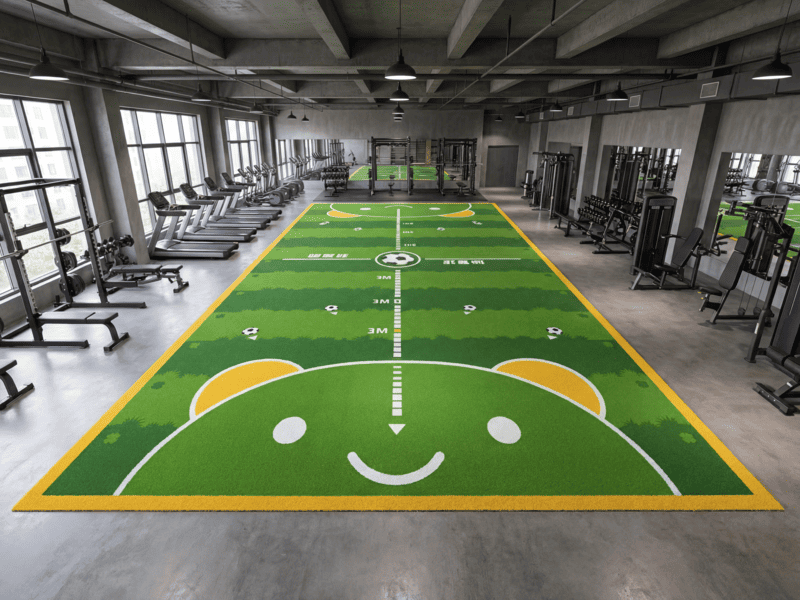
Knowing your weight limit is step one, but the way your athletes move that weight can double the wear rate overnight.
Does Athlete Footwork Create "Bald Spots" in Your Start Zone?
Yes, aggressive "toe-drilling" creates concentrated shear force that exceeds the tuft-bind strength of the turf backing. This action literally saws through the fibers at the base, leading to bald spots in the first 3 meters of the track where static friction is highest.
The "start zone" is where 80% of damage occurs. When an athlete digs their toes in to overcome static friction, the lateral force is massive. I have measured tuft-bind strength in the lab; standard turf requires about 30-40 Newtons of force to pull a fiber out. A powerful athlete pushing a 400 lb sled can easily exceed this limit if they "chop" the ground. To solve this, I always suggest user-specific strategies. For a professional S&C coach, you must teach "flat-foot" initial drives. For a home gym user, simply moving your starting point by 1 meter every week can prevent the "death by a thousand chops."
User-Specific Strategy Guide
- For Professional Gym Owners: Install a 3-meter "sacrificial" heavy-duty rubber mat at the start line to absorb the initial toe-drilling.
- For Personal Trainers: Rotate your sled lanes daily. If you have a 4-meter wide track, don’t let everyone stay in the center 1-meter "sweet spot."
- For Home Gym Users: Stick to plastic-bottom sleds and keep weights under 200 lbs if using budget-friendly PE turf.

The athlete’s movement is the variable you coach, but the equipment is the variable you buy.
Can Your Sled Skis Actually Melt Your Flooring?
Metal sled skis can generate enough friction-based heat to reach the glass transition temperature of polyethylene (approx. 80-100°C), causing the fibers to singe or melt. Switching to UHMWPE (plastic) skis reduces the coefficient of friction and prevents thermal damage to the turf pile.
The "Burr" Effect: A Hidden Danger
As an engineer, I often see "mystery scratches" on turf. These are almost always caused by steel skis that have been used on concrete. A single burr or sharp nick on a metal ski acts like a wood plane, shaving off layers of the turf fiber with every pass. This fibrillation makes the turf look "fuzzy" and grey. In our comparative testing, plastic skis distributed the load more evenly and eliminated the "melting" streaks commonly seen in high-speed sled sprints.
Equipment Performance Data
| Sled Ski Material | Coefficient of Friction (on Turf) | Heat Generation Risk |
|---|---|---|
| Raw Steel (Rusted/Burred) | High (0.45+) | Critico |
| Polished Steel | Medium (0.30) | Alto |
| UHMWPE Plastic | Low (0.15) | Basso |
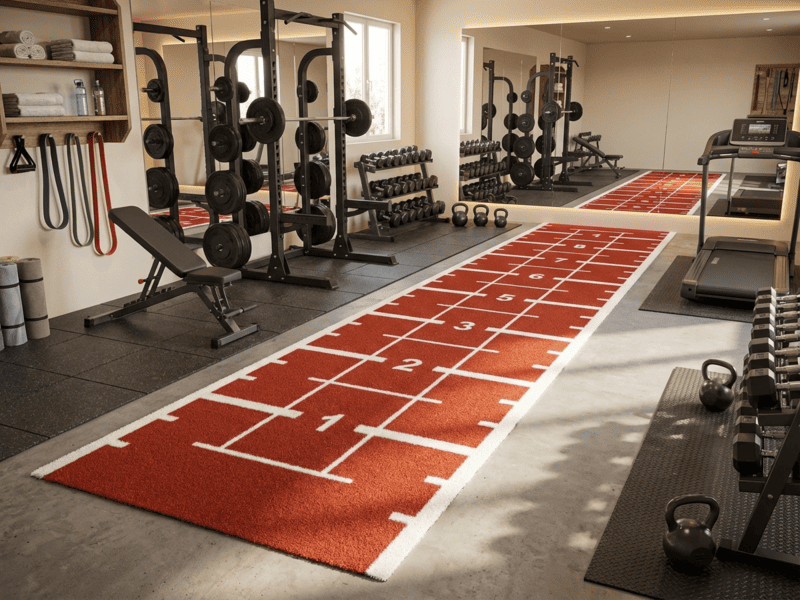
Equipment and technique are the causes, but specialized maintenance is the cure for a dying track.
How Can You Reverse Turf Compaction Before It’s Too Late?
You can reverse early-stage turf compaction by using a power brush to "re-bloom" the fibers and applying a light infill of rounded silica sand to support the fiber base. Regular maintenance prevents the pile from laying flat, which is the primary cause of fiber breakage and slickness.
When fibers lay flat, the sled no longer slides on the "tips" of the grass; it grinds against the "sides." This increases the surface area of friction and accelerates wear. I recommend a "weekly grooming" protocol for any commercial facility. Using a stiff-bristled power broom can stand the fibers back up. If you see "matting" that won’t stand up, the polymer has reached its elastic limit. In a case study I conducted for a large CrossFit affiliate, implementing a bi-weekly brushing schedule extended their turf’s aesthetic life by an additional 18 months compared to their previous non-maintenance cycle.
Pro-Maintenance Checklist
- Weekly Brushing: Use a stiff nylon brush against the grain of the sled push.
- Ski Inspection: Check for burrs on sled feet every 30 days; sand them smooth if found.
- Lane Shifting: Move the sled "path" 50cm to the left or right every week to distribute wear.
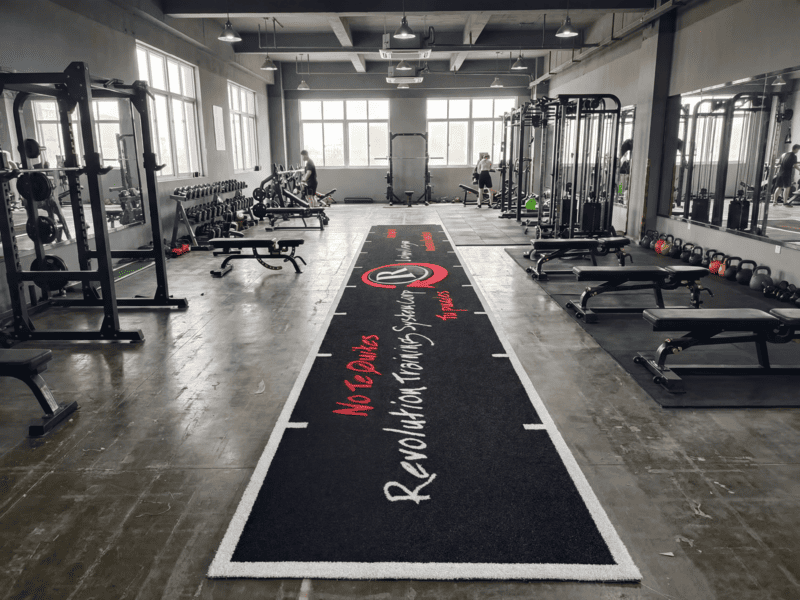
Maintenance is the key to ROI, but selecting the right material from day one is the most important decision you will make.
Conclusione
Sled wear is manageable. Focus on material thresholds, use plastic skis, and maintain your track to ensure long-term durability.
If you need a professional technical consultation on selecting the right turf density or material for your specific gym traffic, send me a private message today for a custom recommendation.