


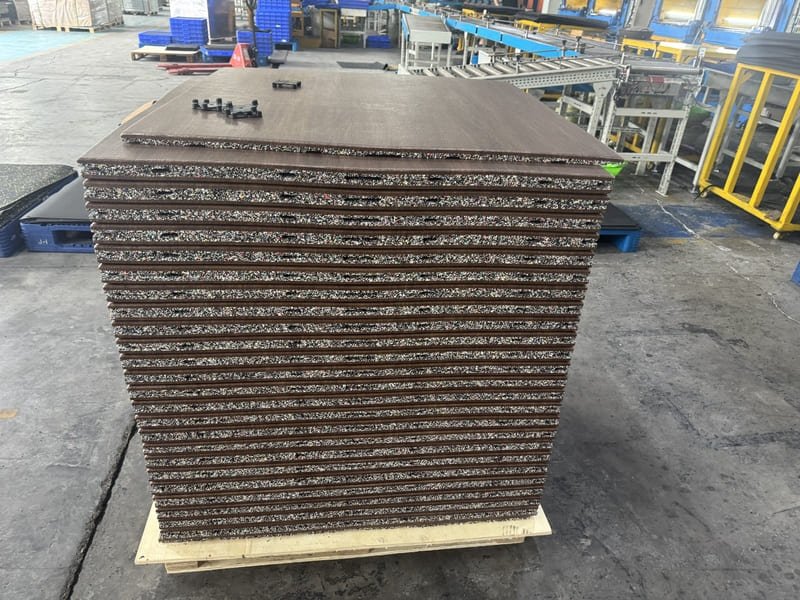
Rubber flooring fails on moist concrete because trapped water vapor breaks down adhesives and creates osmotic pressure. This moisture cannot escape through the dense rubber, leading to bubbles, mold, and loose tiles that ruin the installation and create safety hazards for users.
As an installation director with over 15 years of field experience, I have seen many expensive projects fail because people ignore what is happening under the slab. Concrete looks solid and dry on top, but it is actually a porous material that holds a lot of water. When we install a non-porous rubber cover over it, we create a seal. This seal stops the natural evaporation process. The moisture then collects at the bond line and starts a chemical war with your glue. I always tell my team that a floor is only as good as the subfloor preparation. If you do not handle the Moisture Vapor Emission Rate (MVER) correctly, the best rubber mats in the world will eventually peel up. We need to look at concrete as a living, breathing sponge rather than a finished base.
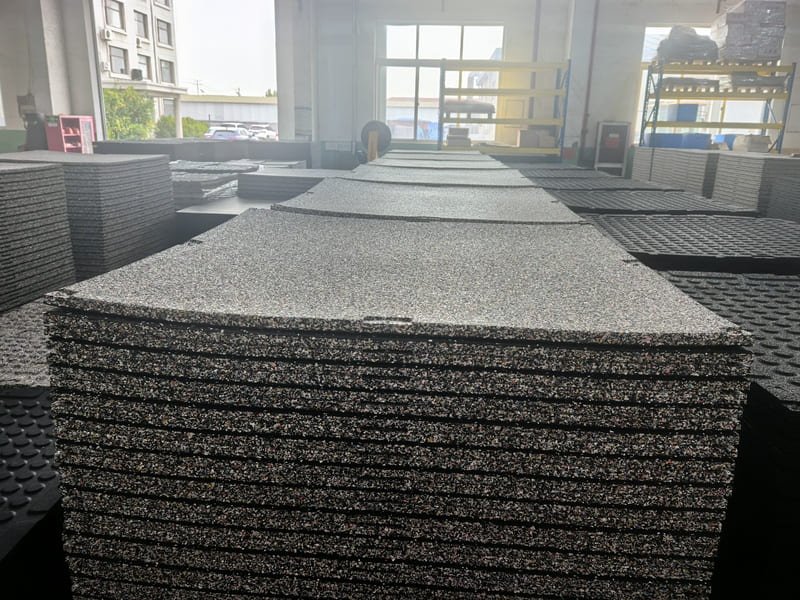
I want to explain why this happens so you can avoid these costly mistakes on your next gym or facility project.
Why do concrete and rubber clash when moisture is present?
Concrete and rubber clash because rubber acts as a vapor barrier that traps rising moisture. This moisture reacts with the lime in concrete to raise pH levels, which destroys the chemical bond of the adhesive and causes the entire flooring system to detach from the subfloor.
| Conflict Factor | Physical Effect | Technical Result |
|---|---|---|
| Permeability | Rubber blocks water vapor | Trapped moisture at the bond line |
| Alkalinity | High pH (12-14) | "Caustic soup" that eats glue |
| Pressione idrostatica | Water pushed by gravity | Physical lifting of the floor |
The problem often starts with the "Permeability Paradox." Most high-density rubber flooring is designed to be water-resistant from the top down, but this means it is also air-tight from the bottom up. In my experience, even semi-porous recycled rubber mats can trap enough dampness to cause trouble. When water gets stuck, it pulls salts and alkalis out of the concrete. This creates a high-pH environment. Most standard floor glues are not built to survive a pH level above 9 or 10. If the moisture levels are high, the glue turns back into a liquid state, which we call re-emulsification. I have walked onto jobs where the glue felt like wet soap months after it should have dried. You must also understand the difference between simple dampness and hydrostatic pressure. Hydrostatic pressure is when liquid water is actually being pushed up through the slab by the water table outside.
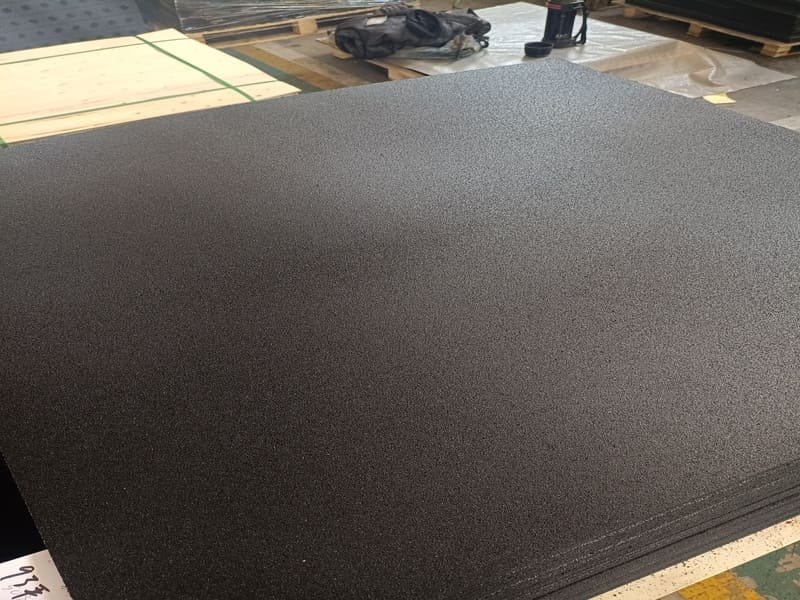
This chemical and physical pressure leads to very specific symptoms that any manager can spot.
The main symptoms include adhesive breakdown, osmotic blistering, mold growth, curling edges, and white powdery residue called efflorescence. These signs indicate that the moisture under the rubber is high enough to cause structural and chemical damage to the flooring system.
| Sintomo | Identification | Impatto sulle prestazioni |
|---|---|---|
| Adhesive Breakdown | Glue feels sticky or liquid | Tiles slide and gap |
| Osmotic Blistering | Small bubbles under the surface | Tripping hazards and poor looks |
| Dimensional Change | Tiles expand or curl at seams | Uneven floor and dirt traps |
When I inspect a failing floor, the first thing I look for is "Osmotic Blistering." These are small bubbles that look like the floor has a rash. They are filled with high-concentration fluid that is being pulled through the rubber by salt. Another huge red flag is mold and mildew. If you pull up a corner and see black spots or smell something earthy, you have a health problem on your hands. I once worked on a gym where the rubber tiles were actually "growing" or expanding. This happens because the rubber absorbs some of the trapped water and swells. You might also see a white powder coming out of the seams. This is efflorescence, which is just salt left behind when water evaporates. It tells me that there is an active moisture path from the ground into your room. If you see these signs, the floor is already in a state of failure.
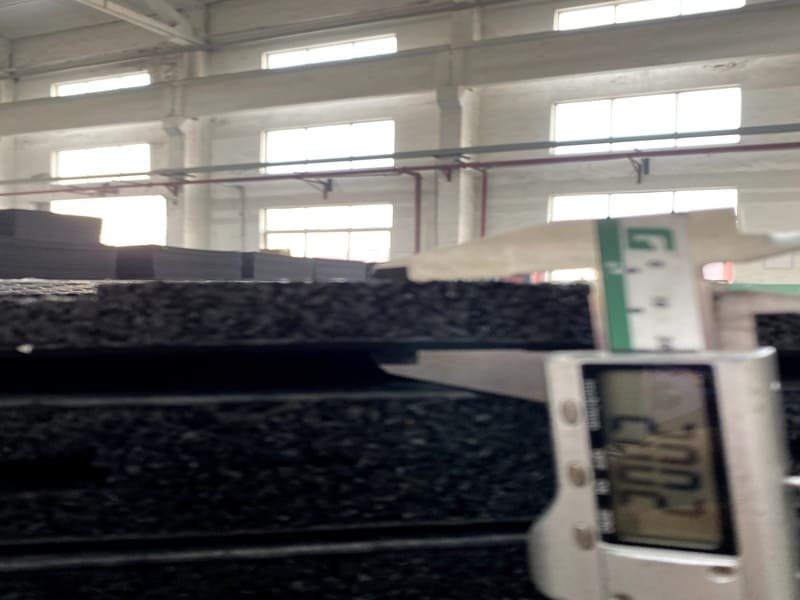
Finding these symptoms is bad, but finding the source of the water is how we fix it.
How do you identify where the subfloor moisture is coming from?
Moisture comes from three main sources: "New Slab Syndrome" where concrete is not fully cured, missing or damaged vapor barriers under the building, and poor exterior drainage that allows ground water to seep through the concrete slab via capillary action.
| Fonte | Common Cause | Soluzione professionale |
|---|---|---|
| New Concrete | Rushed construction schedule | Allow 30 days per inch of thickness |
| Ground Water | No poly-sheeting barrier | Install a topical moisture mitigator |
| Exterior Drainage | Clogged gutters or flat grading | Fix landscaping and site drainage |
I often see "New Slab Syndrome" in fast-moving commercial projects. General contractors love to follow the "one inch per month" rule for drying concrete, but that rule is outdated. If the air is humid or the slab is thick, it takes much longer. In older buildings, the problem is usually a lack of a vapor barrier. Before the 1990s, many slabs were poured directly on the dirt. This means the concrete acts like a giant wick, pulling water up from the damp earth through capillary action. I have also seen cases where the building is fine, but the landscaping outside is slanted toward the walls. When it rains, water pools against the foundation and finds its way under your floor. You have to be a bit of a detective to find the root cause before you try to put a new floor down.
Once we know where the water is, we must use the right tools to measure it.
Which testing methods are best before installing rubber flooring?
The most reliable tests are the In-Situ Relative Humidity (RH) test (ASTM F2170) and the Calcium Chloride test (ASTM F1869). These tests measure the moisture deep inside the slab and the vapor emission rate at the surface to ensure they meet manufacturer specs.
| Tipo di test | Standard | What it measures |
|---|---|---|
| In-Situ RH | ASTM F2170 | Humidity inside the concrete |
| Calcium Chloride | ASTM F1869 | Vapor leaving the surface |
| pH Test | N/D | Acidity/Alkalinity levels |
I never trust a visual check. Concrete can look dry but be soaking wet inside. I always recommend the In-Situ RH test. This involves drilling a small hole and placing a sensor inside the concrete. It tells us how much water is waiting to come out. Most rubber manufacturers want to see less than 75% or 80% RH. The Calcium Chloride test is also good because it measures the "weight" of the water vapor coming off the floor over 72 hours. If you want a quick check, you can tape a piece of plastic to the floor for 24 hours. If it is dark or wet underneath when you peel it up, you have a major problem. However, this DIY test is not enough for a warranty. I also check the pH level. If the floor is too alkaline, we have to treat the surface or use a special primer to keep the glue from failing.
If the tests show high moisture, you have to follow a strict plan to fix it.
Prevention requires proper subfloor preparation like shot-blasting and applying a moisture mitigation system. Using high-quality urethane adhesives or switching to a floating interlocking tile system can also help the floor handle higher moisture levels without failing.
| Strategia di mitigazione | Il miglior caso d'uso | Benefici |
|---|---|---|
| Epoxy Barrier | Heavy moisture (up to 100% RH) | Total seal of the slab |
| Penetrating Sealant | Medium moisture issues | Fills the pores of the concrete |
| Floating Floor | Basements and home gyms | Allows the slab to breathe |
Fixing a wet subfloor is all about the "pores." I usually suggest shot-blasting the concrete to open it up so that sealers can sink in. An epoxy-based moisture barrier is the gold standard. It creates a new, waterproof skin on top of the concrete that the glue can bond to safely. If the budget is tight, I sometimes suggest a floating floor. This means using interlocking rubber tiles that are not glued down. This allows a tiny amount of air to move under the mats, which helps prevent bubbles. I also tell my clients to stay away from cheap rubber mats that use clay fillers. Those fillers soak up water like a sponge and cause the mats to warp. Spend the extra money on high-quality urethane-bonded rubber and a good moisture-rated adhesive. It is much cheaper than doing the whole job twice.
Quick Decision Guide: What Should You Do Based on Moisture Level?
To ensure 100% success, your installation strategy must match your specific test results. Use this guide to determine the required mitigation steps based on your ASTM F2170 (RH) or F1869 (MVER) readings.
| Moisture Level (RH%) | MVER (lbs/1000sqft) | Azione raccomandata |
|---|---|---|
| RH < 75% | < 3 lbs | Standard urethane adhesive is safe. |
| RH 75% – 85% | 3 – 5 lbs | Use a moisture-rated adhesive + specialized primer. |
| RH > 85% | > 5 lbs | Install a 2-part epoxy moisture barrier or switch to floating tiles. |
| Unknown / Basement | N/D | High risk—Floating interlocking system highly recommended. |
I always advise that if you are at 80% RH, you are right on the edge. In these cases, moving to a floating floor or a full epoxy barrier is the only way to sleep well at night. I have seen too many "borderline" floors fail a year later when a heavy rain season hits. Choosing the right path here is the difference between a floor that lasts twenty years and one that lasts twenty days.
In conclusion, moisture is the number one enemy of rubber flooring, but it is manageable.
Conclusione
Moisture failure is a subfloor issue, not a rubber issue. Testing early and using the right barriers saves your investment.
Work with the Engineering Experts
If you are planning a project and are worried about your concrete subfloor, do not guess. My team and I specialize in high-performance rubber flooring solutions that stand up to tough environments. We can help you choose the right materials and provide technical guidance on moisture mitigation to ensure your floor lasts for years.
Reach out to our technical team today to request a project quote or to receive free samples of our moisture-resistant rubber flooring options.
[Contact Our Engineering Team]