


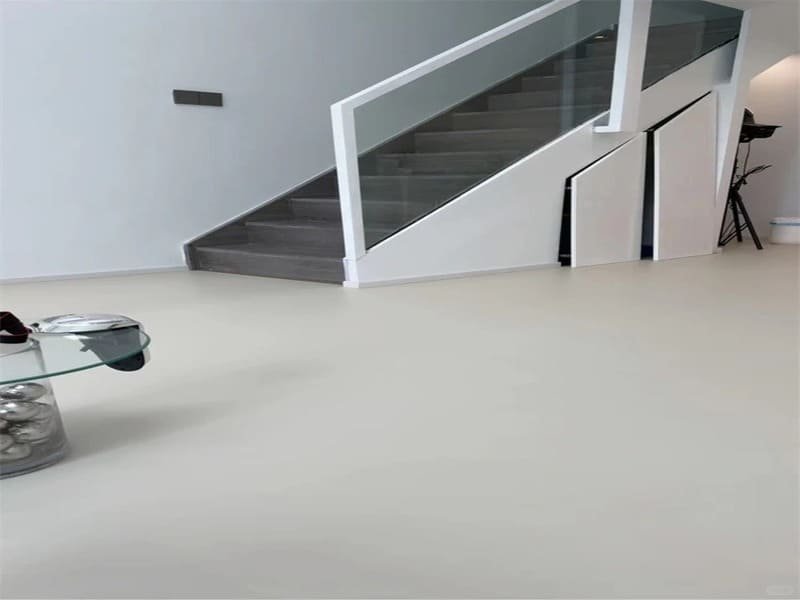
There is no single limit that applies to every PVC floor. Under ISO 24343-1, homogeneous PVC (ISO 10581) and compact heterogeneous PVC (ISO 10582) are generally required to stay at or below 0.10 mm. Foam-backed PVC (ISO 11638) allows higher values depending on use class, and indoor sports flooring is judged under a separate method, EN 1516, where EN 14904 permits up to 0.50 mm after 24 hours of recovery.
I have walked into more than one job site where the client points at a fresh floor and asks why there are dents under the hospital bed or the squat rack. This happens more than people think. Residual indentation is the deformation still measurable in a floor after a heavy, concentrated load is applied and then removed, once the material has been given time to recover. It is easy to see one number online and assume it is the industry-wide passing grade. It is not. The acceptable value depends on the flooring construction, which product standard applies, and which test method was used to generate the number. Mixing these up is one of the most common mistakes I see in specification documents, and it is exactly what leads to disputes on site. In this article I will walk through what residual indentation actually measures, what the real benchmarks are by flooring type and standard, what causes excessive dents, and how to prevent and, where possible, repair them.
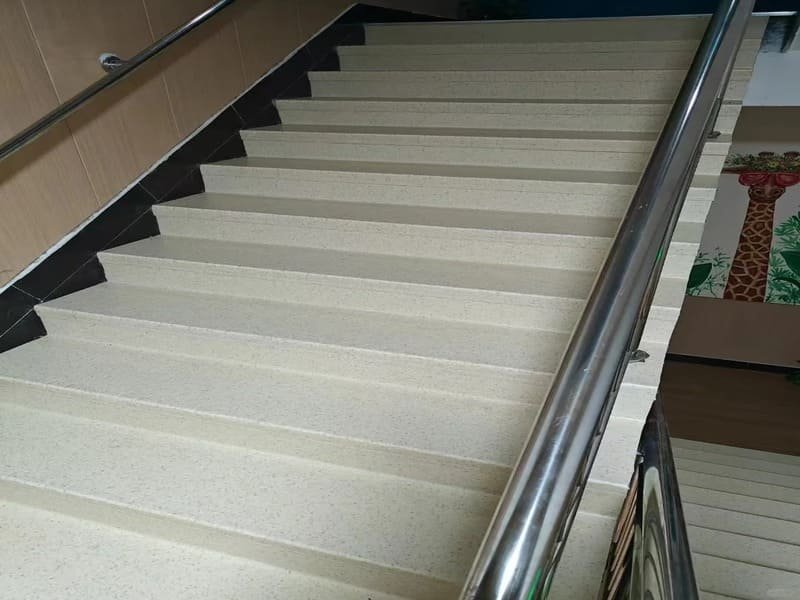
Before getting into the numbers, it helps to understand exactly what the test is measuring and why the method behind the number matters as much as the number itself.
What Exactly Is Residual Indentation in Vinyl Flooring?
Residual indentation is the deformation that remains in a PVC floor after a static load is applied, then removed, and the material is given time to recover. PVC recovers substantially, but a small amount of deformation can remain, and that remaining amount is what gets recorded.
Under ISO 24343-1, a lab applies a load of roughly 500 N through a cylindrical steel indenter about 11.3 mm in diameter, leaves it in place for 150 minutes, then removes it and lets the specimen recover for another 150 minutes before measuring the difference between the original and recovered thickness. Three specimens are typically tested and averaged. ASTM F1914 works on a related principle but with its own indenter, load, and timing, so a number generated under one method is not automatically comparable to a number generated under another. This becomes very important with sports flooring, which is tested under a completely different method, EN 1516, with a 24-hour recovery period instead of 150 minutes. A rule I give every specifier I work with: never compare two residual-indentation numbers unless they came from the same test method and the same recovery period. A 0.10 mm figure from ISO 24343-1 and a 0.50 mm figure from EN 1516 are not measuring the same thing in the same way, even though both describe "residual indentation."
Once you understand how the test works and why the method matters, the next question is what number actually counts as acceptable for the type of PVC floor you are buying.
What Are the Acceptable Indentation Limits by PVC Flooring Type?
Limits are set by product standard, not by a single universal number. Each flooring construction has its own reference standard and its own benchmark.
| Tipo di pavimentazione | Standard di riferimento | Residual Indentation Requirement / Typical Benchmark |
|---|---|---|
| PVC omogeneo | ISO 10581 + ISO 24343-1 | ≤ 0.10 mm |
| Compact heterogeneous PVC | ISO 10582 + ISO 24343-1 | ≤ 0.10 mm |
| Foam-backed heterogeneous PVC | ISO 11638 + ISO 24343-1 | Varies by use class; commonly ≤ 0.20 mm for higher commercial classes |
| Indoor sports flooring | EN 14904 + EN 1516 | ≤ 0.50 mm after 24 h recovery |
| Rigid-core / SPC | EN 16511 or ASTM F3261 (product-dependent) | Depends on the product structure and applicable standard; do not assume a universal 0.05 mm figure |
Homogeneous PVC is dense through its full thickness, which is why hospitals and factories rely on it for rolling and static loads. Compact heterogeneous PVC has a dense backing under the wear layer and is held to a similar 0.10 mm requirement under ISO 10582. Foam-backed PVC is intentionally different. The foam layer absorbs shock, which is why the standard governing it, ISO 11638, allows higher values depending on the use class the product is rated for, rather than one fixed number. Many high-performance products on the market publish typical values well below their standard’s minimum requirement. For example, some premium homogeneous products report figures around 0.02–0.05 mm, but that reflects the individual product’s performance, not a universal "premium grade" rule written into the standard.
Knowing which standard applies to your product is one thing. Knowing what actually pushes a floor past its rated benchmark in real-world use is what helps you avoid the problem before it happens.
What Causes Unacceptable Permanent Dents?
Concentrated static loads, unsuitable furniture glides, installation shortcuts, and the product’s own construction and formulation all contribute to excessive residual indentation.
Most dents I have traced back come down to a small contact point carrying a lot of weight. Think squat racks, free weight stands, filing cabinets, or hospital beds resting on narrow legs or small wheels. The load per square millimeter at that contact point can be far higher than the average pressure the product was tested and rated against, even when the total weight of the object is not extreme. Narrow, hard furniture feet or unsuitable castors make this worse by concentrating the same load into an even smaller footprint. Installation quality matters just as much. Using the wrong adhesive, insufficient rolling during installation, or loading the floor before the adhesive reaches its specified cure strength can all set a floor up to underperform its rated value. It is also worth being direct about this: installation and concentrated loads are common triggers, but the product’s own construction, filler and plasticizer ratio, foam or backing density, and manufacturing consistency all genuinely influence how well a floor resists indentation in the first place. A well-made, correctly specified product installed properly is the baseline for meeting its rated number at all.
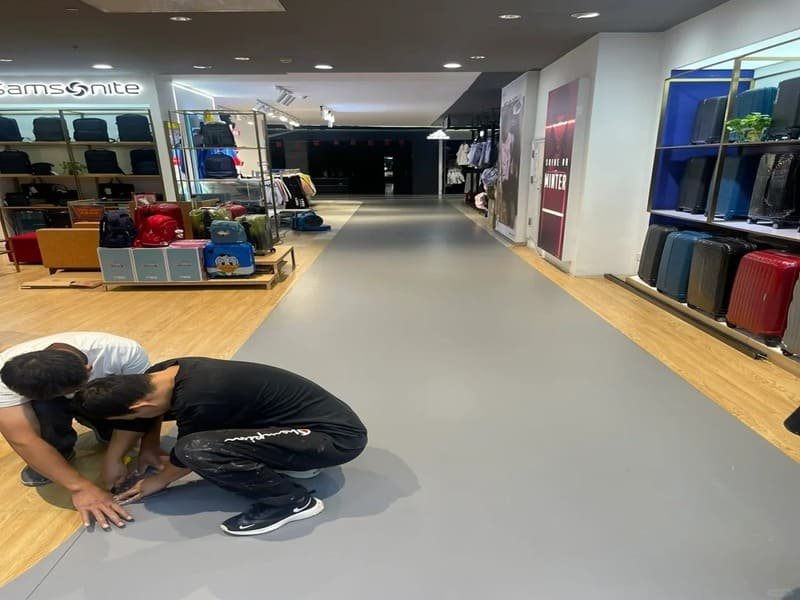
Understanding these drivers makes it much easier to choose a product that actually matches the loads your project will put on it.
How Do You Choose the Right PVC Floor for Heavy-Load Applications?
Match construction and density to the expected load. Total thickness alone does not determine indentation resistance or service life.
"Thicker is better" is one of the most common misunderstandings I run into during specification reviews. Total thickness contributes to underfoot comfort and, combined with wear-layer thickness and surface treatment, to long-term wear performance, but indentation resistance comes primarily from density and backing structure. A thinner, high-density homogeneous sheet will often resist a concentrated static load better than a thicker, softer foam-backed sheet, because it is the compact structure doing the resisting, not the overall gauge. For offices and hospitals, a high-density compact vinyl under ISO 10581 or ISO 10582 is generally the safer specification because of rolling carts, beds, and cabinets. For gym cardio and court areas, sports PVC evaluated under EN 14904 is appropriate, since it still needs to deliver shock absorption for athletes. For heavy free-weight zones specifically, I usually advise moving away from standard PVC altogether toward high-density rubber tiling, since dropped and repeatedly loaded barbells introduce a different kind of stress, closer to impact loading than to the sustained static loading that residual-indentation testing measures.
Selecting the right product up front solves most of the problem. The rest comes down to how the floor is protected once it is in service.
How Can You Prevent Indentation and Protect Your Flooring Investment?
Distribute load properly, use the right castors and glides, follow the adhesive manufacturer’s cure requirements, and manage temperature exposure.
Load distribution is the simplest and most effective prevention measure available. Wide furniture cups spread weight over a larger contact area, plywood sheets under appliances being moved reduce point pressure during relocation, and appropriately sized furniture glides prevent narrow feet from concentrating load into a small footprint. For wheeled equipment, use soft, resilient-floor-rated castors, commonly Type W under ISO 4918, rather than hard casters designed for rigid surfaces. On adhesive cure time, do not load the floor with heavy rolling or static loads until the manufacturer’s specified load-bearing cure time has been reached; depending on the adhesive system, pressure-sensitive, wet-set, epoxy, or dry systems, this can range from a few hours to several days, so always check the product data sheet rather than assuming a fixed number. Temperature also plays a bigger role than most people expect. PVC softens as it warms, so a floor under direct sunlight or near a hot HVAC vent can become more susceptible to indentation than the same product in a climate-controlled space, which is worth checking at the design stage.
Even with good prevention, dents can still happen. The good news is that not every dent is permanent, and not every result requires the same response.
Can You Fix Residual Indentations Once They Happen?
A temporary depression can often recover on its own within its normal recovery range. A permanent dent with a ruptured wear layer generally requires professional assessment and, in severe cases, patching or replacement.
The first step is figuring out which kind of dent you are dealing with. A temporary depression is still within the floor’s normal recovery behavior and will typically lessen over hours or days on its own. A permanent dent, especially where the wear layer has cracked or ruptured, will not resolve by itself. Heat is sometimes mentioned as a way to encourage a PVC floor’s memory to relax, but I would not recommend this as a general fix: heat can discolor the surface, distort embossing, or damage adjacent seams if not applied correctly, and it should never be attempted without the flooring manufacturer’s specific approval for the product in question. For anything beyond a minor temporary depression, the more reliable path is an assessment by the manufacturer or installer, with localized patching using matching material and welding rods where a section is genuinely damaged.
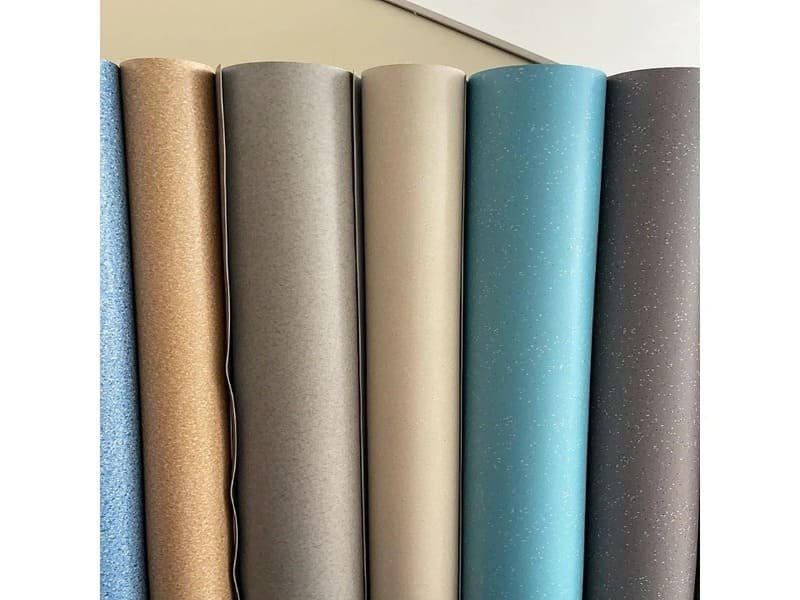
It is also worth remembering that residual-indentation testing is a material comparison test run in controlled lab conditions, not a direct prediction of how every piece of furniture or equipment will behave on an installed floor. Hospital beds, wheelchairs, and gym equipment introduce static, rolling, and point loading in combination, so beyond checking the residual-indentation figure, it is worth confirming the manufacturer’s static-load, rolling-load, and furniture-leg recommendations for the specific product and project.
Conclusione
There is no single acceptable number. Identify the flooring construction, confirm the applicable standard and test method, then compare like for like. Message me if you want help specifying the right PVC flooring for your project.