


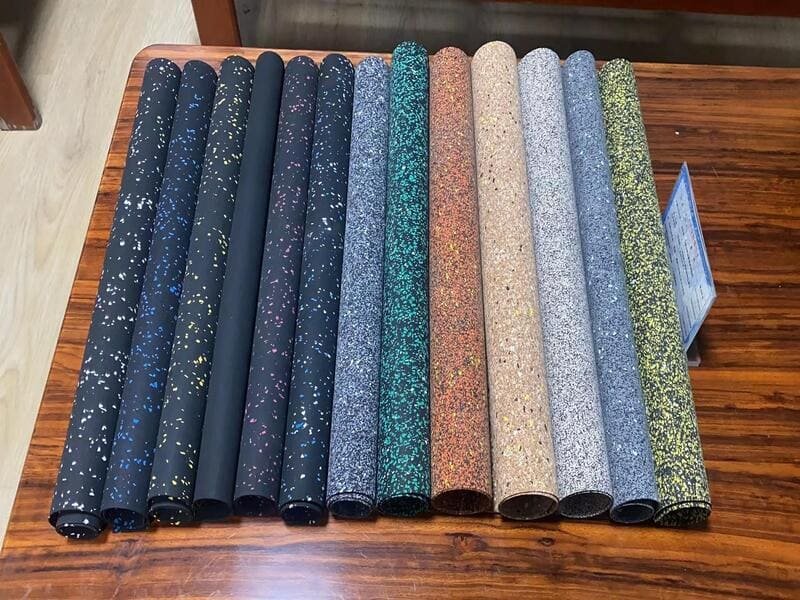
The best practice for storing rubber rolls is to lay them horizontally on a flat, dry surface in a climate-controlled room (15°C–25°C) for at least 24–48 hours before installation. Avoid long-term vertical storage to prevent edge deformation, and always keep rolls off direct soil or damp concrete to protect the adhesive bond.
As a Quality Control Engineer, I have analyzed thousands of square meters of rubber flooring installations. Most "product failures"—such as gaps between seams or persistent curling—are actually storage failures. Rubber is a flexible composite; it has a "physical memory" of how it was held. If you store it poorly, that memory becomes a permanent defect. While industrial warehouse standards are important, the most critical window is the 48 hours between delivery and the first drop of glue. My goal here is to provide objective, manufacturer-backed guidance to ensure your material performs exactly as engineered.
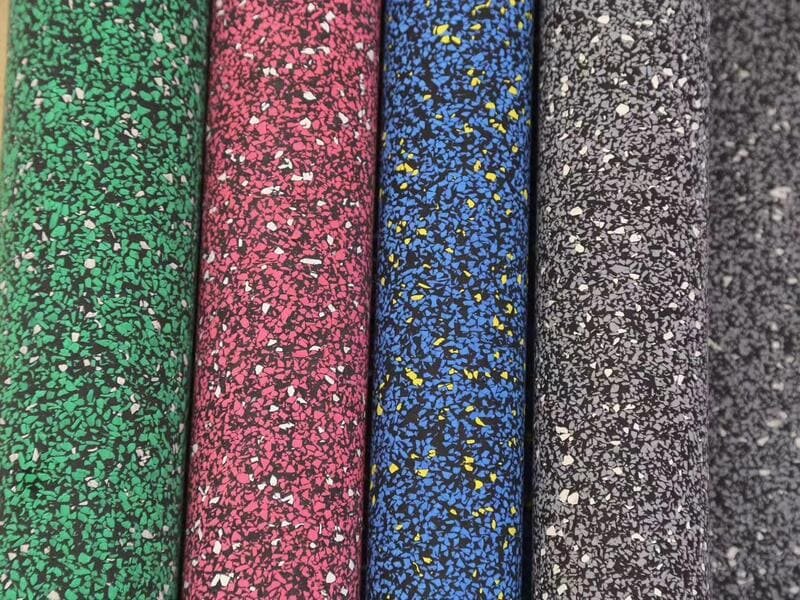
Before you move a single roll, you need a quick execution plan. Here is the direct checklist for the most common "on-site" storage questions.
Can You Store Rubber Rolls Vertically or Stand Them on End?
While standing rolls upright for a few hours during unloading is generally acceptable, long-term vertical storage is discouraged because the roll’s weight crushes the bottom edges. This leads to "mushrooming," which makes it nearly impossible to achieve tight, flush seams during the installation process.
| Storage Method | Acceptable Duration | Technical Risk |
|---|---|---|
| Horizontal (Flat) | Indefinite (Recommended) | Minimal if stacked correctly |
| Vertical (Upright) | Less than 24 hours | Edge flaring/Mushrooming |
| On Pallets | Indefinite | Overhang causing permanent "droop" |
The Reality of Edge Compression
From a manufacturing perspective, the edges are the most sensitive part of the roll. In a vertical position, a standard 8mm or 10mm roll puts immense pressure on its own footprint. This pressure compresses the recycled rubber granules and the polyurethane binder. Even after you lay it flat, the edge may remain slightly thinner or wider than the rest of the roll. This is why most manufacturers recommend horizontal storage. If you must stack rolls horizontally to save space, we suggest a maximum of three rolls high. Any higher, and the bottom roll may suffer from "flat spots" due to the cumulative weight, which can interfere with the floor’s uniform thickness.
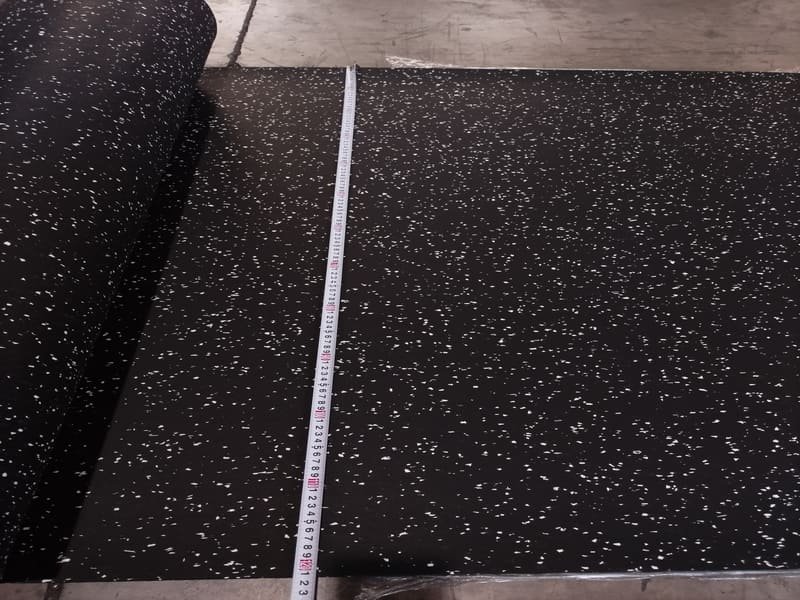
Positioning is the first step, but the environment where those rolls sit will determine how much they "move" after they are glued down.
Should You Remove the Packaging and How Long is the Acclimation?
Most industry standards suggest unrolling the material and letting it acclimate in the installation space for at least 24 to 48 hours. You should remove the shipping plastic during this time to allow the rubber to reach thermal equilibrium and to let any trapped moisture or "new rubber" odors dissipate.
| Facteur | Recommended Setting | Objectif |
|---|---|---|
| Température | 18°C – 23°C (65°F – 73°F) | Stabilize dimensional expansion |
| Humidité | 40% – 60% | Prevent moisture wicking |
| L'heure | 24 – 48 Hours | Release "roll tension" |
The "Breathe" Period
Rubber is a dynamic material; it expands in heat and contracts in cold. If you bring a cold roll from a truck into a warm gym and glue it down immediately, it will expand as it warms up, causing the seams to peak or the center to bubble. I recommend "rough cutting" the rolls—cutting them slightly longer than needed—and letting them lay flat in the room. This allows the internal tension from being tightly wound at the factory to release. Once the material is "relaxed" and has reached the same temperature as the subfloor, you can proceed with final trimming. This simple step is the most effective way to prevent seam gaps.
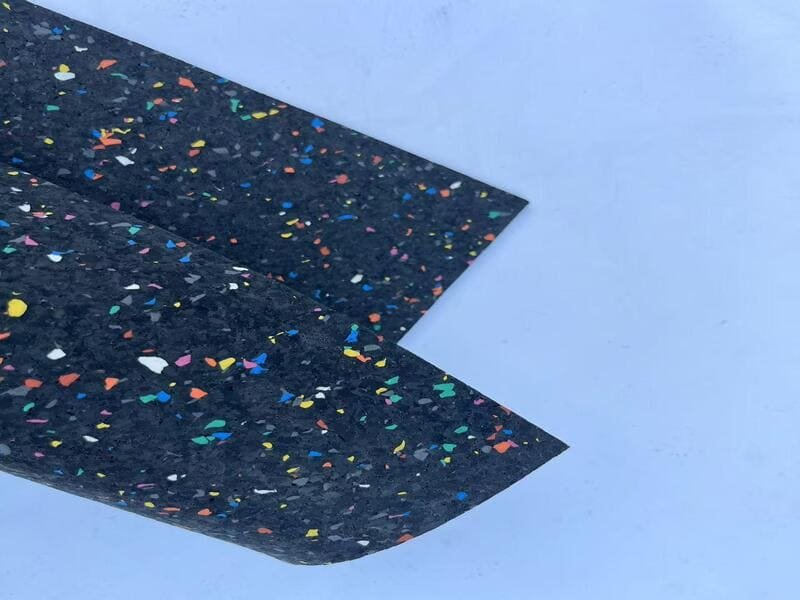
Environmental factors don’t just affect the rubber; they affect how the rubber interacts with your subfloor and adhesives.
What Are the Most Common Problems Caused by Improper Storage?
The most frequent issues include "end curl," where the roll refuses to stay flat at the seams, and "dimensional shifting," where gaps appear days after installation. These are typically caused by storing rolls in unconditioned spaces or on damp surfaces like raw concrete or dirt before the project begins.
Preventing Moisture and UV Damage
One common mistake I see on construction sites is storing rolls directly on a "green" (new) concrete slab. Concrete holds moisture for a long time, and if that moisture wicks into the bottom of a rubber roll, it can compromise the adhesive bond later. Always use a pallet or a moisture barrier. Additionally, keep rolls away from direct sunlight. Even though many rubber floors are UV-stabilized, concentrated sunlight through a window during storage can cause localized heating. This uneven heat makes one part of the roll expand more than the rest, leading to a "wavy" appearance that is very difficult to flatten out during the glue-down phase.
Chemical Exposure Risks
In a pre-installation environment, keep rolls away from solvents, oils, and fuels. Because recycled rubber is held together by polyurethane binders, exposure to harsh chemicals can soften the material. I have seen rolls ruined simply because they were stored next to a leaking generator or freshly painted area where solvent vapors were high. A clean, dry, and neutral environment is the only way to ensure the material remains as strong as the day it was manufactured.
| Enjeu | Typical Cause | Resulting Defect |
|---|---|---|
| End Curl | Lack of relaxation time | Peeling seams / Trip hazard |
| Lacunes dans les coutures | Temperature shock | Visible lines between rolls |
| Bond Failure | Moisture wicking | Bubbles / Loose flooring |
Understanding these risks allows you to proactively manage the site and avoid costly re-installs.
Conclusion
Successful rubber flooring depends on horizontal storage, a 48-hour acclimation period, and climate control to ensure the material stays flat and stable.