


Le revêtement de sol en caoutchouc est l'étalon-or pour les applications lourdes, car sa structure en polymère réticulé offre une résistance aux impacts et une absorption des chocs inégalées, bien qu'il faille souvent gérer les odeurs de dégagement et le poids important lors de l'installation. Il offre une durée de vie de 20 ans pour les gymnases et les espaces utilitaires, en conciliant des performances élevées et des caractéristiques industrielles spécifiques.
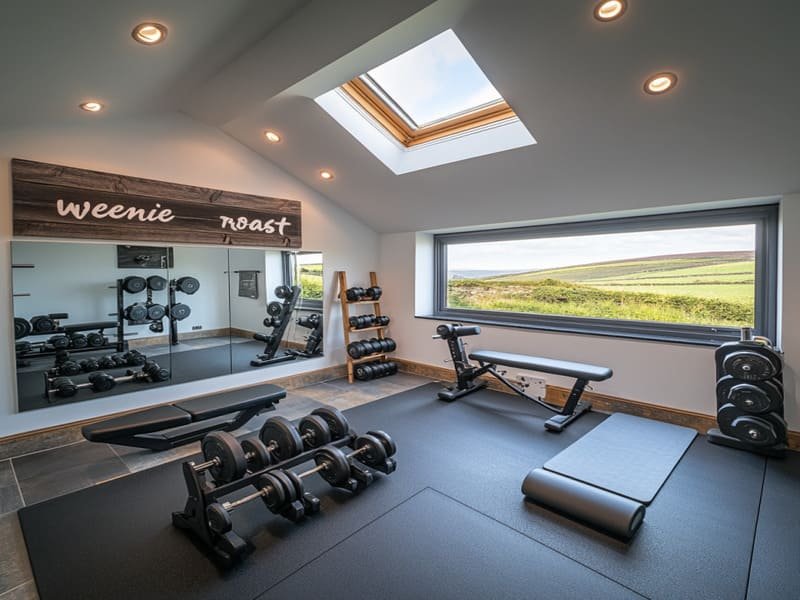
En tant qu'ingénieur de production ayant passé des années à optimiser le processus de vulcanisation des tapis en caoutchouc, je regarde au-delà de la surface. La "bonté" des revêtements de sol en caoutchouc provient de leur liaison moléculaire. Lorsque nous traitons le caoutchouc styrène-butadiène (SBR) ou l'éthylène-propylène-diène-monomère (EPDM) brut, nous créons un matériau présentant une résistance à la traction et une élasticité élevées.
Contrairement aux revêtements de sol rigides tels que le carrelage ou le bois, le caoutchouc a une forme unique. qualité de l'hystérésis-Il absorbe l'énergie (comme un haltère qui tombe) et la dissipe sans déformation permanente. Cependant, cette même densité le rend lourd, et le soufre utilisé pour le durcissement crée cette odeur distincte. La compréhension de ces propriétés intrinsèques du matériau nous aide à évaluer objectivement si les avantages en termes de performances l'emportent sur les compromis en termes d'installation et d'esthétique pour votre projet spécifique.
Maintenant que nous avons compris l'attrait de l'ingénierie de base, examinons ce qu'est exactement ce matériau et les formes qu'il prend sur la chaîne de production.
De quoi sont faits les revêtements de sol en caoutchouc et comment sont-ils formés ?
Les revêtements de sol en caoutchouc sont fabriqués à partir de sève d'arbre naturelle, d'EPDM synthétique ou de pneus SBR recyclés, transformés en rouleaux ou en dalles denses par vulcanisation à haute température. La composition du matériau détermine sa densité spécifique, son élasticité et son adéquation aux environnements à fort impact par rapport à un usage résidentiel décoratif.
Du point de vue de la fabrication, la différence réside dans la formulation. La plupart des "revêtements de sol pour salles de sport" que vous voyez sont Caoutchouc recyclé (SBR). Nous prenons des pneus de véhicules en fin de vie, les déchiquetons en granulés, les mélangeons à un liant de polyuréthane et les faisons durcir dans de grands cylindres ou moules. Ce processus est rentable et permet de créer un produit incroyablement résistant mais poreux.
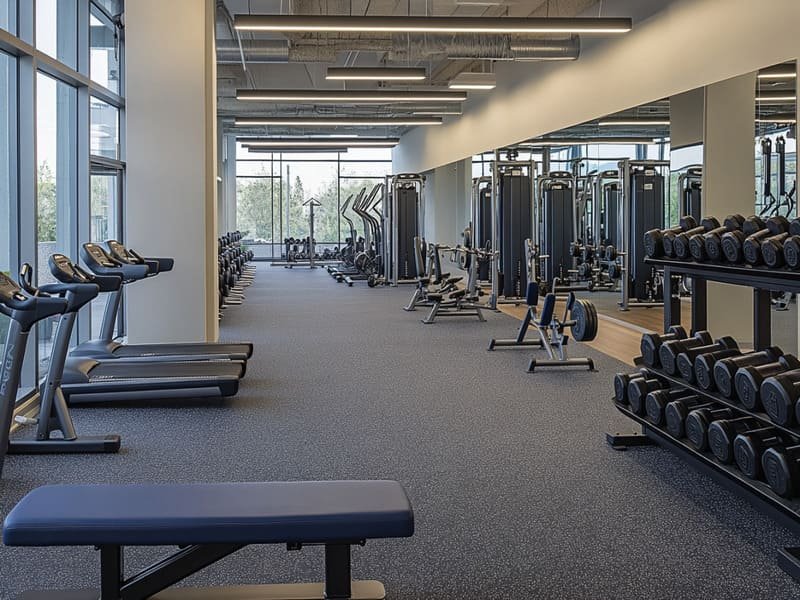
D'autre part, Caoutchouc vierge (EPDM ou naturel) est fabriqué à partir de polymères synthétiques bruts, offrant des avantages spécifiques détaillés dans notre analyse de l'efficacité du produit. Quels sont les avantages des revêtements de sol en caoutchouc EPDM ?. Au cours de la production, nous pouvons contrôler l'éclat des couleurs et la douceur de la surface de manière beaucoup plus précise avec le caoutchouc vierge, car il ne contient pas les impuretés des pneus recyclés. Le choix entre les dalles à emboîtement, les rouleaux ou les tapis autonomes dépend essentiellement de la façon dont nous coupons le produit fini. Les rouleaux présentent moins de coutures pour une finition résistante à l'eau, tandis que les dalles sont coupées avec précision pour un assemblage facile à réaliser soi-même.
| Type de matériau | Composante primaire | Profil olfactif | Facteur de coût | Cohérence de la production |
|---|---|---|---|---|
| Recyclé (SBR) | Pneus de voiture déchiquetés | Modérée à forte | Faible | Variable (dépend de la source du pneu) |
| Vierge (EPDM) | Polymère synthétique | Faible / Neutre | Haut | Très élevé (formulation contrôlée) |
| Vulcanisé | Caoutchouc brut + soufre | Odeur de soufre distincte | Moyenne-élevée | Extrêmement élevé (non poreux) |
Le point sur la situation : 10 avantages et inconvénients des revêtements de sol en caoutchouc
La compréhension des matières premières nous donne une base de référence. Ci-dessous, j'ai classé les caractéristiques de performance spécifiques en 5 avantages distincts et 5 compromis techniques inévitables.
Les 5 principaux avantages (pourquoi les ingénieurs le choisissent)
1. Durabilité et durée de vie inégalées
La structure réticulée signifie que lorsqu'un objet lourd heurte le sol, le caoutchouc se comprime et reprend sa forme initiale. Alors qu'un sol en béton se fissurerait et qu'un sol en bois se cabosserait, les sols en caoutchouc sont durables. 20 ans et plus car le matériau ne se fatigue pas facilement.
2. Absorption des chocs supérieure (hystérésis)
Ceci est crucial pour la biomécanique. Le matériau absorbe l'énergie cinétique qui, sinon, remonterait le long de vos articulations ou endommagerait le support. En laboratoire, nous testons la "classe d'isolation à l'impact" (IIC), et le caoutchouc obtient un score exceptionnellement élevé à cet égard.
3. Isolation phonique élevée
La densité du caoutchouc amortit le transfert des vibrations, ce qui le rend idéal pour les salles de sport ou les appartements situés à l'étage. Il agit comme une barrière acoustique, étouffant le bruit aigu des poids qui tombent ou des pas lourds.
4. Sécurité et prise en main
Nous concevons la texture de la surface pour garantir un coefficient de friction élevé. Cela empêche les glissements même en présence de sueur ou d'eau, ce qui en fait un matériau essentiel pour la sécurité dans les environnements commerciaux.
5. Résistance à l'eau et aux moisissures
Le caoutchouc est naturellement hydrophobe. Si les joints des dalles peuvent laisser passer l'eau, le matériau lui-même ne pourrit pas et ne favorise pas la formation de moisissures comme les matériaux organiques (moquette ou bois).
Les 5 principaux inconvénients (les compromis)
6. Odeur dégagée
Chaque matériau a son talon d'Achille. Pour le caoutchouc, c'est l'odeur. L'odeur provient des composés organiques volatils (COV) libérés par le liant polyuréthane et le soufre utilisé lors de la vulcanisation. Les rouleaux frais dégagent des gaz pendant des semaines ; la ventilation n'est pas négociable.
7. Poids élevé de l'installation
Un rouleau standard de caoutchouc de 8 mm de 4 pieds sur 25 pieds peut peser plus de 100 livres. Il s'agit d'un "poids mort" - mou et difficile à saisir. Son installation nécessite une force physique importante et souvent une équipe de deux personnes.
8. Esthétique industrielle
Bien qu'il soit possible d'ajouter des mouchetures EPDM colorées (concentration de 10% à 20%), il ressemblera toujours à un sol de gymnase. Il n'a pas la chaleur du bois dur ou l'élégance des carreaux de pierre, ce qui limite sa polyvalence dans les salons ou les espaces formels.
9. Sensibilité à la maintenance
Vous ne pouvez pas utiliser de nettoyants à base d'huile. Les huiles pénètrent dans la matrice polymère, ce qui fait gonfler le caoutchouc, le ramollit et finit par l'effriter. Vous devez respecter des protocoles de nettoyage au pH neutre.
10. Questions relatives aux filons et à la porosité
Le caoutchouc recyclé poreux nécessite des produits d'étanchéité spécifiques pour empêcher l'humidité de s'infiltrer dans les joints s'il est utilisé dans des environnements non contrôlés. Contrairement à un sol époxy sans joint, les joints des dalles ou des rouleaux peuvent être des points faibles où l'eau pénètre.

Comment sélectionner l'épaisseur et le type appropriés ?
Connaître les limites permet de gérer les attentes, mais la décision d'ingénierie la plus importante que vous aurez à prendre - souvent essentielle pour déterminer le niveau d'efficacité de l'appareil - ne sera pas facile à mettre en œuvre. Quel est le meilleur revêtement de sol sportif en caoutchouc ?-est de choisir les bonnes spécifications pour votre charge.
Sélectionner des rouleaux de 8 mm pour les salles de sport standard afin de trouver un équilibre entre le coût et la protection, mais la mise à niveau doit se faire en fonction de l'évolution de la situation. Tuiles de 3/4 de pouce pour le levage olympique pour absorber le maximum d'énergie d'impact. Choisissez le caoutchouc vierge pour les zones intérieures nécessitant une faible odeur et une correspondance précise des couleurs, ou optez pour le caoutchouc recyclé pour une durabilité maximale par dollar.
L'épaisseur n'est pas seulement une question de toucher, c'est aussi une question d'atténuation de l'impact.
- 1/4 de pouce (6 mm) : C'est le minimum. Il protège contre les rayures et le trafic piétonnier léger. Il n'offre pas un amortissement suffisant pour les chutes de poids.
- 8 mm (standard) : C'est le point idéal pour l'industrie. Il offre une décélération suffisante pour qu'un haltère lâché à hauteur de la taille protège le béton en dessous.
- 3/4 de pouce (19mm+) : Nous recommandons cette épaisseur pour les "zones d'écrasement". Si vous laissez tomber plus de 200 livres d'un plafond, vous avez besoin de cette épaisseur pour dissiper complètement l'énergie avant qu'elle ne soit transférée au sous-plancher.
En ce qui concerne les rouleaux et les carreaux : Les rouleaux sont supérieurs pour les grands espaces car ils réduisent le nombre de coutures. Les coutures sont des points faibles où l'eau peut pénétrer et où les coins peuvent se recourber. Cependant, les rouleaux sont un cauchemar à couper parfaitement sans une règle et une lame neuve. Les tuiles à emboîtement sont plus faciles à installer pour le commun des mortels, mais elles sont moins étanches.

Comment les revêtements de sol en caoutchouc se comparent-ils aux revêtements en mousse et en vinyle ?
Une fois que vous avez identifié les bonnes spécifications, il est utile de voir comment le caoutchouc se situe par rapport aux alternatives courantes dans une comparaison technique côte à côte.
Le caoutchouc est plus performant que la mousse en termes de longévité et de résistance aux chocs, et plus performant que le vinyle en termes d'absorption des chocs et de sécurité, bien que le vinyle soit plus esthétique. Le caoutchouc est le choix technique pour la performance, tandis que la mousse est pour un amortissement léger et le vinyle pour l'attrait visuel.
Nous voyons souvent des clients confondre les tapis en mousse (EVA) avec le caoutchouc. Du point de vue de la science des matériaux, ils sont opposés. La mousse EVA est pleine de bulles d'air ; elle se comprime facilement mais se déforme en permanence sous de fortes charges statiques (comme un tapis roulant). Le caoutchouc est dense et solide. Les dalles de vinyle de luxe (LVT) sont rigides ; elles sont très esthétiques mais n'absorbent pas les chocs.
| Fonctionnalité | Revêtements de sol en caoutchouc | Tapis en mousse (EVA) | Vinyle (LVT) |
|---|---|---|---|
| Densité du matériau | Haut | Faible (rempli d'air) | Haut (rigide) |
| Résistance aux chocs | Excellent (Rebonds) | Médiocre (baisse de régime) | Faible (fissures) |
| Limite de charge statique | Élevée (sécurité des équipements lourds) | Faible (bosses permanentes) | Haut |
| Espérance de vie | 15-20+ ans | 2-5 ans | 10-15 ans |
Meilleures pratiques pour maintenir l'intégrité des surfaces en caoutchouc
Même le matériau le plus résistant nécessite un entretien correct pour maintenir sa structure polymère pendant des décennies.
Utiliser des nettoyants au pH neutre et éviter les solvants à base d'huile. qui décomposent les chaînes de polymères, entraînant la dégradation du caoutchouc ou le rendant collant. Un passage régulier à l'aspirateur empêche les débris abrasifs d'user la finition de la surface au fil du temps.
L'entretien est une simple question de chimie. Le caoutchouc est sensible à l'acidité et à l'alcalinité. L'utilisation d'eau de Javel ou d'ammoniaque peut assécher le caoutchouc et provoquer des microfissures. L'utilisation de cires ou de solvants à base de pétrole attaque les agents de liaison, transformant votre sol en une masse collante.
Pour l'entretien quotidien, l'aspirateur est votre meilleur outil. La saleté et le sable agissent comme du papier de verre sous vos chaussures. En les éliminant, vous préservez l'aspect lisse de la surface. Pour le nettoyage, utilisez une serpillière humide, pas une serpillière détrempée. Le caoutchouc recyclé étant poreux, l'excès d'eau peut s'infiltrer à travers les joints et se retrouver piégé sous la surface, ce qui peut entraîner la formation de moisissures sur votre sous-plancher. Un simple mélange de savon à vaisselle doux et d'eau suffit généralement.

Conclusion
Le revêtement de sol en caoutchouc est le meilleur choix pour la durabilité et la sécurité dans les zones à fort impact, à condition que vous puissiez supporter le poids de l'installation et l'odeur initiale. Il s'agit d'un investissement dans la protection à long terme du sous-plancher. En pesant le 10 avantages et inconvénients énumérés ci-dessus, vous pouvez vous assurer que vous choisissez la bonne solution d'ingénierie pour votre espace spécifique.