


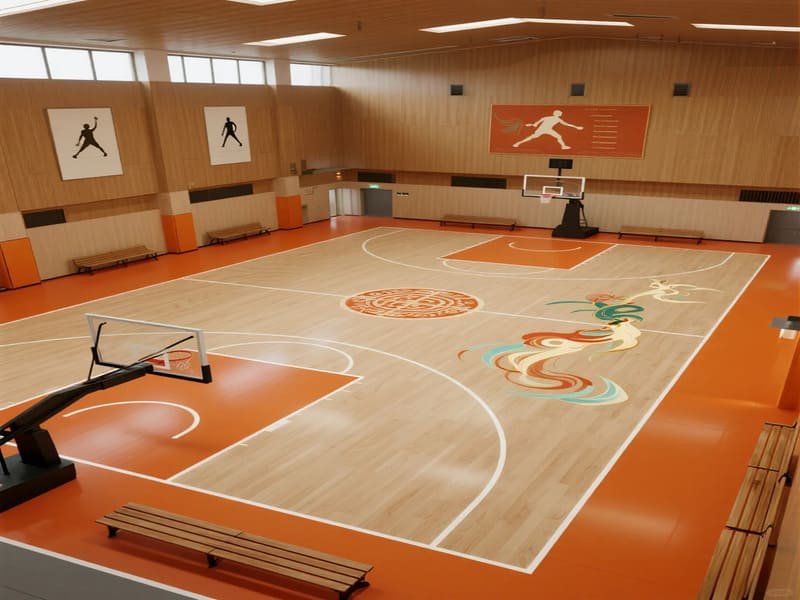
To choose the right basketball flooring, you must balance three critical factors: strict performance standards (ASTM F2772/EN 14904), your specific budget constraints (including long-term maintenance), and environmental conditions like humidity. There is no single "best" material, only the optimal engineering solution for your facility’s unique usage profile.
As a Quality Control Engineer who has spent years testing material density and surface friction in the lab, I often see facility owners make the same mistake. They assume "Maple Hardwood" is the only option because that is what they see on TV. While hardwood is iconic, it is often the wrong engineering choice for schools, community centers, or regions with high humidity. The basketball court is not just a surface; it is the most critical piece of safety equipment in your gym. It dictates player safety, ball speed, and even the acoustics of the room.
In this guide, I will move beyond the marketing fluff and break down the technical specifications. We will look at why modern synthetic materials like PVC and rubber are replacing wood in many high-traffic facilities. I will explain how we test for shock absorption to protect athletes’ joints and how to calculate the Total Cost of Ownership so you do not blow your budget on maintenance. My goal is to help you make a decision based on data and engineering logic, not just tradition.

Now, let us look at the technical standards that define a safe court.
What Are the Critical Performance Standards You Must Know?
You must prioritize four key metrics defined by ASTM F2772 and EN 14904: Force Reduction (Shock Absorption), Vertical Deformation (Stability), Ball Rebound (Consistency), and Sliding Coefficient (Grip). These quantifiable data points determine if a floor is safe for competitive play or if it poses an injury risk.
When I inspect a production run of flooring, I am not just looking for aesthetic defects; I am looking at the physics of the material. The most misunderstood metric is Réduction de la force. This measures how much impact energy the floor absorbs when an athlete lands. For a competitive basketball court, you generally need a force reduction of roughly 45% to 55% (Class 2 or 3). If the floor is too hard (like concrete or thin tile), the shock travels straight up the athlete’s shin, leading to stress fractures. If it is too soft, it causes fatigue.
Le prochain est Ball Rebound (BR). Concrete is the reference point at 100%. A high-quality basketball floor must achieve at least 90% rebound. In my lab tests, high-density PVC vinyl often scores 98-99%, providing a bounce identical to hardwood. Finally, we test the Sliding Coefficient. This is the "Goldilocks Zone" of friction (usually between 80-110). If the friction is too low, players slip and pull groins. If it is too high, the shoe gets stuck while the knee keeps rotating, causing ACL tears. A good floor balances these opposing forces perfectly.
| Métrique technique | Standard Requirement | Pourquoi c'est important |
|---|---|---|
| Réduction de la force | ASTM ≥ 10% (Rec: 45%+) | Prevents joint injuries and shin splints. |
| Rebond du ballon | ≥ 90% | Ensures the game speed is consistent. |
| Déformation verticale | ≤ 3.5mm (typical) | Provides stability for running and cutting. |
| Sliding Coefficient | 80 – 110 | Prevents both slipping and "blocking" injuries. |
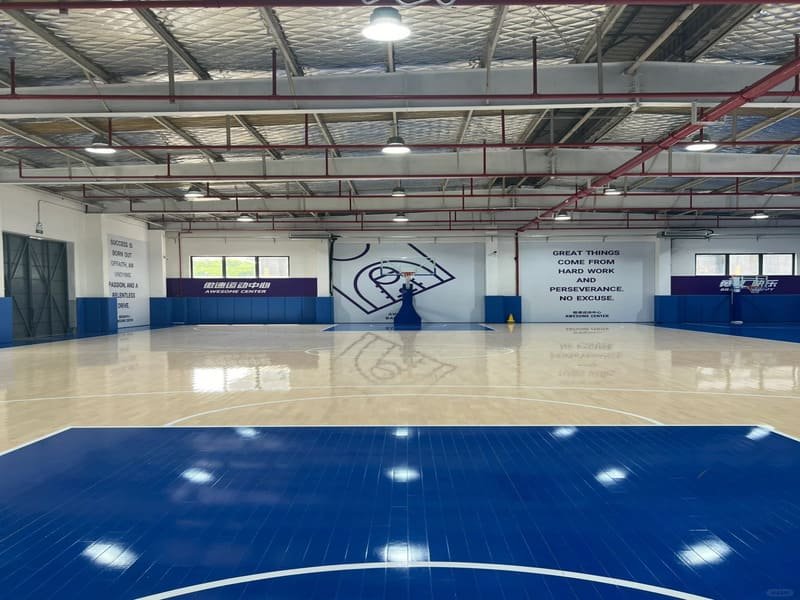
Once you understand the specs, you need to compare the actual materials.
How Do Top Flooring Materials Compare Technically?
Maple Hardwood offers a traditional feel for professional arenas but comes with high costs and moisture sensitivity. PVC Sports Vinyl provides superior shock absorption, moisture resistance, and value for schools and commercial gyms. PP Interlocking Tiles are best reserved for outdoor or temporary setups due to lower acoustic and shock performance.
From a manufacturing perspective, Bois d'érable systems are complex assemblies involving subfloors, plywood, sleepers, and the wood surface. While they are the NBA standard, they are biologically reactive. I have seen beautiful wood floors warp and buckle simply because the facility’s HVAC system failed to control humidity for a week. They are stiff and provide excellent ball response, but they rely entirely on the subfloor design for shock absorption.
PVC Sports Vinyl, on the other hand, is an engineered composite. We manufacture this with a high-density foam backing fused to a pure vinyl wear layer. This design integrates the shock absorption directly into the material. It is waterproof, dimensionally stable, and offers consistent friction. For 90% of facilities—schools, rec centers, and clubs—PVC is the smarter engineering choice because it mimics the performance of wood without the biological vulnerabilities.
Polypropylene (PP) Tiles are rigid plastic squares. While they are incredibly durable and drain water well (making them great for outdoors), they lack the internal cushioning of vinyl or the natural flex of wood. They can also be noisy and hollow-sounding, which is a significant drawback for indoor use.
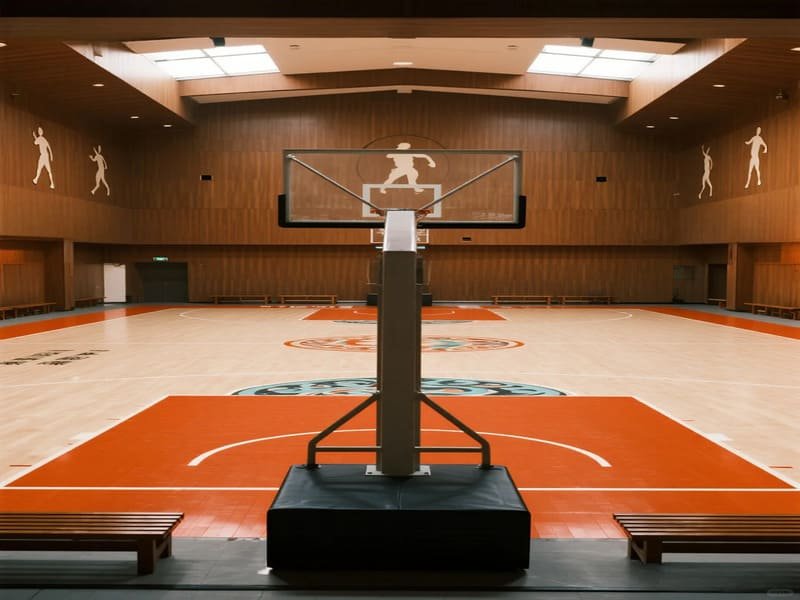
However, performance is only half the equation; you must also consider the cost.
What Is the True Cost vs. ROI of Basketball Flooring?
While PVC Vinyl and PP Tiles generally have lower upfront costs ($4-$10/sq. ft.) compared to Maple Hardwood ($15-$25/sq. ft.), the biggest difference lies in the Total Cost of Ownership (TCO). Vinyl requires minimal maintenance, whereas wood demands expensive climate control, annual screening, and periodic refinishing.
As an engineer, I advise clients to look at the Coût total de possession (TCO) over 10 to 15 years, not just the sticker price. Hardwood is a "high maintenance" asset. To keep the warranty valid, you must maintain indoor humidity between 35% and 50% year-round. This means running HVAC systems 24/7, even when the gym is empty. Additionally, you need to pay professionals to "screen and recoat" the finish annually, and fully sand and refinish every 5-10 years. These operational costs can exceed the original installation price over the floor’s life.
Synthetic floors like PVC and Rubber disrupt this cost model. The installation is faster and cheaper because we typically roll it out and weld the seams. Maintenance is simple: sweep daily and mop with a neutral cleaner. There is no sanding, no varnishing, and no need for aggressive climate control. If your facility operates on a tight budget or lacks a dedicated facilities management team, the ROI on synthetic flooring is mathematically superior. You get professional-grade performance (Class 2 or 3 shock absorption) without the professional-grade maintenance bill.

Next, we must consider the physical environment where the floor will live.
How Do Environment and Installation Factors Affect Your Choice?
Your local climate and subfloor condition dictate your material choice; high humidity areas should avoid wood in favor of synthetics to prevent warping. Additionally, installation speed varies significantly, with synthetic rolls offering a "game-ready" surface in days, compared to the weeks required for acclimating and finishing hardwood.
I cannot stress this enough: Moisture is the enemy of flooring. Before we even discuss product, I ask for a concrete moisture test. If your slab has high hydrostatic pressure or if your building is in a tropical zone with high humidity, installing wood is an engineering risk. Wood is hygroscopic; it absorbs water and expands. I have inspected courts where the wood expanded so much it pushed through the walls. For these environments, PVC or specialized rubber is the only logical choice because it is chemically inert to moisture.
Préparation du support is also critical. Synthetic floors like PVC will "telegraph" any imperfections in the concrete. If your concrete is wavy or pitted, we must use a self-leveling compound first. Wood systems are more forgiving of rough concrete because they sit on raised sleepers. Finally, consider your timeline. A wood floor needs to arrive, sit in the gym to "acclimate" for a week, be installed, sanded, sealed, painted, and finished. It is a 3-6 week process. A synthetic floor can often be installed in 3-5 days. If you are retrofitting a gym during a short school break, synthetic is often the only feasible option.
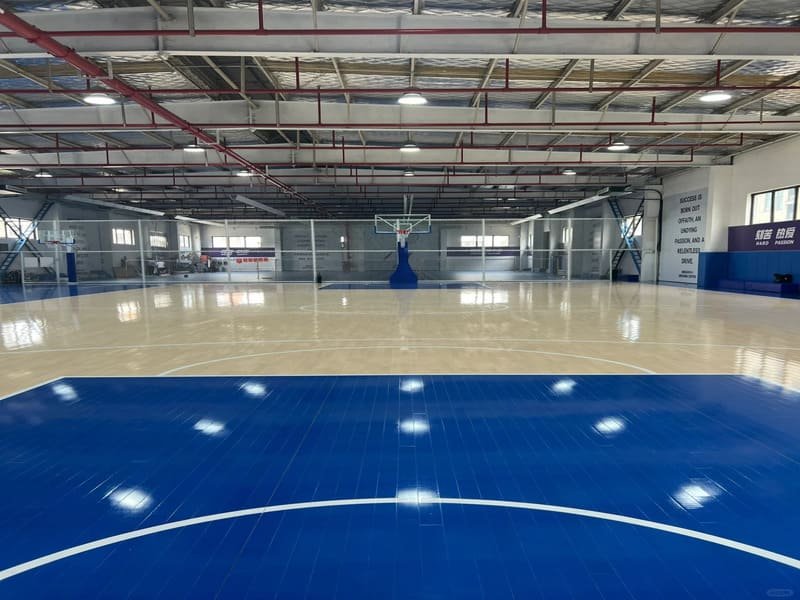
Finally, you need to know how to ensure you are buying high-quality material.
How Can You Verify a Manufacturer’s Quality?
You should verify quality by requesting third-party lab reports (SGS, CE, FIBA) rather than relying on brand claims. Crucially, ensure the manufacturer uses 100% virgin materials rather than recycled scrap to guarantee indoor air quality, structural stability, and color consistency.
In the manufacturing world, there are ways to cut corners that you cannot see with the naked eye. The most common is using recycled filler au lieu de 100% virgin material. While recycling sounds good, in high-performance flooring, unknown recycled plastics can contain heavy metals or cause the floor to become brittle and crack over time. Virgin PVC ensures the molecular structure is stable and durable. Always ask your supplier: "Is this 100% virgin material?" et "Can I see the VOC emission report?" This is vital for schools where air quality is a concern.
Furthermore, look for customization capabilities. A true manufacturer does not just sell off the shelf; we engineer solutions. Can they print your team’s logo directly into the wear layer so it never fades? Can they adjust the foam density if you need more shock absorption for a geriatric facility? Demand to see physical samples. Do not trust a photo. When you hold the sample, try to tear the foam backing. If it crumbles, it is cheap calcium carbonate filler. If it stretches and rebounds, it is quality engineered foam.
Conclusion
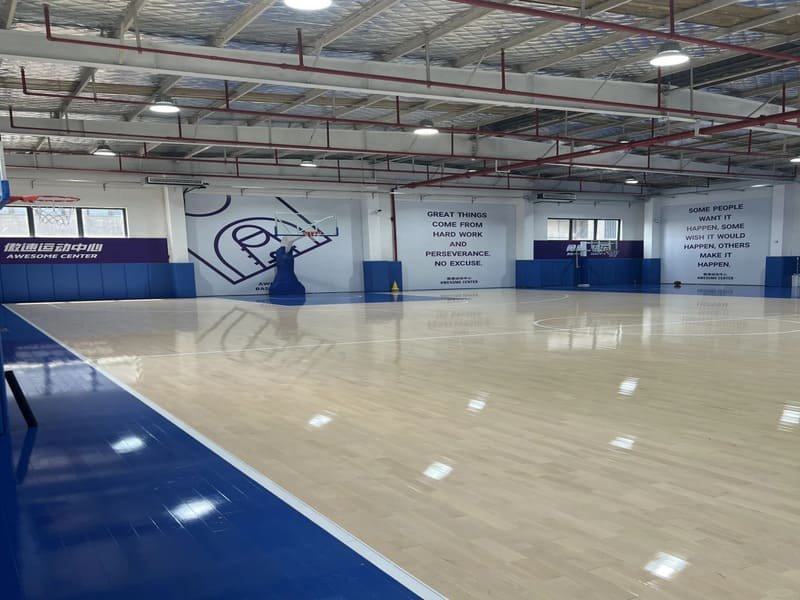
Choosing the right flooring is an engineering decision, not just an aesthetic one. For NBA-level budgets and tradition, Maple is king. However, for durability, safety, and superior ROI, modern PVC synthetics are the smarter choice.
A propos de l'auteur
Senior Quality Control Engineer
With over 15 years of experience in polymer manufacturing and sports infrastructure, I specialize in the technical analysis of flooring materials. I have overseen the production and testing of millions of square feet of sports surfaces, helping facilities worldwide optimize for safety and performance.
Does your project require specific shock absorption data or custom dimensions?
Stop guessing. My technical team can provide a free consultation and send you a Kit d'échantillons so you can feel the material density and grip yourself.
[Contact Our Engineering Team Here]