


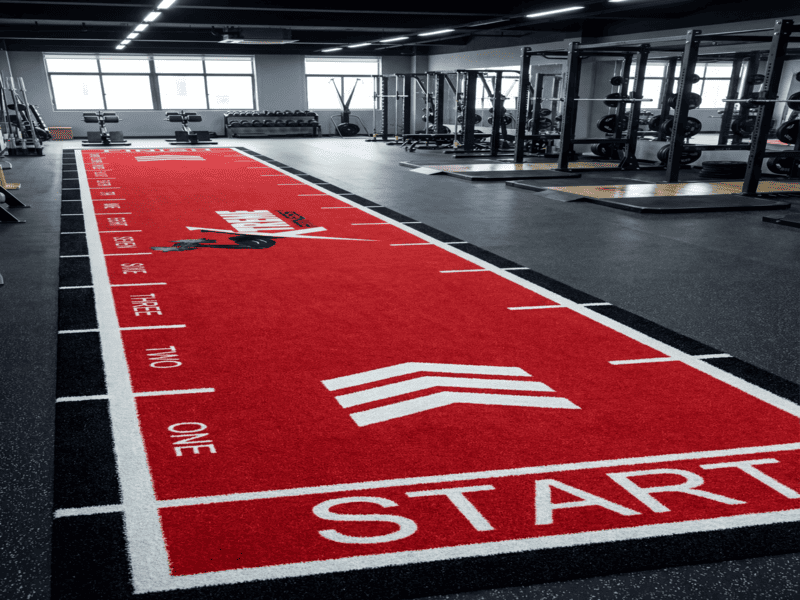
To choose gym turf for high-heat and full-sun climates, you must prioritize UV-stabilized polyethylene fibers and heat-dissipating shapes. You also need a dual-layer polyurethane backing. These features prevent the turf from melting, fading, or becoming brittle when surface temperatures exceed $50^{\circ}\text{C}$ in intense solar environments.
Selecting the right turf for a sun-drenched gym is not just about the color of the grass. In my years as an R&D engineer, I have seen many "standard" indoor turfs fail within months when moved outside. High heat and UV radiation are silent killers of synthetic polymers. Standard turf absorbs solar energy, leading to what we call "hot-foot" syndrome, where the surface becomes too hot to touch. Furthermore, without the right chemical stabilizers, the plastic fibers break down at a molecular level. This causes the turf to shed green "dust" and lose its structural integrity. I believe that choosing a high-heat turf requires a critical look at material science rather than just aesthetic appeal. You must understand how thermal expansion and UV degradation affect every component from the blade tip to the backing material to ensure the product lasts over a decade.
If you want to avoid a melting gym floor, we need to look closer at the actual technology inside the fibers.
Why Is UV Stabilization the Absolute Priority for Outdoor Gym Turf?
UV stabilization is the only way to prevent plastic fibers from becoming brittle and fading under constant sun. You must choose turf with "UV-inhibitors" mixed directly into the polymer during the extrusion process. This ensures the protection is permanent and not just a temporary coating that wears off.
As an engineer, I focus on the "why" behind material failure. When UV rays hit a polymer chain without protection, they cause "scission," which is the breaking of molecular bonds. This leads to the grass blades snapping off during a simple sled push. You should check the technical data sheets for specific testing standards like ASTM G154 or ISO 4892. A high-quality turf for a desert climate should pass at least 3,000 hours of accelerated UV aging.
| Caractéristiques techniques | Exigence standard | Prestation de performance |
|---|---|---|
| Résistance aux UV | ASTM G154 (3,000+ hrs) | Prevents color fading and fiber breakage |
| Type de polymère | 100% Virgin Polyethylene | Better heat stability than recycled plastics |
| Fiber Integrity | 10-Year UV Warranty | Ensures long-term ROI for the owner |
I once worked on a project in a region where noon temperatures hit $50^{\circ}\text{C}$ regularly. The client used cheap turf, and the friction from gym shoes actually melted the weakened fibers into the floor. This is why the "UV-inhibited" method is the only professional choice.
Once the fibers are protected from the sun, the next challenge is managing the physical heat of the surface.
How Do You Keep Surface Temperatures Safe for Workouts?
To keep surface temperatures safe, you should use "Cool-Fiber" technology and light-colored materials. Non-flat blade shapes like "W" or "C" dissipate heat by reflecting light at different angles. Additionally, using cooling infills or no-infill systems can lower the temperature by up to $10^{\circ}\text{C}$ compared to rubber.
The "Heat Island" effect is a major problem for outdoor gyms. Dark green turf can reach $70^{\circ}\text{C}$ ($160^{\circ}\text{F}$), which is hot enough to cause burns. My research shows that fiber geometry plays a huge role in thermal management. A flat blade acts like a solar panel, absorbing every ray. However, a "W" shaped fiber creates tiny shadows on itself and allows air to flow between the blades.
| Heat Factor | High-Risk Choice | Engineered Solution |
|---|---|---|
| Fiber Shape | Flat / Rectangular | "W", "C", or "S" Shapes |
| Matériau de remplissage | Crumb Black Rubber | Hydro-chilling or Tan Silica |
| Turf Color | Dark Forest Green | Field Green or Olive Green |
I always tell my partners that the infill choice is just as vital as the grass. If you put black crumb rubber into a sun-exposed gym, you are essentially building an oven. We recommend specialized tan silica sand or even no-infill turf with a high-density thatch to keep the area usable even in July.
Managing heat is essential, but the turf must also be tough enough to handle heavy weights without falling apart.
Why Is Polyethylene with PU Backing Better Than Nylon for High Heat?
Polyethylene (PE) is the best choice for heat because it stays soft and resists brittleness better than Nylon. For the backing, Dual-Layer Polyurethane (PU) is necessary because it does not expand or contract as much as Latex. This prevents the turf from rippling or bubbling when the weather gets hot.
In the lab, we compare Nylon and PE constantly. While Nylon has a higher melting point, it is very thirsty—it absorbs moisture and humidity. In high-heat, high-humidity coastal areas, Nylon can become abrasive and "crunchy." Polyethylene remains skin-friendly for floor exercises like burpees. However, the biggest failure point in hot climates is the backing. Latex backing often crumbles after repeated heat cycles.
| Composant matériel | Recommandation | Pourquoi c'est important |
|---|---|---|
| Primary Yarn | Polyéthylène (PE) | Soft feel and high UV resistance |
| Backing Coating | Polyuréthane (PU) | Waterproof and thermally stable |
| Classement au feu | Class A / Bf1-s1 | Essential for safety in dry climates |
I have seen many installations where the turf looked like a wave because the installer used Latex backing. The heat caused the Latex to expand, and since there was no room to go, it bubbled up. Using a PU-coated backing ensures the turf stays flat and the drainage holes remain open, preventing "steam" effects after a cleaning session.

Even with the best materials, the way you install and maintain the turf determines if it will last ten years or two.
How Should You Install and Maintain Turf to Survive Intense Sun?
You must install turf with an "expansion gap" and use high-temperature polyurethane glue to handle thermal changes. For maintenance, a simple water spray before use can drastically lower temperatures. Regular brushing is also needed to prevent the heat from making the fibers lay flat over time.
Installation in high-heat zones requires an engineering mindset. When temperatures swing $30^{\circ}\text{C}$ between day and night, the turf moves. We use two-part polyurethane adhesives because they do not soften under the sun. For the sub-base, crushed stone is often cooler than solid concrete. If the turf is on a rooftop, the heat from the concrete below can cook the turf from both sides.
Expert Maintenance Tips for High-Heat Turf
- Pre-Workout Hydration: A 30-second mist of water can drop surface heat by $15^{\circ}\text{C}$ via evaporative cooling.
- Salt Removal: Sweat contains salt which acts like a sandpaper under the sun; rinse the turf weekly.
- Le broyage croisé : Heat makes plastic more pliable; brush against the grain to keep the blades upright.
| Action de maintenance | Fréquence | Bénéfice |
|---|---|---|
| Water Rinse | Before use | Immediate cooling |
| Nettoyage en profondeur | Mensuel | Removes abrasive dust and salt |
| Brossage électrique | Trimestrielle | Restores fiber resilience |
I remember a client in a desert region who complained their turf felt "flat." It turned out they never brushed it, and the heat allowed the fibers to take a permanent set. A little bit of maintenance goes a long way in protecting your investment.
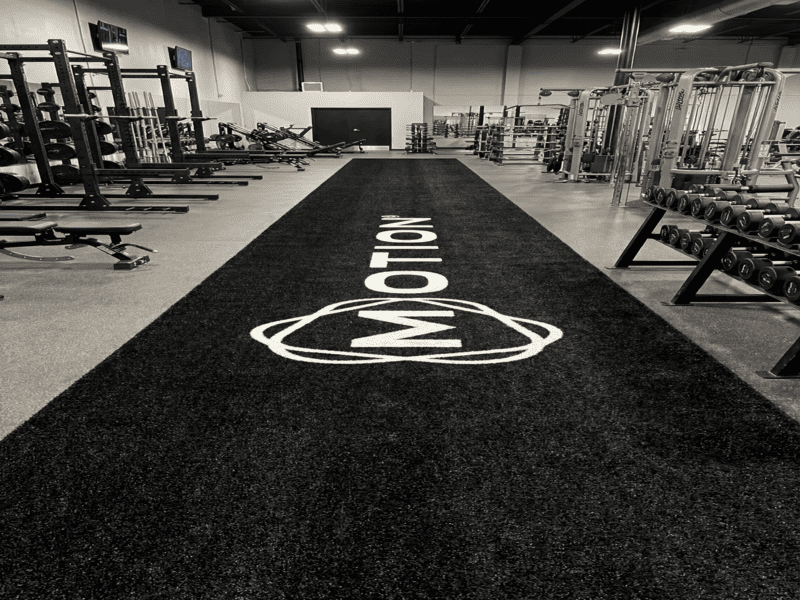
Choosing cheap turf for a high-heat environment is a mistake that leads to double costs and safety risks.
Conclusion
Choose UV-stabilized PE turf with PU backing to ensure a 10-year lifespan in the sun.
If you are planning an outdoor gym project and need technical advice on material selection or custom manufacturing for high-heat climates, feel free to send me a private message!