


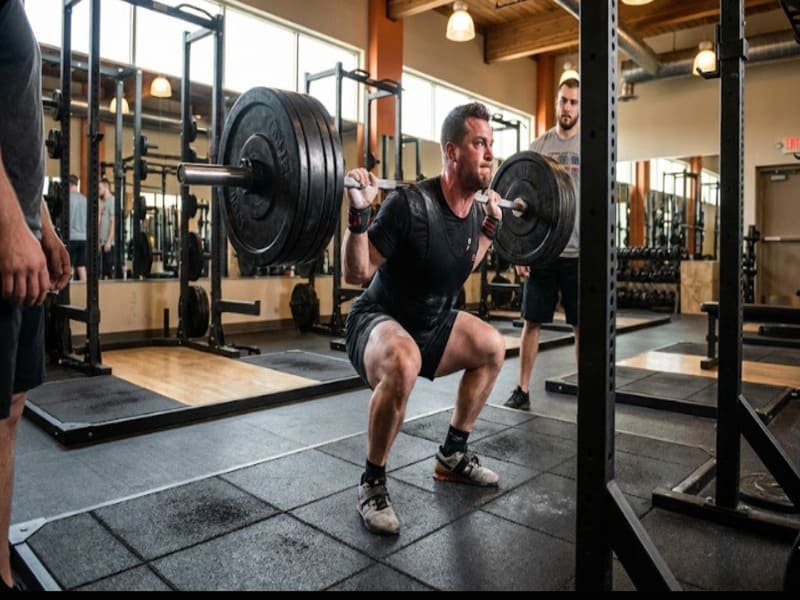
The real culprit behind joint pain and shin splints often isn’t the athlete’s shoes or form, but what lies beneath the floor. A shock pad is a specialized foam underlayment that acts as a suspension system, absorbing impact energy to prevent it from traveling back into the body.
In my years of testing gym flooring systems, I often see facility owners focus entirely on the visible top layer—the artificial turf or rubber tiles. However, laying turf directly over concrete creates what engineers call "Green Concrete." It looks soft, but it hits back hard.
When an athlete jumps, runs, or falls, the energy must go somewhere. Without a shock pad, that energy reflects directly off the concrete subfloor and back into the athlete’s skeletal system. This is where the shock pad becomes critical. It is a resilient layer, typically made from cross-linked polyethylene (XPE) foam or bonded rubber, installed between the subfloor and the surface.
From an engineering perspective, the shock pad functions like the suspension in a car. It compresses under load, extending the duration of the impact. By increasing the time it takes for the foot to come to a complete stop—even by a few milliseconds—we drastically reduce the peak force transfer. This simple mechanical action is the primary defense against both acute trauma and long-term joint degradation.

Understanding the basic mechanical function is just the first step. To truly appreciate why this layer is essential, we must look at the physics of how our bodies interact with the ground during movement.
What is the Science Behind Ground Reaction Force (GRF)?
Ground Reaction Force (GRF) is the equal and opposite force the floor exerts on an athlete upon landing, per Newton’s Third Law. A shock pad works by decelerating the impact, spreading the energy absorption over time to significantly lower the stress placed on joints and ligaments.
To understand injury mechanics, we have to talk about physics. When a 180-pound athlete lands a box jump, they generate a force that can be several times their body weight. If the floor is rigid, like concrete, that force is returned almost instantly. This is high-impact shock.
My role in R&D involves measuring these forces. The key concept here is "deceleration." A hard surface stops the foot instantly, causing a massive spike in peak force. A shock pad, however, allows for a controlled compression.
Here is how the energy transfer differs:
| Fonctionnalité | Béton/Surface dure | With Shock Pad System |
|---|---|---|
| Impact Time | Instant (near zero) | Extended (milliseconds) |
| Peak Force | Extrêmement élevé | Significantly Reduced |
| Energy Path | Reflected up the leg | Absorbed by foam compression |
| Physiological Effect | Shock to cartilage/bone | Muscle engagement |
By managing GRF, we are not just making the floor "softer." We are engineering a surface that works avec the athlete’s biomechanics rather than against them. This reduction in peak force is directly linked to a lower incidence of stress fractures and lower back pain in high-volume training environments.

While the physics explains the "how," we need industry-standard metrics to quantify "how much" protection is provided. This brings us to the critical safety ratings used in our industry.
What Are G-Max and HIC Ratings and Why Do They Matter?
G-Max measures the hardness of a surface by calculating impact attenuation, while HIC (Head Injury Criterion) assesses the likelihood of head trauma from a fall. Keeping G-Max between 90 and 120 creates the ideal balance between safety and performance for functional training areas.
In the lab, we don’t guess if a floor is safe; we drop heavy missiles on it to measure G-Max. G-Max represents the ratio of maximum acceleration (deceleration) experienced during an impact to the acceleration due to gravity.
If a surface has a G-Max of 200 (similar to compacted gravel or asphalt), it is considered dangerous. A fall on this surface carries a high probability of a concussion or skull fracture. For context, the NFL and World Rugby have strict limits on this.
For a training facility, I generally recommend the following target zones based on testing data:
| Métrique | Target Range | Implications |
|---|---|---|
| G-Max < 100 | High Absorption | Best for martial arts, elder care, and kids zones. |
| G-Max 100-120 | Balanced | Ideal for functional fitness, sleds, and agility. |
| G-Max > 165 | Dur | Approaching the safety limit; high risk of injury. |
HIC (Head Injury Criterion) is equally vital for zones involving MMA or CrossFit where athletes might fall from a height. A shock pad can mean the difference between a mild bruise and a catastrophic head injury. It is not just about comfort; it is about meeting ASTM F1292 standards and minimizing liability.
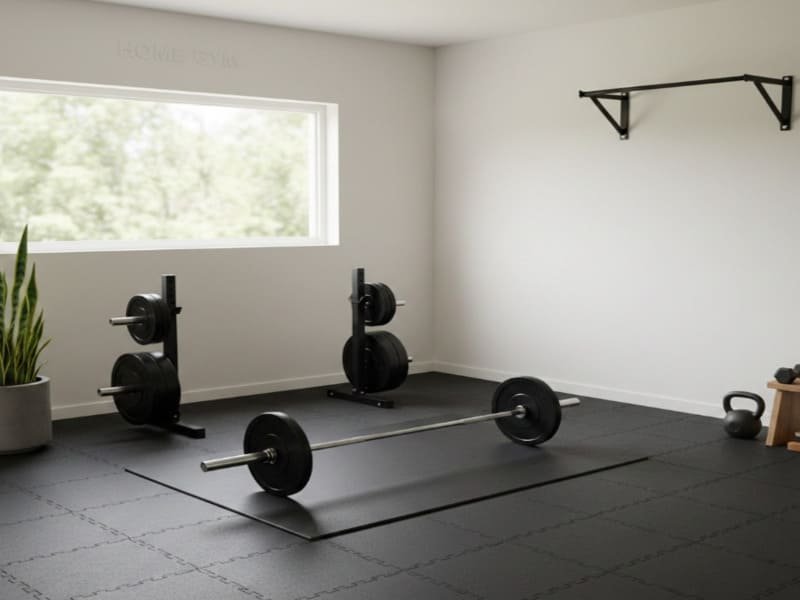
Now that we have covered the theory, we must address the practical application. A common question I receive from facility managers is: "Which material should I use?"
XPE Foam vs. Bonded Rubber: Which Material Works Best?
XPE foam is lightweight, water-resistant, and offers superior shock absorption for artificial turf, while bonded rubber is denser and better suited for heavy weight areas. Choosing the right material depends entirely on whether your priority is impact comfort or load-bearing stability.
Not all shock pads are created equal. In the market, you will primarily encounter two types: Cross-linked Polyethylene (XPE) and Bonded Rubber Granules. Understanding the difference is crucial for your facility’s specific needs.
1. XPE Foam (The Industry Standard for Turf):
This is a closed-cell foam. It is lightweight, does not absorb water (preventing mold), and provides excellent "spring-back" or energy return.
- Meilleur pour : Sled tracks, functional turf areas, and agility zones.
- Pourquoi ? It provides the perfect balance of cushion for running without bottoming out.
2. Bonded Rubber (The Heavy Lifter):
Made from recycled rubber granules bonded with PU glue. It is much heavier and denser.
- Meilleur pour : Underneath heavy rubber tiles in free-weight areas.
- Pourquoi ? It withstands static loads (heavy machines) better than foam but offers less bounce/energy return for running.
For most "injury prevention" applications involving running or jumping on turf, XPE is the superior engineering choice due to its consistent shock attenuation properties.

The next logical step is determining the specification. A 10mm pad performs very differently from a 50mm pad.
Optimization Guide: Recommended Thickness and Density by Zone
Selecting the wrong thickness or density can render a shock pad ineffective or dangerous. Functional zones require high-density, thin pads for stability, while combat zones need low-density, thick pads for maximum fall protection.
This is where many gym owners make mistakes. They either buy the thickest pad thinking it is "safer" (leading to instability) or the cheapest pad that does nothing. Based on my project experience, here are the engineered specifications for specific zones:
1. Sled Push & Sprint Tracks (Agility)
- Recommended Spec: 10mm – 15mm Thickness | High Density (60kg/m³ – 70kg/m³)
- The Logic: You need stability. If the pad is too soft or thick, the athlete feels like they are running in quicksand. This causes energy leaks and slows them down. A high-density, thinner pad reduces shin splint risk without compromising sprint speed.
2. Functional Training & CrossFit (Plyometrics)
- Recommended Spec: 20mm – 25mm Thickness | Medium Density (50kg/m³)
- The Logic: This is the sweet spot. It is thick enough to cushion box jumps and burpees (saving knees) but firm enough that you can still perform light lifting without losing balance.
3. Combat Sports & MMA (Falls)
- Recommended Spec: 40mm – 50mm Thickness | Lower Density (30kg/m³ – 45kg/m³)
- The Logic: Here, HIC is king. You are protecting heads and spines from falls. You need a pad that compresses significantly to dissipate high-impact energy. Stability for running is secondary to fall protection.
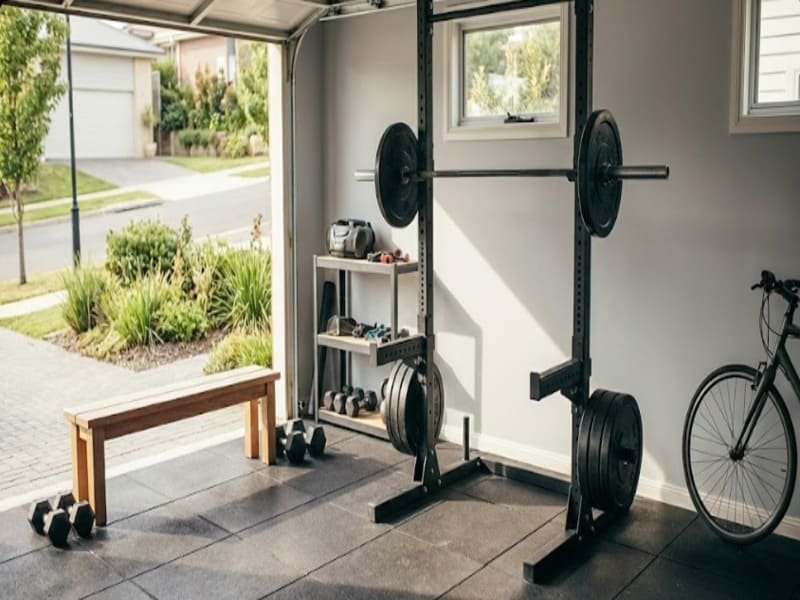
Choosing the right spec is critical, but understanding the risks of choosing wrong is equally important for your liability.
The "Too Soft" Trap: Why Density Matters More Than Thickness
A common misconception is that softer is always safer, but a pad that is too soft causes lateral instability, leading to ankle rolls and knee strain. Proper vertical deformation ensures the floor cushions impact without shifting side-to-side.
Safety is a curve, not a straight line. If you install a low-density, marshmallow-soft pad under a sprint track, you are trading one injury risk for another.
When an athlete plants their foot to change direction, they need the floor to push back. If the shock pad collapses unevenly (lateral deformation), the ankle rolls. This is why density is a critical metric. A professional shock pad provides Déformation verticale (cushioning down) while resisting Lateral Deformation (shifting sideways).
Engineer’s Advice: Never use a low-density "mattress" foam for an agility area. Always check the density rating before the thickness.
Conclusion
A shock pad is not a luxury; it is an engineered safety system. By managing impact energy, it protects athletes from injury, reduces liability, and extends the life of your turf. The key is matching the right material and density to your specific training activities.
Unsure which thickness matches your facility’s needs?
Selecting the wrong density can affect athlete performance. If you need a technical consultation to determine the exact specs for your sled track or functional zone, connect with our team. We can provide data sheets and specific samples to ensure your floor performs exactly as engineered.