


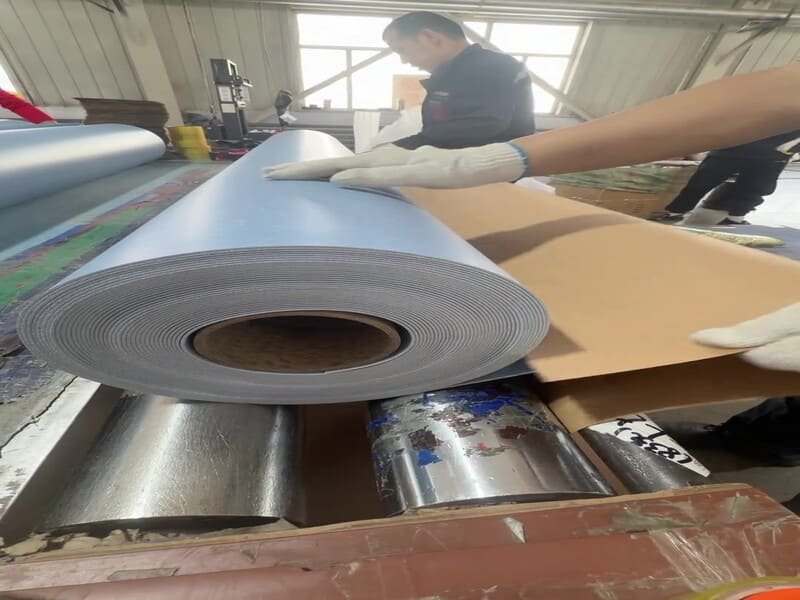
Certains revêtements de sol industriels en PVC peuvent supporter la circulation des chariots élévateurs, mais le poids de ces derniers ne suffit pas à lui seul à déterminer leur adéquation. Il convient d’examiner conjointement la charge par roue, le type de pneus, la fréquence des virages, la structure du sol, la résistance du support et l’indice de charge roulante indiqué par le fabricant.
J'ai passé des années à poser et à choisir des revêtements de sol en PVC pour des entrepôts, des usines et des zones de transit où les chariots élévateurs circulent toute la journée, et la question qui m'est le plus souvent posée n'est jamais aussi simple que « le PVC résiste-t-il aux chariots élévateurs ? ». Pour répondre honnêtement, tout dépend du type de PVC dont il est question, de la manière dont le chariot élévateur exerce sa charge sur le sol et du mode de pose des dalles ou des lames. Un chariot élévateur de 3 tonnes équipé de larges pneus en caoutchouc exerce une contrainte très différente sur le sol qu’un chariot élévateur de 3 tonnes équipé de petites roues dures en polyuréthane. Le rayon de braquage, la fréquence de passage et l’état du support sont tout aussi importants que le revêtement de sol lui-même. Dans cet article, je vais vous expliquer ce qui détermine réellement si le PVC peut supporter le trafic de vos chariots élévateurs, afin que vous puissiez poser les bonnes questions à votre fournisseur au lieu de vous fier à un seul chiffre, comme l’épaisseur ou la capacité de charge.
Avant de choisir un produit, il est utile de comprendre l'impact réel d'un chariot élévateur sur un sol, car la capacité nominale de l'engin ne reflète qu'une partie de la réalité.
Quel est l'impact réel d'un chariot élévateur sur votre sol ?
Un chariot élévateur n'exerce pas une pression uniforme sur le sol. Tout son poids se concentre sur quelques petits points de contact des pneus, et le tonnage indiqué correspond généralement à la capacité de levage nominale, et non au poids total supporté par le sol.
C'est le détail qui échappe à la plupart des acheteurs. La capacité nominale de « 3 tonnes » d'un chariot élévateur fait généralement référence à sa capacité de levage maximale, et non au poids combiné du châssis, du contrepoids et de la charge posée au sol. Ce poids combiné s'exerce sur une surface de contact réduite au niveau des pneus, de sorte que la pression réelle par pouce carré peut être bien supérieure à ce que le tonnage laisse supposer. Le type de pneus influe considérablement sur ce phénomène. Les roues en polyuréthane dur concentrent la charge sur une surface de contact plus petite et transmettent une contrainte plus directe au sol, tandis que les pneus pneumatiques en caoutchouc répartissent la même charge sur une plus grande surface et amortissent une partie de l’impact. Les manœuvres de virage et de freinage ajoutent une force de cisaillement au poids statique, ce qui tord les joints des dalles et fait frotter les pneus le long des joints. C’est pourquoi deux chariots élévateurs de même capacité nominale peuvent avoir des effets très différents sur un sol.
Une fois que vous comprenez comment les chariots élévateurs sollicitent un sol, l'étape suivante consiste à déterminer quel type de revêtement de sol en PVC vous comparez réellement.
Tous les types de revêtements de sol en PVC sont-ils adaptés à la circulation des chariots élévateurs ?
Non. Les revêtements de sol en PVC couvrent une large gamme de produits, et tous ne sont pas adaptés à la circulation automobile. L'adéquation dépend de la gamme de produits concernée et des informations fournies par le fabricant, et non pas uniquement de la dénomination du matériau.
C'est là que la confusion règne, car l'expression « revêtement de sol en PVC » est utilisée comme un terme fourre-tout pour désigner des produits très différents.
| Type de revêtement de sol en PVC | Compatibilité avec les chariots élévateurs |
|---|---|
| Vinyle résidentiel fin / LVT | Généralement déconseillé |
| Vinyle en lés hétérogène à usage commercial | Cela dépend du produit ; non adapté par défaut |
| Plaque de PVC homogène | Peut convenir à certains cas de charge par roue réduite ; vérifier les données du constructeur |
| Dalles en PVC industrielles à coller au sol | Peut fonctionner dans certains environnements où sont utilisés des chariots élévateurs, selon les caractéristiques techniques |
| Dalle en PVC à emboîtement pour usage intensif | Plus couramment utilisé dans les zones où circulent des chariots élévateurs industriels |
| ESD / PVC conducteur | Cela nécessite d'évaluer à la fois la conductivité et les performances en charge |
L'erreur que je constate le plus souvent est que les acheteurs partent du principe que tout PVC de qualité commerciale offre automatiquement les mêmes performances qu'un système de dalles emboîtables à usage intensif. Il s'agit de gammes de produits distinctes, dont la structure interne diffère, et les données fournies par un fournisseur concernant la résistance aux charges roulantes pour une gamme ne s'appliquent pas à une autre. Vérifiez toujours de quel produit spécifique il s'agit avant de supposer qu'il est compatible avec les chariots élévateurs.
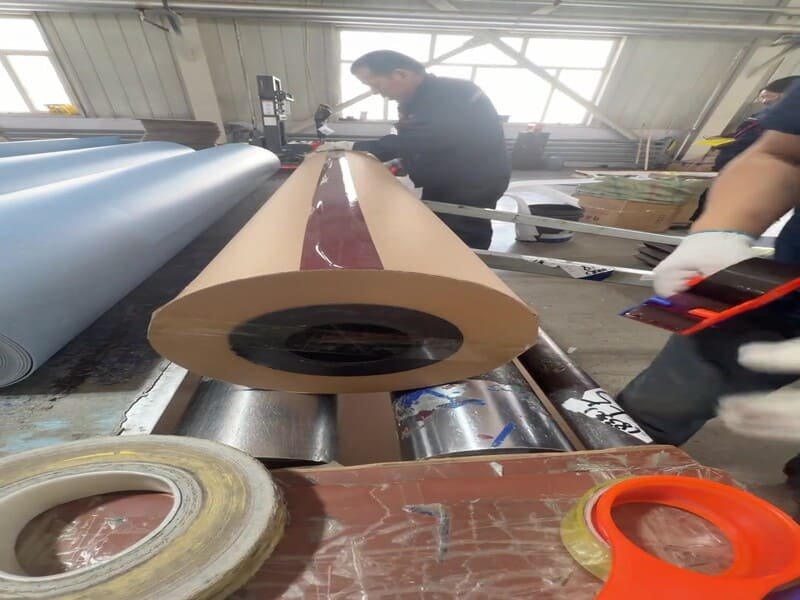
Une fois que vous savez quelle catégorie de produits correspond à votre cas d'utilisation, la question suivante est de savoir quelles caractéristiques techniques sont réellement importantes, car l'épaisseur à elle seule ne suffit pas à donner une image complète.
Quels sont les facteurs qui déterminent réellement si le PVC est adapté à vos chariots élévateurs ?
L'épaisseur n'est qu'un facteur parmi tant d'autres. La capacité de charge au roulement, l'indentation résiduelle, la pression de contact, la résistance des joints et la résistance à la compression du support sont autant d'éléments qui comptent autant, voire davantage, que la seule épaisseur en millimètres.
Je comprends pourquoi on utilise souvent l'épaisseur comme indicateur : c'est un chiffre facile à comparer. Mais pour répondre de manière générale à la question de savoir si le PVC peut résister au passage des chariots élévateurs, l'épaisseur à elle seule peut être trompeuse. Deux produits de même épaisseur peuvent présenter une densité interne, une dureté et une résistance à la charge très différentes selon leur mode de fabrication. Au lieu de choisir un produit uniquement en fonction de son épaisseur, demandez à votre fournisseur des informations sur les points suivants :
- Charge maximale de roulement et limite de charge statique
- Indentation résiduelle sous une charge ponctuelle prolongée
- Tolérance de pression de contact pour votre type de roue
- Dureté de surface et stabilité dimensionnelle
- Résistance des joints et résistance au cisaillement de l'adhésif
- Exigences relatives à la résistance à la compression du sous-plancher
Un produit conçu pour supporter une charge de roulement et un type de roue spécifiques vous apporte une réponse bien plus fiable que la simple fiche technique indiquant l'épaisseur. L'épaisseur reste certes un critère pertinent – les structures plus épaisses résistent généralement mieux aux charges ponctuelles et aux chocs –, mais elle doit être considérée comme un élément parmi d'autres, et non comme le facteur déterminant.
Une fois que vous avez identifié les caractéristiques techniques importantes, l'étape suivante consiste à savoir comment traduire les caractéristiques de votre propre chariot élévateur en données chiffrées que votre fournisseur pourra réellement exploiter.
Comment déterminer les besoins réels de votre chariot élévateur en termes d'espace au sol ?
Au lieu de demander « combien de tonnes pèse mon chariot élévateur ? », indiquez à votre fournisseur de revêtements de sol le poids en ordre de marche du chariot, le type de roues, la surface de contact, le rayon de braquage et la fréquence quotidienne des déplacements, afin qu’il puisse vérifier l’adéquation du revêtement aux charges roulantes.
C'est l'étape que la plupart des acheteurs négligent, alors que c'est justement celle qui vous protège contre un mauvais choix de revêtement de sol. Le tonnage à lui seul ne suffit pas à un fournisseur pour confirmer l'adéquation du produit. Il faut donc recueillir et communiquer les informations suivantes :
- Poids en ordre de marche du chariot élévateur (et pas seulement sa capacité de levage nominale)
- Charge maximale transportée pendant le fonctionnement
- Charge maximale sur l'essieu avant, qui est généralement supérieure à celle de l'essieu arrière
- Type de roue et largeur de roue ou surface de contact
- Rayon de braquage dans les zones où le chariot élévateur sera utilisé
- Nombre de trajets par jour ou fréquence du trafic dans cette zone
Transmettez ces informations à votre fournisseur de revêtements de sol et demandez-lui de confirmer que son produit spécifique est adapté aux charges mobiles et aux charges ponctuelles, et non pas de se contenter d'une recommandation générale. Un fournisseur capable de vous fournir des données concrètes sur les charges, plutôt qu'une réponse générique du type « oui, notre PVC résiste aux chariots élévateurs », est un fournisseur à qui vous pouvez confier l'aménagement d'une zone réservée aux chariots élévateurs.
Maintenant que nous avons abordé le calcul des charges, il est intéressant de se pencher sur les points de défaillance qui préoccupent réellement les responsables d'usine au quotidien.
Quels sont les points de défaillance courants du PVC soumis au passage des chariots élévateurs ?
Les principaux risques sont le soulèvement des joints dû au couple de rotation, l'enfoncement des roues sous l'effet de charges ponctuelles prolongées, l'abrasion des pneus et l'exposition aux produits chimiques ; la gravité de chacun d'entre eux dépend fortement du produit et de l'installation concernés.
Voici les questions qui me sont le plus souvent posées lors des visites de chantier. Les dalles risquent-elles de se décoller ou de se déplacer ? Cela se produit généralement lorsque le couple de rotation vient à bout d’un système d’emboîtement fragile ou d’une méthode de pose non conforme aux spécifications ; c’est pourquoi les zones à forte circulation nécessitent un système adapté à cet usage. Les chariots élévateurs stationnés risquent-ils de laisser des sillons permanents ? Le PVC de faible densité peut présenter un fluage au fil du temps sous une roue stationnaire chargée, tandis que les produits conçus avec une résistance résiduelle à l’indentation plus élevée offrent de meilleures performances ; il est donc préférable de vérifier les données du fabricant plutôt que de faire des suppositions. Les éraflures sont principalement d’ordre esthétique et s’éliminent généralement lors de l’entretien courant. L’exposition aux produits chimiques, notamment aux fluides hydrauliques, aux huiles ou à l’acide de batterie provenant des chariots élévateurs, constitue un réel problème dans les baies d’entretien et les stations de recharge. Cependant, la résistance varie en fonction de la concentration, de la durée d’exposition et de la formulation du produit ; il est donc préférable de demander à votre fournisseur les données d’essais de résistance chimique spécifiques à vos conditions d’exposition plutôt que de supposer que la résistance chimique générale du PVC s’applique dans tous les cas.
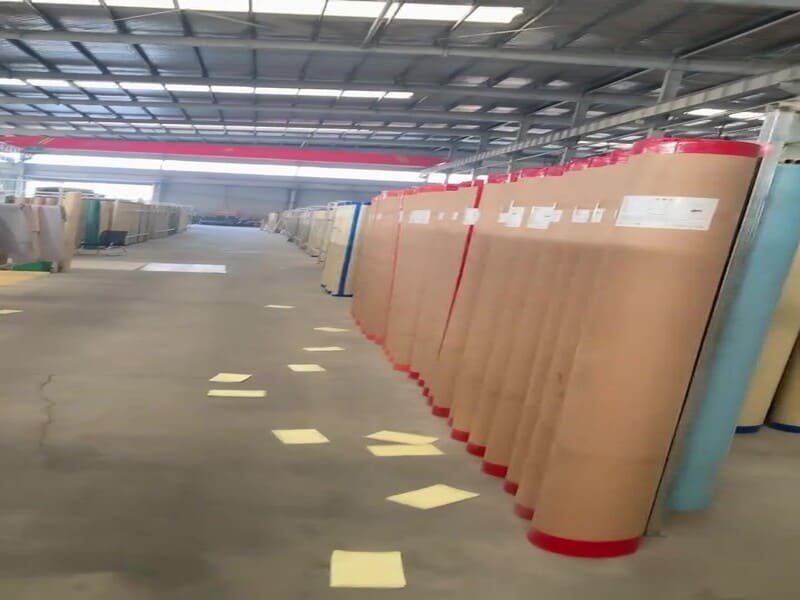
Connaître les points faibles vous aide à vous organiser à l'avance, mais la question la plus importante est de savoir si le PVC est réellement adapté à votre activité spécifique.
Dans quels cas les revêtements de sol en PVC sont-ils les plus adaptés à la circulation des chariots élévateurs ?
Le PVC offre de bonnes performances dans les zones de transit, les sites de production à charge de travail légère à moyenne et les entrepôts équipés de chariots élévateurs électriques, dans la limite de la capacité de charge nominale du produit. Les équipements industriels très lourds nécessitent souvent une solution différente ou un système en PVC conçu pour une utilisation intensive.
Je conseille toujours à mes clients d’adapter le revêtement de sol à l’équipement utilisé et à ses caractéristiques de charge nominale, et non au type de bâtiment. Les zones de transit, les centres de distribution et les ateliers de fabrication à activité légère à moyenne où circulent des chariots élévateurs électriques dont la charge de roulement ne dépasse pas la capacité nominale confirmée du produit constituent des candidats idéaux pour le PVC industriel. Ce matériau convient également aux rénovations accélérées où il est important d’éviter la poussière de béton et de minimiser les temps d’arrêt, car les systèmes à emboîtement s’installent généralement avec un temps de prise très court, voire nul. C’est dans des conditions extrêmes que j’oriente mes clients vers des alternatives plus résistantes, ou vers un système en PVC spécialement conçu pour les charges lourdes : chariots élévateurs à roues en acier très lourds, ou zones soumises à des charges de rotation et de traînée constantes et à haute fréquence. Dans ces cas-là, il est essentiel de vérifier la capacité de charge roulante du produit par rapport à votre équipement réel avant de vous engager.
Si votre activité correspond au profil du PVC, les choix de pose deviennent l'un des facteurs déterminants pour la durée de vie du revêtement de sol.
Comment installer et entretenir le PVC dans les zones réservées aux chariots élévateurs ?
Respectez le système de pose recommandé par le fabricant de revêtements de sol pour votre produit spécifique. Les zones à forte fréquentation ou à trafic intense peuvent nécessiter une pose collée sur toute la surface ou une méthode de pose renforcée, selon la gamme de produits.
La qualité de la pose est tout aussi importante que le produit lui-même. Je commence par préparer le support : colmater les fissures, mettre en place des barrières anti-humidité et aménager les joints de dilatation avant de poser le revêtement de sol. Au-delà de cela, la méthode de pose appropriée dépend entièrement du système en PVC concerné. Certaines dalles emboîtables à usage intensif sont conçues comme des systèmes de pose libre spécialement destinés à la circulation des véhicules, tandis que d’autres produits à coller nécessitent un système adhésif, qui peut être à base d’acrylique, d’époxy, de polyuréthane ou d’une formule en deux composants spécifique au fabricant, selon le produit. Il n’existe pas de règle universelle en matière d’adhésif pour les zones de circulation des chariots élévateurs. La bonne approche consiste à suivre les spécifications de pose approuvées par le fabricant pour ce produit précis, et à vérifier auprès de lui si les zones à forte circulation de votre site nécessitent une méthode de pose renforcée ou à adhérence totale. En matière d’entretien, les traces de pneus s’éliminent généralement à l’aide de nettoyants industriels standard pour sols sans endommager la couche d’usure, à condition d’éviter les abrasifs agressifs. L’un des avantages notables de nombreux systèmes de dalles emboîtables réside dans leur réparabilité : les dalles endommagées peuvent souvent être remplacées individuellement sans avoir à retirer le revêtement environnant, bien que le temps de réparation varie en fonction du produit et de la méthode de pose.
Une fois les coûts d'installation et d'entretien pris en compte, il est utile de comparer le PVC aux autres systèmes de revêtement de sol industriels, en gardant à l'esprit que les produits varient considérablement d'un modèle à l'autre.
Comment le PVC se compare-t-il aux autres revêtements de sol industriels dans le cadre d'une utilisation avec des chariots élévateurs ?
Les performances varient selon la gamme de produits spécifique pour chaque type de revêtement de sol mentionné ici. Considérez ces informations comme un point de départ général ; elles ne remplacent pas les données spécifiques à chaque produit.
| Fonctionnalité | PVC industriel | Revêtement époxy | Béton poli | Revêtements de sol en caoutchouc |
|---|---|---|---|---|
| Capacité de charge d'un chariot élévateur | Cela varie selon le produit ; vérifiez la capacité de charge en roulement | Cela varie en fonction de l'épaisseur du système et de sa composition | Généralement très élevé | Généralement plus bas, varie selon les produits |
| Résistance aux chocs / aux fissures | Bonne absorption des chocs dans l'ensemble | Peut être cassant selon la formulation | Modérée, peut se fissurer en cas de choc | Dans l'ensemble, c'est bien |
| Interruption de service pendant l'installation | Souvent minimalistes avec des systèmes d'emboîtement | Le temps de prise nécessite généralement plusieurs jours. | Nécessite du temps pour le ponçage et le polissage | Généralement minimaliste |
| Réparabilité | Permet souvent de remplacer une section ou une dalle | Nécessite généralement une nouvelle application de produit sur la zone concernée | Nécessite l'installation d'un correctif | Peut être difficile à réparer |
Cette comparaison constitue un point de départ pour les discussions budgétaires, et non une réponse définitive. Au sein de chaque catégorie, les produits présentent des différences significatives en termes de capacité de charge, de résistance chimique et de durabilité ; la comparaison réelle doit donc s'effectuer au niveau des fiches techniques des produits, une fois que vous aurez réduit votre sélection.
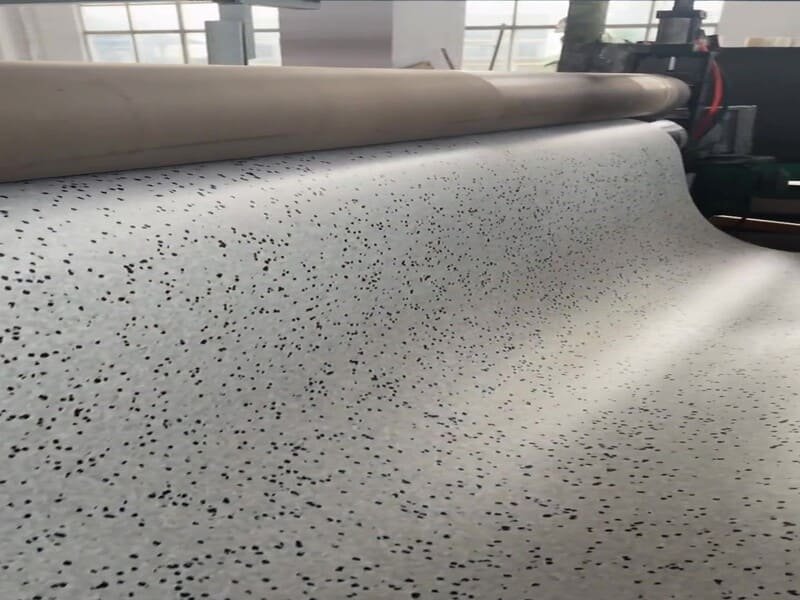
Avant de finaliser un produit, il reste une étape qui revêt une importance bien plus grande que n'importe quelle comparaison de fiches techniques : vérifier la documentation relative aux caractéristiques réelles du produit.
Comment savoir si mon revêtement de sol en PVC est adapté à la circulation des chariots élévateurs ?
Ne vous contentez pas de demander : « Ce sol peut-il supporter un chariot élévateur de 3 tonnes ? ». Demandez au fabricant la fiche technique du produit, les données relatives aux charges roulantes, les résultats des tests d'indentation résiduelle, les remarques concernant la compatibilité des roues et les spécifications d'installation approuvées.
C'est cette étape qui fait la différence entre une décision judicieuse et une erreur coûteuse. Un fournisseur qui se contente de répondre « oui, notre PVC résiste aux chariots élévateurs » sans fournir de documentation ne vous donne pas suffisamment d'éléments pour prendre une décision. Avant tout achat, demandez :
- La fiche technique complète du produit, avec les valeurs relatives aux charges de roulement et aux charges statiques
- Résultats des essais d'indentation résiduelle
- Remarques sur la compatibilité des types de roues, notamment les roues pleines par rapport aux pneus gonflables
- Le cahier des charges d'installation approuvé pour votre circuit de circulation
- Exigences relatives à la préparation du support de pose
Précisez le poids en ordre de marche, le type de roues et la fréquence de rotation de votre chariot élévateur lors de cet échange, et demandez au fournisseur de confirmer l'adéquation du revêtement en se basant sur ses données d'essai réelles plutôt que sur une simple description générale du produit. Cette simple mesure contribue davantage à prévenir les défaillances du revêtement de sol que n'importe quelle indication d'épaisseur ne le fera jamais.
Ces points couvrent l'essentiel de ce dont les acheteurs ont besoin avant de s'engager, mais certaines questions spécifiques reviennent sans cesse.
Quelles sont les questions que se posent les acheteurs concernant le PVC et la circulation des chariots élévateurs ?
La plupart des questions portent sur la capacité de charge, les exigences en matière d'adhésif, la compatibilité avec les pneus et la manière de vérifier la capacité réelle d'un produit.
Est-ce qu'une dalle en PVC épaisse peut résister au passage d'un chariot élévateur ? Pas nécessairement. L'épaisseur n'est qu'un critère parmi d'autres, et l'adéquation dépend de la capacité de charge de roulement, de la dureté et de la structure du produit, qui doivent être vérifiées à l'aide des données fournies par le fabricant plutôt que déduites uniquement à partir de l'épaisseur.
Dois-je coller les dalles en PVC emboîtables si j'utilise des chariots élévateurs ? Cela dépend du produit concerné. Certains systèmes de dalles emboîtables sont conçus pour être posés sans fixation et résister à la circulation automobile, tandis que d'autres nécessitent une méthode de pose à l'adhésif homologuée par le fabricant pour les zones à forte fréquentation.
Quelles sont les différences entre les pneus en polyuréthane dur et les pneus en caoutchouc sur un revêtement de sol en PVC ? Les pneus en polyuréthane rigide concentrent la charge sur une surface de contact plus petite et transmettent une contrainte plus directe à la surface, tandis que les pneus pneumatiques en caoutchouc répartissent la charge et réduisent généralement la contrainte ponctuelle.
Quelle est la durée de vie d'un revêtement de sol industriel en PVC soumis à un passage quotidien de chariots élévateurs ? La durée de vie varie considérablement en fonction de la fréquence de circulation, des manœuvres, du type de pneus, de la charge, de l'état du support et du produit concerné ; il est donc préférable de demander au fabricant des recommandations adaptées à votre projet plutôt que de se fier à une estimation générique en années.
Avant de prendre une décision définitive, il peut être utile de passer en revue une brève liste de contrôle reprenant tous les points abordés ci-dessus.
Conclusion
Les revêtements de sol en PVC peuvent résister au passage des chariots élévateurs, mais ce n'est pas l'épaisseur ou le tonnage qui sont les seuls critères à prendre en compte : le choix dépend du type de produit, des données de charge et de la pose.
Avant de choisir un système de revêtement de sol, posez quatre questions à votre fournisseur : quelle gamme de produits spécifique recommande-t-il en fonction du poids en ordre de marche et du type de roues de votre chariot élévateur ? Sur quelles données relatives à la charge roulante et à l'indentation résiduelle cette recommandation se fonde-t-elle ? Quelle méthode de pose le fabricant approuve-t-il pour votre schéma de circulation ? Et quel état de support est requis pour que ce produit offre les performances nominales ? Si vous avez besoin d’aide pour répondre à ces questions en fonction des spécificités de votre site, envoyez-moi un message en précisant les caractéristiques techniques de vos chariots élévateurs et votre profil de circulation ; je pourrai alors vous aider à trouver la configuration de revêtement de sol en PVC la mieux adaptée.