


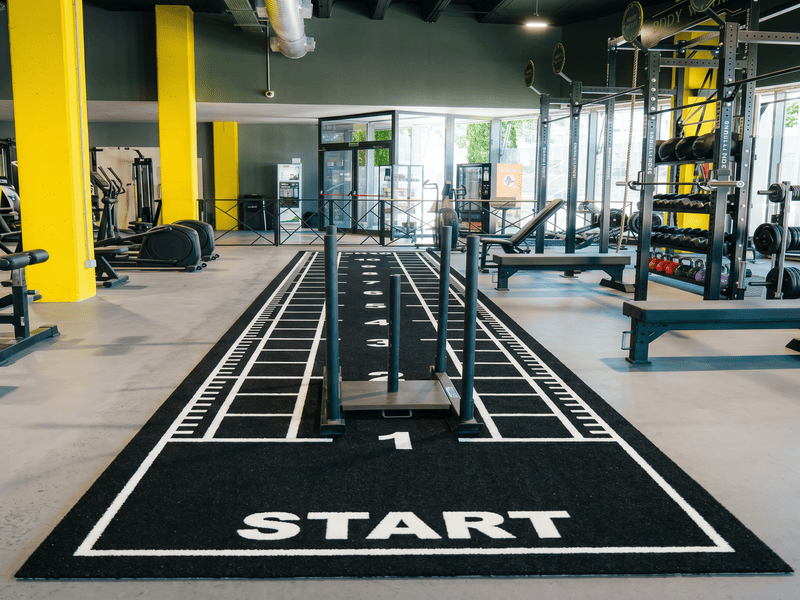
La recommandation ultime pour les zones de balle au mur très fréquentées est la suivante Gazon en nylon à poils courts de 15 mm avec coussin de mousse intégré de 5 mm. Cette configuration est la référence de l'industrie car le Nylon possède un point de fusion plus élevé que le Polyéthylène, empêchant la "brûlure par friction" et la fusion des fibres causées par des impacts répétés de médecine-ball, tandis que la mousse intégrée fournit la décélération critique nécessaire pour protéger le sous-plancher et les articulations de l'athlète.
En tant que spécialiste des projets sur mesure dans la fabrication de gazon de gymnase, j'ai analysé d'innombrables défaillances de sols, en particulier dans la zone de "jonction des murs". Les zones de balle au mur sont uniques car elles subissent une fatigue localisée à haute fréquence. Alors qu'une piste de luge gère le frottement de glissement, une zone de balle de mur gère un cycle de "claquement et grattage". Le gazon paysager standard de 30 mm ou le gazon PE de faible densité s'aplatissent et se dégarnissent en quelques mois car les fibres ne peuvent pas se remettre de la compression verticale d'une balle de 20 à 30 livres. Mon expérience montre que l'utilisation d'une fibre Nylon haute densité (avec un taux de piqûre supérieur à 20 000 par m²) garantit que la surface reste "active", offrant l'adhérence nécessaire au squat de l'athlète et la résilience nécessaire pour survivre à des milliers de chutes à haute vélocité.
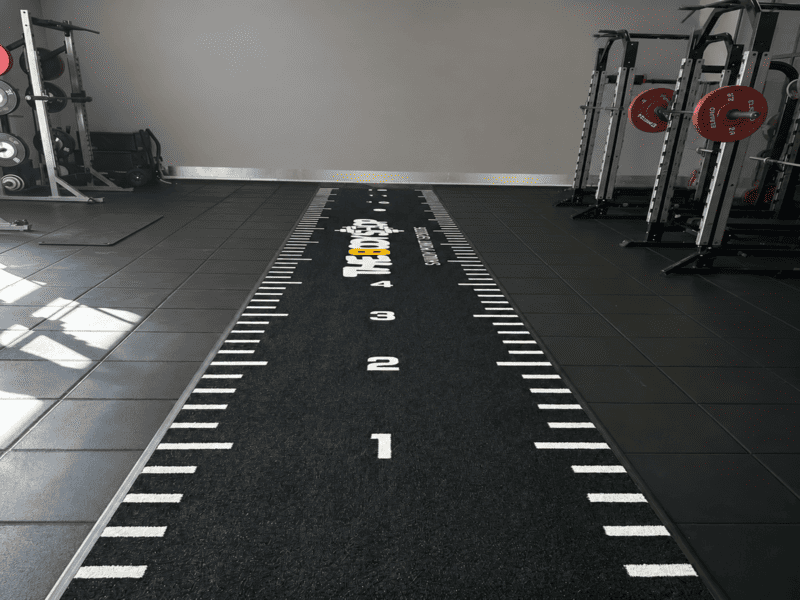
Pour choisir la bonne surface, il faut faire correspondre les propriétés techniques des matériaux avec les contraintes mécaniques spécifiques de l'exercice.
Quelles spécifications de gazon offrent le meilleur retour sur investissement ?
L'option la plus durable est le nylon 100% avec un support en mousse de 5 mm, tandis que le polyéthylène (PE) rembourré est le meilleur choix pour les studios de boutique polyvalents. Pour les centres de performance d'élite, le gazon en nylon à marquage personnalisé est le meilleur choix car il remplace le ruban adhésif pour le sol, qui nécessite beaucoup d'entretien, par des marqueurs de distance permanents et tissés.
Matrice de sélection des professionnels
| Type d'installation | Meilleur choix de gazon | Base matérielle |
|---|---|---|
| CrossFit commercial | 15mm Nylon + 5mm Mousse | Nylon 6,6 pour une stabilité thermique maximale |
| Boutique/PT Studio | PE rembourré de 12 mm | Abrasion cutanée réduite pour les travaux au sol |
| Formation professionnelle | Nylon marqué sur mesure | Tissage haute densité pour un marquage permanent |
| Gymnase à domicile/garage | Nylon non rembourré de 10 mm | Durabilité élevée pour un coût d'entrée réduit |
Au cours du processus de fabrication, nous mesurons la "Tuft Bind Strength", c'est-à-dire la force nécessaire pour arracher une fibre du support. Dans les zones de balle au mur, cette force est essentielle car la balle frappe souvent le sol en biais, ce qui crée un mouvement de "cueillette". Nous utilisons un support secondaire en polyuréthane (PU) renforcé pour garantir que les fibres restent bloquées. De plus, comme gazon utilisé dans les zones de cordes de combat à frottement élevéLe Nylon est préféré dans les zones de wall ball parce qu'il résiste à la chaleur de friction et à la dégradation des fibres bien mieux que le gazon PE standard. Si vous utilisez un PE de qualité inférieure dans une salle de CrossFit très fréquentée, vous finirez par voir apparaître des zones "brillantes" où le plastique a littéralement fondu sous l'effet de l'impact de la balle.
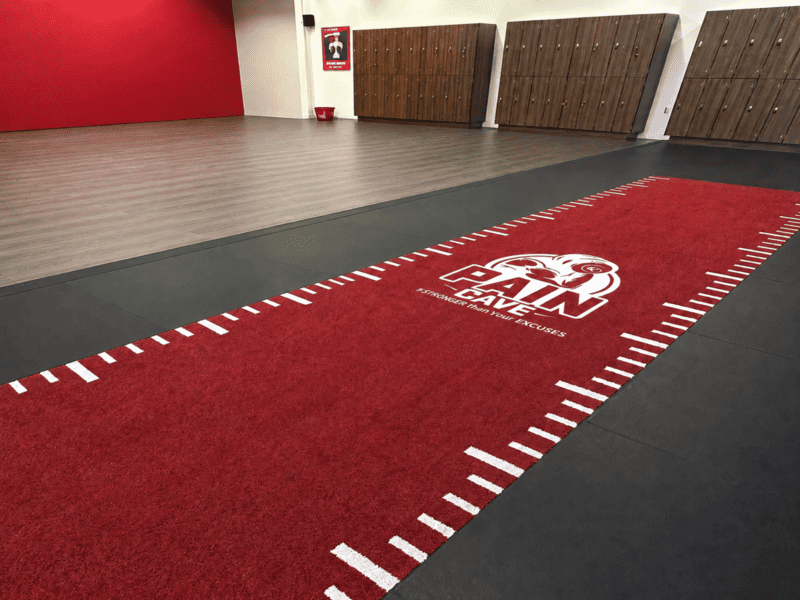
La compréhension de ces différences de matériaux explique pourquoi une zone de wall ball nécessite une surface beaucoup plus robuste qu'une zone de cardio ou d'étirement standard.
Pourquoi l'entraînement au Wall Ball nécessite-t-il une ingénierie différente de celle des pistes de luge ?
Les zones de balle au mur nécessitent une plus grande "récupération de la compression" et un amortissement acoustique dû à l'impact vertical, tandis que les pistes de luge donnent la priorité à la "résistance à la glissade". Le gazon pour la balle au mur doit avoir un poil plus court (12 mm-15 mm) pour éviter l'instabilité de la cheville pendant les squats lourds, un problème de sécurité courant que l'on retrouve dans les produits de gazon à fibres plus longues.
Dynamique d'impact : Wall Ball Zone vs. Sled Track
| Facteur dynamique | Wall Ball Zone | Piste de luge |
|---|---|---|
| Direction de l'impact | Principalement vertical (Slam) | Principalement horizontale (traînée) |
| Contrainte sur les fibres | Haute compression | Friction hautement abrasive |
| Stabilité de l'athlète | Élevé (essentiel pour les squats) | Modéré (conduite en marche avant) |
| Amortissement acoustique | Essentiel (réduction de 8 à 10 dB) | Secondaire |
D'un point de vue technique, le "rebond du médecine-ball" est une mesure de sécurité essentielle. Si le sol est trop mou ou si la pile est trop haute (plus de 20 mm), l'énergie de la balle est absorbée de manière inégale, ce qui provoque un rebond imprévisible qui peut frapper le visage ou la poitrine de l'athlète. En utilisant une pile courte et dense de 13 à 15 mm, nous nous assurons que la balle touche une surface ferme et qu'elle revient avec un timing cohérent. De plus, les zones de balles murales sont des "hubs de sueur et de craie". Le nylon à poils courts ne retient pas la poussière de craie aussi profondément que le gazon à fibres longues, ce qui facilite considérablement le respect des normes d'hygiène et empêche la formation de croûtes lorsque la sueur sèche à l'intérieur des fibres.
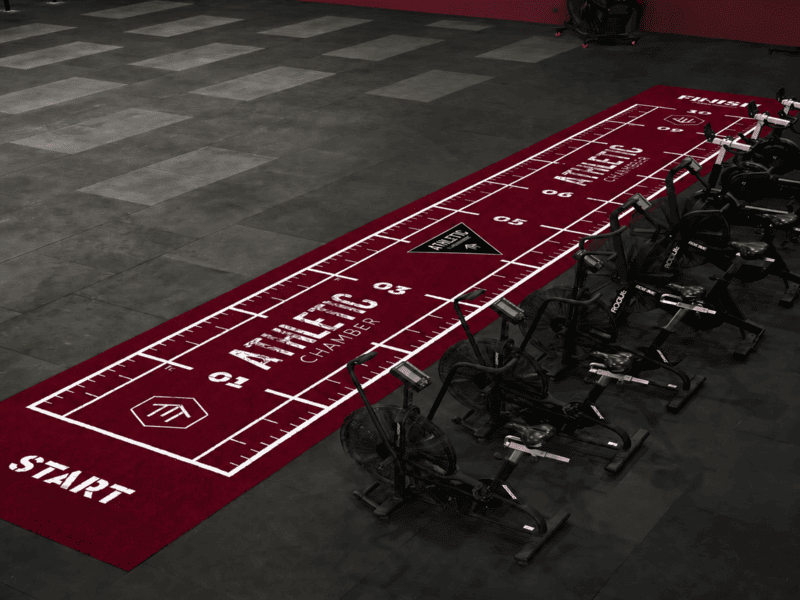
Même les meilleurs matériaux sont voués à l'échec s'ils ne sont pas mis en œuvre correctement, d'où les questions fréquentes concernant l'installation et l'entretien à long terme.
Questions techniques courantes concernant les terrains de jeu de balle (FAQ)
Les revêtements de sol en caoutchouc sont-ils meilleurs que le gazon pour les ballons de football ? Bien que le caoutchouc soit durable, il n'offre pas le retour d'énergie et l'amortissement acoustique du gazon recouvert de mousse, ce qui entraîne souvent des bruits plus forts et une fatigue accrue des articulations. Le gazon doit-il être collé ? Oui, dans les zones de jeu de balle au mur, il est obligatoire d'appliquer un adhésif sur toute la surface pour empêcher le gazon d'onduler sous la pression latérale des pieds.
FAQ sur les performances et l'installation
- Peut-on installer du gazon sur du béton ? Oui, mais le gazon doit être équipé d'un coussin de mousse intégré d'au moins 5 mm afin d'éviter que le gazon ne s'écrase et n'endommage le béton ou la balle.
- Quelle est la meilleure hauteur de pile ? 12 mm à 15 mm. Tout ce qui est supérieur provoque un "déplacement latéral du pied" lors des squats de haute intensité.
- Quel est l'effet de la craie sur le gazon ? La craie agit comme un abrasif. Il faut passer l'aspirateur tous les jours pour éviter que la craie ne coupe les fibres du gazon à la base.
- La balle endommagera-t-elle le mur ? Nous recommandons d'étendre le gazon de 30 cm le long du mur ou d'utiliser une plaque murale de protection de 20 mm pour éviter que les cloisons sèches ne se fissurent.
J'ai récemment conseillé un établissement qui utilisait un gazon standard "souple" pour sa zone de wall ball. Les athlètes se plaignaient d'une assise "molle", ce qui réduisait leur puissance pendant la phase d'entraînement du tir au mur. Nous l'avons remplacé par une surface en nylon haute densité de 15 mm. Un gazon haute densité conçu pour entraînement à la poussée de la luge fournit également la traction stable et antidérapante dont les athlètes ont besoin pendant les mouvements explosifs de wall ball, améliorant ainsi directement leurs performances. Cela prouve que le gazon n'est pas seulement une protection - c'est un équipement d'entraînement fonctionnel.
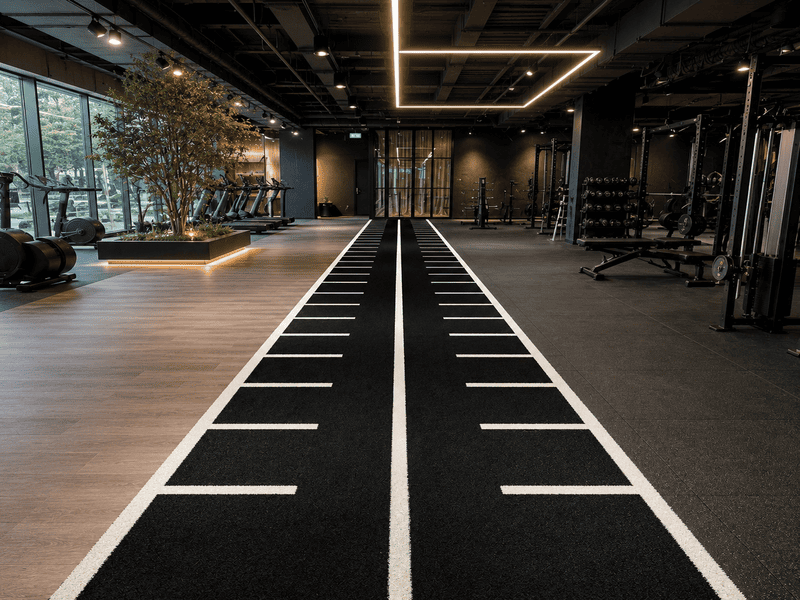
Verdict final : La spécification professionnelle pour les zones de balle de mur
Pour que le 100% réponde aux exigences d'une zone de balle murale performante, vous devez spécifier 15mm Short-Pile Nylon avec un shock pad de 5mm et un poids facial d'au moins 60-80oz. Cette combinaison offre la résistance thermique nécessaire pour gérer les frottements, la densité nécessaire pour assurer la stabilité de l'athlète et l'amortissement acoustique nécessaire pour maintenir un environnement de gymnastique professionnel.
En évitant les styles "paysage" à poils longs et en vous concentrant sur le Nylon à taux de couture élevé, vous réduisez votre coût total de possession sur 5 ans en évitant le dégarnissement et la délamination prématurés. Une zone de balle murale bien conçue n'a pas seulement un aspect professionnel, elle survit aux cycles d'entraînement les plus rigoureux de l'industrie du fitness.
Pour les spécifications personnalisées, la conception de la mise en page ou les demandes de fabrication en vrac, veuillez m'envoyer un message privé pour bénéficier d'une assistance technique professionnelle et d'échantillons techniques.