


L'indentation permanente des revêtements de sol en caoutchouc est principalement causée par une pression statique prolongée qui dépasse la limite élastique du matériau, souvent exacerbée par une faible densité, des sous-planchers souples ou des températures élevées. Il est essentiel de comprendre ces facteurs pour protéger le sol de votre gymnase ou de votre installation contre les dommages structurels à long terme et pour préserver son aspect.
En tant qu'ingénieur chargé du contrôle de la qualité, je vois souvent des sols abîmés parce que les gens traitent le caoutchouc comme s'il était indestructible. Ce n'est pas le cas. Le caoutchouc est un polymère doté d'une "mémoire" spécifique. Lorsque vous placez un support lourd dessus, le matériau se comprime. Si la charge est conforme aux spécifications de conception, les molécules de caoutchouc glissent vers leur emplacement d'origine une fois que le poids a disparu. Toutefois, lorsque la pression est trop élevée pendant trop longtemps, un changement physique appelé "compression" se produit. Les liaisons internes du caoutchouc sont alors écrasées ou déplacées de façon permanente. Du point de vue de la fabrication, cela se produit généralement parce que la densité était trop faible pour l'application. Un sol d'une densité de 900 kg/m³ s'effondrera alors qu'un sol de 1200 kg/m³ restera plat. J'ai testé d'innombrables lots, et les calculs ne mentent jamais : si la pression par pouce carré dépasse la dureté Shore A du matériau pendant une longue période, le cratère devient un élément permanent de votre sol.
J'expliquerai les détails techniques et la manière d'empêcher que cela ne se produise dans votre établissement.
Quelle est la science qui sous-tend la compression et la perte de mémoire des caoutchoucs ?
La déformation par compression est la déformation permanente du caoutchouc après une longue période de pression, qui se produit lorsque les chaînes de polymères perdent leur capacité à reprendre leur forme d'origine. Il s'agit d'un pourcentage mesurable de l'épaisseur d'origine qui est perdue à jamais en raison de la rupture moléculaire.
Comprendre l'élasticité et la plasticité moléculaires
Dans mon laboratoire, nous mesurons l'élasticité à l'aide de tests ASTM normalisés. Le caoutchouc est conçu pour être élastique, mais il a une limite. Lorsqu'un pied lourd d'une barre de traction s'appuie sur une dalle, il transmet une quantité massive d'énergie au matériau. Au fil des semaines ou des mois, cette énergie fait passer les chaînes de polymères à un état "plastique". Dans cet état, la déformation n'est plus réversible. J'ai vu un jour un lot de tapis en caoutchouc recyclé qui n'était pas assez vulcanisé. La chaleur et la pression n'étant pas adéquates lors de la fabrication, la réticulation des molécules était faible. Il en résultait une très forte déformation rémanente à la compression. Si le caoutchouc n'est pas durci correctement, il se comporte comme une pâte plutôt que comme un ressort. Nous utilisons le duromètre Shore A pour le vérifier. Pour un usage intensif en salle de sport, il est préférable d'utiliser un duromètre compris entre 60 et 70. Tout produit plus souple risque de présenter des "cratères" permanents, car la structure moléculaire est trop lâche pour lutter contre le poids.
| Propriété | Comportement élastique | Comportement plastique |
|---|---|---|
| Action moléculaire | Les chaînes s'étirent et reviennent | Les chaînes glissent et restent |
| Résultat | Trempage temporaire | Cratère permanent |
| Cause première | Charge à court terme | Charge excessive à long terme |
Beaucoup de gens pensent que le poids est le seul problème, mais le support et la qualité du matériau sont tout aussi importants.
Pourquoi les charges statiques et les sols de mauvaise qualité sont-ils les principaux responsables de la destruction des revêtements de sol en caoutchouc ?
Les charges statiques créent une "charge ponctuelle" où une pression élevée est concentrée sur une petite zone, tandis que les sous-planchers souples comme la moquette permettent au caoutchouc de s'étirer et de s'affaisser au-delà de ses limites. Ces deux problèmes empêchent le caoutchouc de répartir le poids, ce qui entraîne des empreintes profondes et irréparables dans la surface.
Le danger des charges ponctuelles et de l'instabilité du sous-plancher
D'un point de vue technique, l'empreinte de votre équipement est plus importante que son poids total. Comprendre comment empêcher les pieds des équipements lourds de s'écraser sur le sol en caoutchouc est essentielle car les jambes étroites de l'équipement créent une pression de charge ponctuelle extrêmement élevée. Je dis toujours à mes clients de regarder le PSI (pounds per square inch). Si vous placez une machine lourde sur un sous-plancher mou, comme un contreplaqué pourri ou une vieille moquette, le tapis en caoutchouc n'a rien pour se repousser. Il s'affaisse dans la zone molle. J'ai inspecté une fois un gymnase où l'on avait posé un tapis en caoutchouc de 10 mm d'épaisseur sur une moquette à poils longs. En l'espace d'un mois, tous les tapis de course s'étaient enfoncés de 5 mm dans le sol. Le caoutchouc était tellement étiré sur les bords des pieds qu'il a fini par se déchirer. Vous devez avoir une base rigide comme le béton. En outre, les liants de mauvaise qualité utilisés dans les caoutchoucs bon marché ne supportent pas la chaleur. Dans un entrepôt non climatisé, la chaleur ramollit le liant en polyuréthane, ce qui rend le sol beaucoup plus susceptible de se bosseler, même sous des charges plus légères.
| Facteur | Impact sur l'indentation | Solution d'ingénierie |
|---|---|---|
| Charge ponctuelle | Concentre la pression | Utiliser des plaques d'écartement |
| Sous-plancher souple | Cause de l'affaissement et de l'étirement | Installation sur béton/OSB |
| Faible densité | Faible soutien structurel | Utiliser une densité de plus de 1000 kg/m³ |
| Chaleur élevée | Adoucit le liant du matériau | Maintenir une température stable |
Même si vous disposez du meilleur matériau, une mauvaise installation peut entraîner des problèmes inattendus.
Comment une mauvaise installation peut-elle créer des points faibles cachés dans votre plancher ?
Une mauvaise installation, comme l'utilisation d'un mauvais adhésif ou l'absence d'acclimatation du caoutchouc, entraîne une tension inégale et des espaces d'air. Ces espaces créent des zones de faiblesse où le caoutchouc peut facilement se déformer ou s'étirer sous l'effet du poids, ce qui entraîne des bosses permanentes localisées.
Défauts d'adhésivité et problèmes d'acclimatation
Au cours de mes années de contrôle de la qualité, j'ai constaté que de nombreuses "défaillances de produits" sont en fait des défaillances d'installation. Le caoutchouc se dilate et se contracte en fonction de la température. Si vous ne laissez pas les dalles reposer dans la pièce pendant 24 à 48 heures avant de les poser, elles bougeront par la suite. Ce mouvement crée des points de tension. Lorsque vous posez un poids lourd sur une zone tendue, le caoutchouc est déjà sous tension et cède beaucoup plus rapidement. Un autre problème important est celui de la colle. Si la colle est appliquée de manière inégale, des poches d'air apparaissent. Une poche d'air sous une dalle en caoutchouc est comme une bulle qui attend d'être éclatée. Lorsqu'un poids lourd repose sur cette bulle, le caoutchouc n'est plus soutenu par le bas et s'effondre. Je recommande toujours l'utilisation d'un adhésif polyuréthane sur toute la surface pour les zones à fort trafic. Cet adhésif crée une liaison solide entre le caoutchouc et le support, ce qui aide le caoutchouc à résister à la compression. Il transforme le sol en une unité solide plutôt qu'en une série de tapis lâches qui peuvent glisser et s'amincir.
| Étape d'installation | Risque d'échec | Problème résultant |
|---|---|---|
| Acclimatation | Dilatation thermique | Lacunes et points de tension |
| Collage | Poches d'air / Obligations | Affaissement localisé |
| Mise à niveau du sous-plancher | Surface irrégulière | Usure et bosses importantes |
Si vous avez déjà des bosses, vous voudrez probablement savoir s'il est possible de sauver le plancher.
Peut-on vraiment réparer une dent permanente ou le sol est-il ruiné ?
Si la plupart des empreintes permanentes ne peuvent être 100% effacées, il est souvent possible de les améliorer en utilisant la chaleur ou la vapeur pour encourager les cellules de caoutchouc à se dilater. Toutefois, si les liaisons polymères sont rompues ou si le caoutchouc est déchiré, la seule véritable solution consiste à remplacer la partie endommagée.
Les techniques de restauration du bricolage et leurs limites
Cette question m'est posée chaque semaine. Lorsque l'on apprend comment réparer les bosses de compression sous les équipements de gymnastique lourdsLes empreintes peu profondes peuvent parfois être récupérées en réactivant la mémoire moléculaire du caoutchouc à l'aide d'une chaleur contrôlée. Je suggère généralement un nettoyeur à vapeur professionnel ou un sèche-cheveux à haute puissance. La chaleur ramollit le liant et permet aux poches d'air comprimé dans le caoutchouc de se dilater légèrement. Vous pouvez également essayer de "masser" la zone avec un maillet en caoutchouc pour redistribuer le matériau. J'ai constaté que cette méthode fonctionnait sur du caoutchouc vulcanisé de haute qualité, car les liaisons sont très fortes. En revanche, avec les tapis recyclés à froid bon marché, une fois qu'ils sont bosselés, ils le restent. Si vous voyez des fissures ou un "blanchiment" dans la bosse, cela signifie que la structure physique est cassée. Dans ce cas, la chaleur n'est d'aucune utilité. C'est la raison pour laquelle je préconise l'utilisation de tuiles modulaires. Si une tuile est abîmée, il suffit de la remplacer. C'est beaucoup moins cher que de remplacer tout un rouleau de caoutchouc. Pour les matériaux mélangés à de la mousse, l'utilisation de glace peut parfois aider les fibres à se remettre en place, mais pour le caoutchouc pur, la chaleur est votre meilleure amie - mais ne la faites pas fondre.
| Méthode | Taux de réussite | Meilleur pour |
|---|---|---|
| Pistolet à air chaud/vapeur | Moyen | Bosses peu profondes dans les nattes épaisses |
| Massage physique | Faible | Très légères marques de surface |
| Remplacement des carreaux | 100% | Cratères profonds et structurels |
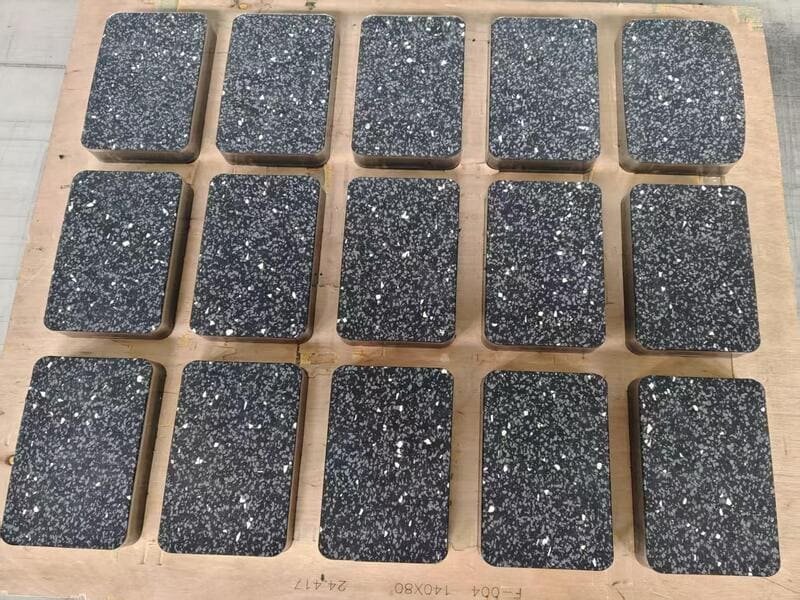
La prévention est toujours moins chère que la guérison, et quelques petits changements peuvent sauver votre sol pendant des années.
Conclusion
Les bosses permanentes sont causées par une pression élevée, une densité médiocre et de mauvaises sous-couches. Choisissez un caoutchouc de haute densité et répartissez correctement le poids.
Besoin d'aide pour choisir la bonne densité pour votre projet de gymnase ?
Je peux vous aider à analyser le poids de votre équipement et le support pour vous assurer que votre sol reste parfaitement plat.
M'envoyer un message pour une consultation technique gratuite ou une fiche technique de revêtement de sol personnalisé !