


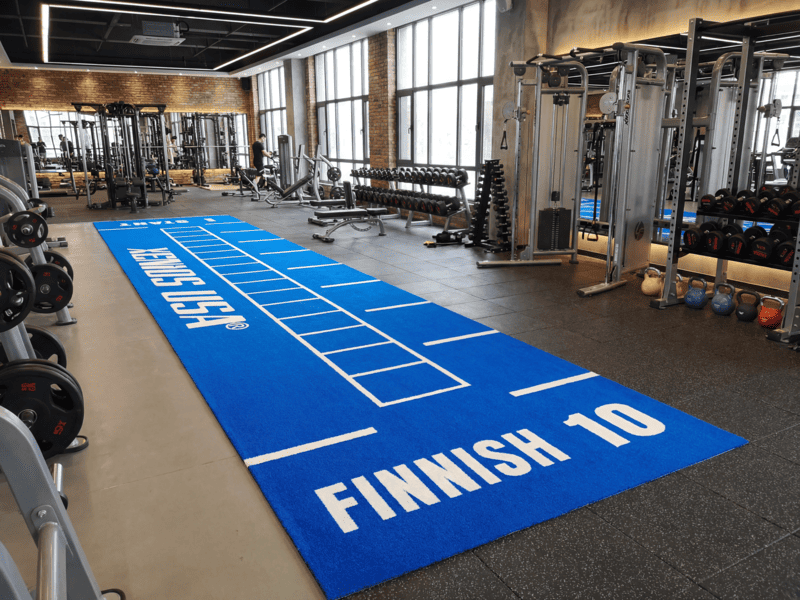
Le meilleur poids de surface pour un gazon de gymnase commercial se situe entre 50oz et 60oz. Cette fourchette offre l'équilibre idéal entre la densité des fibres et la durabilité pour résister aux poussées de traîneaux et au trafic piétonnier important sans s'emmêler les pinceaux ou causer des risques de trébuchement pour les membres de votre salle de sport.
Au cours de mes années de gestion de l'atelier de production, j'ai vu de nombreux propriétaires de salles de sport choisir un gazon en se basant uniquement sur la sensation de "peluche" qu'il procurait. C'est une erreur, car un gazon épais et lourd conçu pour une arrière-cour ne conviendra pas à un gymnase commercial. Le poids apparent mesure le poids réel du fil par mètre carré, à l'exclusion du support. Pour une installation professionnelle, vous avez besoin d'une densité élevée plutôt que d'un poids élevé. Si le poids apparent est trop faible, les fibres s'aplatiront sous le poids d'un traîneau de 200 livres en quelques semaines. S'il est trop élevé et que le poil est trop long, le frottement rendra impossible la poussée de ce même traîneau. Nous nous attachons à créer un tissage serré qui soutient la fibre verticalement. Cette technique permet au gazon de rester droit et sûr pendant des années.
Les sections suivantes vous guideront à travers les spécifications techniques que vous devez connaître pour protéger votre investissement et assurer la sécurité de vos athlètes.
Pourquoi le poids du visage est-il plus important que vous ne le pensez ?
Le poids de la face est le principal indicateur de la quantité de travail que le gazon peut supporter avant que les fibres ne se dégradent. Le choix d'un poids correct garantit que votre sol reste plat, qu'il offre une traction constante pour les sprints et qu'il évite l'usure prématurée que l'on observe souvent dans les installations de qualité médiocre.
Lorsque je supervise le processus de tufting dans notre usine, j'observe la façon dont le fil est tassé. Un aspect "épais" peut être un piège. Certains fabricants utilisent une grande hauteur de poils avec un faible poids apparent pour que le gazon ait l'air cher. Cependant, dans un gymnase commercial, ces fibres longues et fines s'affaisseront presque immédiatement sous l'effet du trafic. Cela crée un effet de "tapis" qui rend le sol glissant et laid. Je dis toujours à mes partenaires que l'objectif est d'obtenir une densité élevée avec des poils plus courts. Cette combinaison crée une surface facile à nettoyer et suffisamment résistante pour un entraînement d'élite. Le choix d'un mauvais poids n'est pas seulement une question d'esthétique. C'est une question de budget, car vous finirez par remplacer l'ensemble du sol dans deux ans au lieu de dix.
Comprendre les différents niveaux de poids vous aidera à catégoriser les zones de votre salle de sport qui ont le plus besoin de protection.
Quels sont les niveaux de poids faciaux courants pour le gazon de gymnastique ?
Le gazon de gymnastique est généralement divisé en quatre catégories : Léger (30-40oz), Moyen (40-60oz), Lourd (60-80oz) et Haute densité (80oz+). Chaque catégorie a une fonction différente, allant des simples zones d'étirement aux couloirs de luge lourde de qualité professionnelle, en passant par les zones à fort impact.
| Niveau | Poids du visage | Application primaire | Durée de vie prévue |
|---|---|---|---|
| Léger | 30oz - 40oz | Yoga, Stretching, Décoratif | 3-5 ans |
| Milieu de gamme | 40oz - 60oz | Entraînement fonctionnel général, Luges | 7-10 ans |
| Usage intensif | 60oz - 80oz | Entraînement des athlètes d'élite, trafic élevé | 10 ans et plus |
| Haute densité | 80oz+ | Voies réservées aux traîneaux lourds | 12 ans et plus |
Dans notre usine de fabrication, nous utilisons différents taux de piqûre pour obtenir ces niveaux. Par exemple, un gazon léger de 35oz est parfait pour un coin de yoga parce qu'il est doux et peu coûteux. Mais je ne permettrais jamais à un client de mettre une luge dessus. Les fibres se détacheraient du support. Pour un gymnase commercial standard, nous passons au milieu de gamme. C'est à ce niveau que je consacre la majeure partie de mon temps de production, car c'est le plus polyvalent. Lorsque nous produisons du gazon de 70 ou 80 oz, nous mettons des milliers de fibres supplémentaires dans chaque centimètre carré. Ce gazon est destiné aux salles de sport "black iron" où l'équipement est lourd et l'utilisation constante. Connaître ces niveaux vous permet d'éviter de payer plus que ce dont vous avez besoin tout en vous assurant que vous n'achetez pas trop peu.
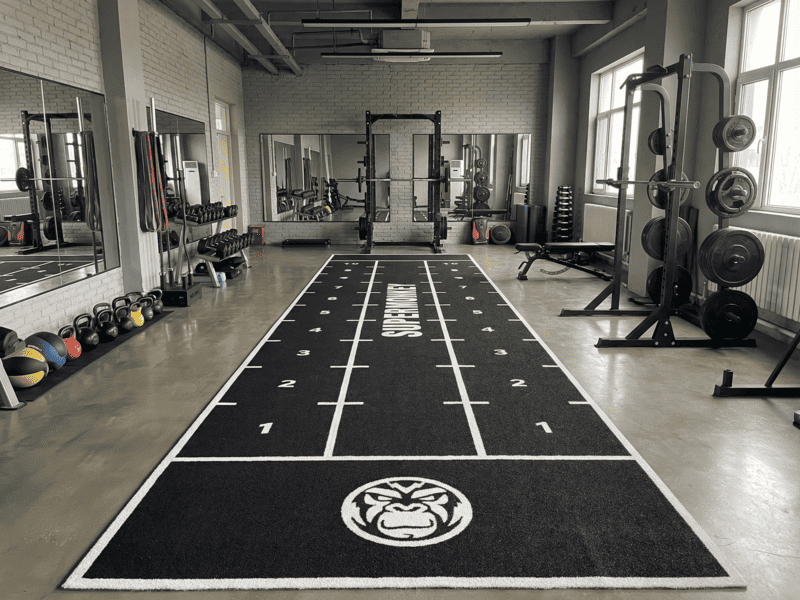
Bien que les niveaux soient utiles, il existe une gamme spécifique qui convient à presque toutes les applications commerciales.
Pourquoi la norme commerciale est-elle de 50 à 60 oz ?
La gamme de 50oz à 60oz est le "sweet spot" car elle offre une densité de fibres suffisante pour résister à l'écrasement tout en conservant une surface à faible friction pour les mouvements du traîneau. Elle offre le meilleur retour sur investissement en garantissant une durée de vie de 10 ans à un prix raisonnable pour la plupart des propriétaires.
Du point de vue de la production, la gamme 50oz-60oz nous permet d'utiliser un fil Dtex de haute qualité avec un taux de piqûre dense. Si le gazon est trop léger, la luge le tue. Si le gazon dépasse 80oz, il peut en fait être trop "accrocheur", ce qui empêche les membres de déplacer les luges de manière naturelle. Le nettoyage est également un facteur important que de nombreux propriétaires oublient. D'après mon expérience, les pelouses à poids élevé emprisonnent la poussière, les cellules de la peau et la sueur au plus profond des fibres. Un gazon de 50 oz est beaucoup plus facile à aspirer et à nettoyer.
Pourquoi les indicateurs de performance favorisent-ils le milieu de gamme ?
| Métrique | 50oz-60oz Performance | Pourquoi c'est important |
|---|---|---|
| Résistance des traîneaux | Modéré/faible | Permet des mouvements fluides sans accrochage |
| Récupération des fibres | Haut | Les fibres reprennent leur élan après avoir été piétinées |
| Maintenance | Simple | Peut être nettoyé à l'aide d'un aspirateur d'atelier standard |
Lorsque je conçois un gazon pour un nouveau gymnase, je recherche l'équilibre entre ces facteurs. Cette gamme fonctionne parce qu'elle supporte le trafic piétonnier d'un lundi soir très fréquenté sans paraître usée le mardi matin. C'est le pari le plus sûr pour tous ceux qui veulent une solution de revêtement de sol "prête à l'emploi et oubliée".
Avant de faire un achat définitif, vous devez tenir compte des activités spécifiques qui se dérouleront sur votre sol chaque jour.
Quels sont les facteurs qui devraient influencer votre choix final ?
Votre choix dépend de trois facteurs principaux : vos activités principales dans la salle de sport, le volume de votre trafic quotidien et le rapport entre la taille et le poids des piles. Par exemple, le travail en luge nécessite une densité plus élevée, tandis que l'entraînement HIIT requiert une surface plus stable et à faible frottement pour éviter les blessures à la cheville.
Je vois souvent des propriétaires commettre l'erreur d'acheter du gazon en se basant sur le poids total du rouleau. En tant que directeur de production, je sais que certaines usines ajoutent du sable lourd ou du latex bon marché au support pour que le produit paraisse "lourd". Vous devez ignorer le poids total et ne tenir compte que du poids de la surface. Vous devez également calculer le nombre de "visites quotidiennes". Si vous avez 500 membres par jour qui utilisent une petite bande de gazon, vous devez augmenter le poids de la face, peut-être 70oz.
Facteurs clés pour la sélection du gazon
| Activité | Spécifications recommandées | Raison technique |
|---|---|---|
| Poussées de traîneaux | 50oz+ / Low Pile | Empêche la fibre de s'étaler et de s'agglutiner |
| HIIT/Sprints | 45oz-55oz / High Dtex | Fournit une base stable pour les mouvements latéraux |
| Poids lourds | 60oz+ / Amortisseur de chocs | Protège le support et le fil du gazon. |
Je recommande également de comprendre les principales spécifications du gazon, telles que Dtex, jauge et taux de point avant de choisir un système de gazon de gymnase commercial. Il s'agit du poids du fil lui-même. Un gazon de 50 oz avec un fil de 10 000 Dtex durera toujours plus longtemps qu'un gazon de 60 oz avec un fil de 5 000 Dtex. Le fil plus épais résiste beaucoup mieux au frottement des chaussures et des traîneaux. Si vous faites beaucoup de travail au sol comme des burpees ou des étirements, je vous conseille les fibres de polyéthylène car elles sont plus douces pour la peau et ne causent pas de "brûlures de gazon" comme peut le faire le nylon moins cher.
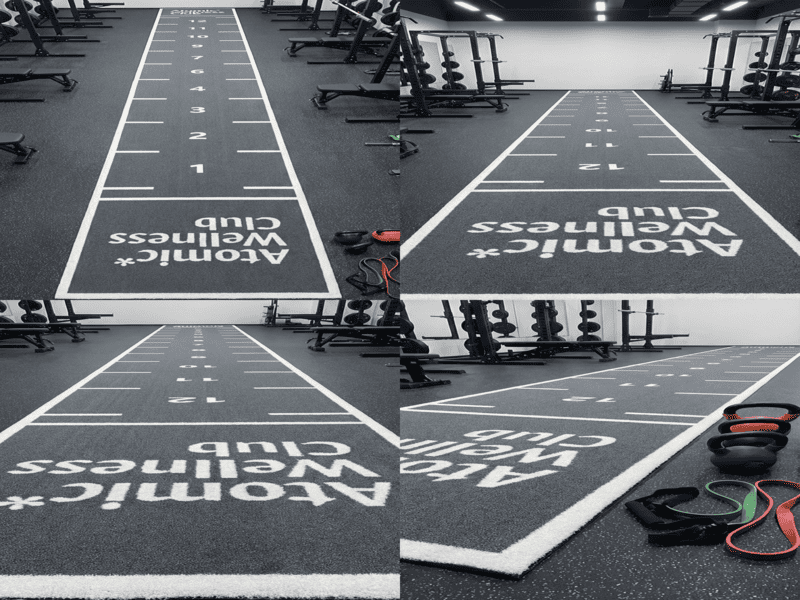
D'où les questions les plus fréquentes que me posent les propriétaires de salles de sport lors de la phase de conception.
Points douloureux communs : Les questions que se posent tous les propriétaires
Les propriétaires s'inquiètent généralement de voir les traîneaux s'enliser, le gazon se dégarnir au fil du temps, et se demandent si le surcoût lié à l'augmentation du poids de la face en vaut la peine. Comprendre ces compromis techniques vous permet de dépenser votre budget là où il a un impact réel sur la longévité de votre installation.
Questions fréquemment posées par les gestionnaires d'installations
| Question | La réponse de l'expert | Conseil de pro |
|---|---|---|
| Les traîneaux resteront-ils coincés ? | Seulement si la pile est trop haute ou le poids trop faible. | La hauteur de la pile doit être inférieure à 3/4 de pouce. |
| Comment prévenir la calvitie ? | Choisissez une stabilisation UV élevée et un support primaire/secondaire. | Comparaison des gazons en fonction du taux de piqûre et de la force de liage des touffes est l'un des meilleurs moyens d'évaluer la durabilité à long terme. |
| Le poids élevé en vaut-il la peine ? | Oui, si vous avez un trafic de traîneaux important. | Il double la durée de vie de la zone. |
| Ai-je besoin d'un amortisseur ? | Si vous lâchez des poids ou faites de la pliométrie. | Un coussin de 5 mm préserve vos articulations et le gazon. |
J'ai travaillé une fois avec un client qui avait acheté un gazon "paysager" de 30oz pour sa salle de CrossFit afin d'économiser de l'argent. Au bout de trois mois, les traîneaux avaient littéralement fait fondre les fibres de plastique à cause de la friction. Ils ont dû payer pour l'arracher et installer un gazon commercial de 60oz. Cette erreur leur a coûté le double. Lorsque je parle de "dégarnissage", je veux dire que la fibre se détache du support. Dans notre usine, nous utilisons un support secondaire renforcé pour retenir les fibres. C'est pourquoi un gazon de haute qualité de 50 oz ressemble à un sol solide, et non à une moquette.
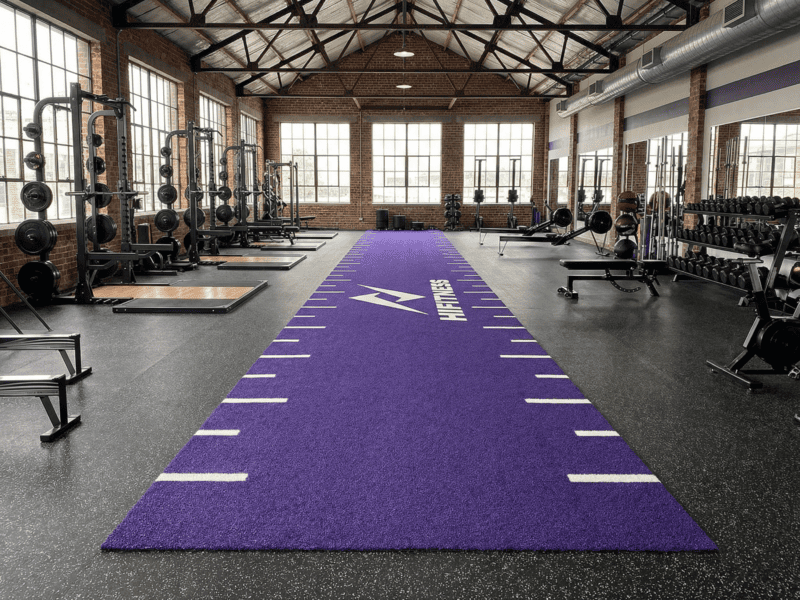
Le choix du bon sol est la base de l'image de marque et de la sécurité de votre salle de sport.
Conclusion
Pour la plupart des gymnases commerciaux, un poids de 50oz à 60oz avec une hauteur de poil courte est le meilleur choix pour la durabilité et la performance.
Prêt à améliorer votre installation avec un gazon de qualité professionnelle ?
Si vous avez besoin d'un devis personnalisé, de fiches techniques ou d'échantillons gratuits pour votre prochain projet, n'hésitez pas à nous contacter. envoyez-moi un message privé. En tant que fabricant, je peux vous aider à trouver le poids et la densité exacts qui correspondent à votre budget et aux besoins de vos athlètes. Construisons ensemble un meilleur gymnase !