


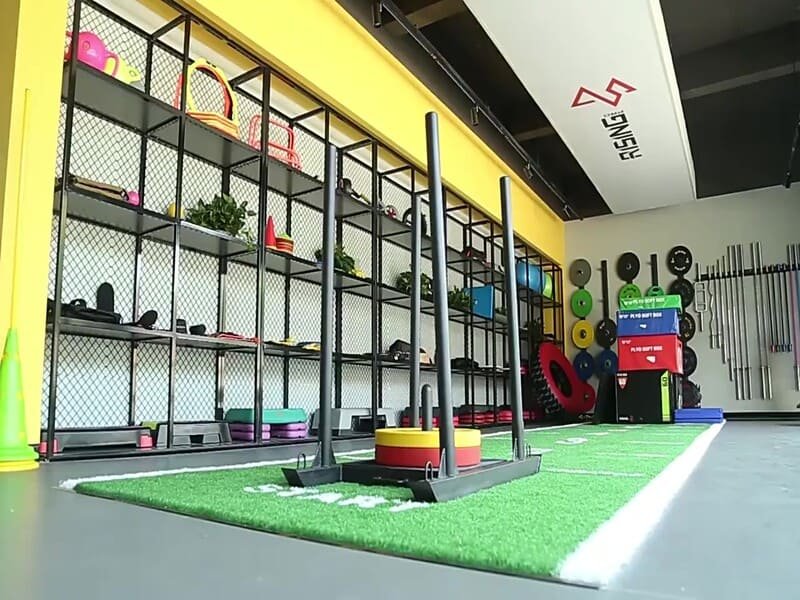
La hauteur idéale des poils pour la plupart des gazons de gymnastique se situe entre 10 et 15 mm. Cette gamme spécifique offre le meilleur équilibre entre une faible friction pour les poussées en traîneau, une grande stabilité pour les exercices en position debout et une facilité de nettoyage pour les environnements de fitness commerciaux ou domestiques très fréquentés.
Au cours de mes années de gestion de la production de gazon de gymnase, j'ai vu de nombreux acheteurs commettre l'erreur de choisir un gazon trop haut. La hauteur des poils correspond à la longueur des fibres d'herbe visibles au-dessus du support. Bien que l'on puisse penser qu'une fibre plus longue serait plus confortable, elle crée souvent trop de "jeu" et d'instabilité. Du point de vue de la fabrication, une hauteur de poils de 10 à 15 mm nous permet de créer une surface très dense en utilisant un taux de piqûre élevé. Cette densité du gazon est ce qui supporte le poids d'une personne ou d'un traîneau lourd. Si la pile est trop haute, les fibres se replient et s'emmêlent sous l'effet de la pression. Il en résulte une surface qui semble usée au bout de quelques mois. Nous nous concentrons sur la conception de fibres courtes et droites qui assurent une "glisse" régulière de l'équipement et une base sûre et solide pour l'athlète.
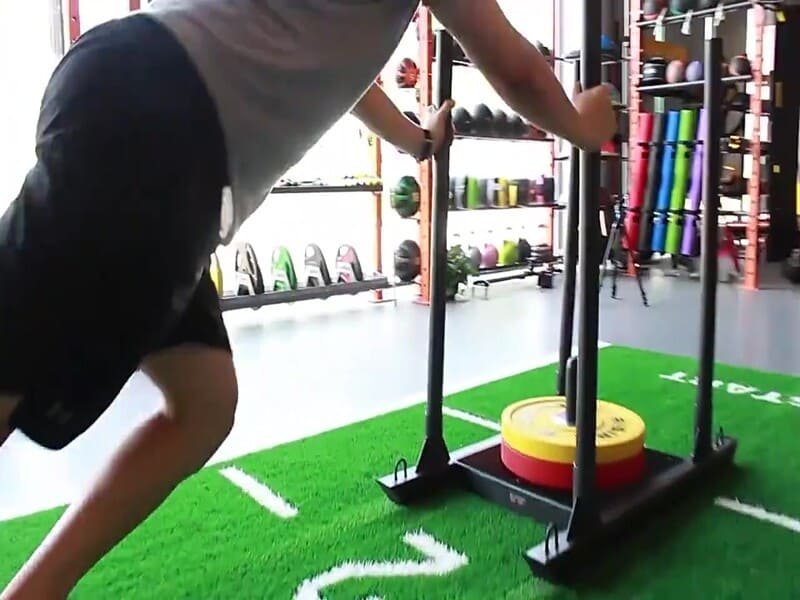
Vous devez comprendre comment ces caractéristiques techniques modifient la façon dont vous vous entraînez au sol.
Pourquoi la hauteur des piles a-t-elle un impact sur vos performances techniques ?
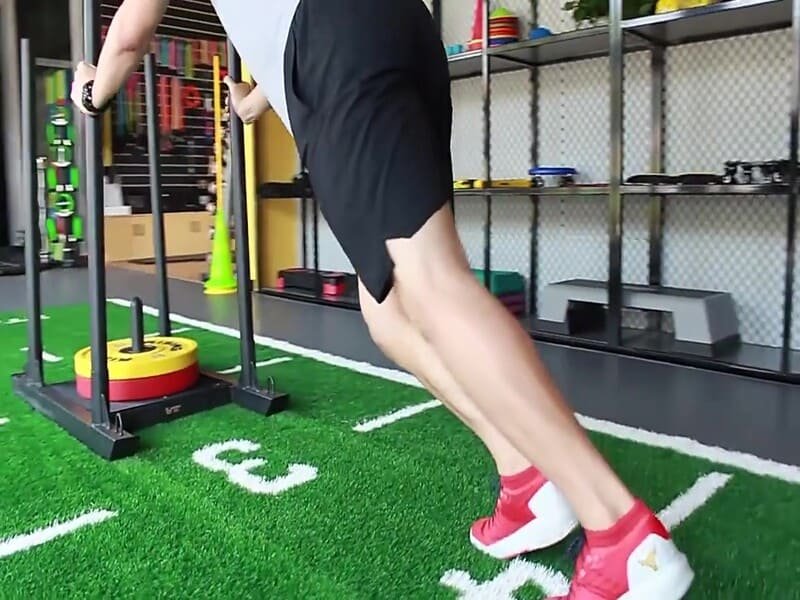
La hauteur des pieux influence directement la friction et la stabilité. Une pile courte de 12 mm réduit la surface de contact avec un traîneau, ce qui le rend plus facile à pousser, tandis qu'une pile plus haute augmente la traînée et réduit la sécurité des levages lourds.
| Facteur de performance | 10mm - 15mm (court) | 20mm - 30mm (long) |
|---|---|---|
| Friction du traîneau | Très faible / lisse | Élevé / Difficile |
| Stabilité du pied | Excellent | Médiocre / spongieux |
| Maintenance | Facile / sous vide | Dur / piège à poussière |
| Durabilité | Haut (moins de matelas) | Modéré (les fibres s'aplatissent) |
Analyse technique de la résistance et de la durabilité
Du point de vue du directeur de production, l'impact technique de la hauteur des poils est lié au "poids de la face". Lorsque nous fabriquons un gazon de 13 mm, nous pouvons mettre plus de points dans chaque mètre carré qu'un gazon paysager de 30 mm. Cette densité élevée garantit que les fibres restent droites. Si vous utilisez un gazon de 30 mm pour faire de la luge, le frottement crée de la chaleur qui peut faire fondre les fibres de polyéthylène avec le temps. Les fibres plus courtes dissipent cette chaleur plus rapidement et empêchent les patins du traîneau de "s'enfoncer" dans l'herbe. Je dis souvent à mes clients que la sensation de peluche est l'ennemie d'un bon entraînement. Si votre pied s'enfonce ne serait-ce que de 5 mm lors d'un squat lourd ou d'un sprint, la stabilité de votre cheville est menacée. Nous utilisons les tests ASTM standard de l'industrie pour mesurer la résistance à l'abrasion et le Tuft Bind, et le gazon à poils courts obtient systématiquement de meilleurs résultats pour un usage intensif en salle de sport.
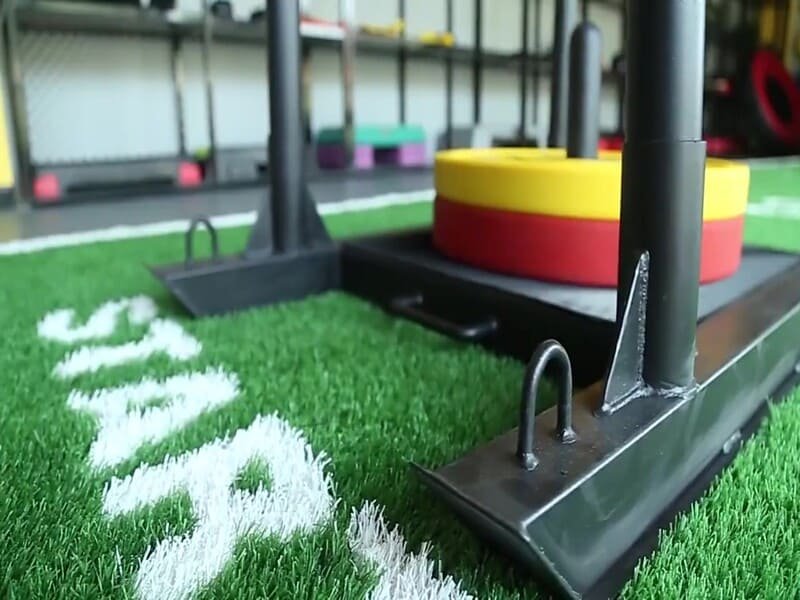
Je veux vous montrer exactement quelle hauteur correspond à vos activités sportives spécifiques.
Quelles sont les hauteurs de piles recommandées pour votre activité spécifique ?
La hauteur optimale dépend de vos objectifs : utilisez 10-15 mm pour les luges et l'entraînement fonctionnel, 15-20 mm pour les exercices de vitesse et d'agilité, et 20 mm ou plus avec un amortisseur pour les zones d'étirement général ou de yoga afin d'assurer le confort.
Trouver le juste milieu pour votre salle de sport
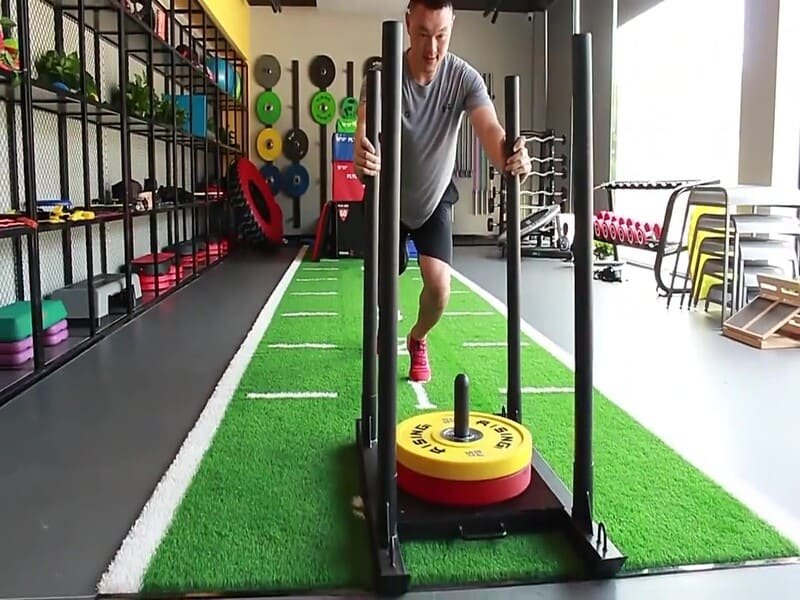
Dans notre usine, nous classons les séries de production en fonction de l'activité principale de l'utilisateur final, car les contraintes mécaniques varient considérablement. Pour une installation axée sur le CrossFit ou les travaux lourds sur luge, nous recommandons strictement une épaisseur de 10 à 13 mm. Ce "Pro Standard" garantit que la luge se déplace avec une résistance prévisible. Si vous vous concentrez davantage sur les sports de terrain comme le football ou la préparation au football, nous passons à 15 mm ou 20 mm pour permettre une meilleure traction avec des chaussures en gazon. Pour les salles de sport à domicile où l'on travaille davantage au sol, un poil un peu plus haut est plus agréable pour la peau.
| Activité gymnique | Hauteur recommandée | Pourquoi ça marche |
|---|---|---|
| Poussée de traîneaux | 10mm - 13mm | Traînée la plus faible et meilleure résilience des fibres |
| Agilité / Sprints | 15 mm - 20 mm | Meilleure prise en main pour les mouvements latéraux rapides |
| Yoga / Etirements | 20mm - 25mm | Sensation de douceur pour les genoux et les coudes |
| Boîte de CrossFit | 15 mm | Un bon compromis pour tous les mouvements |
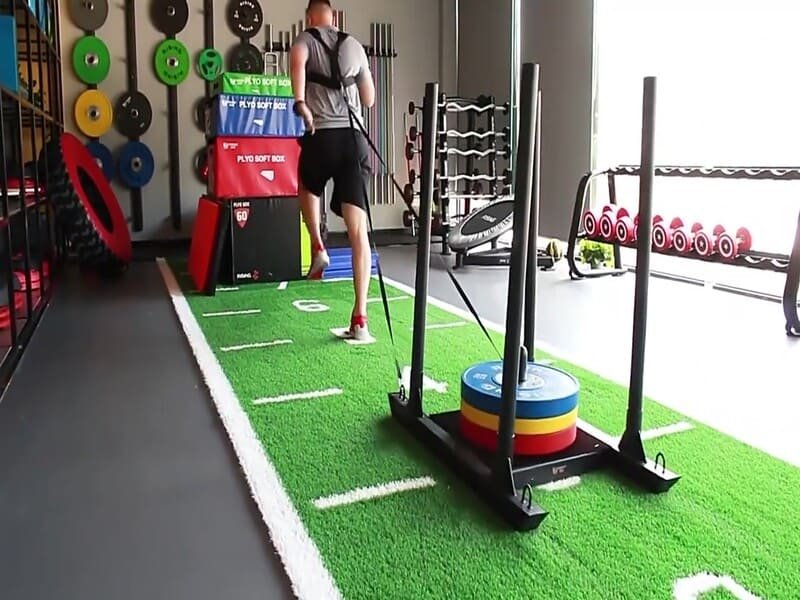
De nombreuses personnes achètent encore le mauvais gazon parce qu'elles suivent des mythes courants.
Quelles sont les erreurs les plus courantes commises par les utilisateurs en ce qui concerne la hauteur des piles ?
Les utilisateurs choisissent souvent à tort un gazon paysager "souple" avec des poils hauts, ce qui les fait trébucher et les empêche de transpirer. Dans la plupart des salles de sport, un gazon à poils courts sans remplissage est le meilleur choix pour l'hygiène et la sécurité.
S'attaquer aux points douloureux de la maintenance et de la sécurité
Le plus grand mythe que je rencontre est celui du "plus doux, c'est mieux". Un jour, j'ai eu un client qui a insisté pour que son gymnase soit recouvert d'un gazon de 35 mm parce qu'il était agréable au toucher. Trois mois plus tard, le gazon était plat, laid et impossible à nettoyer. Les fibres plus hautes retiennent la craie, la sueur et les cellules de la peau à la base du fil. Cela crée un terrain propice aux bactéries et aux odeurs. Dans un cadre professionnel, nous suggérons un poil court car il est facile à aspirer et à désinfecter. Un autre problème est le "dilemme du remplissage". Les gazons plus hauts nécessitent souvent un remplissage de sable pour que les fibres restent debout. Il n'est pas souhaitable d'avoir du sable dans un gymnase intérieur, car il s'infiltre dans l'équipement et dans l'air. En choisissant un gazon court de 13 mm à haute densité, vous obtiendrez l'aspect et les performances d'un gazon droit sans aucun remplissage salissant.
La hauteur n'est qu'un élément du puzzle ; il faut également tenir compte de ce qui se trouve en dessous.
Quels sont les facteurs cruciaux à prendre en compte au-delà de la seule hauteur des piles ?
Vous devez évaluer la sous-couche et le poids de la surface. Un gazon de 10 mm associé à un amortisseur en caoutchouc de 5 mm offre une bien meilleure protection des joints et une meilleure durabilité qu'un gazon de 25 mm installé directement sur le béton.
Comprendre la science des matériaux et la densité
En tant que directeur de production, je me concentre sur le "système global". Le gazon n'est que la couche supérieure. Si vous recherchez le confort, n'augmentez pas la hauteur des poils, mais ajoutez un amortisseur en caoutchouc sous le gazon. Cela donne de la souplesse à vos articulations, tandis que le gazon court assure la stabilité de vos pieds. Nous examinons également la composition du matériau. Le polyéthylène (PE) est plus souple et populaire, mais le nylon a un point de fusion plus élevé et est beaucoup plus résistant pour les frottements extrêmes. Si nous produisons un gazon en nylon à poils courts, il est presque indestructible. La densité est l'autre paramètre clé. Un gazon d'un poids de 60 oz à une hauteur de 13 mm sera beaucoup plus ferme et durera plus longtemps qu'un gazon de 40 oz à la même hauteur. Nous utilisons ces spécifications pour nous assurer que le produit répond aux normes élevées exigées pour revêtement de sol haute performance pour salles de sport.
| Facteur Spec | Importance | Aperçu de l'industrie manufacturière |
|---|---|---|
| Amortisseur | Critique | Utiliser du caoutchouc de 5 à 10 mm pour la sécurité des articulations |
| Poids du visage | Haut | Un poids plus élevé signifie plus de fibres par pouce |
| Matériau | Modéré | Le nylon est le meilleur pour les traîneaux ; le PE pour le confort |
Une installation correcte permet de s'assurer que la hauteur de pieu choisie fonctionne bien pendant des années.
Comment assurer la longévité de votre installation de gazon de gymnastique ?
Pour maximiser la durée de vie, il faut faire attention à la direction du grain lors de l'installation afin d'assurer un mouvement régulier du traîneau. Un brossage régulier des fibres et une bonne gestion des coutures éviteront les risques de trébuchement et maintiendront la pile en position verticale.
Conseils d'experts pour l'installation et l'entretien
Lorsque le gazon sort de nos machines, les fibres ont un "penchant" naturel appelé "grain". Si vous installez deux rouleaux avec le grain orienté dans des directions différentes, le traîneau sera plus difficile à pousser dans une direction que dans l'autre. Posez toujours votre gazon avec le grain orienté dans le même sens. Pour les coutures, nous recommandons l'utilisation d'un adhésif de haute qualité ou d'un ruban adhésif pour gazon afin de s'assurer qu'il n'y a pas de bords sur lesquels les athlètes pourraient trébucher, en particulier avec des hauteurs de poils plus courtes où la couture est plus visible. Si les fibres commencent à s'aplatir après des années d'utilisation intensive, une simple brosse électrique peut leur redonner vie. Ces petites mesures, associées au choix d'une hauteur de poils de 10 à 15 mm, garantiront que le sol de votre salle de sport restera en parfait état pendant une décennie ou plus.
Le choix de la bonne hauteur est le premier pas vers une salle de sport performante.
Conclusion
La fourchette de 10 à 15 mm est la norme industrielle pour le fitness fonctionnel. En cas de doute, choisissez toujours un gazon plus court et plus dense pour une meilleure durabilité.
Vous cherchez le gazon idéal pour votre projet de gymnase ? Envoyez-moi un message privé pour obtenir des échantillons professionnels et une consultation technique personnalisée !