


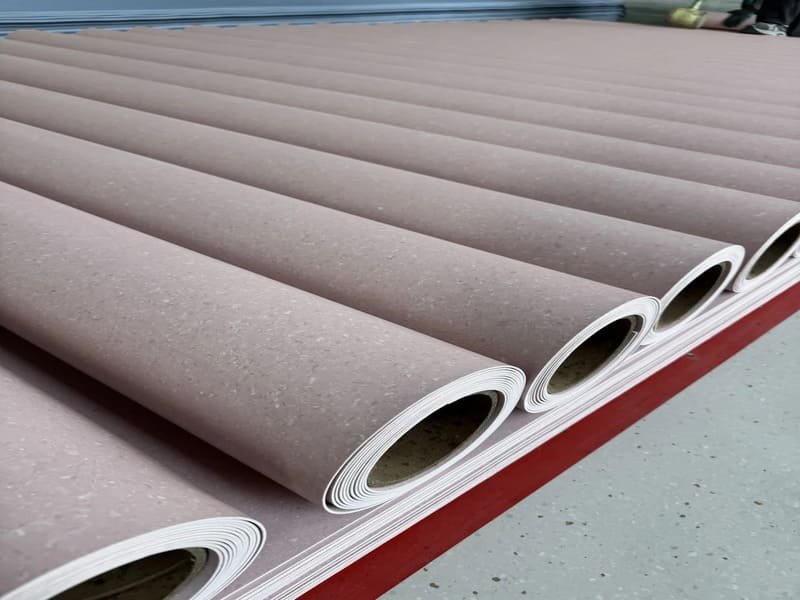
Often, yes. First, check if your load is limited by weight or by volume. Then adjust roll size, loading method, and packaging. Dense PVC rolls often reach the weight limit before the container is full, so better stacking cannot always add more flooring.
Freight is a large part of landed cost for PVC flooring. Empty space inside a container still costs money, and it raises your freight cost per square meter. I talk with importers, distributors, and procurement managers every week. Most of them compare quotes per container. I think the better number is freight cost per square meter ($/m²).
Better loading does not always mean more flooring in the box. If the container is full by weight, no stacking method can add more PVC. If it is full by volume, good planning can add a lot. This guide shows you how to tell which case you have and what to change.
Is My PVC Roll Shipment Weight-Limited or Volume-Limited?
Compare two numbers: how many rolls the weight limit allows, and how many rolls fit in the space. The smaller number is your limit. Dense homogeneous rolls are often weight-limited. Light, thin, or foam-backed rolls are often volume-limited.
PVC is dense, so a container can look half empty and still be at its payload limit. Other products work the other way. They are light, and the gaps between round rolls use up the space first. You need to know which one you have before you change any roll spec, because the fix is different for each case.
To test your load, divide the planned cargo weight by the gross weight of one roll. Gross weight includes the core, wrap, end caps, and labels, not only the vinyl. Then compare that roll count with the number that physically fits, based on the measured finished roll diameter. I always leave a safety margin below the payload limit and the road weight limit. A real roll from the factory is better than a calculation.
Representative Container Values
These are typical values. Always check the container plate and the carrier specification.
| Container | Internal L × W × H (m) | Volume | Door opening W × H (m) | Rated payload |
|---|---|---|---|---|
| 20GP | 5.90 × 2.35 × 2.39 | ~33 m³ | ~2.34 × 2.28 | ~25–28 t |
| 40GP | 12.03 × 2.35 × 2.39 | ~67 m³ | ~2.34 × 2.28 | ~26–29 t |
| 40HC | 12.03 × 2.35 × 2.69 | ~76 m³ | ~2.34 × 2.58 | ~26–29 t |
Road, axle, terminal, or destination rules can set a lower limit than the rated payload. I check these before I fix the load weight. The packed container also needs a verified gross mass (VGM) before it goes on a vessel, so I never plan right up to the theoretical limit.
A weight-limited load also changes how I think about mixed cargo. If the flooring already uses all the payload, adding light accessories means taking some flooring out. It can still save a separate shipment, but it does not increase flooring m².
How Does Roll Size Affect Container Use?
Finished roll diameter, width, and length decide how many rolls fit and how easily they load. Diameter matters most for volume-limited loads. Width decides the fit across the container. Length decides roll weight and handling.
For volume-limited loads, finished roll diameter is the most useful number. It depends on the core outer diameter, the flooring thickness, and the roll length. A simple estimate is:
Finished diameter ≈ √(core outer diameter² + 4 × length × thickness ÷ π)
I add a small allowance for wrap and winding looseness. This is only an estimate, so I confirm it by measuring a real roll.
Width and Door Opening
Do not design against the internal width alone. The door opening is slightly narrower than the inside of the container. The wrapped roll, with end caps and handling space, has to pass through it. A standard 2.0 m roll leaves unused width on each layer, and a custom width can reduce that gap if the production line can run it. I check line capability and wrapped width before I suggest any change.
Rolls wider than the container normally load lengthwise. In that case, I check the real wrapped roll length against the usable container length. I do not rely on nominal dimensions, because wrap, end protection, and wall corrugation all take space.
Length and Core Size
Longer rolls mean fewer rolls and less handling, but each roll is heavier. A long roll of thick vinyl can need a forklift with a carpet pole at the destination. A smaller core can reduce the finished diameter slightly, but roll length and flooring thickness usually have a much larger effect. A smaller core can also weaken the roll, so I test core strength before I change it. Compare the core outer diameter, not the bore alone.
| Variable | Effect on loading | My note |
|---|---|---|
| Finished diameter | Haut | Measure a real roll when you can |
| Largeur du rouleau | Haut | Check door opening and wrapped width |
| Roll length | Moyen | Longer rolls are heavier to handle |
| Core size | Faible | Test strength before reducing |
Is Loose Loading Better Than Palletized Loading?
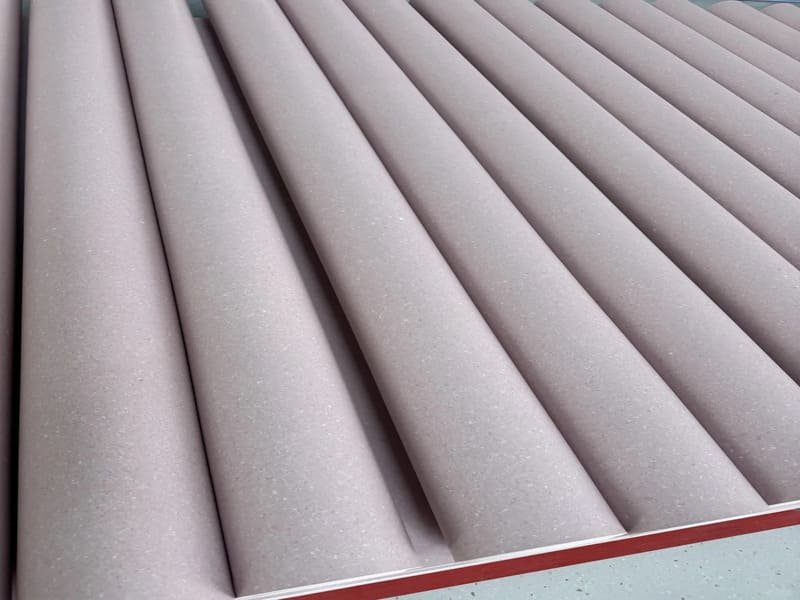
For volume-limited loads, loose loading usually uses space better because it removes pallet height and reduces voids. Palletized loading protects goods and unloads faster. The real gain depends on roll and pallet size, so calculate it for each load.
Round rolls in a square stack fill about 78.5% of the cross-section in theory. In a staggered stack, each roll sits in the gap between two rolls below it, and the theoretical fill rises to about 90.7%. These are theory values for an endless plane. A real container gets less, because of walls, dunnage, dimension tolerance, and incomplete rows.
Staggered stacking also puts more weight on the bottom rolls. For this reason, I set a stack limit for each product before I use it. Vertical loading, with rolls standing up, suits shorter widths and uses the extra height of a 40HC. It can make unloading easier at some sites, but only if the receiver has the right equipment and the rolls are braced. Edges can get damaged and tall rolls can tip.
| Méthode | Space use | Main risk | Meilleur pour |
|---|---|---|---|
| Palettisé | Le plus bas | Wasted space under and around pallets | Sites with forklifts and short unloading time |
| Loose, square stack | Moyen | Déplacement | Simple loads |
| Loose, staggered | Le plus élevé | Bottom roll crush, slower unloading | Volume-limited products |
| Vertical | Moyen | Edge damage, tipping | Shorter widths |
I do not quote a fixed percentage gain for loose loading. It changes with every roll size, pallet size, and stack plan.
Which Container Size Should I Choose?
It depends on your limit. For very dense, weight-limited products, a 20GP can sometimes give a lower freight cost per m² than a 40-foot container. For light, volume-limited rolls, a 40HC often works better. Compare real quotes.
A 20GP and a 40-foot container can have similar rated payloads, but the 40-foot box has about twice the space. If your rolls reach the weight limit in a 20GP, the extra space in a 40-foot box may go unused, and you may still pay more for it. If your rolls are light, the extra height and volume of a 40HC can lower the cost per m².
The choice also depends on freight rate, local trucking, destination handling charges, container availability, roll length, and the unloading method. Freight differences between 20ft and 40ft containers vary a lot by route and season, so I compare current quotes for both before I recommend one. The same product type can also behave differently. For example, a foam-backed sports floor can be much lighter than a dense homogeneous floor, so I check the actual gross roll weight each time.
| Your load | Usual better choice | Raison |
|---|---|---|
| Very dense, weight-limited rolls | 20GP, sometimes | Extra space in a 40-foot box may go unused |
| Medium-weight rolls | 40GP or 40HC | Depends on the quote |
| Light or thin rolls | 40HC | More volume for each freight dollar |
How Do I Protect Rolls in a Tight Load?
Set a tested stack height, control moisture, secure the load with a proper plan, and spread the weight along the container floor. A tight load saves money only if the rolls arrive without damage.
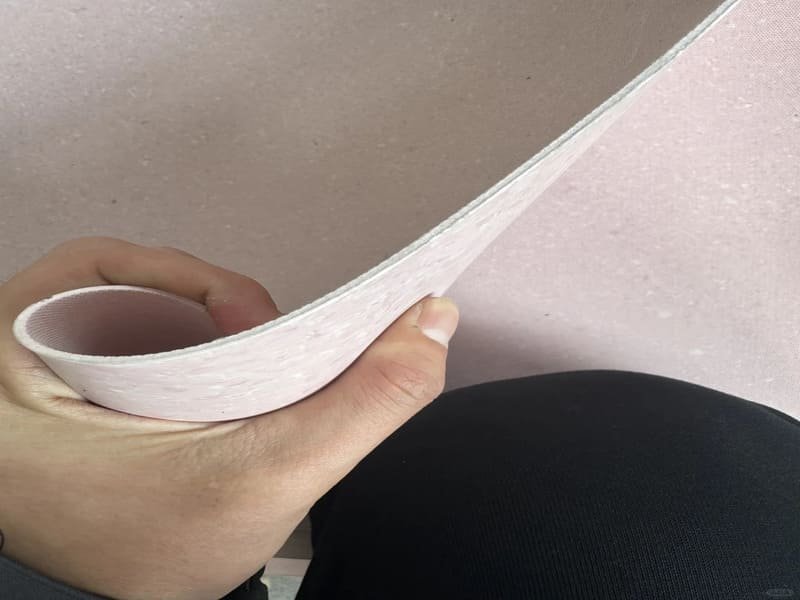
I do not use a universal layer count. Safe stack height depends on roll diameter, gross roll weight, core strength, product stiffness, packaging, temperature, and transit time. A light thin roll and a heavy cushioned roll behave very differently. For heavy or soft-backed rolls, I want a trial stack or a stack limit from the manufacturer. If the bottom rolls carry too much weight, they can turn oval or crease for good.
Moisture and Securing
Container rain comes from moisture in the cargo or packing, temperature changes, and surfaces that fall below the dew point. I wrap rolls in suitable moisture-resistant packaging and add correctly sized desiccants where the condensation risk is high.
For securing, I use blocking, bracing, friction material, dunnage bags, or lashings, as the load plan requires. A dunnage bag only works if it suits the load and the gap size. Putting a bag in every row is not a plan.
Répartition du poids
Staying under the total payload does not make a load safe. If most of the weight sits near one end, it can overload part of the floor and one axle. I spread heavy rolls along the container length and keep the center of gravity near the middle. I also ask what equipment the receiver has. A dense loose load is a poor choice for a site with no forklift carpet pole and few workers.
| Risque | Cause | La prévention |
|---|---|---|
| Oval deformation | Too much stack weight | Tested stack limit |
| Container rain | Moisture and temperature change | Moisture-resistant wrap, desiccants |
| Déplacement | Gaps and braking in transit | Designed blocking, bracing, and lashing |
| Overloaded floor or axle | Weight concentrated at one end | Spread weight along the length |
What Does the Saving Look Like in Numbers?
Divide container freight by the flooring m² you load. If better loading raises the m² per container, freight cost per m² falls. If the load is already weight-limited, better stacking may not add any flooring.
Use two different metrics and do not mix them.
Freight cost per m² = container freight ÷ flooring m² loaded
Landed cost per m² = (product + freight + duty + port + handling + other costs) ÷ saleable m²
Freight cost per m² shows how well you load the container. Landed cost per m² shows the real cost of the goods. I use both when I compare options for a customer.
Exemple
This is an illustration, not a quote. It assumes a volume-limited, lightweight roll and a freight cost of $3,500 per container. Your products and rates will differ.
| Méthode | Flooring loaded | Fret | Freight per m² |
|---|---|---|---|
| Palettisé | 12,000 m² | $3,500 | ~$0.29 |
| Optimized loose loading | 17,000 m² | $3,500 | ~$0.21 |
In this example, the saving is about $0.08 per m², or about $8,000 per 100,000 m². If the shipment is already weight-limited, better stacking may not increase the flooring quantity at all. In that case, I look at roll spec, container size, or a mixed shipment instead.
Conclusion
Find your limit first, weight or volume. Then adjust roll size, loading, and safety. Savings come from a plan that fits your product.