


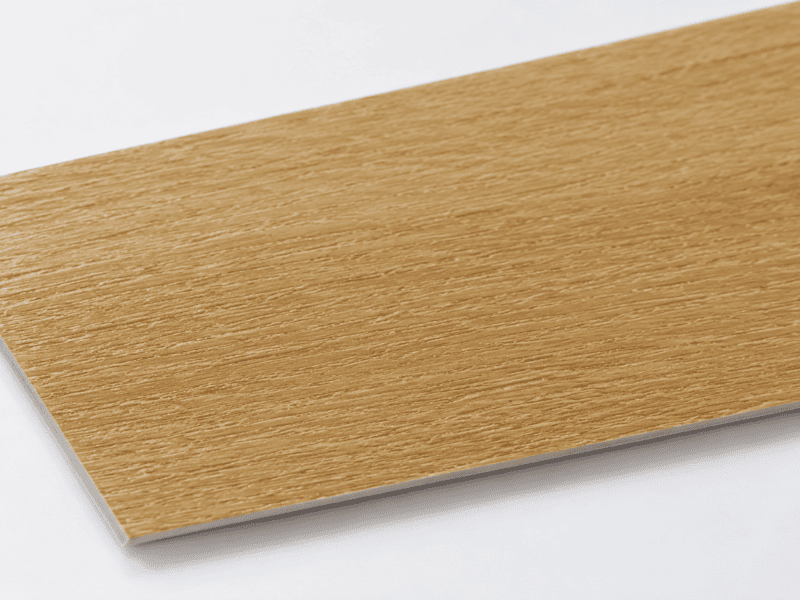
Yes, it can. Strong sun can make vinyl expand and buckle, fade its printed layer, and soften glue-down adhesive. You can install vinyl beside full-height glass, but only if the product, the installation method, and the real floor temperature all fit the site.
I work in vinyl flooring R&D and manufacturing, and full-height glazing is one of the hardest conditions I see. Vinyl is a thermoplastic, so it reacts to heat more than tile or stone does. A plank in a sunny patch can run much hotter than the air in the room. That gap between floor temperature and air temperature causes most of the failures I review.
Most people ask, "Which vinyl type is safest?" I think a better question is, "Will the floor surface stay within the temperature limit of this product and its adhesive?" No material type can answer that for you. Only the site can.
Here is how I break the problem down:
- Chaleur : The plank grows. If it has no room, it lifts or pushes at the joints.
- Light: UV rays damage the decorative film, and the color fades.
- Colle : On glue-down jobs, hot adhesive can lose bond strength.
Each of these three problems has its own cause and its own fix, so I will cover them one at a time.
What Are the Three Main Ways Sun Damages Vinyl Flooring?
Sun damages vinyl in three ways: thermal expansion that causes buckling, UV fading of the decorative layer, and heat that softens the adhesive in glue-down floors.
I check all three before I recommend a product for a glass-heavy space. A fix for one does not always fix the others. For example, a UV film can slow fading but may do little to lower floor temperature.
Thermal Expansion and Buckling
Vinyl grows when it heats up and shrinks when it cools. Under direct sun, planks expand. If they have no room, they push against each other. The edges peak, or the floor lifts. Click-lock floors can also suffer locking stress, joint gaps, and edge damage.
UV Discoloration and Fading
Long UV exposure bleaches the decorative film. Colors and wood-grain patterns fade, and the sunny strip looks washed out next to the rest of the room.
Défaillance de l'adhésif
In glue-down installations, strong solar heat can soften the adhesive under the planks. The bond gets weaker. The planks can then shift, open gaps, or curl at the edges.
| Type de défaillance | Cause | Ce que vous voyez | Main Fix |
|---|---|---|---|
| Flambage | Heat expansion with no room to move | Peaked edges, lifted floor, open joints | Suitable product, correct gaps, solar control |
| Fading | UV damage to the print film | Washed-out color near the glass | UV-rejecting glass or film |
| Défaillance de l'adhésif | Heat softens the glue | Gaps, shifting, curled edges | Adhesive approved for the expected floor temperature |
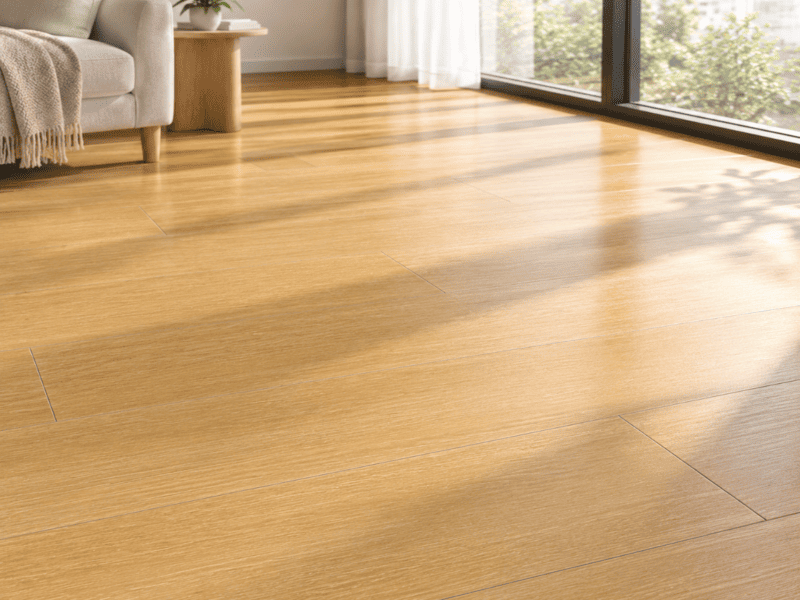
Before you pick a material, you need to know how hot your floor will actually get.
How Can You Tell Whether Solar Heat Is Too High for Vinyl Flooring?
Measure the expected peak floor surface temperature, not the room air temperature. Then compare it with the temperature limits from the flooring and adhesive manufacturers. If the floor will run hotter than those limits, add solar control or choose another system.
This is the step most projects skip. Air temperature tells you little here. Direct sun on a dark plank can push the surface far above the room reading. I always ask for surface data before I talk about product choice.
How to Check Your Site
- Measure real sun-exposed areas. Use an infrared thermometer or a surface probe on the spots that get the most direct sun.
- Measure when the sun is strongest on that spot. Take readings when direct solar exposure is strongest for the specific floor area. This may not match the highest outdoor air temperature, because sun angle, glass orientation, and shading all play a part.
- Check your readings. Infrared thermometers can be thrown off by surface reflectivity and emissivity. On glossy or embossed surfaces, confirm the reading with a contact temperature probe.
- Account for the season. The sun angle changes over the year, and a single reading can mislead you. A West-facing facade, for example, can behave very differently in summer and winter afternoons.
- Compare with the product data. Check the maximum temperature in the flooring warranty and installation guide. Check the adhesive data sheet if you plan to glue down.
- Check for sun exposure restrictions. Some manufacturers restrict or prohibit installation in areas exposed to prolonged direct sunlight, even when the measured temperature looks acceptable. A temperature limit is not the only condition for approval.
- Act on the result. If the expected temperature goes over the limit, or the maker restricts direct sun, improve shading or glazing, or select another approved flooring system.
Once you know your temperature range and the maker’s limits, you can pick a vinyl type with a clear target in mind.
Which Vinyl Handles Heat Best: SPC, WPC, or LVT?
SPC usually has better dimensional stability than many flexible LVT products, but it is not immune to solar heat. Suitability depends on the product’s temperature limits, the installation method, and the real floor surface temperature.
Core type matters, but it is not the full answer. I would still choose a rigid, stable core for glazing zones. I would not say any core type is safe without checking the product’s heat limits.
How the Cores Compare
Many traditional flexible LVT products are more sensitive to temperature changes than rigid-core SPC flooring. Actual dimensional stability still depends on the product’s formulation, construction, and test performance. WPC floors typically use a foamed polymer composite core. They feel soft underfoot, but composition and thermal stability differ from one maker to another. SPC uses a dense, mineral-filled rigid core, which usually gives better dimensional stability.
Rigid does not mean immune. Long exposure to strong direct sun can still cause expansion, edge lift, locking stress, and joint separation in click-lock SPC. Some manufacturers warn against long direct sun exposure in their installation guides.
| Type de vinyle | Core | Stabilité dimensionnelle | Near Large Windows |
|---|---|---|---|
| LVT | Flexible vinyl | Often lower, product-dependent | Higher risk, check product limits |
| WPC | Foamed polymer composite | En fonction du produit | Moderate risk, check product limits |
| CPS | Dense mineral-filled rigid core | Generally higher | Often the better choice, still check product limits |
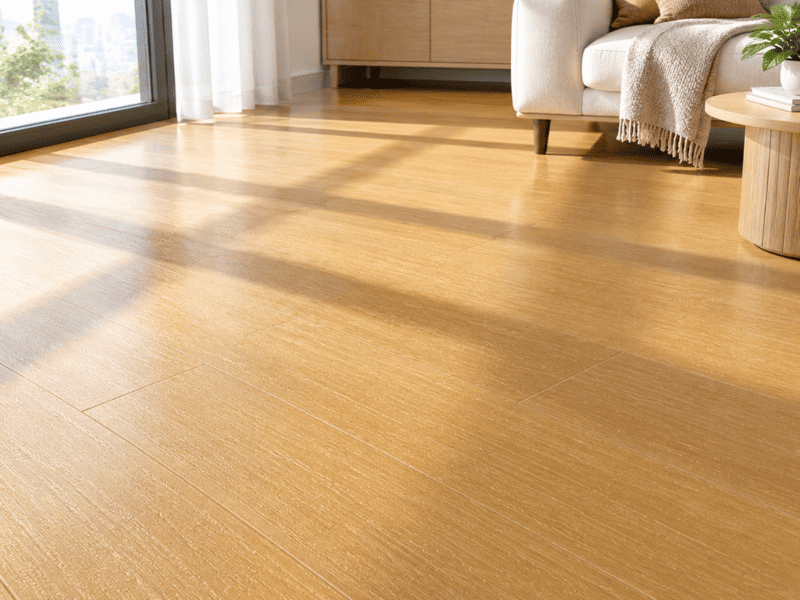
A stable core helps, but a poor installation can still ruin it, so let’s look at the rules that matter.
What Installation Rules Protect Vinyl in Sun-Drenched Rooms?
Follow the manufacturer’s rules for acclimation and site temperature. Leave the specified perimeter gap on floating floors. Use transition strips where the manufacturer limits continuous runs, or where doorways and structure call for them.
Installation rules differ between floating and fully adhered vinyl. I have seen problems start when installers apply one rule to every product. I ask for the exact manufacturer instructions to go into the installation plan.
Follow Product-Specific Acclimation Requirements
Acclimation needs vary by product. Some vinyl floors need 24 to 48 hours of conditioning. Some SPC products can go down without a separate acclimation period. Either way, keep the site at the required temperature before, during, and after installation.
Expansion Gaps Depend on the Installation Method
Floating vinyl floors usually need a perimeter expansion gap. The manufacturer sets the exact width, and 1/4 inch is only a common example. Fully adhered vinyl follows different perimeter and joint rules. Do not copy floating-floor gap rules onto every job.
Transition Strips and Continuous Runs
Long, continuous floating runs build up expansion pressure. This is common in big commercial spaces and open-plan layouts. Use the maximum run length from the manufacturer, and place strips at doorways or structural breaks. Do not place them at random intervals.
Adhesive Choice for Glue-Down Jobs
Floating is not always safer than gluing. Floating floors face expansion and locking stress. Glue-down floors face bond failure. For glue-down, use an adhesive system the manufacturer approves for the expected floor temperature. If the site cannot meet that, pick a different system approved for the solar exposure.
Good installation helps the floor, and you can also cut the heat that reaches it.
How Can I Protect Vinyl Flooring Near Full-Height Windows?
Choose glazing or film for both UV rejection and solar heat control, add shading during peak sun, and keep the HVAC steady. Do not rely on rugs as your main protection, and avoid rubber- or latex-backed mats unless the flooring maker confirms they are compatible.
You can use these steps on an existing floor or while you finalize a design. I suggest bringing the glazing and flooring decisions together at the design stage, because it is much cheaper than fixing a failed floor.
Low-E Glass and Window Films
UV rejection and solar heat control are two different ratings. High UV rejection, in some products up to 99%, helps cut fading and material aging. A suitable solar heat gain coefficient (SHGC) or total solar energy rejection (TSER) value helps limit floor surface heating. Check both numbers, not just one.
Strategic Shading
Use automated blinds, solar shades, or thermal curtains during the peak afternoon hours. They block heat before it reaches the floor, which works better than any treatment applied to the floor itself.
Contrôle du climat
Keep the HVAC system running steadily. Big temperature swings between day and night put stress on the locking system of floating floors.
Area Rugs and Mats
Rugs can reduce direct light on the floor, but they may also trap heat against it. Do not rely on rugs as your main solar heat control. Some rubber or latex backings can also cause permanent discoloration on vinyl, and heat can make this worse. Check mat compatibility and temperature conditions with the flooring manufacturer before you use any mat in a sunlit area.
| Solution | What It Does | Watch Out For |
|---|---|---|
| Low-E glass or window film | Cuts UV and, depending on the product, solar heat | Check UV rejection and SHGC/TSER, and check film and glass compatibility |
| Solar shades or blinds | Blocks peak heat before it hits the floor | Needs daily use or automation |
| Steady HVAC | Reduces temperature swings | Keep it running day and night |
| Rugs and mats | Reduce direct light only | May trap heat, not a primary control, avoid rubber or latex backing unless approved |
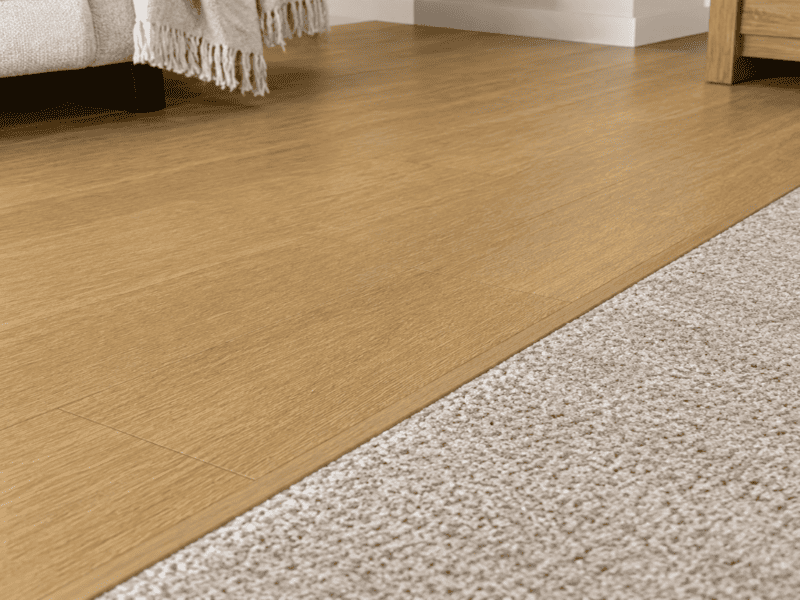
These steps work for most projects, but some sites are so extreme that vinyl may not be the right answer.
Should I Choose Ceramic or Porcelain Tile Instead of Vinyl?
Consider tile if floor temperatures stay above vinyl limits even with shading and glazing upgrades. Tile resists solar heat and UV fading very well, but it still moves with temperature and needs properly designed movement joints.
Sometimes I tell a client to think again about vinyl. Ceramic and porcelain tiles do not fade in sun and handle heat far better than vinyl. They are not free of thermal movement, though. Direct sun can create temperature differences that stress a tile assembly. The Tile Council of North America notes that areas with direct sun may need movement joints placed closer together.
When Tile Makes Sense
Tile suits high-risk glazing zones where you cannot add enough shading or film, such as a large West-facing glass facade in a hot climate. Plan the movement joints with the tile installer early, and do not leave them to the end.
When Vinyl Still Works
Vinyl is warmer and softer underfoot, and it is quieter. With a product rated for the site’s temperature, correct installation, and good solar control, it works well in many glazed rooms. I suggest tile only when conditions go beyond what these steps can handle.
You may also be dealing with a floor that already shows damage, so here is what I would do first.
What Should I Do If My Vinyl Floor Is Already Warped, Gapped, or Faded?
Find the heat source and the cause of failure first. Measure the floor surface temperature, check the installation method and gaps, and review the product limits. Then decide whether to repair, add solar control, or replace.
Replacing a floor without finding the cause often repeats the same failure. I start with the temperature readings and the installation details. If the damage is local and the cause is fixed, a repair may be enough. If the product cannot handle the site’s heat, add solar control or choose a system approved for it.
Here is the short version of everything above.
Conclusion
Vinyl can work beside full-height glass. Measure floor temperature, choose a product approved for it, follow its installation rules, and control sunlight. That lowers the risk of heat damage a lot.