


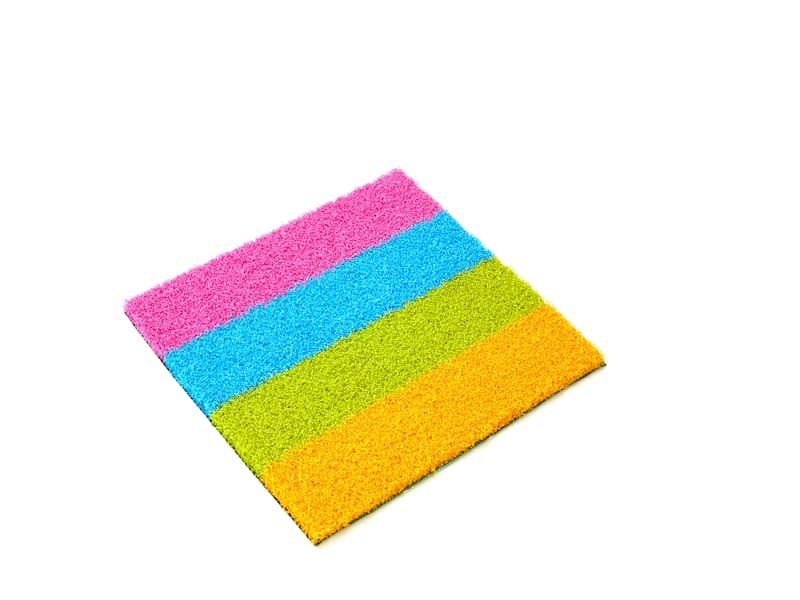
MF Infill-Free turf is a high-density, multi-layer engineered system that eliminates the need for performance infills like rubber or sand by using a dense, texturized "thatch" layer to provide structural support and shock absorption. This technology solves the primary pain points of traditional turf: high surface heat, messy infill migration, and intensive maintenance.
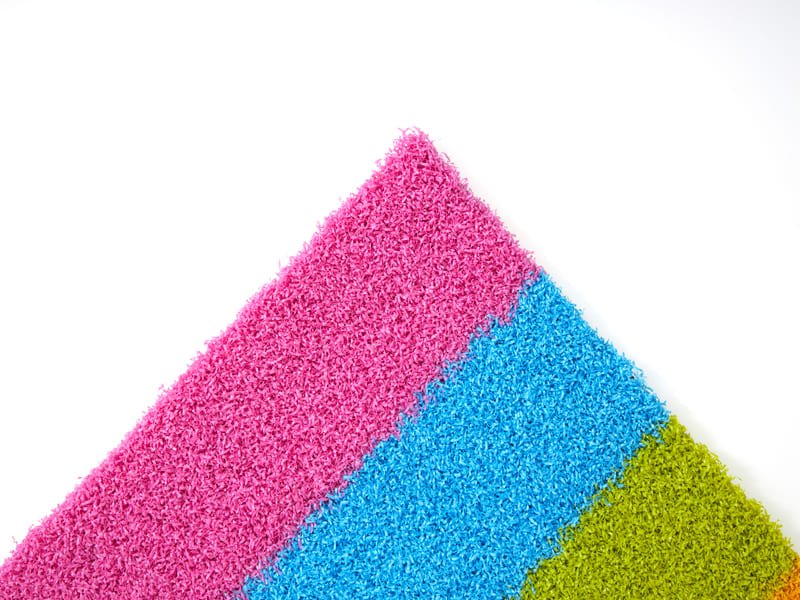
The "MF" in our technology stands for a hybrid of high-durability Monofilamento blades paired with Fibrillated (or heavily texturized) root zones. In traditional production, we leave space between yarn tufts for rubber granules to hold the blades up. In MF Infill-Free production, we double the stitch density and add a "curled" yarn layer that acts like a thousands of tiny springs. This creates a surface that is safer, cleaner, and significantly cooler than old-fashioned rubber-filled fields. As a production manager, I’ve seen this shift from "chemical infill" to "mechanical density" revolutionize how we design athletic facilities.
This engineering shift ensures the turf performs better over a 15-year lifecycle. Now, let’s compare it directly to the systems you are likely used to.
How Does MF Infill-Free Turf Compare to Traditional Systems?
MF Infill-Free turf outperforms traditional systems by eliminating "infill splash" and reducing surface heat by up to 20%, while maintaining FIFA-standard ball roll. It replaces messy rubber granules with a dense, integrated thatch layer, making it safer for schools, indoor facilities, and high-end residential sports courts.
The biggest difference lies in the maintenance and safety profile. Traditional systems rely on "infill" for shock absorption; we build that absorption directly into the carpet fibers and the specialized shock pad underneath.
| Característica | MF Infill-Free System | Traditional Rubber Infill | Sand Infill (Landscape) |
|---|---|---|---|
| Mantenimiento | Bajo (cepillado ocasional) | High (Re-leveling/Top-up) | Moderate (Weed control) |
| Surface Heat | Low (No black rubber) | High (Absorbs solar heat) | Moderado |
| Limpieza | 100% (No "black dots") | Messy (Rubber migrations) | Dusty |
| Absorción de impactos | Consistent (Pad-based) | Variable (Moves over time) | Bajo |
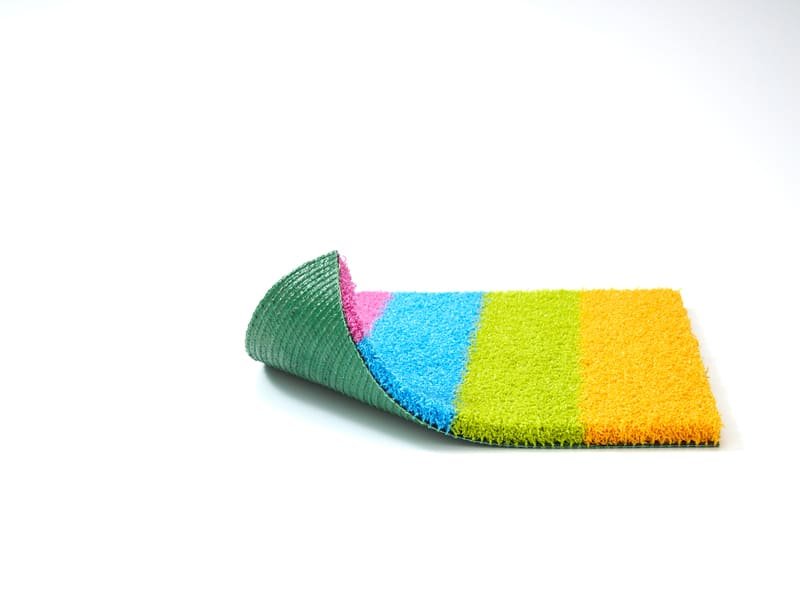
From a manufacturing standpoint, Infill-Free turf is a "precision product." Because there is no sand to hide mistakes, the stitch rate must be perfect. If you want a clean, professional-grade field that doesn’t smell like tires on a hot day, this is the engineering choice.
Why Does the "MF" Fiber Structure Eliminate the Need for Infill?
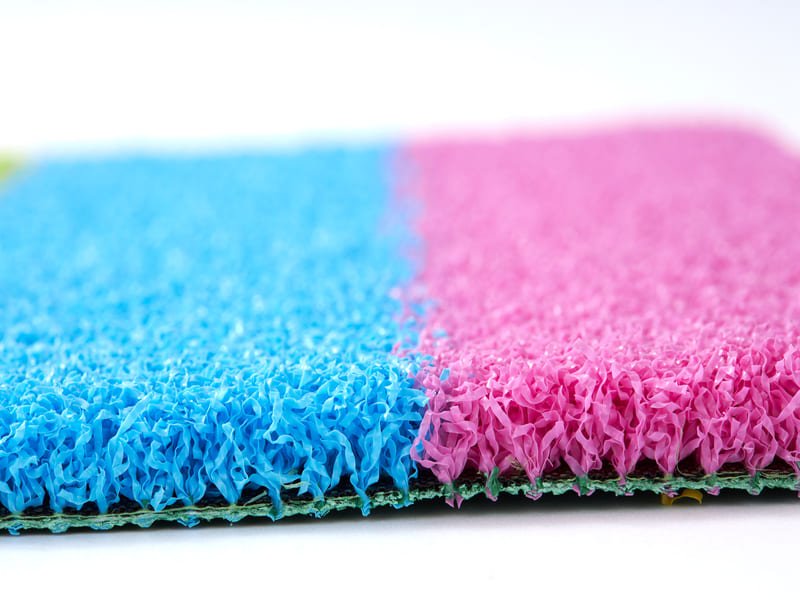
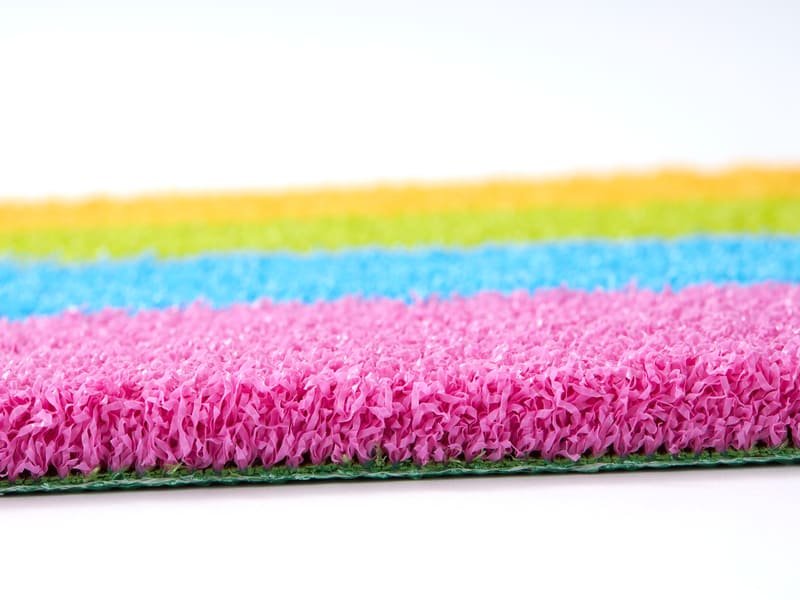
The "MF" structure uses a high-Dtex Monofilament top layer for grass-like aesthetics and a dense, texturized root zone that provides the "push-back" force usually provided by sand. This dual-layer yarn system ensures the main blades stay vertical without external support, preventing the "matting" common in low-density products.
In our factory, we use a specialized "texturizing" process on the secondary yarn layer. This layer is curled and knotted at the base of the carpet. This creates a "nest" that supports the tall Monofilament blades. Without this nest, the blades would simply fall over.
The Physics of Infill-Free Performance
| Componente | Función técnica | Benefit for Sports |
|---|---|---|
| Primary Monofilament | Vertical Resilience | Predictable ball roll & foot traction |
| Texturized Root Zone | Lateral Support | Eliminates the need for sand stabilizer |
| High Stitch Density | Surface Compactness | Prevents "tripping" and uneven spots |
Why is Infill-Free Turf the Best Option for High-Traffic Pet Areas?
Infill-Free systems are superior for pets because they remove the primary "odor trap"—the infill. Without sand or rubber to soak up and hold urine, the liquid passes directly through the 100% permeable backing, leaving no place for ammonia-producing bacteria to hide.
In my experience, 90% of pet odors in artificial grass come from the sand infill, not the grass itself. Sand acts like a sponge for waste. By removing the sand and using a high-flow "MF" weave, we allow the yard to be flushed clean with just a garden hose.
Odor and Hygiene Comparison
| Edición | Traditional (with Infill) | MF Infill-Free |
|---|---|---|
| Ammonia Retention | High (Trapped in sand) | Zero (Direct flow-through) |
| Bacterial Growth | Possible in damp infill | Minimal (Dry root zone) |
| Cleaning Effort | Hard (Deep cleaning needed) | Easy (Surface rinse) |
How Do You Install Infill-Free Turf for Maximum Safety?
The secret to a successful Infill-Free installation is the "Shock Pad" layer. Since there is no rubber infill to provide cushioning, a high-density XPE or EPP shock pad must be installed beneath the turf to achieve the necessary G-Max rating for fall safety.
The Professional Layer Cake
| Capa | Material | Propósito |
|---|---|---|
| Capa superior | MF Infill-Free Turf | Ball roll and aesthetics |
| Cushion Layer | 10mm-20mm Shock Pad | Impact absorption (HIC safety) |
| Capa base | Compacted Crushed Stone | Drainage and flat foundation |
Why Does Infill-Free Technology Solve the "Hot Grass" Problem?
MF Infill-Free turf stays significantly cooler because it lacks black SBR crumb rubber, which acts as a thermal mass that stores and radiates heat. By using air-circulating thatch and IR-reflective yarns, the surface temperature remains closer to ambient air levels.
Thermal Performance Data
| Medio ambiente | Traditional Turf Temp | MF Infill-Free Temp |
|---|---|---|
| Direct Sun (Noon) | 68°C | 48°C |
| Partial Shade | 45°C | 34°C |
| Post-Rain | 32°C | 28°C |
Is the Higher Upfront Cost of MF Infill-Free Turf Worth the Investment?
Yes, because MF Infill-Free turf eliminates the recurring costs of "top-dressing" infill and professional de-compaction services. While the initial carpet price is higher due to the increased yarn density, the total cost of ownership over 10 years is roughly 30% lower than traditional systems.
Total Cost of Ownership (TCO) Breakdown
| Categoría de costes | Traditional System | MF Infill-Free System |
|---|---|---|
| Purchase Price | $ (Lower) | $$$ (Higher) |
| Mantenimiento anual | $500 – $1,000 | $50 – $100 |
| Infill Replacement | Every 2-3 years | Nunca |
| 10-Year TCO | $12,500 | $8,800 |
Why Is Brushing Still Necessary for an Infill-Free System?
Brushing is the only way to counteract "directional lean" caused by high-intensity play. Even with high-density MF thatch support, fibers will eventually tilt toward the most common direction of travel; regular cross-brushing resets the fibers to a vertical position.
Monthly Maintenance Steps
| Tarea | Herramienta | Beneficio |
|---|---|---|
| Cross-Brushing | Power Broom / Stiff Brush | Lifts matted fibers; restores look |
| Retirada de escombros | Soplador de hojas | Prevents organic matter from decaying |
| Spot Rinse | Water Hose | Keeps the surface bright and dust-free |
Conclusión
MF Infill-Free turf is the smart, low-maintenance choice for high-performance sports and clean residential yards. By investing in fiber density and technical design, you eliminate the mess and heat of traditional systems.
If you are ready to see the performance of MF Infill-Free technology in person, our team can help. Contact us for a technical consultation or to request a free sample kit to experience the quality firsthand.
Mis ideas
- Density is King: In an infill-free system, the stitch rate is the only thing standing between performance and failure.
- The Backing Matters: A high-density turf needs a high-tensile backing. Ensure your spec includes a reinforced secondary coating.
- Test the "Spring": A true MF Infill-Free product should bounce back instantly when compressed.