


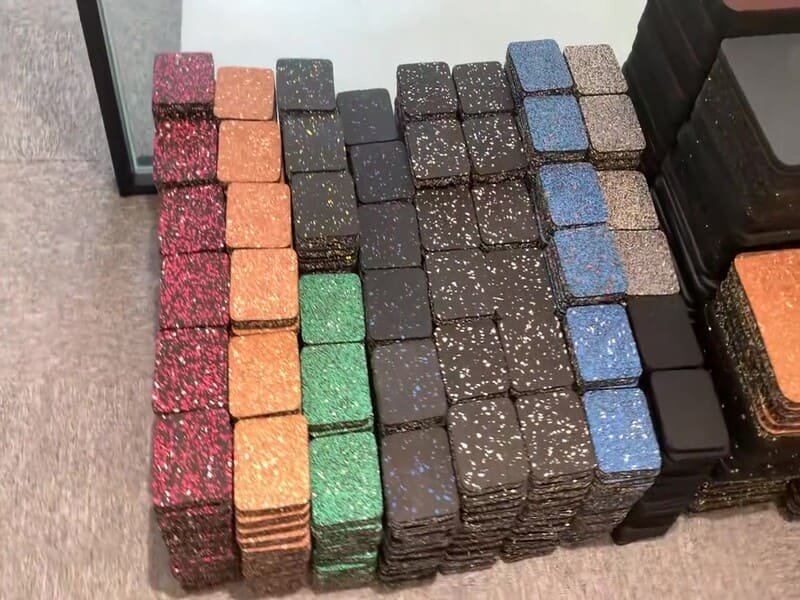
Yes, you can install rubber flooring over existing tile or vinyl without failure, provided the base is flat, firm, and dry. Success depends on assessing structural integrity, filling deep grout lines, and managing moisture to prevent mold growth or material shifting under heavy loads.
Installing new rubber mats or rolls directly over an old floor is a common request in my factory. Most people want to avoid the high cost and massive dust of a full demolition. From a production standpoint, rubber is a flexible material that mirrors what is underneath it. If your tile is cracked or your vinyl is soft, the rubber will eventually show those same defects. This is why we focus on the "subfloor" quality. You must treat the old floor as a foundation. If that foundation moves, your new gym floor will move too. I have seen many projects fail because the installer ignored a single loose tile. That one tile creates a pivot point that can tear the interlocking tabs of a rubber mat over time. We need to look at stability, chemical compatibility, and moisture levels before we lay down a single square meter of rubber.
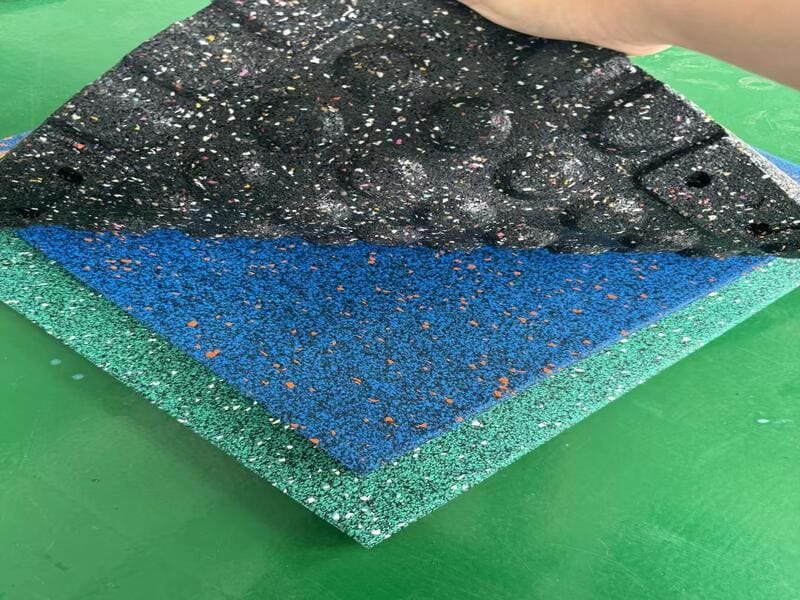
You need to know if your current floor can handle the weight of a gym. Let us look at how to test your surface.
How do you perform a "Go/No-Go" test on tile or vinyl?
To test your floor, tap tiles to find hollow spots and check vinyl for "squishiness." If more than 10% of tiles are loose or if the vinyl is cushioned, you must remove them. Stable, hard, and flat surfaces are the only safe bases for long-term rubber installation.
Assessing Ceramic Tile and Sheet Vinyl Integrity
When I run production lines for rubber mats, we aim for a specific density. If you put high-density rubber over a low-density, "cushioned" vinyl, the floor will feel unstable. This is a common point of failure. For ceramic tiles, the biggest issue is the grout line. Deep grout lines cause "telegraphing." This means the pattern of the tiles shows through the rubber over time. You can see the technical breakdown in the table below.
| Tipo de subsuelo | Key Failure Risk | Production Manager’s Advice |
|---|---|---|
| Baldosas de cerámica | Grout line telegraphing | Fill lines with a patch compound if they are wider than 3mm. |
| Gres porcelánico | Poor adhesive bond | Use a primer if you plan to glue the rubber down. |
| Láminas de vinilo | Bubbling/Delamination | Only install if the vinyl is fully glued to the concrete. |
| LVP (Planks) | Joint movement | Ensure the planks do not "click" or move when stepped on. |
I once saw a commercial gym install 8mm rolls over old cushioned vinyl. Within three months, the seams opened up because the vinyl underneath compressed every time someone dropped a dumbbell. The rubber has no rigid core, so it relies entirely on the hardness of the tile or vinyl below it. If your tile sounds hollow when you tap it with a screwdriver, it is not bonded to the concrete. You must fix those spots first.
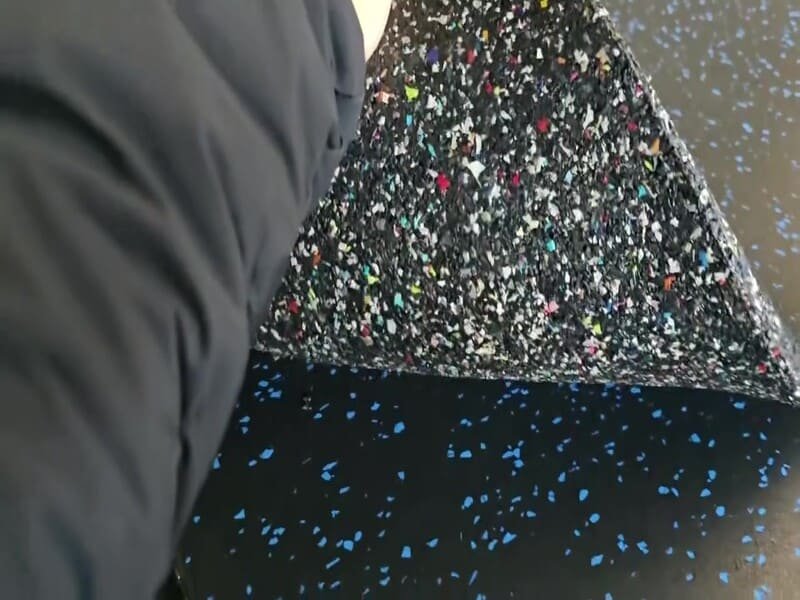
Now that you know if your floor is ready, we must talk about the risks that happen after the job is done.
What are the 3 main risks of installing rubber over another floor?
The three main risks are moisture entrapment (mildew), lateral shifting (slippage), and vertical height issues. Moisture is the most dangerous because it can rot the subfloor unseen. Shifting occurs if the rubber does not have enough friction against a smooth vinyl surface.
Understanding Moisture, Shifting, and Height Clearances
From a manufacturing view, rubber is non-porous. If you trap water between a vinyl floor and a rubber mat, that water has nowhere to go. This creates a "sweat" effect. In basements, this leads to a bad smell and mold. You also have to think about friction. Rubber on concrete stays put. Rubber on a waxed, shiny tile can slide like a sled. Lastly, do not forget your doors. Adding 10mm of rubber plus the old floor might mean your door will not open.
| Factor de riesgo | Impacto en el rendimiento | Solución técnica |
|---|---|---|
| Humedad | Mold and adhesive failure | Use a vapor barrier or moisture-resistant tape. |
| Slippage | Safety hazard and seam gaps | Use double-sided cloth tape or full-spread glue. |
| Altura | Trip hazards/Door blockage | Use transition reducers and trim door bottoms. |
In our testing lab, we measure the "Coefficient of Friction." Smooth tiles have very low friction. If you are doing a high-intensity workout with sled pushes, the whole floor could move. I always tell my clients to use a "skim coat" or a high-tack tape to increase the grip between the two layers. This prevents the rubber from stretching or "walking" across the room over months of use.
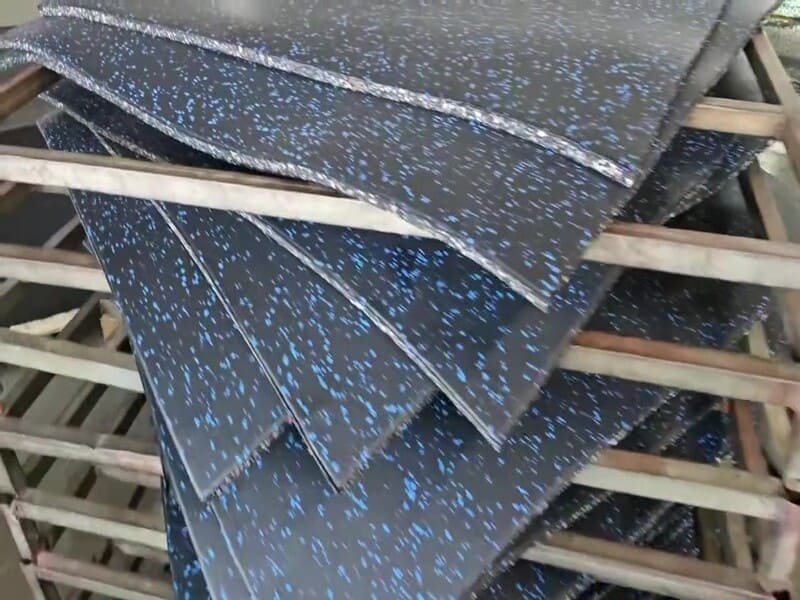
If you are ready to move forward, you need a plan that ensures the floor stays down forever.
What is the zero-failure method for installing rubber flooring?
The zero-failure method involves deep cleaning the base, leveling all grout lines, acclimating the rubber for 48 hours, and using the right adhesive. Proper acclimation is the most important step because rubber expands and contracts based on the temperature of your room.
Step-by-Step Installation and Product Selection
In the factory, we heat rubber to shape it. When it arrives at your house, it might still be "settling." If you cut it immediately, it will shrink the next day and leave gaps. You must lay the pieces out in the room for at least two days. For the subfloor, you must remove all wax. Most tiles have a sealer or wax that prevents glue from sticking. Use a pH-neutral cleaner to get it bone-dry.
| Fase de instalación | Task Detail | Por qué es importante |
|---|---|---|
| Prep | Remove wax and oil | Glue will not bond to dirty tile. |
| Nivelación | Skim coat grout lines | Prevents the "grid" look on your new floor. |
| Aclimatación | 48-hour rest period | Prevents gaps at the walls and seams. |
| Selection | Interlocking vs. Rolls | Interlocking is better for uneven surfaces. |
I suggest using 1/2 inch (12.7mm) mats if you are going over tile. Thinner 8mm mats are too easy to telegraph. If you use rolls, you must use a full-spread adhesive or very strong tape because rolls have more "memory" and want to curl up. Tiles are easier for DIY projects because the weight of the interlocks keeps them flat. We see fewer failures with interlocking tiles on vinyl because they "float" as one solid unit.
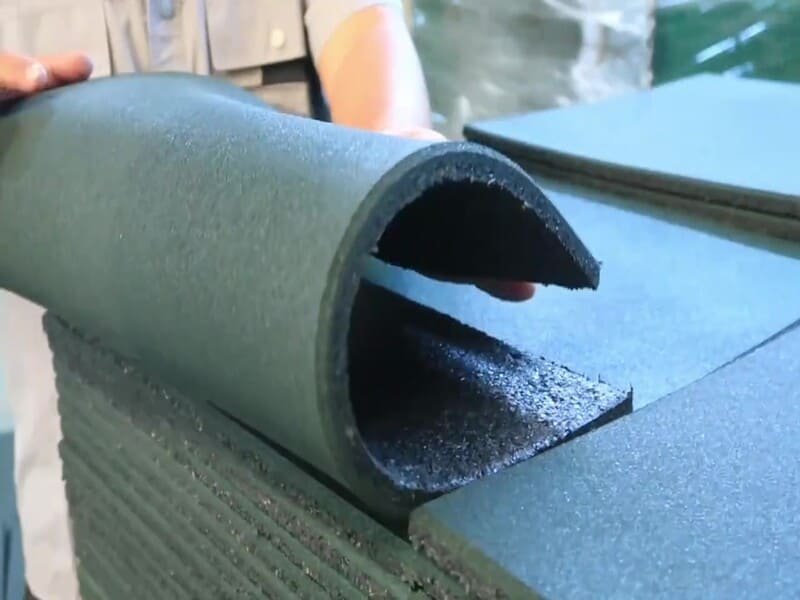
Different rooms have different needs, so you should adjust your strategy based on where the floor is located.
How do pro tips change for gyms, commercial spaces, and basements?
Pro tips focus on weight distribution in gyms, safety codes in commercial spaces, and vapor barriers in basements. For home gyms, use extra thick mats under power racks. In basements, always use a plastic underlayment to stop moisture from the concrete rising through the tile.
Environment-Specific Flooring Strategies
If you have a home gym on the second floor with tile, the noise will be a problem. The tile will vibrate and could crack if you drop a heavy bar. In this case, I recommend a dual-layer approach. In commercial spaces, you have to worry about fire ratings and "slip and fall" liability. If your rubber is not glued perfectly to the vinyl, a bubble could cause a customer to trip. This is a major legal risk for business owners.
| Medio ambiente | Principal preocupación | Manager’s Recommendation |
|---|---|---|
| Gimnasio en casa | Impact on tile | Use 15mm+ thickness for drop zones. |
| Comercial | High traffic durability | Full glue-down is mandatory for safety. |
| Sótano | Hydrostatic pressure | Use a dimpled underlayment if moisture is high. |
I once worked with a client who put rubber over tile in a basement. They didn’t use a vapor barrier. One year later, they pulled up a corner and found the grout had turned into a wet paste. The moisture from the ground was trapped. If you are in a basement, even if the tile looks dry, use a 6-mil poly film underlayment. It costs very little and saves the entire investment.
Maintenance is the last step to ensure your floor lasts for ten or twenty years without peeling.
How do you maintain a "layered" floor system properly?
To maintain the floor, use a damp mop—never a wet mop. Excess water can seep through rubber seams and sit on the vinyl or tile below, leading to odor and adhesive rot. Use a vacuum with a soft brush and a specialized rubber cleaner to keep the surface fresh.
Maintenance and Long-Term Care
The enemy of a layered floor is standing water. In my production experience, we test rubber for water absorption, and while it is very low, the seams are not waterproof. If you dump a bucket of water on the floor, it goes straight to your old tile. If that tile is porous, you will get mold. Use a microfiber mop that is only slightly damp.
- Vacuum often: Dust acts like sandpaper between the rubber and the tile.
- Avoid solvent cleaners: Harsh chemicals can dissolve the glue holding your vinyl down.
- Check seams: If you see a gap opening, tape it immediately to prevent water entry.
Always use a pH-neutral cleaner. Many people use vinegar, but over time, acid can degrade the binders in recycled rubber. A specialized cleaner keeps the rubber "supple" and prevents it from getting brittle. If you take care of the top layer, the bottom layer will stay protected and dry.
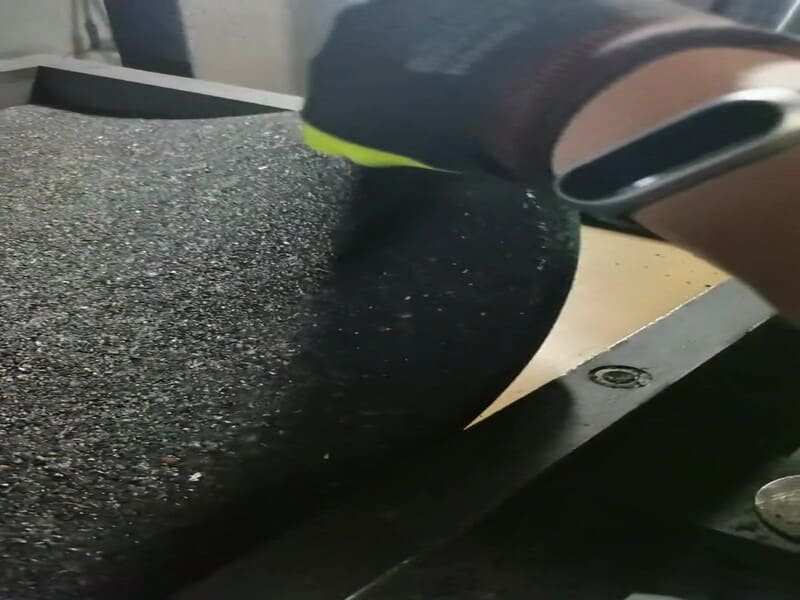
Your old floor does not have to be a barrier to your new gym. If you follow these steps, you can save a lot of money.
Conclusión
If the base is flat, dry, and firm, go for it. Proper prep ensures your new floor never fails.
PREGUNTAS FRECUENTES
Will it ruin my original tile?
If you use a "floating" interlocking system with no glue, your tile will be fine. If you use a full-spread adhesive, the tile will be permanently bonded and likely ruined if you try to remove the rubber.
¿Necesito un contrapiso?
Only in basements or if the tile is very uneven. A thin foam or plastic underlayment can help with moisture and noise reduction.
Can I install rubber over heated floors?
Yes, but check the temperature limit. Most rubber can handle up to 85°F (29°C). High heat can cause the rubber to smell like "new tires" more intensely.
What if my vinyl is already peeling?
Do not install over it. You must remove the peeling sections and fill the gaps with a floor patch, or rip the vinyl out entirely.
Do you have a specific project in mind?
If you are a wholesaler or a gym owner looking for the right material specs for your project, feel free to enviarme un mensaje privado.