


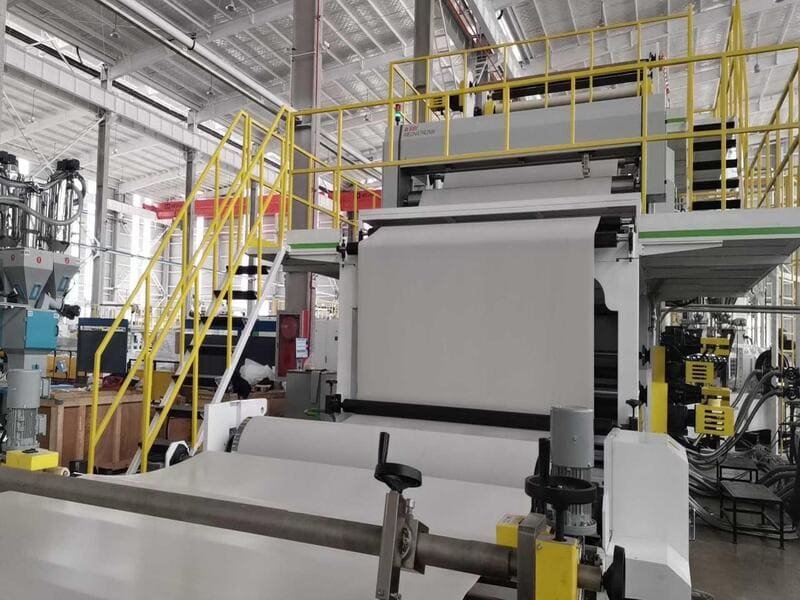
Conductive ESD vinyl is better for highly sensitive electronics and specially assessed ignition-risk processes. Static-dissipative vinyl is more suitable for standard electronics, laboratories, server rooms, and other occupied technical areas that need controlled static removal.
Choosing the wrong ESD vinyl flooring can result in damaged electronic components, failed compliance audits, unstable production, or unnecessary installation costs. In my project experience, many buyers choose only by the words “conductive” or “static-dissipative.” This approach is risky because the floor must work as part of a complete ESD system.
I check the floor resistance, component sensitivity, footwear, adhesive, copper grounding strips, humidity, cleaning method, and personnel safety before making a recommendation. Conductive flooring normally has a resistance of 1 × 10⁶ Ω or below. Static-dissipative flooring is generally above 1 × 10⁶ Ω and below 1 × 10⁹ Ω.
Lower resistance is not always better. The correct product is the one that matches the real process risk and passes testing after installation.
What Is the Difference Between Conductive and Static-Dissipative Vinyl?
Conductive vinyl provides a lower-resistance path to ground, while static-dissipative vinyl limits current through a higher-resistance path. Both types remove electrostatic charge, but their suitability depends on the complete flooring and footwear system.
Electrical Resistance and Charge Control
Conductive ESD vinyl often contains carbon particles, conductive chips, or a conductive backing that creates a continuous path from the floor surface to ground. This makes it suitable for processes that require stronger charge control.
Static-dissipative vinyl also transfers charge to ground, but its higher resistance provides a more controlled discharge path. It is often selected for normal electronics facilities where people work around powered equipment.
| ESD Vinyl Type | General Resistance Range | Aplicación principal |
|---|---|---|
| Conductive | ≤ 1 × 10⁶ Ω | Highly sensitive electronic processes |
| Static-Dissipative | > 1 × 10⁶ Ω and < 1 × 10⁹ Ω | General electronics and technical rooms |
| Standard Vinyl | Usually outside ESD limits | Normal commercial flooring |
The resistance range is only one part of the decision. Actual ESD performance also depends on the footwear, adhesive, grounding point, surface cleanliness, humidity, and voltage generated while people walk.
Static-dissipative flooring is not electrical insulating flooring. It must not be treated as protection against contact with energized electrical parts.
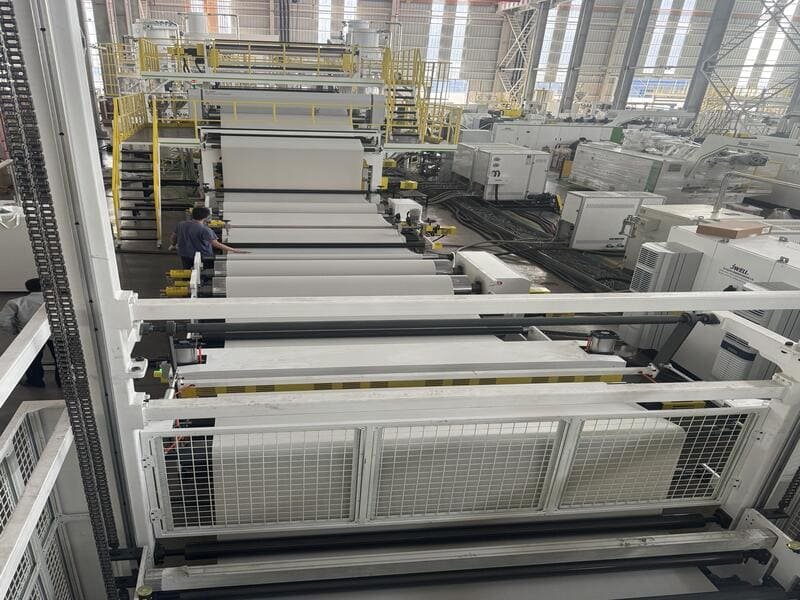
I therefore use resistance as a selection guide, but I rely on system testing for final approval.
Where Should Conductive ESD Vinyl Rolls Be Used?
Conductive ESD vinyl is commonly used in semiconductor production, sensitive electronics assembly, selected cleanrooms, and specialized processes that require a low-resistance grounding path. Hazardous environments need a separate ignition-risk assessment.
Semiconductor and Sensitive Electronics Facilities
Conductive vinyl may be suitable for wafer fabrication, advanced SMT production, disk-drive assembly, aerospace electronics, sensors, and other processes that handle low-voltage ESD-sensitive devices.
Human Body Model Class 0 components can have withstand levels below 250 V. Some devices may be damaged at levels below 50 V. These applications may require tighter control of personnel voltage, isolated conductors, tools, packaging, and automated equipment.
| Aplicación | Riesgo principal | Why Conductive Vinyl May Be Used |
|---|---|---|
| Wafer fabrication | Damage to fine semiconductor structures | Supports a low-resistance grounding system |
| Advanced SMT lines | Damage during handling and placement | Helps control personnel-generated charge |
| Disk-drive assembly | ESD damage and particle attraction | Supports clean and controlled production |
| Aerospace electronics | Failure of high-value components | Provides stable charge-control performance |
| Precision sensors | Very low ESD withstand levels | Supports tighter control requirements |
A sensitive component does not automatically mean that conductive flooring is required. I also check whether a tested static-dissipative footwear-and-floor system can meet the required body-voltage limit.
Explosive or Combustible Environments
Conductive flooring may be part of a grounding design in facilities handling flammable gases, solvents, combustible powders, energetic materials, or low-ignition-energy products.
However, I never approve conductive vinyl for an explosive environment based only on its resistance value. These projects require a complete electrostatic ignition-risk assessment covering personnel, footwear, containers, machines, ventilation, bonding, and grounding.
Standards for electronics protection, such as ANSI/ESD S20.20, do not replace hazardous-area standards such as NFPA 77 or IEC TS 60079-32-1.
Cleanrooms and Medical Areas
Conductive ESD vinyl is also used in some cleanrooms and specialized medical technical rooms. Its use depends on the equipment, process sensitivity, cleaning requirements, and local regulations.
An ISO Class 3, Class 4, or Class 5 cleanroom does not automatically require conductive flooring. ISO cleanroom classifications mainly concern airborne particle levels, not electrical resistance.
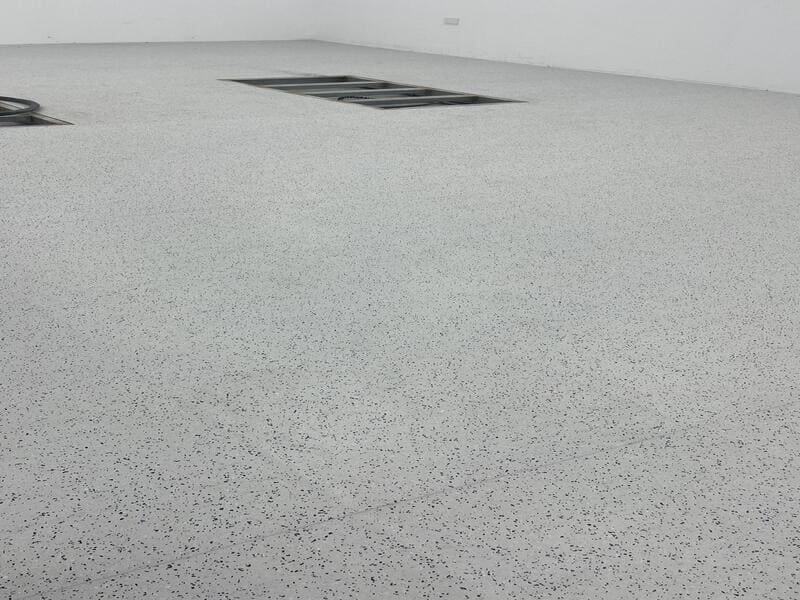
Conductive flooring should be selected because the process requires it, not simply because it has the lowest resistance.
Where Should Static-Dissipative ESD Vinyl Rolls Be Used?
Static-dissipative vinyl is often the practical choice for standard electronics assembly, repair centers, laboratories, data centers, telecommunications rooms, and command centers where both equipment protection and occupied-area use must be considered.
Electronics Assembly and Testing
I commonly recommend static-dissipative vinyl for PCB assembly, soldering rooms, box-build production, electronics repair, quality inspection, and general testing facilities.
These areas need stable ESD control, but they may not require the lowest possible floor resistance. Static-dissipative vinyl can provide effective protection when it is combined with approved ESD footwear and a verified grounding system.
| Aplicación | Why Static-Dissipative Vinyl Is Suitable |
|---|---|
| PCB assembly | Controls charge generated by walking and handling |
| Electronics repair | Supports mixed products and changing workstations |
| QA and QC rooms | Provides a stable testing environment |
| University laboratories | Suitable for occupied technical spaces |
| Telecommunications rooms | Protects sensitive communication equipment |
Normal footwear can block the path between the person and the floor. Workers usually need conductive shoes, ESD shoes, or heel grounders when the floor is used for personnel grounding.
Data Centers and Server Rooms
Static-dissipative vinyl may be used in server rooms, data centers, network operation centers, and telecommunications facilities.
These rooms contain powered equipment, racks, cables, and continuous human movement. Static-dissipative flooring can reduce charge generated by walking, rolling chairs, and maintenance work.
Still, the floor does not provide electrical shock protection. Electrical grounding, guarding, access control, and safe maintenance procedures must be managed separately.
Command Rooms and Technical Laboratories
Flight control centers, emergency dispatch rooms, calibration laboratories, R&D facilities, and engineering classrooms often need reliable static control without using the lowest-resistance flooring system.
Static-dissipative vinyl is often easier to integrate into these spaces because it supports equipment protection, rolling loads, daily cleaning, and long working hours.
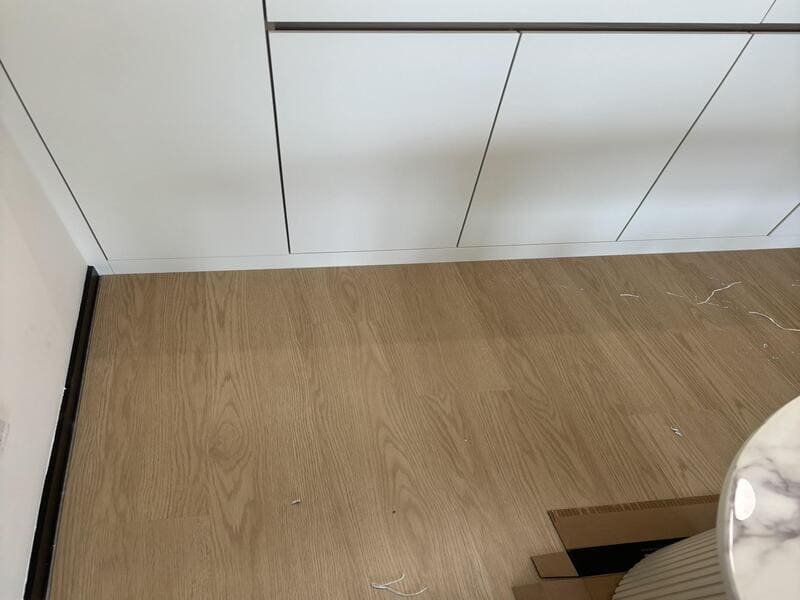
For most general electronics and technical environments, static-dissipative vinyl is often sufficient when the full system passes testing.
How Do I Choose the Correct ESD Vinyl?
Choose the flooring by reviewing component sensitivity, process hazards, footwear, exposed electrical power, humidity, installation design, and compliance limits. Do not select conductive or static-dissipative vinyl only from the catalogue resistance range.
Factores clave de selección
The first step is to identify what must be protected. The main risk may be electronic component damage, particle attraction, ignition, or a combination of several hazards.
| Factor de decisión | Main Question |
|---|---|
| Component sensitivity | What are the HBM and CDM withstand levels? |
| Process type | Are components exposed, packaged, powered, or unpowered? |
| Personnel grounding | Will workers use approved ESD footwear? |
| Electrical risk | Are workers near exposed energized equipment? |
| Humedad | Can the room become very dry? |
| Mantenimiento | Which cleaning products will be used? |
| Conformidad | Which resistance and body-voltage limits apply? |
When footwear and flooring are used to ground personnel, the complete resistance of the person, footwear, and floor is more important than the resistance of the vinyl alone.
The system should also control body voltage during walking. A floor can have an acceptable resistance reading but still generate too much voltage when used with the wrong footwear.
Practical Three-Step Decision Process
- Identify the risk. Determine whether the main concern is ESD damage, ignition, particle attraction, or electrical safety.
- Set the required limits. Define the floor resistance, footwear-and-floor resistance, and body-voltage target.
- Test the full system. Test the flooring, adhesive, copper strips, ground point, footwear, and users together.
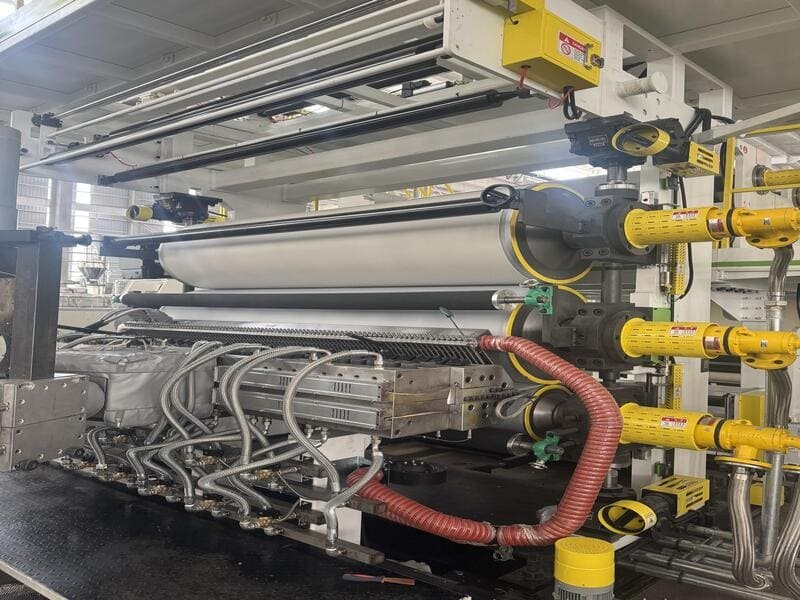
This method prevents buyers from paying for conductive flooring when a tested static-dissipative system would already meet the project requirements.
How Should ESD Vinyl Be Installed and Maintained?
ESD vinyl must be connected to an approved grounding point through a tested installation system. Compatible adhesive, copper strips, correct substrate preparation, seam treatment, footwear, cleaning, and electrical testing are all required.
Grounding and Adhesive
The subfloor must be dry, smooth, clean, level, and structurally sound. Moisture, high alkalinity, dust, oil, old wax, loose epoxy, or cracks can cause adhesive failure and unstable resistance readings.
Some ESD vinyl systems require conductive adhesive under the complete floor. Other conductive-back products need conductive adhesive only over the copper grounding strip. The exact installation method must follow the flooring manufacturer’s instructions.
| Installation Part | Función principal |
|---|---|
| Conductive adhesive | Supports bonding and electrical continuity |
| Copper strip | Connects the flooring system to ground |
| Conductive backing | Distributes charge below the vinyl |
| Heavy roller | Produces complete adhesive contact |
| Heat-welded seam | Seals joints in clean or hygienic rooms |
| Grounding terminal | Connects the floor to an approved ground |
A full copper grid is not required for every ESD vinyl product. Some manufacturers require only one copper strip for a defined floor area. Others require several strips. Adding more copper does not correct poor adhesive contact or an unsuitable ground connection.
The grounding connection should be completed or verified by a qualified electrical professional.
Cleaning and Testing
Standard commercial wax can form an insulating layer over the vinyl and increase resistance. I use only cleaners, finishes, and maintenance pads approved by the ESD flooring manufacturer.
Routine care normally includes dust removal, neutral-pH damp cleaning, suitable automatic scrubbing, and regular inspection of seams and grounding points.
The installed floor should be tested using the correct methods:
| Test | Propósito |
|---|---|
| Point-to-ground resistance | Checks the electrical path to ground |
| Point-to-point resistance | Checks consistency across the floor |
| Person-footwear-floor resistance | Verifies personnel grounding |
| Walking-voltage test | Measures voltage generated during movement |
| Ground inspection | Checks copper strips and terminals |
ANSI/ESD STM7.1 is commonly used for flooring resistance tests. ANSI/ESD STM97.1 and STM97.2 are used to evaluate footwear-and-floor resistance and walking voltage.
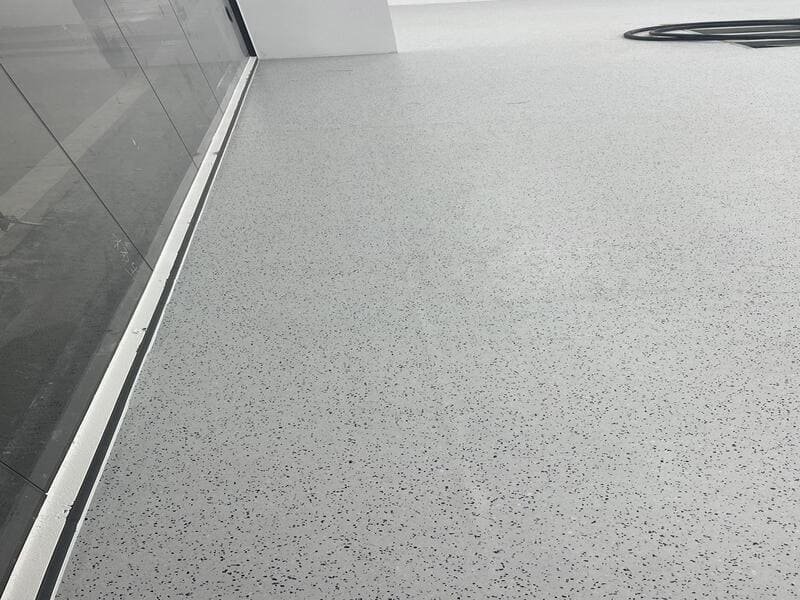
The floor should be tested after installation and then checked regularly as part of the facility’s ESD control plan.
Preguntas frecuentes
Can ESD Vinyl Be Installed Over Concrete or Epoxy?
Yes. The existing surface must be dry, smooth, clean, stable, and compatible with the adhesive. Concrete should be checked for moisture and alkalinity. Existing epoxy must be firmly bonded and free from oil, wax, and loose coatings.
The required copper grounding system must still be installed.
How Long Does ESD Vinyl Maintain Its Electrical Properties?
Homogeneous ESD vinyl with conductive material through its structure can maintain its electrical properties for the useful life of the floor.
However, unapproved coatings, contamination, damaged seams, loose adhesive, and broken grounding connections can reduce the performance of the installed system.
Is Conductive Vinyl More Expensive?
Conductive vinyl may have a higher material and installation cost because of its formulation, backing structure, grounding requirements, and testing controls.
The total project cost should include substrate preparation, adhesive, copper strips, welding, grounding work, footwear, and ongoing compliance testing.
Can ESD Vinyl Be Used on Workbenches?
Only when the manufacturer approves the material for workbench use and the completed surface passes the required worksurface tests.
Flooring and ESD bench mats are not automatically interchangeable because workbenches face different heat, chemical, grounding, and contact conditions.
Conclusión
Use conductive vinyl for verified critical risks and static-dissipative vinyl for general ESD control. Proper grounding, footwear, installation, cleaning, and testing determine the final performance.
Mi papel
I work as an engineering and installation director for conductive and static-dissipative ESD vinyl sheeting. My experience includes material selection, resistance design, conductive backing systems, adhesive compatibility, copper grounding layouts, heat-welded seams, electrical testing, and installation troubleshooting.
I support custom and bulk ESD vinyl projects for electronics manufacturing, semiconductor facilities, laboratories, cleanrooms, healthcare areas, server rooms, and other controlled environments.
Message me with your application, required resistance, room size, component sensitivity, subfloor condition, humidity range, and footwear plan. I will help you select the correct conductive or static-dissipative ESD vinyl roll system.