


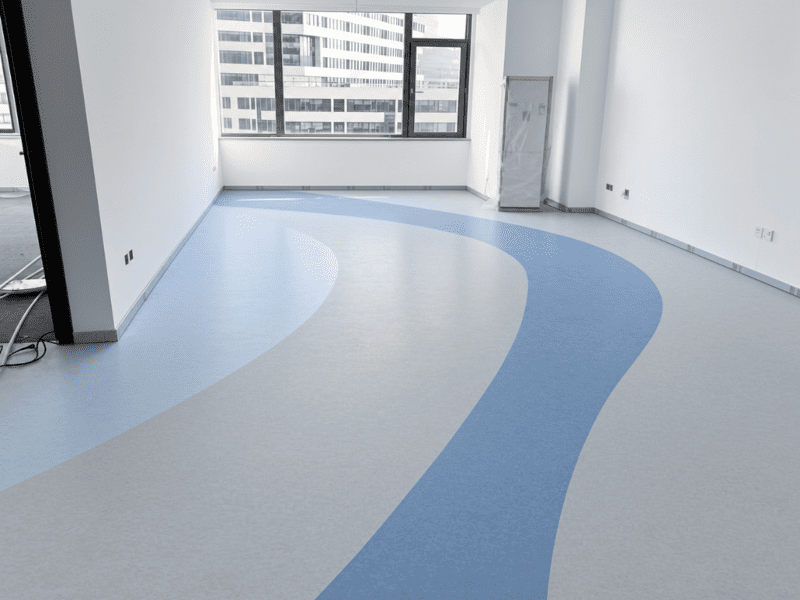
ESD chair casters form the electrical contact between a chair and an ESD floor. Non-conductive wheels, contamination, and damage can increase contact resistance or interrupt the grounding path. Casters do not replace the wrist strap that seated personnel need under ANSI/ESD S20.20.
A floor can pass resistance testing while the chair next to it fails. The floor and the chair are two parts of one system, and the caster is where they meet.
Two ideas often get mixed up. Chair grounding means the chair can dissipate charge through its casters and the floor. Personnel grounding means the operator is grounded under the ESD control program. Under ANSI/ESD S20.20, seated personnel handling ESD-sensitive devices at an ESD-protected workstation are required to use a wrist strap system. ESD chair casters support chair grounding but do not replace this requirement. Any alternative approach must be formally justified under the applicable standard’s tailoring provisions. This article covers how casters affect the floor-side path, what breaks it, and how to test and fix it.
How Do ESD Chair Casters Affect the Grounding Path?
Charge from a chair moves through the seat, frame, caster assembly, wheel, and floor surface into the floor’s conductive structure and grounding connections. A break at any point raises the chair’s resistance to ground.
Many chairs use casters as the contact point, but not all do. Some ESD chairs use a grounding chain or another method. Check the chair’s data sheet before you assume the casters carry the path.
Where Each Part Fits
| Part of the Path | Para qué sirve | ¿Qué puede salir mal? |
|---|---|---|
| Seat and backrest | Collect charge from the chair surface | No electrical link to the frame |
| Frame and caster stem | Carry charge to the wheel | Insulating joints or coatings |
| Wheel | Makes contact with the floor | Non-ESD material, worn or dirty tread |
| Superficie del suelo | Receives the contact | Wax, polish, residue, or oil film |
| Conductive flooring structure | Provides an electrical path through the flooring material | Material damage, contamination, or loss of electrical continuity |
| Conductive adhesive, where specified | Forms part of the installed flooring’s conductive path | Incorrect adhesive, poor application, or installation defects |
| Grounding connections | Link the floor to ground | Loose, broken, or missing connections |
ESD vinyl flooring systems may use conductive adhesive, copper strips, designated grounding points, or a combination of these components. The required arrangement depends on the flooring manufacturer’s installation specifications.
What Caster Materials and Conditions Affect ESD Floor Contact?
Wheel material, tread condition, contamination, contact load, and floor finish all change contact quality. Rolling also shifts the contact point, so check chairs under real working conditions.
Casters are exposed to repeated rolling and surface contamination. An ESD caster may lose reliable electrical contact because of contamination, tread damage, or deterioration of its conductive material. The effect depends on how the wheel is constructed, because some wheels get their conductivity from the material itself and others from a separate layer.
Factors That Change Contact
| Factor | Effect | Qué comprobar |
|---|---|---|
| Material de las ruedas | Decides whether the wheel can carry charge | Confirm it is rated as conductive or dissipative |
| Tread condition | Changes the contact area | Look for flat spots, cracks, and embedded debris |
| Contaminación | Dust, oil, and floor products can insulate the contact | Clean the wheel and the floor, then retest |
| Cargar | Changes contact pressure on a small patch | Match caster rating to chair and operator weight |
| Floor finish | Wax, polish, or residue adds a film | Use only products approved for your floor |
| Rolling or static | Rolling changes the contact point and the dirt on it | Check in the real work area, not only in one parked position |
Contact and separation between caster wheels and flooring can generate static charge. The amount depends on the material combination and environmental conditions such as humidity. ESD-rated casters can provide a path for charge dissipation, but their resistance rating alone does not guarantee low charge generation.
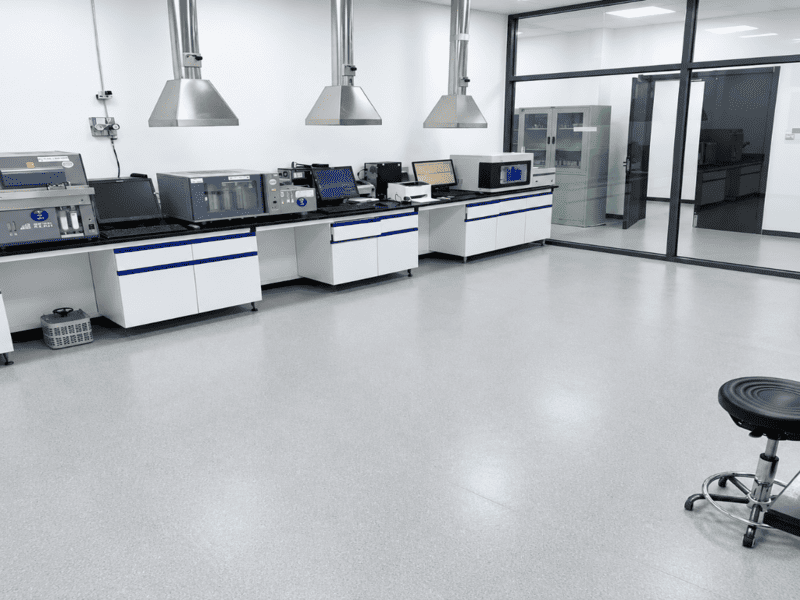
Why Can ESD Flooring Pass Testing While an ESD Chair Fails?
A floor resistance test evaluates the flooring system, while a seating resistance test evaluates the chair using the specified test configuration. A passing floor result does not guarantee that the chair will pass its applicable resistance checks.
A failed chair does not point to the caster by default. The cause can sit in the chair, at the wheel, or in one spot on the floor. Use the table to decide where to look first.
Field Troubleshooting Guide
| Lo que ves | Compruébalo primero |
|---|---|
| Floor passes, chair fails | Seat, frame, caster assemblies, wheel contact surface |
| Only some spots fail | Local dirt, wear, or floor grounding connection |
| Readings change after cleaning | Cleaner residue or surface treatment |
| Problem starts after a caster swap | Electrical rating of the new casters and how they attach |
| Resistance rises over time | Wheel condition, contamination, chair parts, floor condition |
| Chair fails everywhere, floor passes everywhere | Whether the chair is a true ESD chair, and the test setup |
Check the test setup too. Wrong electrode placement, unclean contact points, or a wrong chair position can give a false result. Record humidity and the date of the last cleaning with each reading. That record makes repeat problems much easier to find.
How Should ESD Chair and Flooring Resistance Be Tested?
Evaluate floor resistance with ANSI/ESD STM7.1 or IEC 61340-4-1, and seating resistance with ANSI/ESD STM12.1. Use ESD TR53 for procedures that verify ESD control program compliance in an installed environment.
These documents do different jobs. The test methods describe how to measure. Acceptance criteria should be based on the applicable ESD control program requirements, relevant standards, and documented specifications. A manufacturer’s published resistance range does not automatically establish compliance.
What Each Document Covers
| Documento | Utilice |
|---|---|
| ANSI/ESD S20.20 and IEC 61340-5-1 | Requirements for an ESD control program, including personnel grounding |
| ANSI/ESD STM7.1 and IEC 61340-4-1 | Measuring floor resistance to ground and point to point |
| ANSI/ESD STM12.1 | Characterizing ESD seating resistance |
| ESD TR53 | Procedures for verifying compliance of an installed ESD control program, including seating grounding |
ANSI/ESD STM12.1 is used to characterize seating resistance, while ESD TR53 provides procedures for verifying ESD seating grounding in an installed environment. Site-specific troubleshooting measurements may also help identify poor contact between casters and flooring. Follow the applicable procedure and your ESD control program’s acceptance criteria.
A Practical Routine
- Measure the floor at several points, including the chair zones with heavy traffic.
- Check the chair with the applicable seating resistance or on-site verification procedure.
- Record humidity, floor condition, and the last cleaning date.
- Compare the results to see whether the floor, the chair, or one spot is the issue.
- Inspect the full path if the results disagree.
- Retest after cleaning or any part swap.
Set inspection and testing intervals according to your ESD control program and site-specific risks. Workstations with frequent caster movement may need more frequent checks when wear or contamination has caused problems before.

How Can ESD Vinyl Flooring Maintain Reliable Caster Contact?
Choose a floor with a conductive structure suited to your chair loads, follow the manufacturer’s installation system, pair it with verified ESD casters, and clean with products the floor maker approves.
Early coordination between the floor supplier, the chair supplier, and the ESD coordinator can reduce compatibility problems and rework.
Specification and Care Checklist
| Zona | Qué hacer |
|---|---|
| Construcción del suelo | Homogeneous ESD vinyl with a through-body conductive structure can help maintain electrical performance as the surface wears. Actual resistance still depends on the product design, floor condition, and grounding system |
| Coated floors | Ask for coating thickness and wear data for your caster load. Performance depends on the coating system |
| Instalación | Follow the manufacturer’s adhesive and grounding layout. Do not assume every system uses the same components or copper strip design |
| Wear and load | Check flooring thickness, indentation resistance, wear performance, and suitability for the intended caster loads |
| Casters | Request electrical resistance data for the caster or complete chair, confirm compatibility with the flooring material, and verify the installed chair with the applicable test procedure. A label that says "ESD" is not enough. Also check wheel hardness and material against the floor and your marking tolerance |
| Limpieza | Use cleaners the floor maker approves. Avoid standard wax and polish. Confirm the cleaner leaves no insulating residue |
| Marks | Test any mark removal method on a small area first. Retest resistance after cleaning |
A neutral pH does not make a cleaner safe for an ESD floor. The product also has to leave no film. Ask your flooring supplier which cleaners they have tested with their material.
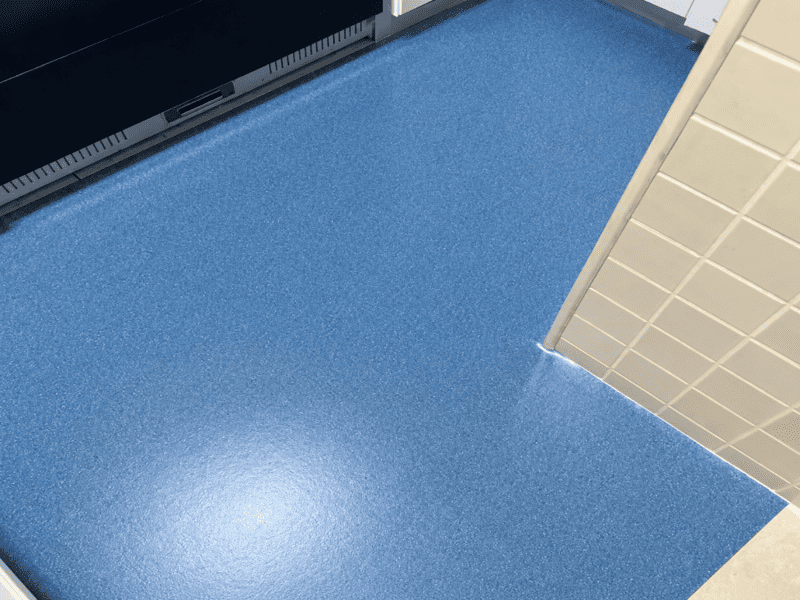
Conclusión
Treat the chair, casters, floor, adhesive, and grounding connections as one system. Verify each part, clean with approved products, and keep wrist strap requirements separate.
Need help matching ESD vinyl flooring with your chairs and test plan? Send me a direct message with your layout and chair type, and I will share practical advice.