


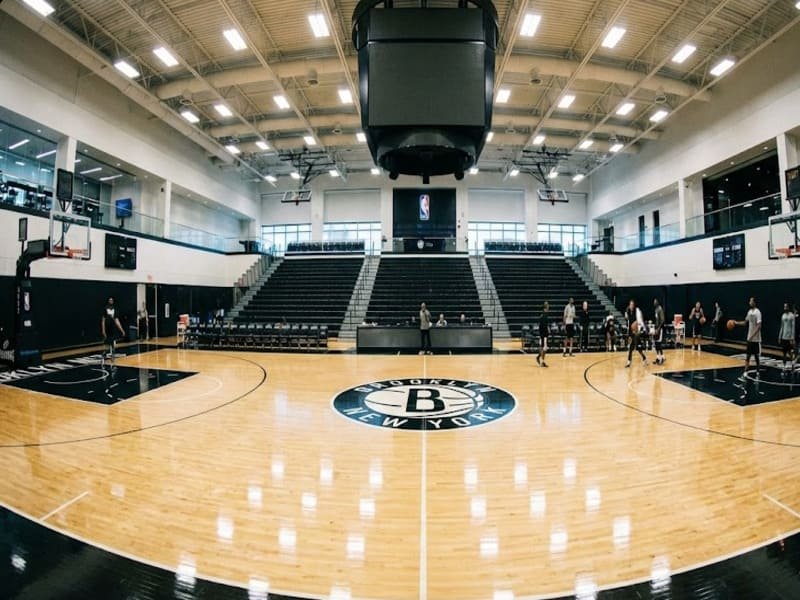
The four primary types of indoor sports flooring are Hardwood Timber (Area-Elastic), Polyurethane (PU) Seamless (Point/Mixed-Elastic), Vinyl (PVC), and Rubber. The correct choice depends strictly on your facility’s priority: elite performance, multi-purpose versatility, budget constraints, or heavy-load durability. Choosing incorrectly impacts athlete safety and long-term maintenance costs.
As a manufacturing engineer who has designed production lines for various sports surfaces, I view flooring not just as a visual finish, but as a complex technical system. The "floor" is actually a combination of the sub-floor structure, the shock-absorbing layer, and the wear layer. When we engineer these systems, we are trying to balance two opposing physical forces: Vertikale Verformung (how much the floor sinks to absorb impact) and Energierückgabe (how much spring it gives back to the athlete).
For example, a solid timber floor without a sprung sub-structure fails modern EN 14904 standards because it lacks shock absorption, leading to stress fractures in athletes. Conversely, a soft foam-backed vinyl that is too thick creates a "swampy" feel that causes muscle fatigue. The manufacturing challenge is optimizing the hysteresis—the lag between impact and return. In my experience, facilities often fail because they select a surface based on aesthetics rather than the biomechanical requirements of the primary sport or the static load limits required for non-sporting events like exams.
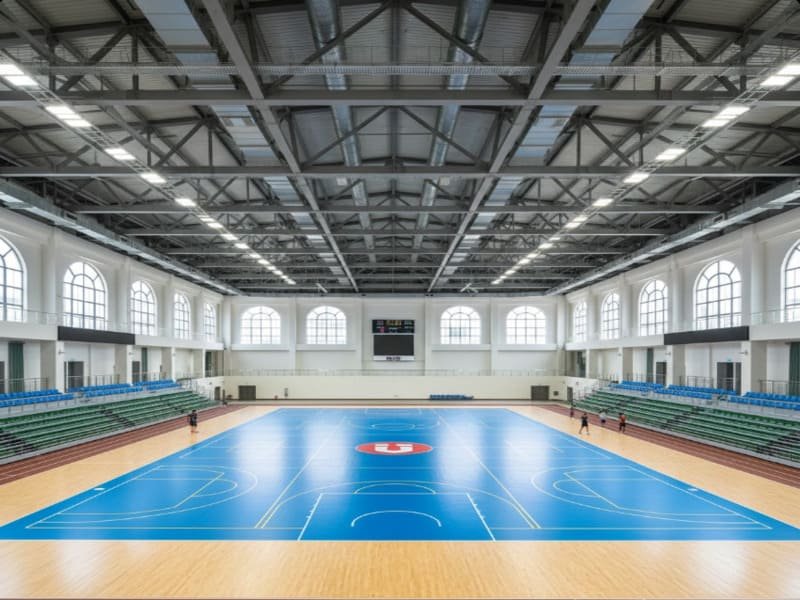
Understanding the base materials is only step one; you must next evaluate the engineering criteria that dictate performance and longevity.
What Critical Factors Must You Analyze Before Selection?
You must evaluate four engineering constraints: Shock Absorption (Safety), Rolling Load Capacity (Durability), Environmental Sensitivity (Moisture/HVAC), and Acoustics. Neglecting these leads to "decision paralysis" or costly failure, such as floor buckling due to uncontrolled humidity or permanent indentation from bleachers.
When I consult on facility upgrades, I steer the conversation immediately to Life Cycle Costing (LCC) und Load Profiles. It is not enough to ask "how much does it cost?"; you must ask "how does it fail?".
- Rolling Loads: If your facility uses telescopic bleachers, the point load can exceed 500 PSI. A standard point-elastic floor (like cheap vinyl) will permanently compress under this weight. We manufacture high-density polyurethane systems specifically to resist this, but they require a different curing process.
- Moisture Tolerance: Timber is hygroscopic. If your concrete slab has a Relative Humidity (RH) over 75%, or if your HVAC cannot maintain 35-50% ambient humidity, timber will cup and warp. Synthetic options like PU are chemically inert to ambient moisture but require a perfect vapor barrier underneath.
- Acoustics: In large halls, sound reverberation is a major issue. A porous rubber or foam-backed vinyl can significantly reduce the noise coefficient compared to hard maple, which reflects sound.
| Faktor | Engineering Metric | Warum es wichtig ist |
|---|---|---|
| Schockabsorption | Kraftreduzierung (%) | Prevents acute impact injuries (concussions, fractures). |
| Vertikale Verformung | Millimeters (mm) | Prevents chronic injuries (shin splints, joint pain). |
| Rolling Load | Newtons (N) | Ensures bleachers or scissor lifts don’t crush the floor. |
| Reibung | Coefficient (0.4-0.7) | Prevents slipping (too low) or knee twisting (too high). |
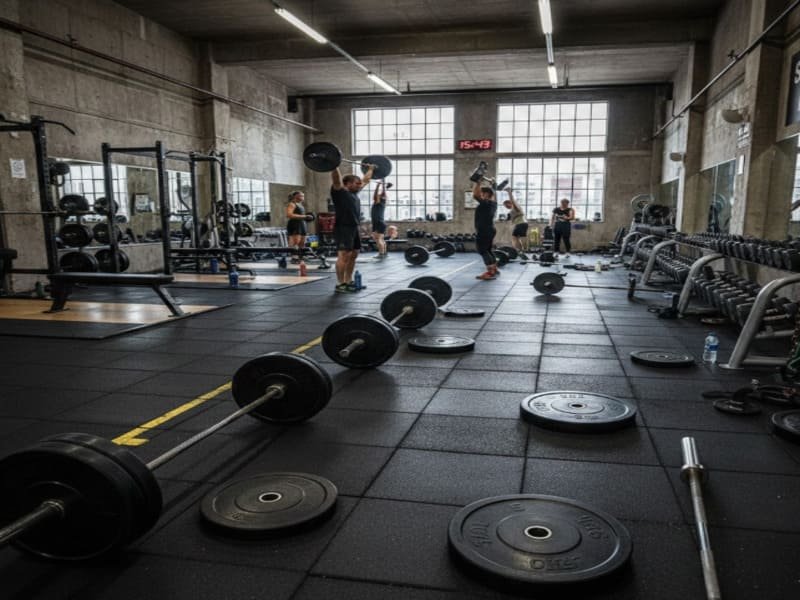
To make the right decision, you must understand the technical classification of how these floors react to weight, known as "Elasticity."
How Do Area-Elastic and Point-Elastic Floors Differ Technically?
Area-Elastic floors (Timber) disperse impact energy over a wide surface area, offering stability for ball sports. Point-Elastic floors (Vinyl/Rubber) deform only at the impact site, providing superior protection for falls. Mixed-Elastic systems combine both for the ultimate multi-purpose solution.
This distinction is the single most important technical concept in sports flooring design. It defines the interaction between the human foot and the surface.
- Area-Elastic (Type A): Think of a wooden ruler bridging two books. Press the center, and the whole ruler bends. This is how a sprung timber floor works. It provides high stability for pivoting (basketball) because the floor doesn’t "sink" under the toe. However, it offers poor protection if a light child falls on their hip, as the floor requires significant weight to engage the shock absorption.
- Point-Elastic (Type P): Think of a memory foam mattress. Press your finger, and only that spot sinks. We achieve this in manufacturing using PVC with foam backing or liquid PU over a rubber mat. This is safer for kindergartens or nursing homes but creates higher fatigue for running sports due to increased friction and drag.
- Combined-Elastic (Type C): We build a synthetic face over a wooden sprung sub-structure. This is the "Holy Grail" of engineering—providing the ball bounce of wood with the surface grip and durability of synthetics.
| Elasticity Type | Deformation Pattern | Ideale Anwendung | Schwerpunkt Fertigung |
|---|---|---|---|
| Area-Elastic | Wide radius deflection | Basketball, Volleyball | Sub-floor beam flexibility |
| Point-Elastic | Localized deflection | Yoga, Primary School, Rehab | Foam density optimization |
| Mixed-Elastic | Hybrid deflection | Olympic Multi-Sport Halls | Bonding synthetic to wood |
Now that the physics are clear, let’s analyze the specific material properties and manufacturing realities of the four main market options.
What Are the Specific Pros and Cons of the 4 Main Flooring Types?
The four main options are Hardwood Timber (best for elite ball sports), Polyurethane (best for durability and multi-use), Vinyl (best for budget and consistency), and Rubber (best for heavy weights). Each material requires a distinct manufacturing process that dictates its final performance characteristics.
From a production standpoint, the difference between these materials is vast. I will break down the engineering reality of each:
1. Hardwood Timber
- Prozess: We kiln-dry Maple or Oak to specific moisture content. The system relies on the sub-floor (sleepers and rubber pads).
- Die Realität: It offers the best aesthetics and ball response. However, it is high-maintenance. You must sand and recoat it every decade. It is not water-resistant.
2. Polyurethane (PU) Seamless
- Prozess: This is "chemistry on-site." We adhere a recycled rubber mat, pore-seal it, and pour liquid self-leveling resin.
- Die Realität: It creates a seamless, monolithic surface. No seams mean no peeling. It is water-resistant and can be "retopped" (new wear layer poured on top) cheaply. It is the toughest multi-use floor.
3. Vinyl (PVC)
- Prozess: Calendered sheets with a photorealistic print layer and a factory-laminated foam back.
- Die Realität: Quick to install (roll out and weld). Cost-effective. However, the seams are weak points that can split over time. Heavy static loads can crush the foam permanently.
4. Rubber
- Prozess: Vulcanized rubber granules pressed under high heat and pressure.
- Die Realität: Incredible impact resistance. You can drop a dumbbell on it. But the friction is too high for basketball (risk of ACL tear), and the ball bounce is "dead."
| Material | Cost Profile | Dauerhaftigkeit | Wartung | Am besten für |
|---|---|---|---|---|
| Timber | Hoch | High (if controlled) | High (Sanding) | Elite Sports |
| PU | Med-High | Sehr hoch | Low (Retop) | Schools/Exams |
| Vinyl | Low-Med | Mittel | Niedrig | Community Use |
| Gummi | Mittel | Extrem | Niedrig | Weight Rooms |
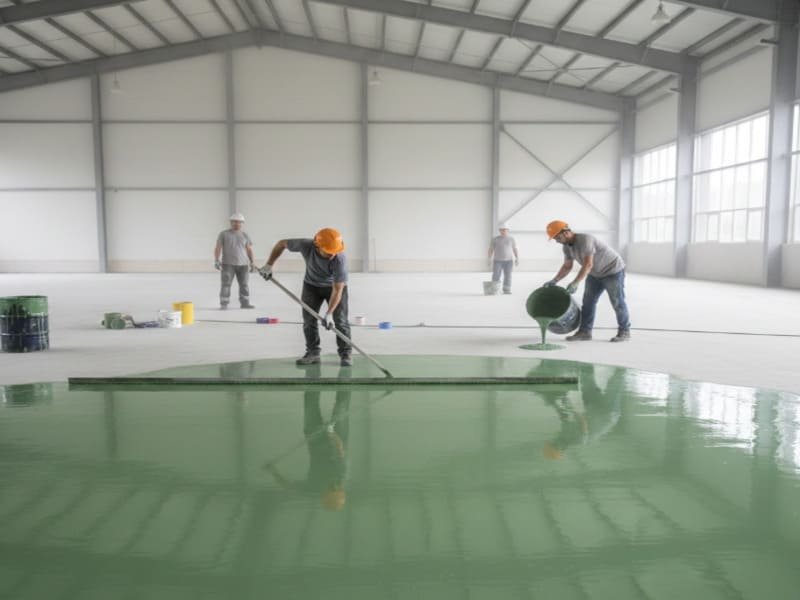
Even the best-engineered floor will fail if the maintenance protocol violates the chemical properties of the wear layer.
How Does Maintenance Impact the Long-Term Engineering Integrity?
Proper maintenance preserves the Coefficient of Friction and the visual clarity of court lines. You must use pH-neutral cleaners to avoid chemical stripping of the wear layer, strictly enforce non-marking shoe policies, and use protective coverings for non-sport events to prevent surface abrasion.
Maintenance is chemistry. Many facility managers ruin their floors by using household detergents. High-alkaline cleaners might clean well initially, but they slowly emulsify the polyurethane coating or the lacquer on timber, creating a slippery, cloudy surface.
- The Dust Factor: Dust acts as an abrasive. Under the microscope, dust particles on a shoe sole look like sandpaper. Daily dust mopping is not just for looks; it is to prevent the mechanical wearing down of the traction layer.
- The "Scrubber" Risk: Auto-scrubbers are great, but if the pad pressure is too high (red pad vs white pad), you are essentially sanding your floor every night. For timber, water control is critical; excess water from a machine can seep between boards, causing cupping.
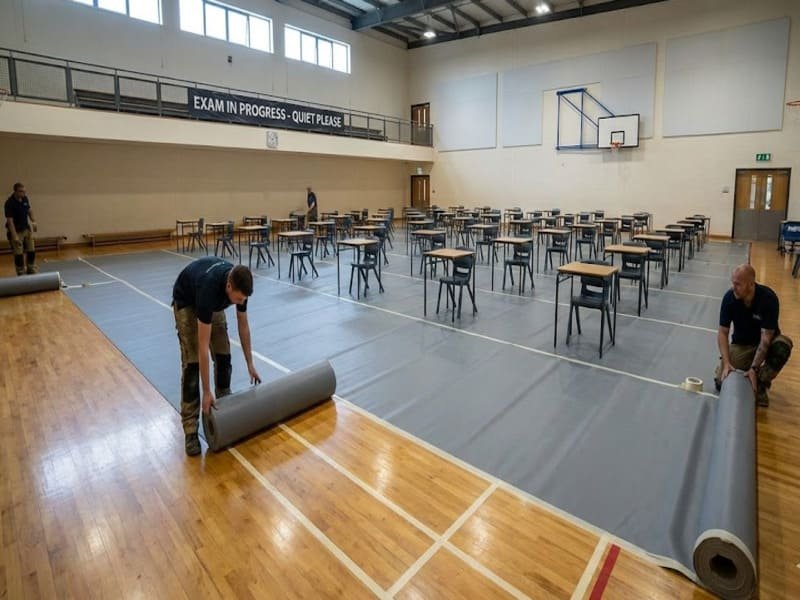
- Schutz: When using the hall for exams, chairs with metal feet can exert pressure exceeding 1000 PSI at the point of contact. We advise using protective tiles or "giant carpet tiles" to distribute this load, protecting the engineered elasticity of the floor beneath.
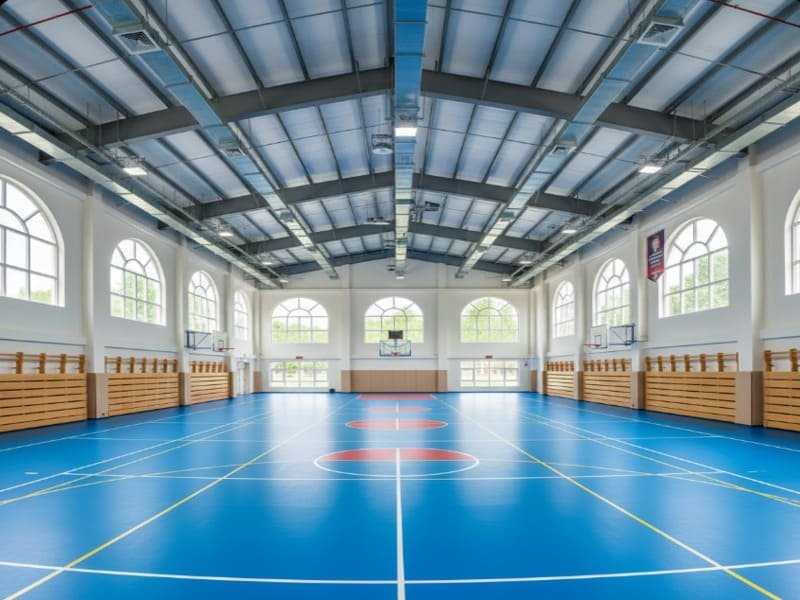
We have covered the engineering, the materials, and the chemistry of care. Here is the final verdict.
Schlussfolgerung
Select Timber for elite competition performance, PU for the ultimate seamless durability in schools, Vinyl for budget-conscious community centers, and Gummi for weight/fitness zones.
Häufig gestellte Fragen (FAQ)
Can I install a new sports floor over an existing one?
Yes, in specific engineering scenarios. If the existing floor is level (tolerance <3mm under 3m) and dry, an "overlay" system works well. However, installing liquid PU over old vinyl tiles requires rigorous adhesion testing to ensure the chemicals don’t react and delaminate.
What is the lifespan difference between PU and Timber?
A well-engineered timber system can last 40-50 years because it can be sanded down and refinished 4-5 times. A PU system typically lasts 20-25 years, but the renovation process (re-topping) is significantly faster, cheaper, and dust-free compared to timber sanding.
Is sports flooring completely waterproof?
Synthetic materials like PU and Vinyl are inherently waterproof. However, the System is not. If water floods the sub-floor, it can degrade the adhesives and rot the sub-structure. Timber is never waterproof and will suffer irreversible damage from standing water.
How thick should the flooring system be?
It varies by design. A point-elastic vinyl is often 6-8mm. A mixed-elastic system can be 50-100mm due to the sub-structure. This height difference is a critical architectural detail for door thresholds and ramp transitions during the design phase.
Why does my new rubber floor smell?
This is "off-gassing" from the vulcanization process or the binders used in recycled rubber. As a manufacturer, we bake materials to minimize this, but some odor is normal for the first few weeks. Proper ventilation accelerates the dissipation of these volatile organic compounds (VOCs).
Über den Autor
Senior Process Engineer at MeettFit
I am a specialized manufacturing engineer with over 15 years of experience in designing and optimizing production lines for indoor sports flooring. I have consulted on material formulation for high-performance PU systems and overseen quality control for large-scale vinyl production. My goal is to bridge the gap between chemical engineering and practical facility management to help you build better courts.
Need technical advice on your specific facility constraints?
Don’t guess with your budget. Contact my engineering team today for a free technical consultation oder zum Anfordern material samples tailored to your load profile.