


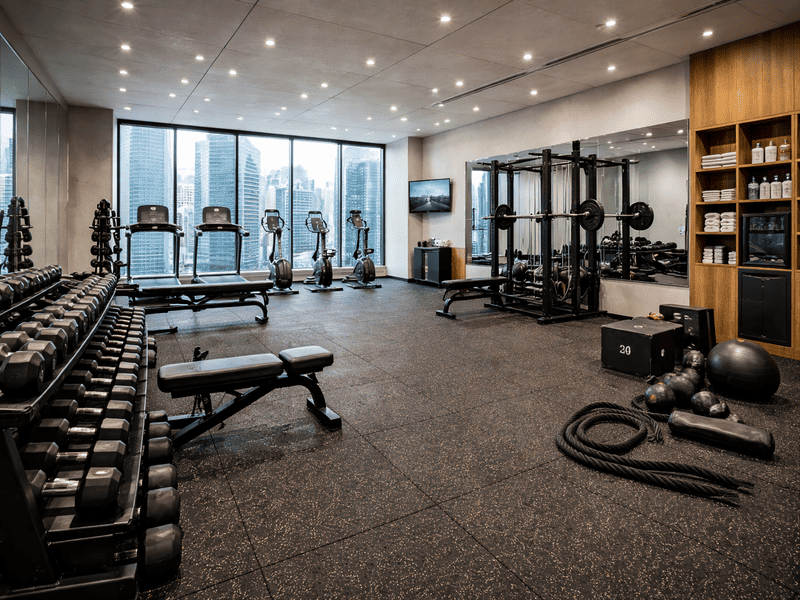
Commercial gyms are large, budget-friendly chains designed for general fitness, characterized by high volume, standard equipment, and low monthly fees. Private gyms are smaller, owner-operated facilities that focus on specific training goals (like CrossFit or Powerlifting), offering coaching, community, and specialized equipment at a premium price.
As a Renovation Director who has designed layouts for both sprawling commercial chains and gritty private warehouse gyms, I see this distinction not just in the price tag, but in the blueprint itself.
Commercial gyms (like Planet Fitness or 24 Hour Fitness) are built for access. Their business model relies on volume—signing up thousands of members with the statistical expectation that most won’t show up. This keeps prices low but often results in overcrowding.
Private gyms (boutique studios, barbell clubs) are built for utilization. They are engineered for people who actually train. When I consult for these spaces, we prioritize performance flooring and specialized gear over quantity. You aren’t just paying for a key card; you are paying for a supportive environment and expert guidance.

To help you decide where you belong, here is the breakdown of the seven critical differences.
At a Glance: The Quick Comparison
If you are in a rush, here is how they stack up side-by-side:
| Merkmal | Commercial Gyms (Big Box) | Private Gyms (Boutique/Specialized) |
|---|---|---|
| Primäre Zielsetzung | General Fitness & Access | Specific Performance & Results |
| Kosten | Low ($10 – $50/mo) | Premium ($100 – $300+/mo) |
| Crowd | High Volume, Anonymous | Low Volume, Community-Focused |
| Ausrüstung | Cardio Machines, Selectorized Weights | Free Weights, Rigs, Specialized Bars |
| Supervision | DIY (Do It Yourself) | Coached / Supervised |
1. Membership Cost and Contracts: What Are You Paying For?
Commercial gyms rely on low fees and long contracts, banking on members staying home. Private gyms charge a premium for coaching and usually offer flexible, results-based terms.
The Expert View:
Commercial gyms operate on what we call the "oversell model." They keep the entry price extremely low (sometimes $10) to get volume. However, they often hide costs in "annual maintenance fees" and use iron-clad contracts that are notoriously difficult to cancel.
- In einfachen Worten: They are betting against you. They make money when you sign up and nicht come.
Private gyms have a much higher sticker price ($150+), which can be shocking. But you are paying for the operational costs of limited class sizes and professional coaching salaries.
- In einfachen Worten: You are paying for a service, not just rent. Because they often lack long-term contracts, they have to earn your business every month by getting you results.
2. Equipment and Flooring: "Idiot-Proof" vs. Performance
Commercial gyms stock machines that are easy to use and hard to break. Private gyms invest in specialized tools and high-performance flooring for serious training.
The Expert View:
In a commercial gym, you will see rows of pin-loaded machines. We choose these for commercial layouts because they are safe for beginners and reduce liability. However, you will rarely find specialized barbells or deadlift platforms.
- In einfachen Worten: It’s designed for safety and mass appeal, not for maximizing athletic potential.
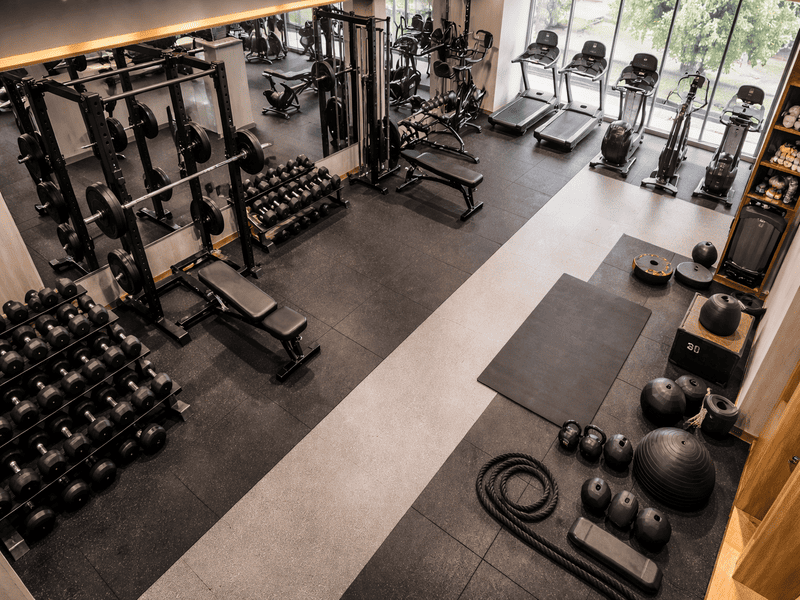
In a private gym, the equipment is curated for specific sports. As a flooring specialist, this is where I see the biggest difference. Private gyms invest in high-density rubber tiles (often 20mm+) rather than the thin rolled rubber found in commercial gyms.
- In einfachen Worten: The floor is built to handle heavy weights being dropped. You can train hard without worrying about breaking the floor or making too much noise.
3. Atmosphere: Anonymity vs. Community
Commercial gyms can feel isolating with a "headphones on" culture. Private gyms foster a "team" environment where members know each other and provide accountability.
The Expert View:
Commercial gyms can suffer from "Gymtimidation." The sheer size and volume of strangers can make beginners feel judged or lost. It is an anonymous experience; you swipe in, you workout, you leave.
Private gyms rely on culture. Because the group is smaller, the owner knows your name and your injuries. If you miss a week, someone will text you to ask where you are.
- In einfachen Worten: Commercial gyms are like renting a book from a library; private gyms are like joining a book club. The social pressure helps you stay consistent.
4. Crowds: The Math of Waiting
Commercial gyms are often overcrowded during peak hours, leading to frustrated waiting. Private gyms manage capacity to ensure you always have access to equipment.
The Expert View:
If a commercial gym has 5,000 members and even 5% show up at 6 PM, the facility is gridlocked. Waiting 15 minutes for a squat rack kills your workout momentum.
- In einfachen Worten: They sell more tickets than they have seats.
Private gyms, especially those with class booking systems, cap their attendance. We design these spaces with "stations" in mind, ensuring that every person in the room has the equipment they need, when they need it.
5. Coaching: Supervision vs. Sales
In commercial gyms, staff are often sales reps. In private gyms, the staff are coaches whose primary job is to teach you how to move safely.
The Expert View:
Unless you pay extra for a Personal Trainer in a commercial gym, you are on your own. The floor staff are there for maintenance, not instruction.
- In einfachen Worten: No one is watching your form. If you do it wrong, you might get hurt.
In a private gym, coaching is the main product. Eyes are always on you.
- In einfachen Worten: It’s safer for beginners because you have a professional correcting you in real-time.
6. Amenities: Luxury vs. Essentials
Commercial gyms sell comfort (saunas, tanning). Private gyms sell work (chalk, foam rollers).
The Expert View:
Commercial gyms allocate a huge budget to locker rooms, saunas, and massage chairs. They want the gym to feel like a spa so you keep paying the membership even if you don’t lift weights.
- In einfachen Worten: You are paying for the perks.
Private gyms are utilitarian. You won’t find a smoothie bar, but you will find high-quality chalk bowls and specialized resistance bands.
- In einfachen Worten: You are paying for the workout.
7. Rules: The "Lunk Alarm"
Commercial gyms restrict noise and intensity to keep the environment calm. Private gyms encourage noise and effort as part of the training process.
The Expert View:
Many commercial gyms ban chalk and discourage "grunting" (like Planet Fitness’s "Lunk Alarm"). This is to keep the environment non-intimidating for the general public.
- In einfachen Worten: They don’t want you to train too hard because it scares other members.
Private gyms understand that effort makes noise. Dropping weights (on proper flooring) and vocal exertion are seen as signs of hard work.

Decision Guide: Which One is Right for You?
Use these personas to make your choice.
Choose a Commercial Gym IF:
- Budget is #1: You need to keep costs under $50/mo.
- You want amenities: You love the sauna and pool.
- You are independent: You know what you are doing and don’t need a coach.
- You travel: You need a gym that has branches in every city.
Choose a Private Gym IF:
- You have a goal: You want to learn a specific skill or rehab an injury.
- You need a push: You know you won’t work hard without a coach or community.
- You hate waiting: You value your time and want guaranteed equipment access.
- You value quality: You want to use professional-grade gear on safe flooring.
Schlussfolgerung
There is no "best" gym, only the environment that fits your current needs. If you are self-motivated and budget-conscious, a commercial gym is fantastic. If you need accountability and specialized training, a private gym is worth the investment.