


Ein stoßdämpfender Basketball-Bodenbelag ist eine große Bereicherung für jeden Platz. Er reduziert die Belastung der Gelenke erheblich, beugt Langzeitverletzungen vor und macht das Spiel viel besser. Dieser Bodenbelag gibt die Energie an den Spieler zurück und erfüllt strenge Sicherheitsstandards wie ASTM F2772. Er ist sowohl für Profisportler als auch für Kinder, die gerade erst spielen lernen, eine bessere und sicherere Wahl als Beton.

Die Wissenschaft von Aufprall und Energierückgabe
Aus meiner Sicht in der Produktion ist der Unterschied zwischen Beton und Parkett nicht nur ein "weiches Gefühl". Es geht um Physik. Wenn wir stoßdämpfende Systeme entwerfen, egal ob es sich um Fliesen oder gepolsterte Pads handelt, ist unser Hauptziel die Kraftreduzierung. Wenn ein Spieler auf Beton landet, werden 0% des Stoßes vom Boden absorbiert. Das bedeutet, dass 100% dieser Kraft durch die Knöchel, Knie und Hüften des Spielers wieder nach oben dringt.
Umgang mit Gewalt und kumulativen Traumata
Im Gegensatz dazu sind unsere technischen Werkstoffe so beschaffen, dass sie zwischen 10% und über 50% dieser Aufprallenergie absorbieren. Dies erreichen wir durch spezielle Kunststoffrezepturen und Strukturtechniken. Zum Beispiel bringen wir auf der Unterseite der Fliesen Gittermuster an, die wie Miniaturfedern wirken. Dies verhindert "kumulative Traumafolgestörungen", d. h. Abnutzungserscheinungen, die mit der Zeit auftreten und eine Sportlerkarriere frühzeitig beenden können. Als Produktionsleiter weiß ich, dass ein erfolgreicher Boden steif genug sein muss, damit der Ball gut abprallt, aber auch genug nachgeben muss, um den menschlichen Körper zu schützen. Das ist ein heikles Gleichgewicht der Materialwissenschaft, das Beton einfach nicht bieten kann. Wir testen diese Konstruktionen ständig, um sicherzustellen, dass der Boden den Aufprall abfängt und nicht Ihre Gelenke.
Was ist ein stoßdämpfender Bodenbelag?
Stoßdämpfende Bodenbeläge beziehen sich auf spezielle Oberflächensysteme - wie modulare Polypropylenfliesen, Gummipuffer oder abgehängte Holzböden -, die so konzipiert sind, dass sie Aufprallkräfte verringern. Sie funktionieren, indem sie ein berechnetes Maß an vertikaler Verformung zulassen. Dadurch wird die kinetische Energie bei Sprüngen und beim Laufen absorbiert, anstatt sie in den Körper des Sportlers zurückzustrahlen.
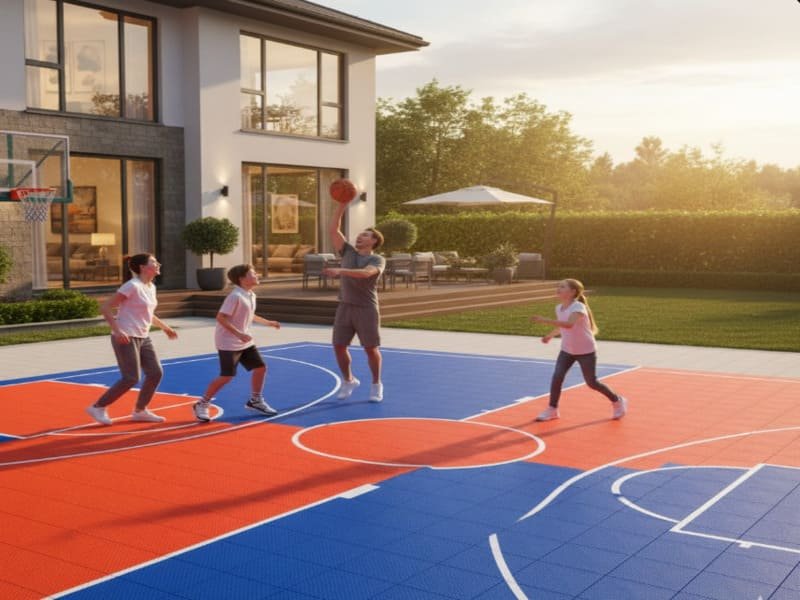
Werkstofftechnik und Mechanik
Ich unterscheide stoßdämpfende Bodenbeläge in zwei Haupttypen, je nachdem, wie wir sie herstellen: Flächenelastisch (wie gefedertes Holz) und punktelastisch - eine Schlüsselkategorie bei der Bestimmung von Welches ist der beste Sportbodenbelag aus Gummi?. Für Außenplätze verwenden wir in der Regel hochschlagfesten Polypropylen-Kunststoff (PP), der zu modularen Fliesen geformt wird. Dabei handelt es sich nicht einfach nur um massive Kunststoffblöcke, sondern sie sind mit einem hängenden Profil versehen.
Die eigentliche Arbeit findet unter der Oberfläche statt. Wir konstruieren die Stützpfeiler so, dass sie sich unter Belastung leicht biegen. Dies wird oft als "seitliche Nachgiebigkeit" bezeichnet. Wenn ein Spieler einen harten Schnitt macht oder einen Sprung landet, bewegt sich der Boden mikroskopisch, um die Scherkräfte zu absorbieren und die Bänder zu schützen. Wenn Sie sich einen Querschnitt unserer Fliesen ansehen, werden Sie eine komplexe geometrische Rippung erkennen. Diese Geometrie sorgt für strukturelle Festigkeit und ermöglicht gleichzeitig Wärmeausdehnung und Stoßabsorption. Wir testen diese Chargen ständig auf ihre Elastizität, um sicherzustellen, dass sie den "Sweet Spot" treffen: nicht zu weich, damit der Ball stirbt, und nicht so hart, dass er sich wie Zement anfühlt.
Wie sie Verletzungen vorbeugt und die Gesundheit schützt
Die Stoßdämpfung beugt Verletzungen vor, indem sie die auf den Körper einwirkenden G-Kräfte bei Sprüngen und Sprints deutlich verringert. Sie mildert unmittelbare akute Verletzungen bei Stürzen, wie z. B. Brüche, und schützt gleichzeitig die sich entwickelnden Wachstumsplatten jüngerer Sportler vor chronischer Belastung und Ermüdung.
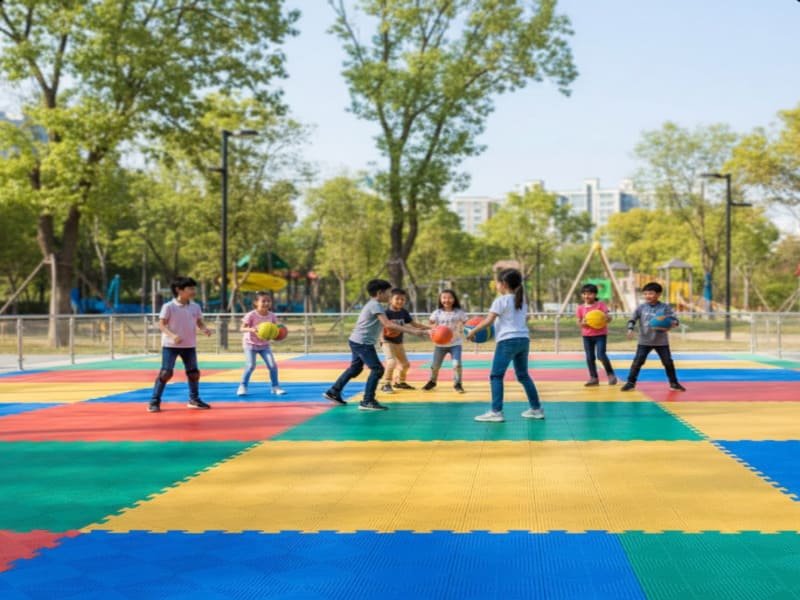
Biomechanik und wachsende Körper
In der Welt der Herstellung sprechen wir von "Sicherheitsfaktoren", aber auf dem Spielfeld bedeutet dies direkt die menschliche Gesundheit. Der wichtigste Vorteil eines stoßdämpfenden Bodenbelags ist der Schutz der Wachstumsfugen bei Kindern und Jugendlichen. Junge Knochen verkalken noch, und wiederholte Stöße auf harte Oberflächen wie Asphalt können zu Krankheiten wie Morbus Sever oder Morbus Osgood-Schlatter führen. Unsere Bodensysteme sind so konzipiert, dass sie als Puffer wirken.
Darüber hinaus entwickeln wir die Oberflächenstruktur so, dass Unfälle durch Ausrutschen und Stürze vermieden werden, und stellen sicher, dass sie nicht so abrasiv ist, dass sie Hautabschürfungen verursacht, wenn ein Spieler stürzt. Wir testen sogar das Potenzial für Kopfverletzungen auf diesen Oberflächen. Zwar kann kein Boden alle Verletzungen verhindern, aber eine stoßdämpfende Oberfläche kann den Unterschied zwischen einer Prellung und einem Knochenbruch ausmachen. Auch die Ermüdung der Spieler wird deutlich reduziert. Das ist der "Trampolineffekt" oder die Energierückgabe. Auf Beton leisten Ihre Muskeln die ganze Arbeit, um Sie vom Boden abzuheben. Auf einem stoßdämpfenden Boden speichert das Material einen Teil dieser Energie und gibt sie zurück, so dass die Sportler für dieselben Bewegungen weniger Energie aufwenden müssen.
Hilft es der Spielleistung?
Ja, ein hochwertiger, stoßdämpfender Bodenbelag verbessert die Leistung, indem er einen gleichmäßigen Ballrückprall gewährleistet (über 90%-Standard), tote Winkel reduziert und eine optimierte Traktion bietet. Dadurch können die Spieler scharfe Schnitte und Hochgeschwindigkeitsmanöver mit Selbstvertrauen ausführen, ohne die Unberechenbarkeit von unebenen Außenflächen.
Die Physik der Spielbarkeit
Eine häufige Frage, die ich von Kunden höre, lautet: "Wenn der Boden Stöße dämpft, wird er dann nicht auch den Aufprall des Balls absorbieren?" Wenn das Produkt schlecht hergestellt ist, ja. Aber bei der professionellen Herstellung halten wir uns an strenge Ballrückprall-Standards. Wir streben eine Rebound-Konsistenz an, die mindestens 90% bis 95% dessen entspricht, was Sie auf Beton erhalten würden. Dies erreichen wir durch die Verwendung starrer Deckschichten, die von der stoßdämpfenden Unterkonstruktion unterstützt werden. Der Boden ist steif genug für den leichten Aufprall eines Balls, aber nachgiebig genug für den schweren Aufprall eines Spielers.
Ein weiterer Leistungsfaktor, den wir entwickeln, ist die Akustik. Harte Oberflächen schaffen eine chaotische Lärmumgebung. Durch die Wahl der Materialdichte dämpfen unsere Böden das hochfrequente "Quietschen" und das niederfrequente "Poltern". Außerdem legen wir großen Wert auf die Reibung. Beton wird rutschig, wenn er staubig ist; Asphalt ist zu abrasiv. Wir strukturieren unsere Fliesen so, dass sie sowohl im trockenen als auch im nassen Zustand einen gleichmäßigen Grip bieten. So können die Spieler effizient beschleunigen und abbremsen, weil sie wissen, dass der Boden sie halten wird.
Beton vs. stoßdämpfender Bodenbelag
Beton ist zwar langlebig, aber nicht stoßdämpfend, was ein hohes Verletzungsrisiko birgt und keine Energierückgabe ermöglicht. Stoßdämpfende Bodenbeläge bieten überlegene Sicherheit, akustische Dämpfung und gleichbleibende Leistung, so dass sie trotz der höheren Anfangsinvestition die bevorzugte Wahl für die Langlebigkeit der Spieler sind.

Eine Seite-für-Seite-Analyse
Wenn ich Hausverwalter oder Hauseigentümer berate, die sich für Was ist der beste Belag für einen Basketballplatz im Freien im Jahr 2025?Ich unterscheide oft den Lebenszyklus der Oberfläche. Beton ist oft die "Basis", aber er sollte nicht die "Oberfläche" sein. Mit der Zeit bekommt Beton aufgrund von Bodensenkungen und Temperaturschwankungen Risse. Sobald er Risse bekommt, wird er zu einem Sicherheitsrisiko, dessen Erneuerung teuer ist.
Unsere stoßdämpfenden Fliesen sind so konzipiert, dass sie "schwimmen". Sie haben Dehnungsfugen, die in die Schlösser eingebaut sind. Das bedeutet, dass sich der Boden bei Temperaturschwankungen zwischen heiß und kalt ausdehnt und zusammenzieht, ohne sich zu verziehen oder Risse zu bekommen. Diese Technik löst das Problem der Langlebigkeit, das bei starren Platten auftritt. Konkret bietet Beton eine Kraftreduzierung von etwa 0%, während unsere Böden 25% bis 55% bieten. Während Beton mit 100% der Referenzstandard für den Ballrückprall ist, erreichen unsere technischen Böden 90% bis 99%, was während des Spiels praktisch nicht zu unterscheiden ist. Am wichtigsten ist jedoch, dass der modulare Bodenbelag schnell über bestehende Beläge verlegt werden kann, während Beton eine schwere Konstruktion erfordert.
Dauerhaftigkeit und Entwässerung bei jedem Wetter
Neben Sicherheit und Leistung bieten Parkettböden auch erhebliche Vorteile in Bezug auf Haltbarkeit und Wetterbeständigkeit. Im Gegensatz zu Holz, das verrotten kann, oder Beton, der Pfützen aufnimmt, werden spezielle Fliesen für den Außenbereich so hergestellt, dass sie den Elementen standhalten.
Entwässerungsmechanik und -wartung
Wir entwerfen für den Außenbereich spezifische Fliesen mit einer Oberfläche mit offenem Gitter. Dadurch entsteht ein selbstentwässerndes System. Wenn es regnet, fließt das Wasser sofort durch die Oberfläche in den Unterbau darunter. Da die Fliesen auf einer Gitterstruktur aufliegen, zirkuliert die Luft darunter, so dass der Platz sehr schnell trocknet. Das bedeutet, dass man nach einem Gewitter fast sofort spielen kann, während Betonplätze stundenlang rutschig und gefährlich bleiben können.
Diese Materialien sind außerdem UV-stabilisiert. Während des Mischvorgangs fügen wir Stabilisatoren hinzu, die verhindern, dass der Kunststoff spröde wird oder in der Sonne seine Farbe verliert. Die Wartung ist im Vergleich zu herkömmlichen Oberflächen unglaublich einfach. Es ist nicht nötig, jährlich Risse zu füllen oder Linien neu zu streichen. In der Regel genügt ein einfaches Abspritzen oder Laubblasen, um den Platz über ein Jahrzehnt lang in einem Topzustand zu halten.
Ästhetik und einfache Installation
Die Leistung ist zwar entscheidend, aber die optische Attraktivität und die einfache Einrichtung sind wichtige Vorteile, die Beton nicht bieten kann. Modulare Systeme ermöglichen ein Maß an Individualisierung, das einen Hinterhof in eine professionell aussehende Arena verwandelt.
Anpassung und Montage
Da wir diese Fliesen im Spritzgussverfahren herstellen, können wir sie in jeder erdenklichen Farbe produzieren. Dies ermöglicht es den Besitzern von Einrichtungen, die Mannschaftsfarben anzupassen, individuelle Tasten, Drei-Punkte-Linien und Umrandungen zu erstellen, ohne Farbe zu verwenden, die mit der Zeit abblättern würde. Wir können sogar Logos direkt auf die Oberfläche drucken.
Vom Standpunkt der Installation aus ist das modulare Design überlegen. Wir verwenden ein einfaches Schlaufen- und Stiftsystem, das sich zusammenstecken lässt. Es ist wie das Zusammensetzen eines großen Puzzles. Dadurch sind keine schmutzigen Klebstoffe, schweren Maschinen oder giftigen Dämpfe erforderlich. Ein kleines Team kann ein komplettes Spielfeld in nur ein oder zwei Tagen installieren. Und wenn ein bestimmter Bereich beschädigt wird, müssen Sie nicht den ganzen Boden austauschen. Sie können die beschädigte Fliese einfach abnehmen und eine neue einsetzen, was langfristige Reparaturen billig und einfach macht.
Technische Standards sichern die Qualität
Seriöse stoßdämpfende Bodenbeläge müssen Normen wie ASTM F2772 (Nordamerika) und DIN 18032 (Europa) erfüllen, die die Stoßdämpfung, die vertikale Verformung, den Ballrückprall und die Gleitreibung prüfen. Diese Zertifizierungen garantieren, dass der Boden die behaupteten Sicherheitsvorteile bietet.

Entschlüsselung der Zertifizierungen
Als Hersteller raten wir nicht nur, wir testen. Der Goldstandard, den wir befolgen, ist DIN 18032, Teil 2. Diese deutsche Norm ist der weltweite Maßstab. Sie prüft vier Schlüsselkriterien. Erstens die Stoßdämpfung: Hier wird gemessen, wie viel Aufprallenergie der Boden im Vergleich zu Beton absorbiert. Ein Mindestwert von 53% wird häufig für Böden im Hochleistungssport gefordert, während 25-35% für den Freizeitsport hervorragend geeignet ist. Zweitens die vertikale Verformung: Sie misst, wie stark sich der Boden bei einem Aufprall verformt. Unser Ziel sind 2,3 mm bis 5,0 mm.
Drittens der Ballrückprall: Wie bereits erwähnt, muss er mindestens 90% des Betons betragen. Schließlich muss die Gleitreibung zwischen 0,5 und 0,7 liegen. Ein Wert unter 0,5 ist zu rutschig, wie Eis; ein Wert über 0,7 ist zu griffig und führt zu eingeklemmten Füßen und verstauchten Knöcheln. Die Erfüllung dieser Normen beweist, dass die Behauptung "stoßdämpfend" nicht nur ein Marketingversprechen ist - sie entspricht der technischen Realität.
Schlussfolgerung
Zusammenfassend lässt sich sagen, dass stoßdämpfende Basketballböden nicht nur eine ästhetische Aufwertung darstellen, sondern eine entscheidende Investition in Sicherheit, Leistung und Langlebigkeit sind. Indem sie den Aufprall der Gelenke erheblich reduzieren, Verletzungen verhindern und ein gleichmäßiges Ballverhalten gewährleisten, bieten diese Systeme einen immensen Mehrwert gegenüber einfachem Beton. Ob für einen Hinterhofplatz oder eine kommerzielle Anlage, die medizinischen Einsparungen und das verbesserte Spielerlebnis machen sie zur klaren Wahl.
Sind Sie bereit, Ihr Spielfeld aufzurüsten? Wenden Sie sich noch heute an unser Team, um ein kostenloses Musterkit und ein individuelles, auf Ihre Bedürfnisse zugeschnittenes Angebot zu erhalten.