


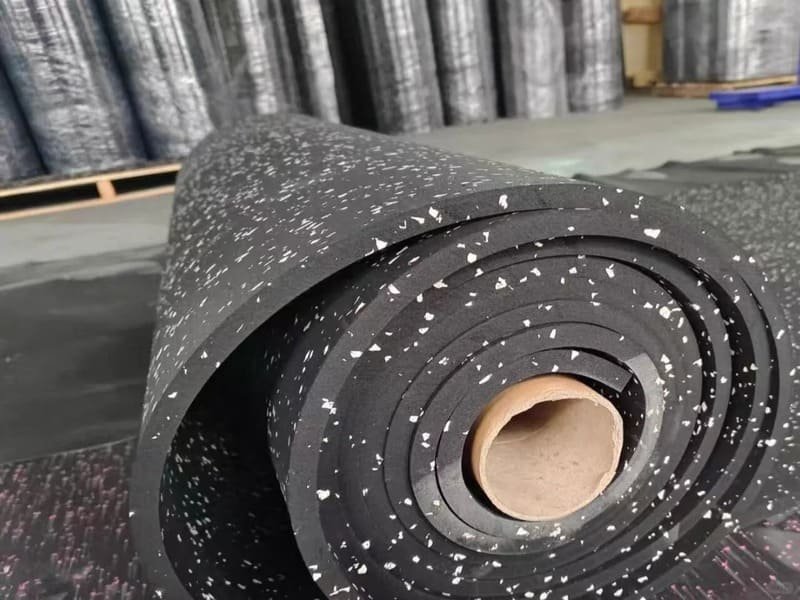
To read rubber flooring specs like an engineer, you must verify five critical metrics: Density (≥1000 kg/m³), Tensile Strength (≥200 psi), ASTM E648 Fire Rating (Class I), FloorScore® VOC certification, and a Thickness Tolerance of ≤±0.5mm. Prioritizing these data points over aesthetics ensures structural integrity, safety compliance, and long-term ROI.
Transitioning from a Casual Buyer to a Technical Evaluator
When I walk onto a job site, I do not look at how pretty the floor is. I look at the data sheet because "looks good" is not a measurable metric in engineering. Many buyers select rubber based on a small hand sample, but they fail to realize that the wrong specification leads to catastrophic failures like delamination, toxic odors, or rapid surface erosion. My goal is to help you move past the marketing talk. We need to look at the material science and the mechanical limits of the product. If you understand the physics of the roll, you can prevent a 10,000-dollar mistake before the glue even touches the subfloor.
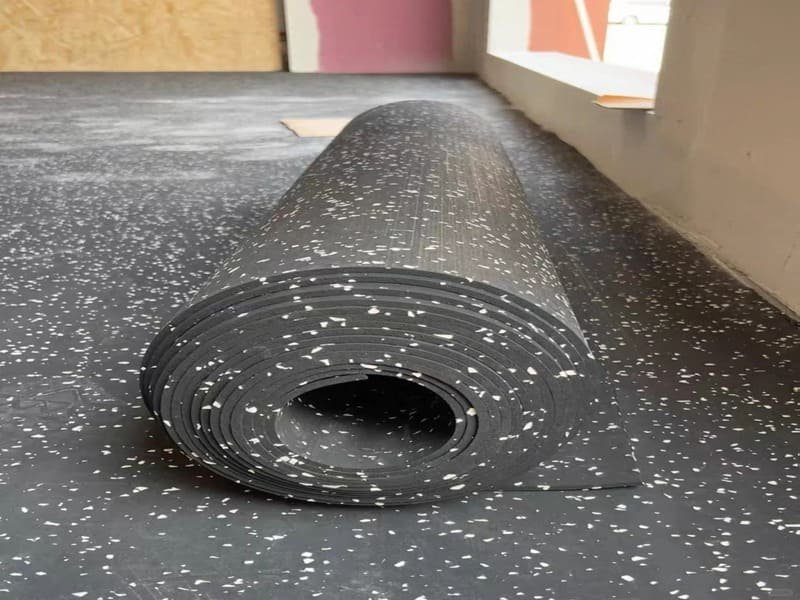
Before we dive into the deep science, I want to give you a tool to filter out low-quality products in seconds.
Quick Checklist: How to Evaluate Rubber Flooring in 30 Seconds?
You can identify high-quality rubber flooring by checking five specific technical benchmarks. If a product fails more than two of these metrics, it is likely a residential-grade material being marketed as commercial-grade, and it will not survive high-traffic or heavy-load environments.
| Technische Metrik | Industrial Standard | Technischer Zweck |
|---|---|---|
| Dichte | ≥ 1000 kg/m³ | Supports heavy-duty gym equipment. |
| Zugfestigkeit | ≥ 200 psi | Ensures the roll won’t snap under stress. |
| Brandklasse | ASTM E648 Class I | Required for legal commercial occupancy. |
| VOC Emission | FloorScore® Certified | Guarantees indoor air safety/low odor. |
| Toleranz | ≤ ±0.5mm | Ensures seamless installation and no trips. |
The "Do Not Buy" Logic for Engineers
I use this checklist to kill bad deals quickly. In my experience, manufacturers who hide their ASTM data are usually hiding a weak binder ratio or low-quality recycled SBR. If a spec sheet says "High Density" but does not give you a number in kg/m³ or lb/ft³, it is a marketing claim, not an engineering spec.
You must also look at the thickness tolerance. If you buy a 10mm floor and the tolerance is ±1.0mm, one roll could be 9mm and the next 11mm. When you lay them down, the "lip" between rolls becomes a permanent trip hazard and a point where cleaning machines will tear the edge. A true engineered product maintains tight tolerances because the manufacturing molds are calibrated to a professional standard. If the data is missing, the quality is missing.
Once you have the basic numbers, you need to match them to your specific room. Not every project needs the same "strength."
Which Specs Matter for Your Specific Application?
Different applications require different mechanical priorities. While a weightlifting area demands high density and tear resistance to survive dropped plates, a yoga studio or office space should prioritize Shore A hardness for comfort and FloorScore® certifications for air quality.
| Anmeldung | Primary Spec Priority | Secondary Spec Priority |
|---|---|---|
| Weightlifting/Gym | Density + Tear Resistance | Zugfestigkeit |
| CrossFit/Turf | Tensile + Binder Ratio | Abnutzungswiderstand |
| Yoga/Pilates | Lower Shore A (Softer) | VOC-Emissionen |
| Commercial Hallway | Fire Rating (ASTM E648) | Gleitwiderstand (COF) |
Matching Material Physics to Human Use
I often see engineers over-spec a floor, which wastes money. For a yoga studio, you do not need a 1200 kg/m³ density; it is too hard on the knees. You want a lower Shore A durometer rating for "give." However, for a CrossFit "box" where heavy sleds are pushed and dumbbells are dropped, the binder ratio is the most important factor.
The binder is the polyurethane glue that holds the rubber granules together. If the binder ratio is too low, the high-friction "pivot" movements of an athlete will tear the granules apart. This is called "shedding." For these high-intensity zones, I always look for a high tensile strength (ASTM D412) to ensure the floor stretches but does not snap. For commercial buildings like hospitals or schools, the fire rating is the non-negotiable "gatekeeper" spec. If it is not Class I, the project will not pass inspection.

To see why this matters in the real world, let’s compare a cheap product against a professional engineered product.
Real Example: Cheap vs. Engineered Rubber Flooring?
The difference between cheap and engineered rubber flooring is found in the lifespan and certified test data. Cheap flooring often lacks ASTM verification and uses lower density, leading to a lifespan of only 2–3 years, while engineered products offer 10+ years of utility.
| Spec Point | Cheap "Generic" Product | Engineered Professional Product |
|---|---|---|
| Dichte | 800 – 850 kg/m³ | 1000 – 1200 kg/m³ |
| ASTM Data | "Meets standards" (No reports) | Fully Certified Lab Reports Provided |
| Binder Qualität | Standard Grade (Higher Odor) | MDI Isocyanate (Low Odor/High Bond) |
| Erwartete Lebensdauer | 2–3 Years | 10+ Jahre |
Why the "Cheap" Option is an Engineering Failure
I have analyzed many failed floors, and the "Cheap" product almost always fails because of the binder and density combo. A density of 850 kg/m³ is mostly air pockets. When a heavy rack is placed on it, the rubber compresses permanently. This is a static load failure. The engineered product uses a higher density and a better binder, which allows the floor to "spring" back to its original shape.
The most dangerous part of cheap flooring is the missing ASTM data. When a supplier says "tested to meet ASTM D2047" but cannot show you the actual lab report from a third party, they are usually lying. As an engineer, I only trust third-party verified data. A professional product will provide a full technical manual with clear numbers. This is how you justify the higher upfront cost to your stakeholders—by showing that the "Engineered" product has a much lower cost-per-year over its decade-long lifespan.
Engineering a floor is about more than just buying a roll; it is about technical partnership and verification.
Schlussfolgerung
Data doesn’t lie, but marketing often does. Always verify the ASTM reports.