


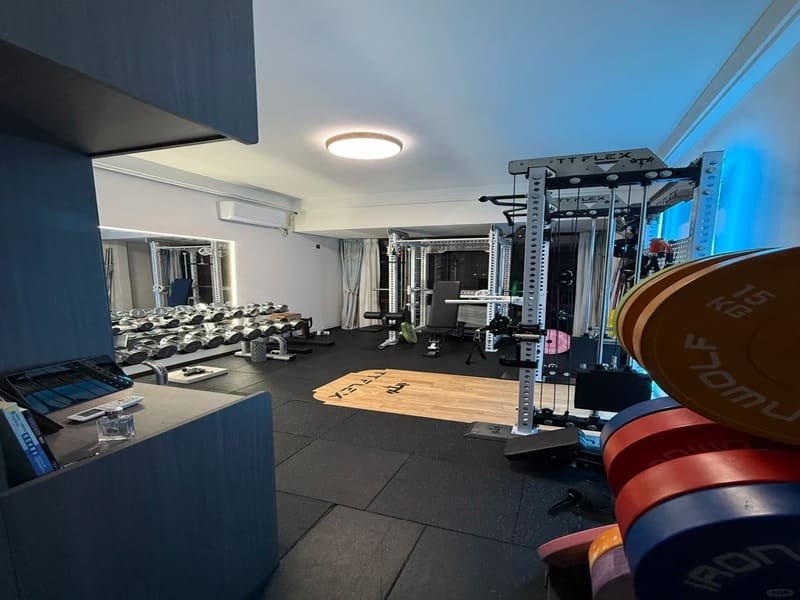
The performance of your gym floor depends entirely on two metrics: Density ($kg/m^3$) determines durability and sound insulation, while Shore Hardness (Shore A) dictates stability and shock absorption. Getting this balance wrong results in unstable lifts, joint pain, and rapid equipment damage.
As a production engineer who has overseen the manufacturing of thousands of square meters of rubber flooring, I see a common mistake. Athletes spend a fortune on precise barbells but lift on "spongy" mats. The floor is part of your equipment. Dichte refers to how tightly the rubber granules are packed during the molding process. In our factory, we measure this in kilograms per cubic meter ($kg/m^3$). A higher density means a heavier, tougher mat that blocks sound. Shore-Härte, measured on the Shore A scale, tells us how much the rubber resists indentation. If you are doing a heavy squat, you need the floor to push back, not sink. If you are doing plyometrics, you need some give. We engineer these specific ratios by adjusting the binder content and compression pressure during vulcanization to match specific sports.
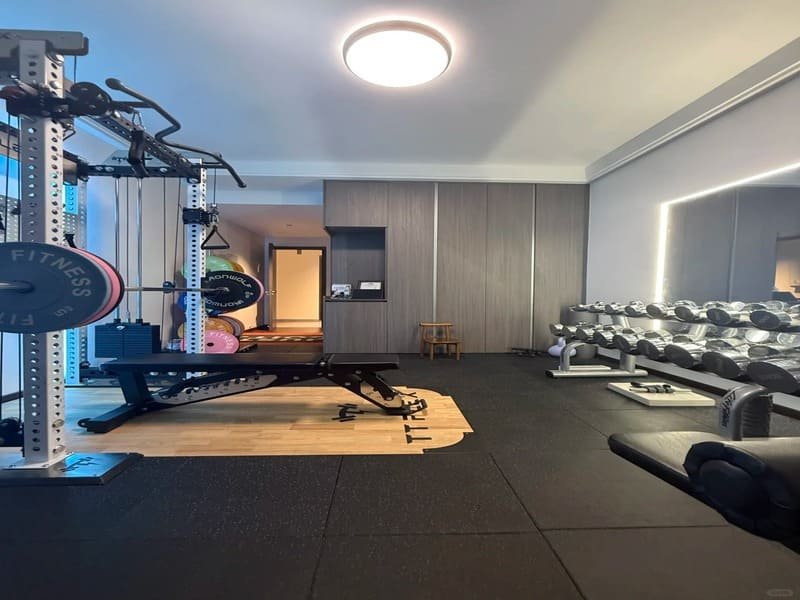
Before we dive into the engineering science, I want to give you the cheat sheet right away. If you are in a rush, here is exactly what you need to look for based on your training style.
TL;DR – Choose Like a Pro (30-Second Guide)
To instantly match your gym floor to your training needs, match the density and hardness specs below. This ensures you get the right balance of stability, protection, and acoustics without overpaying for specs you don’t need.
I have compiled this quick selection guide based on years of testing and customer feedback. Save this or screenshot it for when you are talking to suppliers:
- Heavy Lifting / Powerlifting:
- Spez: Density 1000+ $kg/m^3$ & 70A+ Hardness.
- Warum? Maximum stability, zero compression.
- CrossFit / HIIT:
- Spez: Density 900–950 $kg/m^3$ & 60–65A Hardness.
- Warum? Balances shock absorption for jumps with firmness for lifts.
- Home Gym (Noise-sensitive):
- Spez: Density 950+ $kg/m^3$ & 60–65A Hardness.
- Warum? High density blocks noise; medium hardness reduces impact clatter.
- Yoga / Rehab:
- Spez: Lower density & 45–55A Hardness.
- Warum? Prioritizes comfort and joint protection.
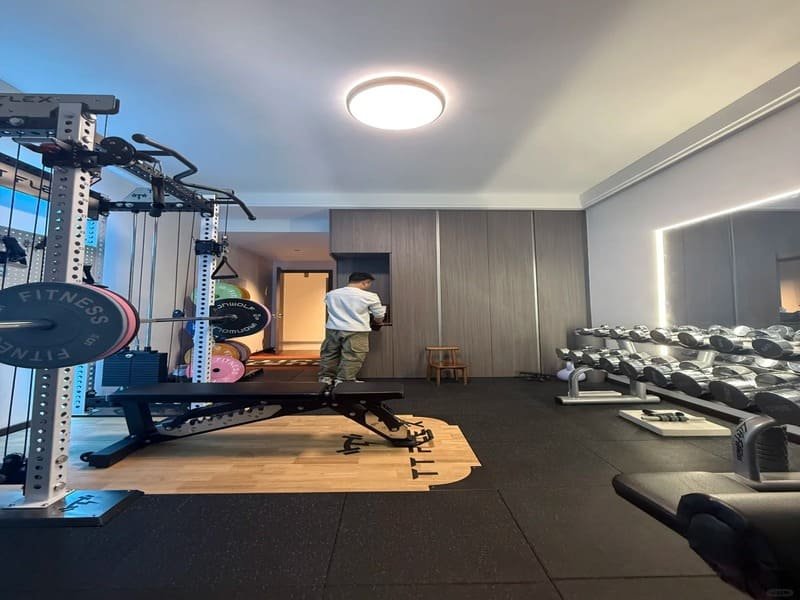
Now that you have the summary, let’s understand warum these numbers matter so you don’t fall for marketing fluff.
What Do the Technical Numbers Actually Mean for You?
Rubber Density ($kg/m^3$) measures the mass per unit volume, similar to the difference between a dense fruitcake and a light sponge cake. Shore Hardness (Scale A) measures resistance to indentation; 40A is soft like an eraser, while 80A feels like a hard car tire.
When we design flooring compounds, we look at these two metrics as distinct levers we can pull. Dichte is primarily about the lifespan and "meat" of the product. In production, we achieve high density (over $1000 kg/m^3$) by using finer rubber granules and higher compression. This leaves fewer air pockets. Think of it this way: low-density mats are like a sponge cake—full of air and light. High-density mats are like a dense fruitcake—heavy and solid.
Shore-Härte is different. It is about surface feel. Here is how the scale breaks down in a gym context:
| Shore A Rating | Gefühl | Typische Anwendung |
|---|---|---|
| 40A – 55A | Soft, high grip, "squishy" | Yoga, Pilates, Stretching areas |
| 60A – 70A | Firm but forgiving | CrossFit, Functional Fitness, General Gyms |
| 75A – 90A | Hard, minimal give | Olympic Weightlifting platforms, Heavy Machinery |
Understanding this scale prevents you from buying a floor that feels like quicksand when you are trying to set a PR.
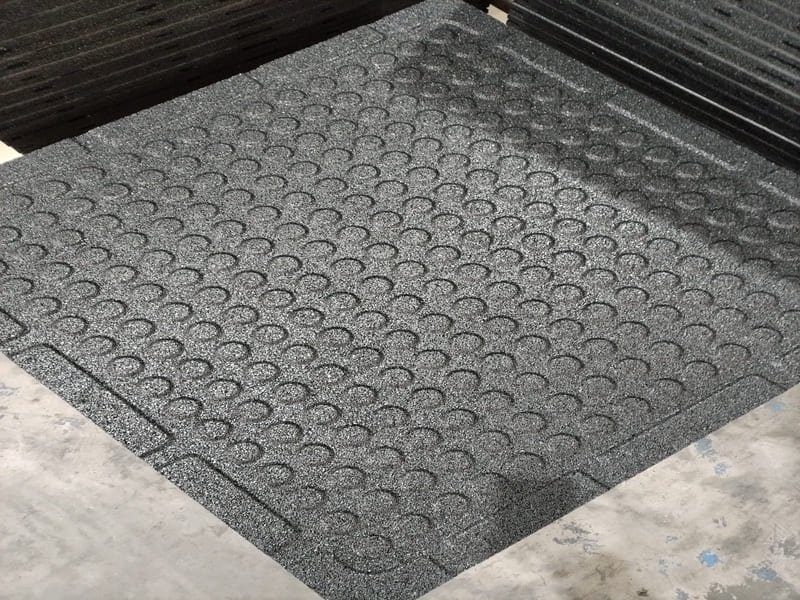
Understanding the numbers is the first step. Next, we will look at how these technical specifications directly change your biomechanics and safety during a workout.
How Do These Specs Impact Stability and Shock Absorption?
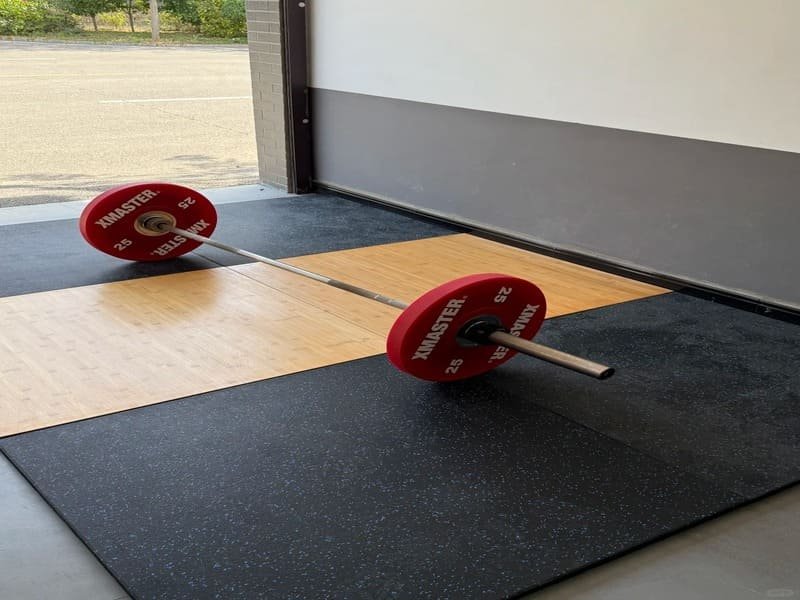
High Shore Hardness (65A+) prevents "energy leaks" during heavy lifts by ensuring force transfers to the bar, not the floor. Conversely, medium hardness (55A-65A) is essential for shock absorption to protect joints during jumps and to prevent dangerous barbell bounces.
From an engineering perspective, we call the loss of force "hysteresis." If you squat 300 lbs on a soft floor (low Shore Hardness), the rubber compresses. This is an energy leak. You are wasting energy compressing the mat instead of moving the weight. For powerlifting, we recommend high hardness to ensure 100% kinetic force transfer. It provides a stable base that feels as solid as concrete but protects the subfloor.
However, for dynamic movements like box jumps or CrossFit, a floor that is too hard is dangerous. It sends the impact shock straight back up into your ankles and knees. We adjust the formulation to create a "sweet spot" (around 60-65A) that dissipates impact energy. Furthermore, we test for "bounce." High-density, high-hardness rubber can cause a dropped barbell to rebound aggressively, risking injury. A properly engineered floor provides a "dead bounce," absorbing the energy so the bar settles safely.
Even smart buyers make mistakes. Before we discuss how to verify quality, I want to highlight the three most common traps I see customers fall into.
What Are the Most Common Buying Mistakes?
The biggest errors buyers make are prioritizing thickness over density, confusing hardness with density, and assuming that "softer" always means "safer." These misconceptions often lead to overspending on flooring that fails prematurely.
I have seen many gym owners regret their purchase because they focused on the wrong metrics. Here is what to avoid:
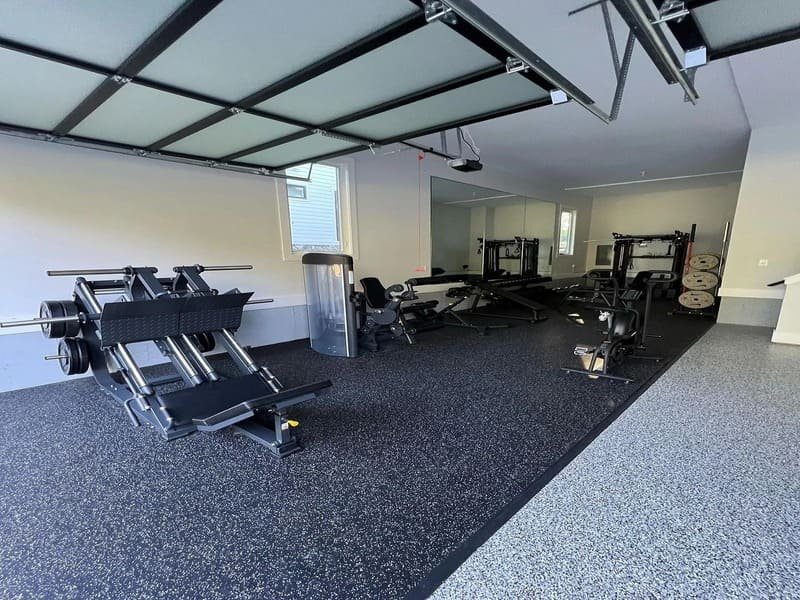
- ❌ Only looking at thickness: A 20mm mat seems robust, but if it has low density, it’s just a thick sponge. A 10mm high-density mat often offers better protection and stability than a 20mm low-density crumb rubber mat.
- ❌ Confusing hardness with density: A mat can be hard (high Shore A) but low density (porous). This type of mat is brittle and will crack easily. You need both specs to be high for a premium floor.
- ❌ Assuming “softer = safer”: While soft floors cushion falls, they are terrible for joint stability. Lifting heavy weights on a soft floor increases the risk of rolling an ankle or straining a knee due to the unstable surface.
Now that you know what to avoid, let’s talk about how you can verify the quality of the product yourself, just like we do in the factory.
How Can You Verify Quality Before Buying?
Use this quick checklist to validate quality: ensure Density and Shore A are explicitly listed on the datasheet, perform a "dead bounce" test with a golf ball, check for persistent odors after 24 hours, and test indentation recovery with a heavy weight.
As an insider, I advise you to treat your flooring purchase like an engineering project. Here is your Quick Verification Checklist:
- ✔ Density & Shore A Check: If a supplier hides these numbers or only gives vague terms like "heavy duty," it is a red flag. Demand the datasheet.
- ✔ Sample Rebound Test: Drop a golf ball onto the sample. A "dead bounce" (low rebound height) indicates good energy absorption characteristics for weightlifting. A high bounce suggests it might be too elastic and dangerous for dropped barbells.
- ✔ The Smell Test: Unwrap a sample and leave it for 24 hours. High-quality rubber (EPDM or premium SBR) should have a faint smell that fades. If it still smells like strong sulfur or burnt tires, it’s using cheap bonding agents.
- ✔ Indentation Recovery: Press your thumb hard into the sample or leave a heavy weight on it overnight. It should recover its shape almost instantly. If the dent stays, it will fail under your equipment.
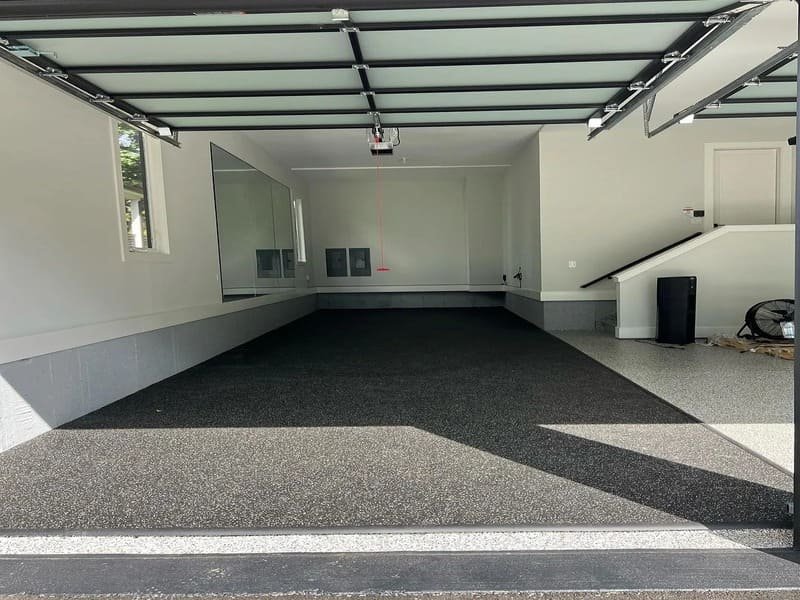
The floor is the foundation of your fitness journey. Making the right choice now ensures safety and performance for years to come.
Schlussfolgerung
Density equals durability and sound control; Hardness equals stability and feel. By looking at the specs and avoiding common traps like the "thickness fallacy," you can build a pro-level gym.
If you are still unsure which specs fit your specific facility, or if you want to perform the "smell test" yourself, my team is here to help. Contact us to discuss your project, and we can send you a kostenloses Musterkit so you can verify the density and hardness with your own hands before you buy.