


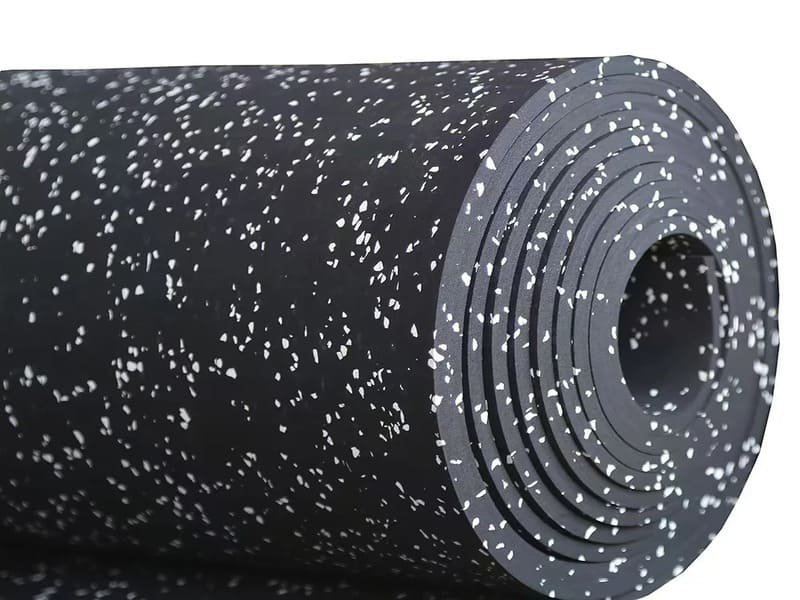
Rubber flooring must acclimate to reach physical equilibrium with the installation environment’s specific temperature and humidity. This pre-installation phase prevents post-installation shrinkage (gapping) or expansion (buckling). Without acclimation, the internal stresses of the rubber exceed the bond strength of the adhesive, leading to permanent floor failure and voided manufacturer warranties.
Rubber is a "living" polymer. It expands and contracts based on thermal energy. If you move cold rubber from a transit truck into a 22°C room and glue it down immediately, the material will expand as it warms up, causing the seams to peak or bubbles to form. Acclimation is a non-negotiable engineering step. It is the only way to ensure the dimensional stability required for a seamless, high-traffic surface.
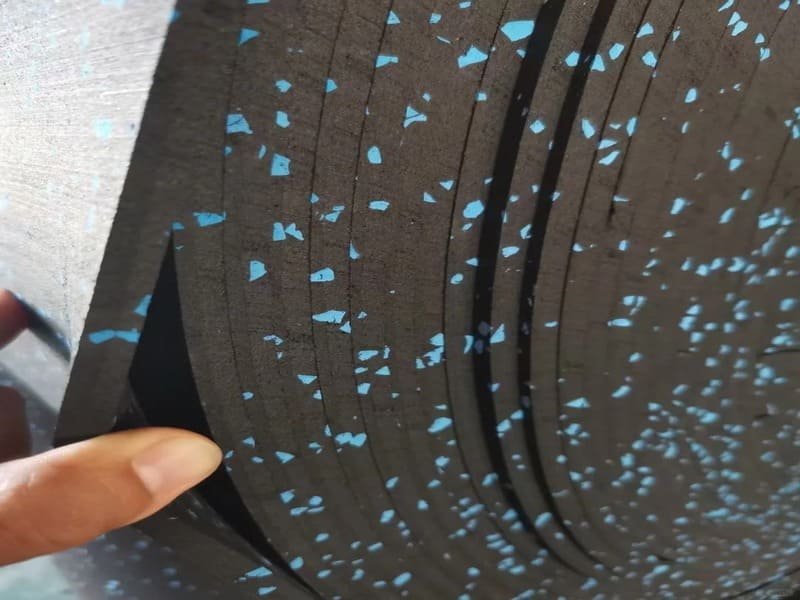
The physics of the material dictates the timeline. Understanding these variables is the difference between a floor that lasts decades and one that fails in weeks.
Why is ambient equilibrium critical for rubber polymers?
Ambient equilibrium is critical because rubber molecules require time to adjust to the room’s "service temperature"—the climate the floor will experience during daily use. This process eliminates "roll set" tension and ensures the material’s dimensions are fixed before the adhesive cures, preventing mechanical shearing of the glue bond.
Thermal Coefficients and Material Memory
Rubber has a high coefficient of linear thermal expansion. When temperature changes by even 10 degrees, the physical length of a 20-meter roll can change by several millimeters. Most rubber flooring is shipped in tightly wound rolls or compressed pallets, creating "material memory." If not allowed to relax, the rubber will attempt to return to its curved or compressed shape after installation.
| Eigentum | Impact of Temperature Change | Installation Risk |
|---|---|---|
| Linear Expansion | Material grows as temperature rises | Bubbling, "volcano" seams |
| Linear Contraction | Material shrinks as temperature drops | Wide gaps, dirt traps |
| Tensile Stress | Internal forces pull against the glue | Adhesive shearing/delamination |
| Vapor Pressure | Trapped moisture between cold rubber/warm floor | Mold growth and bond failure |
Why "Acclimation" includes the Adhesive
A common mistake is acclimating the rubber but leaving the adhesive in a cold warehouse. The adhesive must be at the same temperature as the flooring and subfloor. If the glue is too cold, its viscosity increases, leading to poor "wet-out" and insufficient transfer to the backing of the rubber.
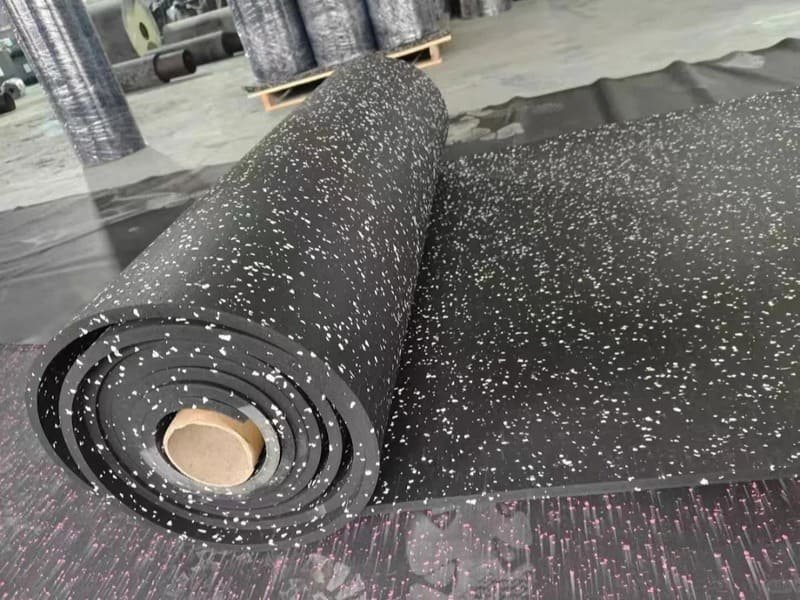
Failure to achieve this balance results in predictable, avoidable structural issues that no amount of heavy rolling can fix.
What are the technical consequences of skipping the 48-hour window?
Skipping the 48-hour acclimation window results in gapping, buckling, and peak seams. These are not cosmetic issues; they are structural failures. Most importantly, nearly all major manufacturers (e.g., Mondo, Regupol, Nora) explicitly state in their technical manuals that failure to acclimate voids all product performance warranties.
The "Shrink-Back" Phenomenon
If rubber is installed while it is expanded (due to heat during transit), it will eventually shrink as the building’s HVAC system cools the room. This creates gaps at the seams. In a gym or healthcare setting, these gaps become traps for bacteria and cleaning chemicals, which further degrade the adhesive.
Key Failure Points for Project Managers:
- Adhesive Shearing: The lateral force of expanding rubber can be stronger than the initial tack of the glue.
- Safety Hazards: Buckled rubber creates trip hazards that violate safety codes (e.g., OSHA or local building standards).
- Subfloor Moisture: Cold rubber placed on a warm subfloor can reach "dew point," creating condensation that prevents the glue from ever bonding.
Manufacturer & Industry Standards
Industry standards (such as ASTM F710 for concrete prep and manufacturer-specific ISO standards) emphasize that the HVAC system must be operational for 48–72 hours prior to and during installation. Always refer to the specific Technical Data Sheet (TDS) for your product, as high-density recycled rubber may require longer than low-density virgin rubber.
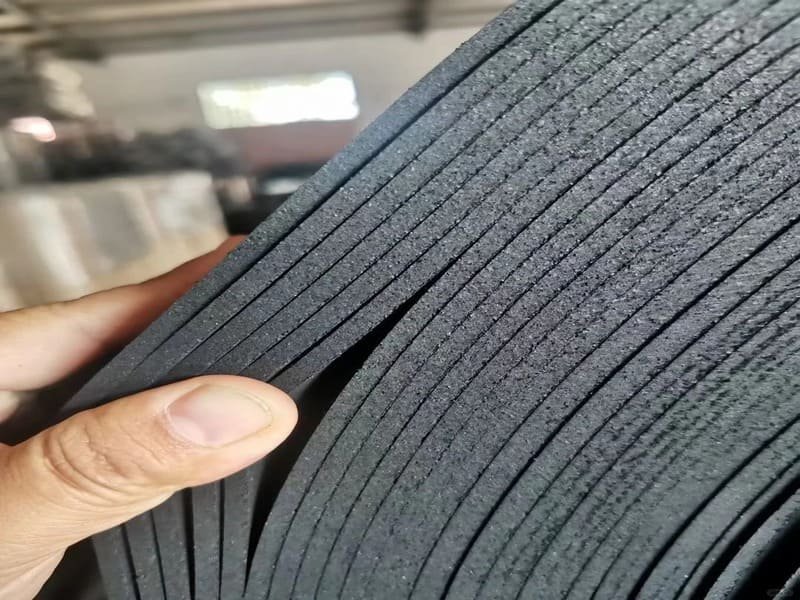
Understanding the "Why" is only half the battle; the "How" requires a strict protocol, especially in extreme weather.
FAQ: Professional Installation Parameters (Time, Temperature, & Methods)
The standard acclimation period is 48 to 72 hours. However, this varies based on the material type (rolls vs. tiles) and the delta between the storage temperature and the installation site temperature.
1. Does winter weather require longer acclimation?
Yes. If rubber has been stored in sub-zero temperatures, it can take up to 72 or 96 hours to reach a core temperature of 20°C. An infrared thermometer should be used to verify the core temperature, not just the surface.
2. Is there a difference between Rolls and Tiles?
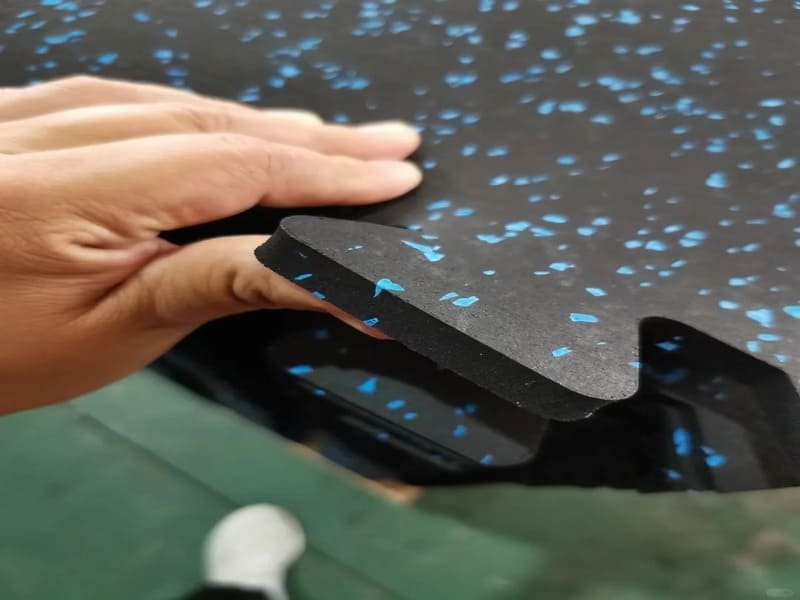
- Brötchen: Must be unrolled and "relaxed" for at least 24 hours of the 48-hour period.
- Kacheln: Must be removed from pallets and "cross-stacked" (log-cabin style) to allow airflow to the center of the stack.
3. Can I acclimate without the HVAC system running?
No. Acclimation is about matching the service conditions. If the building’s permanent heating or cooling is off, the rubber is acclimating to a temporary environment. Once the power is turned on and the temperature changes, the floor will move.
4. Should I cut the rolls before acclimating?
Yes. It is standard practice to "rough cut" the rolls to length (adding 5-10cm of overage) and letting them lay flat. This allows the internal tension from the manufacturing process to release fully.
| Material Typ | Minimum Time | Beste Praxis |
|---|---|---|
| Falzziegel | 48 Hours | Stacked no more than 5 high |
| Standard 8mm Rolls | 48-72 Hours | Rough-cut and laid flat |
| High-Density Mats | 72 Hours | Full airflow on both sides |
Schlussfolgerung
Acclimation is the primary technical safeguard against dimensional instability and adhesive failure.
For specific technical specifications or adhesive compatibility, feel free to reach out for a consultation.