


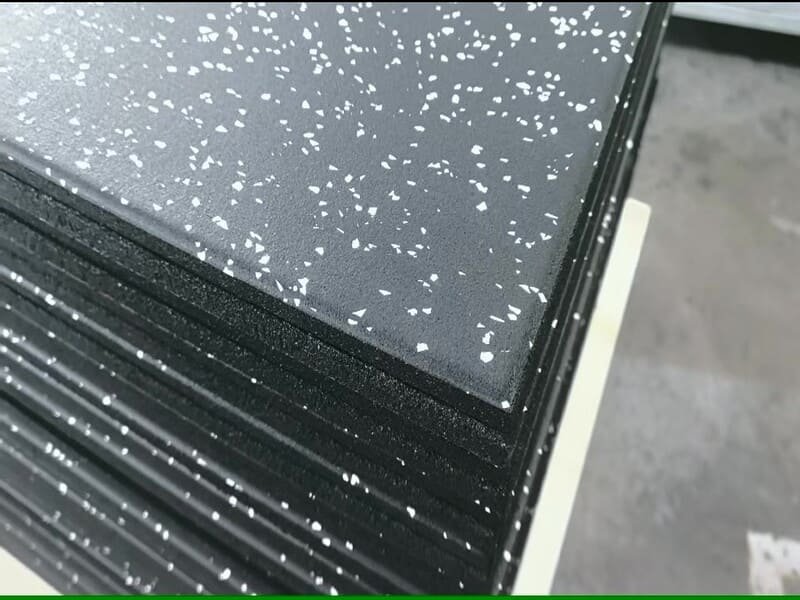
To stop rubber flooring from shifting, you must eliminate the "skating" effect caused by vibration and low friction. The most direct solution is bolting the rack through the rubber into the subfloor. For non-permanent setups, use a wall-to-wall compression fit or a plywood platform "sandwich" to lock the mats in place without damaging the underlying surface.
I have spent years as an R&D engineer developing high-density rubber compounds, and I see the same problem in almost every gym I visit. A trainer sets up a beautiful power rack, and three months later, it has "crawled" two inches to the left. This isn’t magic; it is basic physics. Rubber is elastic. Every time you rack a heavy barbell or drop a plate, energy travels through the rack and tries to push the floor out from under it. If the friction between your mat and the concrete is too low—which happens often with dust or polished surfaces—the floor moves. My goal here is to give you the exact mechanical fixes we use in professional facility design to stop that "creep" for good.

Before you go out and buy heavy-duty adhesives, run through this quick checklist. Most shifting issues are actually caused by small installation oversights that are easy to fix.
Quick Fix Checklist: Why is Your Rack Moving?
Most shifting is caused by low static friction at the subfloor. Check for dust buildup under the mats, ensure your rubber is at least 8mm thick to prevent "stretching," and make sure your rack feet aren’t sitting directly on a seam, which forces tiles to pull apart over time.
In my field testing, I have found that dust is the number one enemy of a stable floor. It acts like tiny ball bearings between the rubber and the concrete. If you just laid your mats down over a dusty garage floor, they are going to slide. Another huge factor is the "Wave Effect." When a heavy rack sits on thin, cheap rubber, the weight compresses the material, causing it to bulge slightly at the edges. This lateral tension eventually pushes the mats away from the center. Switching to a higher-density 10mm or 12mm mat usually provides enough structural mass to resist this horizontal force.
| Kontrollpunkt | Common Issue | Die Lösung des Ingenieurs |
|---|---|---|
| Vorbereitung des Unterbodens | Dust or concrete sealer | Vacuum and deep clean with a de-greaser. |
| Mat Density | Thin, spongy rubber | Upgrade to high-density 10mm-12mm mats. |
| Rack Footing | Feet sitting on seams | Re-align mats so feet sit in the center of a tile. |
| Temperatur | Cold installation | Let rubber acclimatize for 48 hours before loading. |
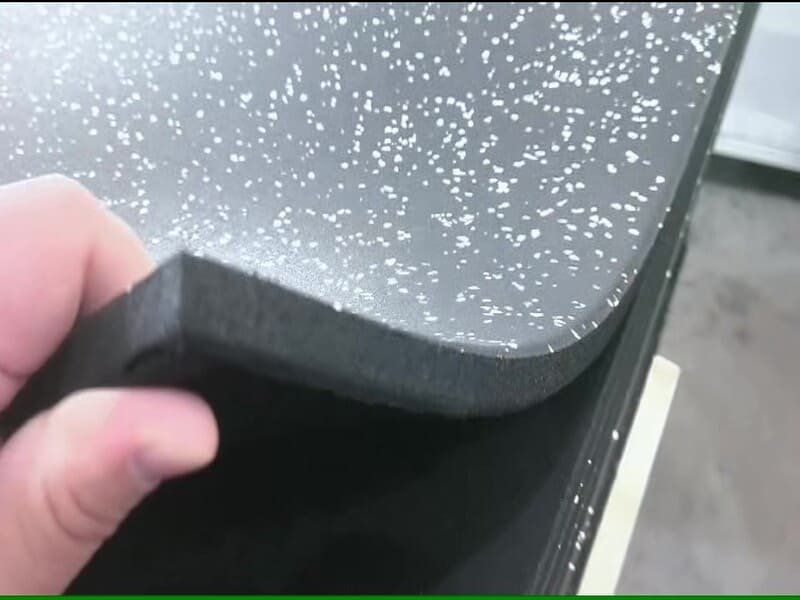
The solution you choose really depends on whether you are allowed to modify the building. I’ve broken these down into "Permanent" and "Non-Permanent" categories so you can choose what works for your space.
Which Stabilization Method Fits Your Situation?
The best fix for a commercial space is bolting the rack through the rubber, but for home gyms or rentals, a "Platform Sandwich" or wall-to-wall compression fit is much better. These methods use mass and structural pressure rather than chemicals to keep the flooring from wandering.
In our R&D lab, we test different adhesives, and I always warn people: stay away from water-based glues. They might be cheaper, but the constant vibration from a heavy rack will eventually crack the bond. If you are in a commercial setting, use a moisture-cured polyurethane adhesive. It stays slightly flexible, which is exactly what you need when thousands of pounds are moving around. However, if you’re in a garage and can’t glue anything down, I highly recommend the "Wall-to-Wall" method. By cutting your mats so tight that they have to be wedged against the walls, you turn the entire floor into one giant, immovable unit.
| Lösung Typ | Recommended Method | Why it Works | Am besten für |
|---|---|---|---|
| Dauerhaft | Bolted Rack + PU Glue | Mechanical lock plus chemical bond. | Kommerzielle Fitnessstudios |
| Non-Permanent | Plywood Platform | Uses the weight of the rack to lock the mat. | Renters / Garages |
| Zero-Mess | Wall-to-Wall Fit | Uses structural pressure to prevent gaps. | Basement Gyms |
| Stall Mat Fix | T-Joint + Framing | Overlapping seams reduce lateral "creep." | Budget Setups |
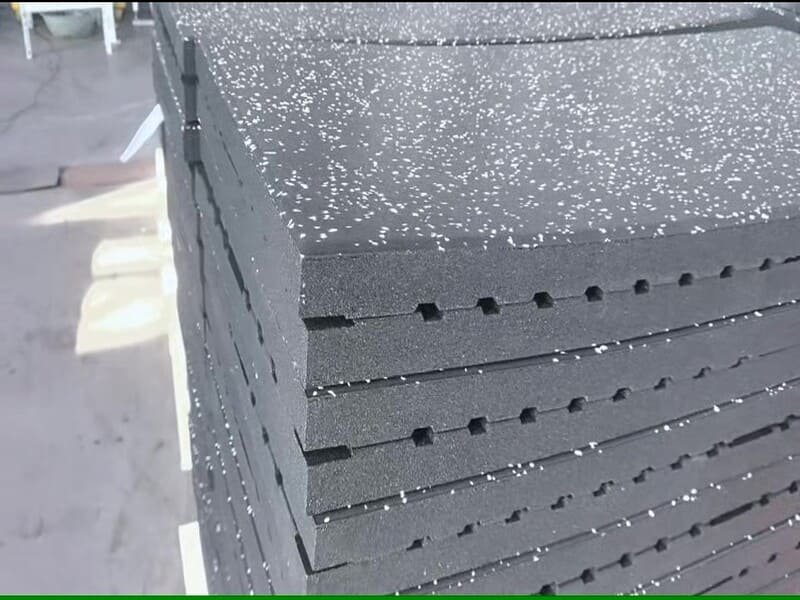
Let’s talk specifically about the "Platform Sandwich." It’s a trick I often suggest to home users who want professional stability without drilling into their foundation.
How Does the Plywood Platform "Sandwich" Work?
The platform sandwich involves placing two layers of plywood under your rubber mats and bolting the rack into the wood. This creates a massive, heavy base that uses its own weight and a large surface area to create enough friction to stay put on any subfloor.
I love this solution because it’s pure engineering. Instead of relying on the friction of four small rack feet, you are now relying on the friction of an entire 8×8 foot wooden base. Even if the rack wants to shift, it has to move the entire platform with it. In my experience, once you bolt a 200lb rack into 150lb of plywood and 100lb of rubber, that floor isn’t going anywhere. This "sandwich" also protects your subfloor from impact damage, which is a nice secondary benefit.
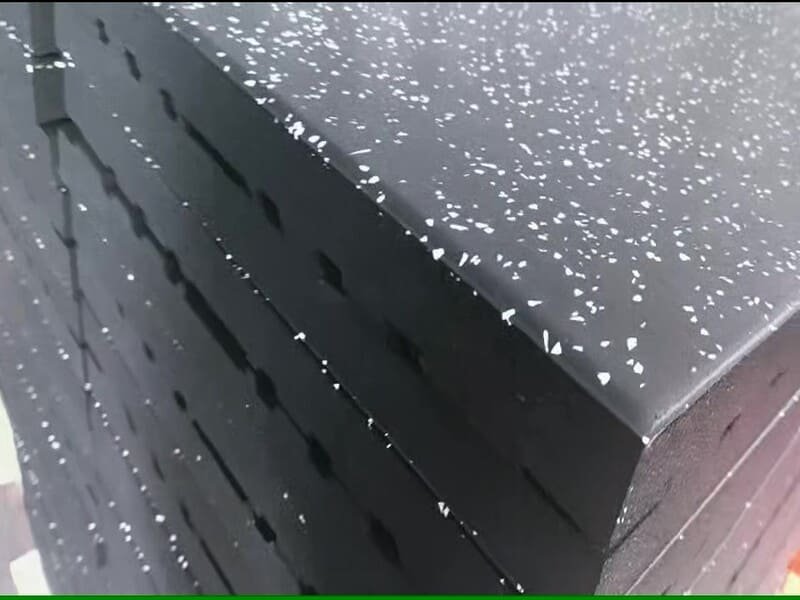
One thing people often forget is how the environment changes the "grip" of the rubber. Humidity is a silent factor that can ruin a perfect installation.
Does Humidity and Moisture Impact Floor Grip?
Yes, moisture is a lubricant. Our internal data shows that humidity trapped under rubber mats can reduce floor friction by nearly 50%. This creates a "hydroplaning" effect where the rubber slides easily across the concrete, especially during high-intensity workouts.
I’ve seen many gyms in humid climates struggle with "walking" floors. If your garage gets damp, that moisture gets trapped under the non-porous rubber. It can’t escape, so it creates a slippery film. If you’re dealing with this, I suggest using a vapor barrier or simply ensuring your rack is mechanically anchored (bolted). We’ve also found that certain concrete sealers make this worse. If your concrete is "polished," you might need to use a high-tack Mylar tape on the seams to provide that extra bit of "bite" the rubber needs to stay still.
| Faktor | Effect on Stability | Technical Advice |
|---|---|---|
| Dry Concrete | High Friction (Stable) | Keep the floor clean of dust. |
| Hohe Luftfeuchtigkeit | Low Friction (Slippery) | Use a dehumidifier or vapor barrier. |
| Polished Concrete | Moderate Friction | Use double-sided Mylar tape on perimeters. |
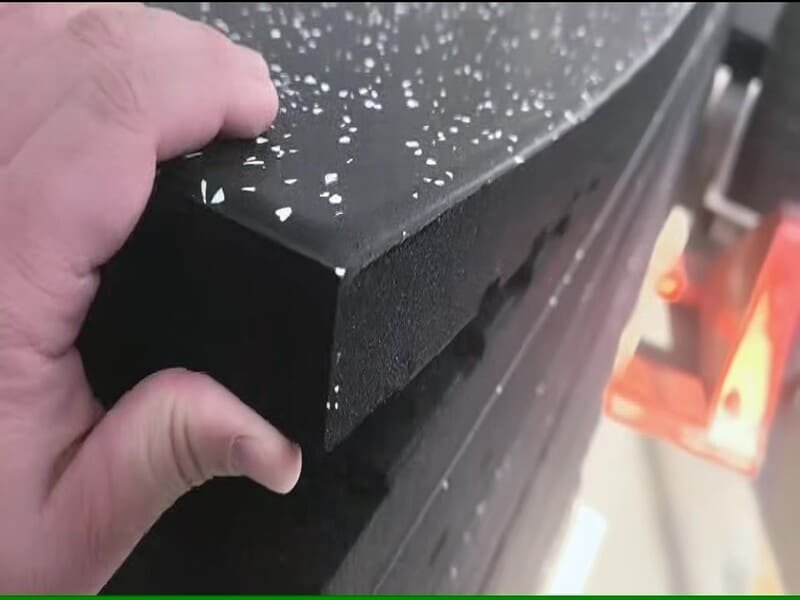
No matter which path you take, remember that floors need maintenance just like your car. Check your bolts every few months. Vibration is a slow but steady force, and keeping things tight is half the battle.
Schlussfolgerung
Bolting is best, but a platform works for everyone.
Need a technical partner for your next gym project? If you are looking for high-density rubber flooring that meets specific friction standards or need a custom-engineered solution for a commercial facility, send me a private message. I can provide data sheets, material samples, and installation consultations to ensure your equipment stays exactly where you want it.